
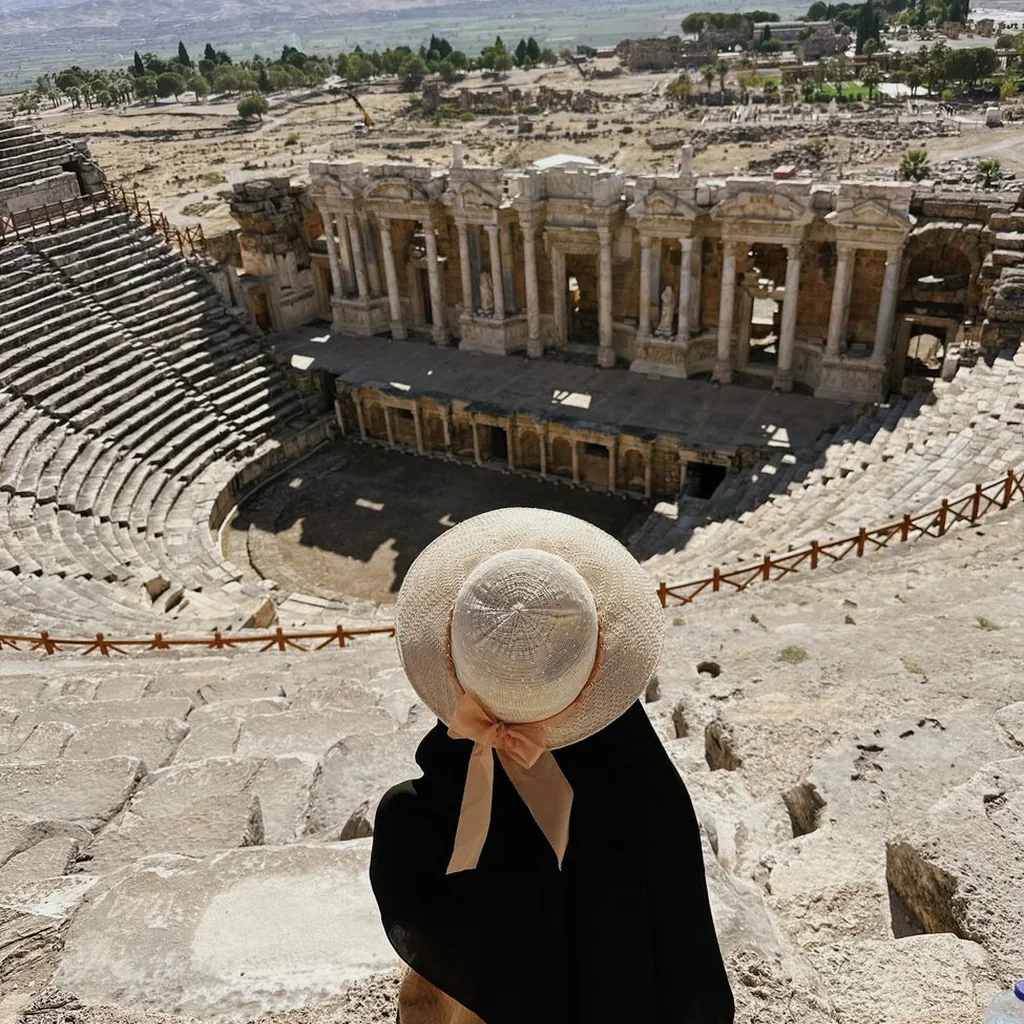
La mensajera inesperada
The Unexpected Messenger
While exploring the Teatro Real, Clara accidentally steps onto a stage where actors and musicians are rehearsing a scene.
Three short parts. Read each part in Spanish first; tap “Show English” under a paragraph when you need the translation.


Part 1
Clara había visitado el famoso Teatro Real para conocer su interior. Después de recorrer varios pasillos, se detuvo frente a una puerta entreabierta y entró, pensando que daba de nuevo al vestíbulo.
Show EnglishHide English
Clara had visited the famous Teatro Real to see what it was like inside. After walking through several corridors, she stopped in front of a partly open door and went in, thinking it led back to the lobby.
De pronto, unas luces intensas la deslumbraron. Estaba en el escenario, delante de una enorme sala casi vacía. En las primeras filas, un director levantó la cabeza y toda la orquesta dejó de tocar.
Show EnglishHide English
Suddenly, some powerful lights dazzled her. She was on the stage, facing a huge, almost empty hall. In the front rows, a conductor looked up, and the entire orchestra stopped playing.
—Perdón —dijo Clara—. Creo que me he perdido.
Show EnglishHide English
“Sorry,” Clara said. “I think I’m lost.”
Un actor vestido de rey se acercó lentamente, sin salir de su personaje.
Show EnglishHide English
An actor dressed as a king slowly approached her, staying in character.
—¿Es usted la mensajera? —preguntó con voz solemne.
Show EnglishHide English
“Are you the messenger?” he asked in a solemn voice.
Clara oyó algunas risas entre los músicos y miró hacia las cortinas, pero no encontró la salida. El director le hizo una señal para que esperara y volvió a levantar la batuta.
Show EnglishHide English
Clara heard a few laughs among the musicians and looked toward the curtains, but she couldn’t find the exit. The conductor signaled for her to wait and raised his baton again.
—Improvisemos —murmuró—. Dígale al rey que el ejército ya está en camino.
Show EnglishHide English
“Let’s improvise,” he murmured. “Tell the king that the army is already on its way.”
Clara tragó saliva. Todos la miraban, y el actor esperaba su respuesta con expresión seria. Entonces dio un paso hacia él y abrió la boca para hablar.
Show EnglishHide English
Clara swallowed. Everyone was looking at her, and the actor waited for her answer with a serious expression. Then she took a step toward him and opened her mouth to speak.
Part 2La escena improvisada(The Improvised Scene)
—Majestad —dijo Clara, intentando sonar segura—, el ejército ya está en camino.
Show EnglishHide English
“Your Majesty,” Clara said, trying to sound confident, “the army is already on its way.”
El actor inclinó la cabeza, satisfecho, y levantó una mano hacia la orquesta. Los músicos tocaron unos acordes solemnes. Clara oyó algunos aplausos y, por un instante, dejó de sentirse completamente perdida. El director le sonrió y le indicó que avanzara hasta el centro del escenario.
Show EnglishHide English
The actor nodded, satisfied, and raised a hand toward the orchestra. The musicians played a few solemn chords. Clara heard some applause and, for a moment, no longer felt completely lost. The conductor smiled at her and signaled for her to move to the center of the stage.
—Muy bien. Ahora el rey le preguntará qué ha visto en la frontera.
Show EnglishHide English
“Very good. Now the king will ask you what you saw at the border.”
Clara abrió mucho los ojos.
Show EnglishHide English
Clara’s eyes widened.
—¿Qué he visto?
Show EnglishHide English
“What did I see?”
—Lo que usted quiera —respondió el director—. Es una improvisación.
Show EnglishHide English
“Whatever you like,” the conductor replied. “It’s an improvisation.”
Ella miró al actor, que seguía esperando con seriedad. Después observó el decorado: unas columnas de cartón, una mesa cubierta con un paño rojo y un mapa enorme colgado al fondo. Se acercó al mapa y fingió estudiarlo.
Show EnglishHide English
She looked at the actor, who was still waiting seriously. Then she studied the set: some cardboard columns, a table covered with a red cloth, and a huge map hanging at the back. She walked over to the map and pretended to study it.
—He visto… una larga fila de soldados —dijo—. Pero también he visto que están cansados y necesitan comida.
Show EnglishHide English
“I saw… a long line of soldiers,” she said. “But I also saw that they’re tired and need food.”
Esta vez nadie se rio. El actor pareció pensar en la respuesta y preguntó:
Show EnglishHide English
This time, no one laughed. The actor seemed to consider her answer and asked:
—¿Y quién se ocupará de ellos?
Show EnglishHide English
“And who will take care of them?”
Antes de que Clara pudiera contestar, una mujer apareció entre las cortinas y le susurró:
Show EnglishHide English
Before Clara could answer, a woman appeared between the curtains and whispered to her:
—Perdone, ¿usted sabe cómo termina esta escena?
Show EnglishHide English
“Excuse me, do you know how this scene ends?”
Part 3Entre el público y el escenario(Between the Audience and the Stage)
Clara miró a la mujer, sorprendida.
Show EnglishHide English
Clara looked at the woman, surprised.
—No lo sé —admitió—. Yo solo he venido a visitar el teatro.
Show EnglishHide English
“I don’t know,” she admitted. “I’ve only come to visit the theater.”
La mujer sonrió, aliviada.
Show EnglishHide English
The woman smiled with relief.
—Entonces estamos igual. Es la primera vez que ensayamos esta escena.
Show EnglishHide English
“Then we’re in the same boat. It’s the first time we’ve rehearsed this scene.”
El director levantó la batuta.
Show EnglishHide English
The conductor raised his baton.
—Que el rey responda a la mensajera. Después encontraremos un final.
Show EnglishHide English
“Let the king answer the messenger. Then we’ll find an ending.”
El actor se volvió hacia Clara y declaró:
Show EnglishHide English
The actor turned to Clara and declared:
—Yo mismo me ocuparé de mis soldados. Un rey debe escuchar a su pueblo.
Show EnglishHide English
“I will take care of my soldiers myself. A king must listen to his people.”
La orquesta tocó una melodía tranquila, que dio a la escena un tono esperanzador. Clara hizo una pequeña reverencia.
Show EnglishHide English
The orchestra played a calm melody, giving the scene a hopeful tone. Clara made a small bow.
—Entonces todavía hay esperanza, majestad.
Show EnglishHide English
“Then there is still hope, Your Majesty.”
El director dejó la batuta y aplaudió.
Show EnglishHide English
The conductor lowered his baton and applauded.
—Perfecto. Con eso podemos dar la escena por terminada.
Show EnglishHide English
“Perfect. We can consider the scene finished.”
La mujer tomó a Clara del brazo y la acompañó hasta las cortinas. Allí Clara encontró por fin la puerta que llevaba al pasillo.
Show EnglishHide English
The woman took Clara by the arm and led her to the curtains. There, Clara finally found the door that led to the corridor.
—Gracias por ayudarnos —dijo el director—. Y perdone el susto.
Show EnglishHide English
“Thank you for helping us,” the conductor said. “And sorry for the scare.”
—No se preocupe. Ha sido la visita más inesperada de mi vida.
Show EnglishHide English
“Don’t worry. It’s been the most unexpected visit of my life.”
Cuando volvió al vestíbulo, Clara oyó que la orquesta comenzaba de nuevo. Esta vez supo exactamente dónde estaba: entre el público, pero con un pequeño papel en el escenario.
Show EnglishHide English
When she returned to the lobby, Clara heard the orchestra start playing again. This time she knew exactly where she was: among the audience, but with a small role onstage.
Practise this Spanish story
Vocabulary in context
Important words and phrases
de pronto
adverbial phrasesuddenly
De pronto, se quedó en silencio.
Suddenly, he fell silent.
puerta entreabierta
noun phrasehalf-open door
Vio una puerta entreabierta al final del pasillo.
She saw a half-open door at the end of the hallway.
se detuvo frente a
verb phrasestopped in front of
Se detuvo frente a la entrada y respiró hondo.
He stopped in front of the entrance and took a deep breath.
sin salir de su personaje
prepositional phrasewithout breaking character
El actor siguió hablando sin salir de su personaje.
The actor kept speaking without breaking character.
le hizo una señal
verb phrasesignaled to her
El profesor le hizo una señal para que esperara.
The teacher signaled to her to wait.
levantar la batuta
verb phraseto raise the baton
La directora levantó la batuta y comenzó la música.
The conductor raised the baton and the music began.
dar un paso
verb phraseto take a step
Dio un paso hacia la luz.
He took a step toward the light.
me ocuparé de
verb phraseI will take care of
Me ocuparé de los detalles mañana.
I will take care of the details tomorrow.
por un instante
prepositional phrasefor a moment
Por un instante, nadie dijo nada.
For a moment, no one said anything.
dar la escena por terminada
verb phraseto consider the scene finished
Cuando llegó el final, dieron la escena por terminada.
When the ending came, they considered the scene finished.
Check your understanding
Comprehension questions
Choose an answer, check it, then move to the next question.
Question 1 of 3
- Question 1: current not answered
- Question 2: not answered
- Question 3: not answered
More Spanish stories to read next

El zapato perdido
The Lost Shoe
Marta goes to return a pair of uncomfortable shoes, but discovers that one of them is still on her foot.
El relevo en la escapada
Taking Turns in the Breakaway
A cyclist in a breakaway tries to get his teammates to share the effort as the peloton closes in.

Marquitos, mi rey
Marquitos, My King
When Lucía’s phone turns Marcos’s name into an embarrassing nickname, her attempt to invite him to study becomes awkward.
La tarjeta de embarque equivocada
The Wrong Boarding Pass
Mid-flight, Clara discovers that the boarding pass in her hand belongs to someone else and tries to find its owner.