
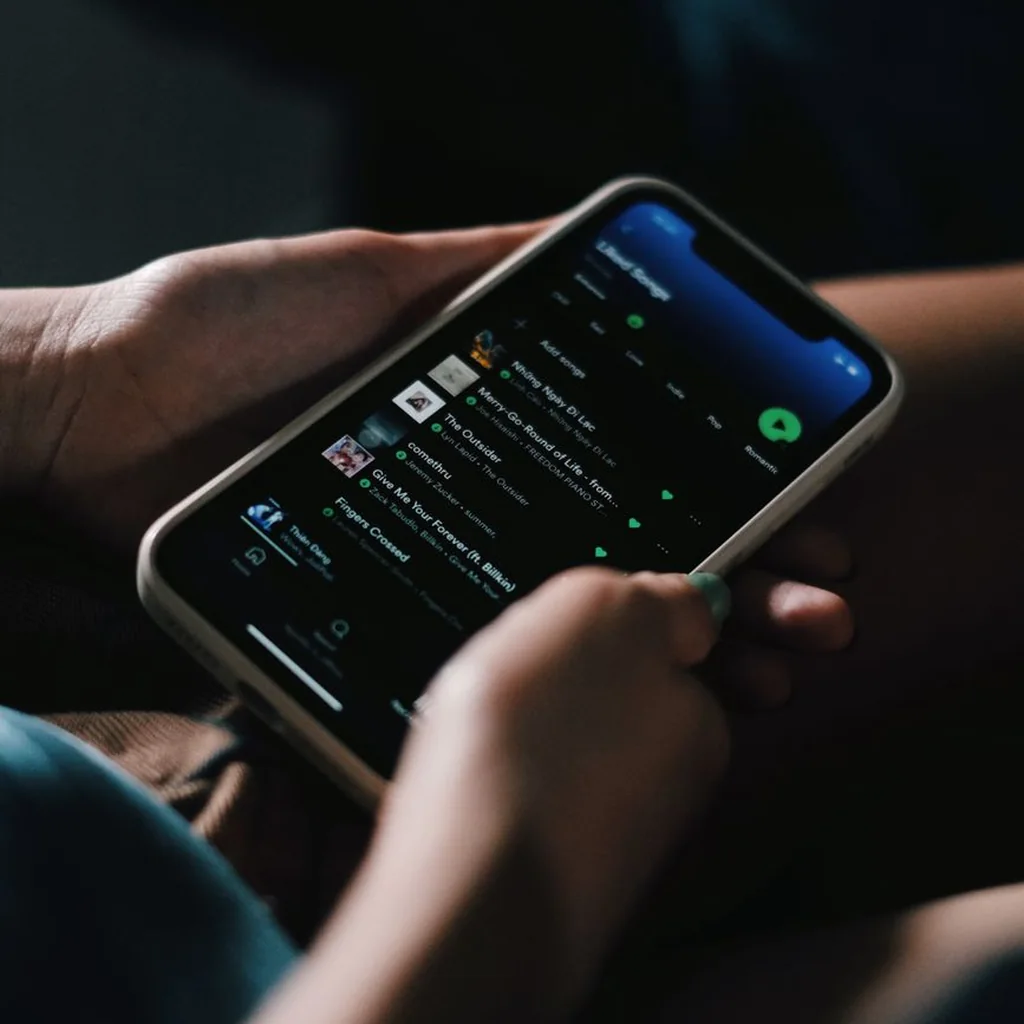
Photo: Pew Nguyen on Pexels
Marquitos, mi rey
Marquitos, My King
When Lucía’s phone turns Marcos’s name into an embarrassing nickname, her attempt to invite him to study becomes awkward.
Three short parts. Read each part in Spanish first; tap “Show English” under a paragraph when you need the translation.


Part 1
Lucía llevaba varios días hablando por mensaje con Marcos, el chico que le gustaba. Una tarde, él se sentó a su lado en la biblioteca y le preguntó si había terminado el trabajo de historia.
Show EnglishHide English
Lucía had been messaging Marcos, the boy she liked, for several days. One afternoon, he sat down beside her in the library and asked if she had finished the history assignment.
—Casi —respondió ella, intentando parecer tranquila—. Justo estaba escribiéndote para preguntarte algo.
Show EnglishHide English
“Almost,” she replied, trying to seem calm. “I was just writing to ask you something.”
Lucía abrió el chat y empezó a teclear: «¿Quieres que estudiemos juntos mañana, Marcos?». Sin darse cuenta, el autocorrector cambió su nombre por «Marquitos, mi rey».
Show EnglishHide English
Lucía opened the chat and began typing: “Do you want to study together tomorrow, Marcos?” Without realizing it, autocorrect changed his name to “Marquitos, my king.”
Antes de que pudiera revisar el mensaje, pulsó «Enviar».
Show EnglishHide English
Before she could check the message, she pressed “Send.”
Marcos miró su móvil y después levantó la cabeza muy despacio.
Show EnglishHide English
Marcos looked at his phone and then slowly raised his head.
—¿«Marquitos, mi rey»? —leyó en voz alta.
Show EnglishHide English
“‘Marquitos, my king’?” he read aloud.
Lucía sintió que se le calentaban las mejillas.
Show EnglishHide English
Lucía felt her cheeks grow warm.
—No es lo que parece. Mi teléfono está… enfermo.
Show EnglishHide English
“It’s not what it looks like. My phone is… sick.”
—¿Enfermo?
Show EnglishHide English
“Sick?”
—Sí. Tiene problemas serios de personalidad.
Show EnglishHide English
“Yes. It has serious personality problems.”
Marcos intentó contener la risa, pero no pudo. Lucía se tapó la cara con las manos mientras él volvía a mirar el mensaje.
Show EnglishHide English
Marcos tried to hold back his laughter, but couldn’t. Lucía covered her face with her hands as he looked at the message again.
—Bueno —dijo finalmente—, mañana puedo estudiar contigo. Pero tendrás que prometerme que no volverás a escribirle a tu teléfono mientras yo esté delante.
Show EnglishHide English
“Well,” he finally said, “I can study with you tomorrow. But you’ll have to promise me you won’t write to your phone again while I’m in front of you.”
Lucía apartó las manos y abrió la boca para contestar.
Show EnglishHide English
Lucía lowered her hands and opened her mouth to answer.
Part 2
—Te lo prometo —dijo Lucía—. Mañana usaré un lápiz y hablaré contigo como una persona normal.
Show EnglishHide English
“I promise,” Lucía said. “Tomorrow I’ll use a pencil and talk to you like a normal person.”
—Me parece un buen plan —contestó Marcos, sonriendo—. Aunque tengo curiosidad por saber qué otros nombres inventa tu teléfono.
Show EnglishHide English
“That sounds like a good plan,” Marcos replied with a smile. “Though I’m curious to find out what other names your phone comes up with.”
—No quieres saberlo.
Show EnglishHide English
“You don’t want to know.”
En ese momento, el bibliotecario pasó junto a ellos y les pidió que bajaran la voz. Lucía guardó rápidamente el móvil, pero Marcos señaló la pantalla.
Show EnglishHide English
Just then, the librarian walked past them and asked them to keep their voices down. Lucía quickly put her phone away, but Marcos pointed at the screen.
—Espera. Todavía tienes que responderme por el chat.
Show EnglishHide English
“Wait. You still have to reply to me in the chat.”
—¿Ahora?
Show EnglishHide English
“Now?”
—Sí. Quiero asegurarme de que mañana estudiaremos juntos y no con… tu teléfono enfermo.
Show EnglishHide English
“Yes. I want to make sure we’re studying together tomorrow, and not with… your sick phone.”
Lucía respiró hondo y escribió despacio: «Perfecto, Marcos. Nos vemos mañana a las cinco». Antes de enviarlo, revisó cada palabra dos veces. Esta vez, su nombre estaba escrito correctamente.
Show EnglishHide English
Lucía took a deep breath and typed slowly: “Perfect, Marcos. See you tomorrow at five.” Before sending it, she checked every word twice. This time, his name was spelled correctly.
Marcos recibió el mensaje y levantó el pulgar.
Show EnglishHide English
Marcos received the message and gave her a thumbs-up.
—Muy bien. Parece que se está recuperando.
Show EnglishHide English
“Very good. It looks like it’s recovering.”
Lucía sonrió, aliviada. Sin embargo, cuando empezó a guardar el móvil, apareció una nueva notificación. Marcos alcanzó a leerla por encima de su hombro.
Show EnglishHide English
Lucía smiled with relief. However, as she began putting her phone away, a new notification appeared. Marcos managed to read it over her shoulder.
—¿Por qué tu teléfono acaba de sugerir «Marquitos, mi rey» como respuesta rápida?
Show EnglishHide English
“Why did your phone just suggest ‘Marquitos, my king’ as a quick reply?”
Part 3El teléfono entrometido(The Meddling Phone)
Lucía miró la pantalla, horrorizada.
Show EnglishHide English
Lucía looked at the screen in horror.
—¡Yo no he escrito eso otra vez! Es una respuesta automática. Mi teléfono se ha quedado obsesionado.
Show EnglishHide English
“I didn’t type that again! It’s an automatic reply. My phone has become obsessed.”
Marcos se inclinó para leer las opciones y sonrió.
Show EnglishHide English
Marcos leaned over to read the options and smiled.
—Entonces tendrás que enseñarle mejores modales.
Show EnglishHide English
“Then you’ll have to teach it better manners.”
—O cambiar de teléfono.
Show EnglishHide English
“Or get a new phone.”
Lucía abrió la configuración del teclado y buscó la lista de palabras aprendidas. Allí estaba «Marquitos, mi rey», guardado como si fuera una expresión normal. Lo borró inmediatamente.
Show EnglishHide English
Lucía opened the keyboard settings and searched for the list of learned words. There it was: “Marquitos, my king,” saved as if it were a normal expression. She deleted it immediately.
—Ya está. Problema solucionado.
Show EnglishHide English
“There. Problem solved.”
—Qué pena —dijo Marcos—. Era un nombre bastante cariñoso.
Show EnglishHide English
“What a shame,” Marcos said. “It was quite an affectionate name.”
Lucía lo miró, sin saber si se estaba burlando de ella.
Show EnglishHide English
Lucía looked at him, unsure whether he was making fun of her.
—¿Te ha molestado que apareciera?
Show EnglishHide English
“Did it bother you that it came up?”
—No. Me ha hecho gracia. Además, prefiero que me llames Marcos, aunque sea menos interesante.
Show EnglishHide English
“No. I thought it was funny. Besides, I’d rather you call me Marcos, even if it’s less interesting.”
Lucía soltó una risa nerviosa.
Show EnglishHide English
Lucía let out a nervous laugh.
—Lo siento. Me puse tan nerviosa porque me gustas y quería invitarte a estudiar.
Show EnglishHide English
“I’m sorry. I got so nervous because I like you and wanted to invite you to study.”
Marcos se quedó callado un segundo, pero enseguida sonrió.
Show EnglishHide English
Marcos fell silent for a second, but soon smiled.
—Entonces mañana estudiamos juntos. Y, si quieres, después podemos tomar algo.
Show EnglishHide English
“Then we’ll study together tomorrow. And, if you want, we can get something to drink afterward.”
Lucía guardó el móvil.
Show EnglishHide English
Lucía put her phone away.
—De acuerdo. Pero esta vez te lo diré en persona.
Show EnglishHide English
“Okay. But this time I’ll tell you in person.”
—Mejor —respondió él—. Así el teléfono no podrá llevarse todo el mérito.
Show EnglishHide English
“Better,” he replied. “That way the phone won’t get all the credit.”
Practise this Spanish story
Vocabulary in context
Important words and phrases
sin darse cuenta
phrasewithout realizing it
Sin darse cuenta, cerró la aplicación equivocada.
Without realizing it, she closed the wrong app.
autocorrector
nounautocorrect
El autocorrector cambió mi nombre otra vez.
The autocorrect changed my name again.
teclear
verbto type
Tecleó la respuesta muy despacio.
He typed the reply very slowly.
pulsar
verbto press, tap
Pulsó el botón sin mirar.
He pressed the button without looking.
contener la risa
phraseto hold back laughter
Intentó contener la risa durante toda la reunión.
He tried to hold back laughter during the whole meeting.
bajar la voz
phraseto lower one's voice
Bajó la voz para no molestar a nadie.
She lowered her voice so as not to bother anyone.
respuesta automática
noun phraseautomatic reply
Activé una respuesta automática cuando no pude contestar.
I activated an automatic reply when I couldn't answer.
lista de palabras aprendidas
noun phraselist of learned words
Borré una palabra de la lista de palabras aprendidas.
I deleted a word from the list of learned words.
tomar algo
phraseto go for a drink / have something to eat
Después de estudiar, podemos tomar algo.
After studying, we can go for something to drink or eat.
me ha hecho gracia
phraseit amused me / I found it funny
Tu comentario me ha hecho gracia.
Your comment amused me.
Check your understanding
Comprehension questions
Choose an answer, check it, then move to the next question.
Question 1 of 3
- Question 1: current not answered
- Question 2: not answered
- Question 3: not answered
Notice the language
Language notes
me parece + sustantivo/adjetivo
Use this pattern to give a softened opinion, similar to "it seems to me" or "I think it is." You can follow it with a noun phrase or an adjective, which makes it useful for polite, everyday opinions. Example: "Me parece un buen plan."
Me parece un buen plan.
It seems like a good plan.
More Spanish stories to read next
La tarjeta de embarque equivocada
The Wrong Boarding Pass
Mid-flight, Clara discovers that the boarding pass in her hand belongs to someone else and tries to find its owner.

El regalo perfecto
The Perfect Gift
Clara gives her sister a vintage camera, but struggles to let go of something she wants for herself.
La mensajera inesperada
The Unexpected Messenger
While exploring the Teatro Real, Clara accidentally steps onto a stage where actors and musicians are rehearsing a scene.

El zapato perdido
The Lost Shoe
Marta goes to return a pair of uncomfortable shoes, but discovers that one of them is still on her foot.