
Photo: Tuba Duran on Pexels
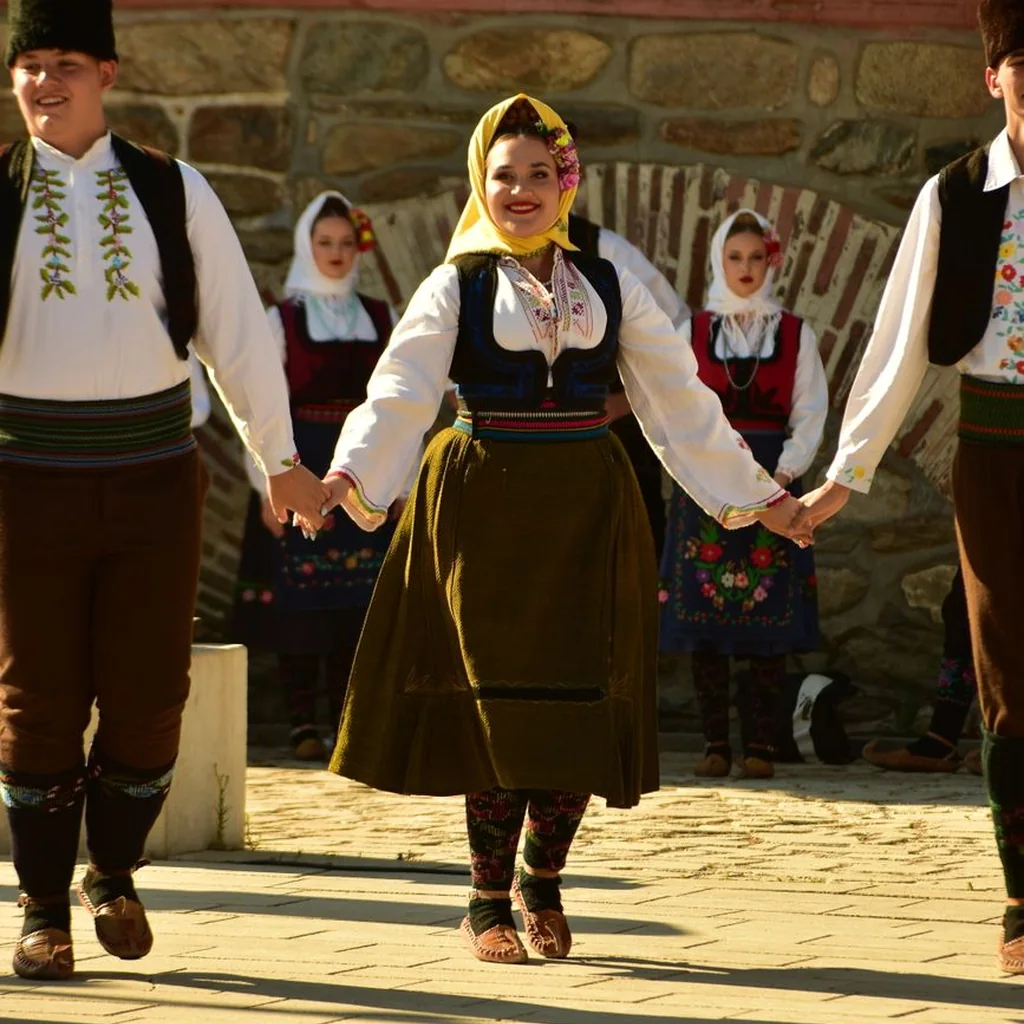
La danza del pueblo
The Village Dance
Marta goes to a village festival with her granddaughter and is invited to dance with the folk dancers.
Three short parts. Read each part in Spanish first; tap “Show English” under a paragraph when you need the translation.


Part 1
El sábado, Marta fue con su nieta Elena a una fiesta del pueblo. En la plaza había música, comida y un grupo de bailarines con trajes tradicionales.
Show EnglishHide English
On Saturday, Marta went with her granddaughter Elena to a village festival. In the square, there was music, food, and a group of dancers in traditional clothes.
De pronto, el presentador dijo por el micrófono:
Show EnglishHide English
Suddenly, the host said into the microphone:
—Ahora necesitamos a una persona del público para bailar con nosotros.
Show EnglishHide English
“Now we need someone from the audience to dance with us.”
Todos miraron a Marta. Ella se sorprendió cuando Elena levantó la mano y dijo:
Show EnglishHide English
Everyone looked at Marta. She was surprised when Elena raised her hand and said:
—¡Mi abuela quiere participar!
Show EnglishHide English
“My grandmother wants to join in!”
Los bailarines ayudaron a Marta a subir al escenario. La música empezó y todos movieron los pies de un lado a otro. Marta los miró, pero no entendía los pasos.
Show EnglishHide English
The dancers helped Marta onto the stage. The music started, and everyone moved their feet from side to side. Marta watched them, but she didn’t understand the steps.
Primero levantó el pie derecho cuando debía levantar el izquierdo. Después giró en la dirección equivocada. La gente aplaudió y Marta comenzó a reírse.
Show EnglishHide English
First, she raised her right foot when she should have raised her left. Then she turned in the wrong direction. The people clapped, and Marta began to laugh.
—¡No sé bailar esta danza! —dijo.
Show EnglishHide English
“I don’t know how to dance this dance!” she said.
El bailarín que estaba a su lado le sonrió y le mostró los pasos muy despacio. Marta respiró hondo, miró sus pies y, cuando empezó la siguiente canción, levantó una mano para…
Show EnglishHide English
The dancer next to her smiled and showed her the steps very slowly. Marta took a deep breath, looked at her feet, and, when the next song started, raised one hand to…
Part 2Bailando en el escenario(Dancing on Stage)
Marta levantó una mano y movió el brazo lentamente, como le había enseñado el bailarín. Después dio dos pasos hacia la derecha y uno hacia la izquierda. Esta vez lo hizo bien.
Show EnglishHide English
Marta raised one hand and slowly moved her arm, just as the dancer had shown her. Then she took two steps to the right and one to the left. This time she did it right.
Elena aplaudió desde abajo del escenario.
Show EnglishHide English
Elena clapped from below the stage.
—¡Muy bien, abuela!
Show EnglishHide English
“Very good, Grandma!”
Marta sonrió, pero no tuvo tiempo de descansar. La música cambió y empezó una canción más rápida. Los bailarines dieron una vuelta y formaron una fila. El bailarín que estaba junto a Marta le explicó:
Show EnglishHide English
Marta smiled, but she didn’t have time to rest. The music changed, and a faster song began. The dancers turned around and formed a line. The dancer next to Marta explained:
—Ahora caminamos hacia delante. Después, hacia atrás.
Show EnglishHide English
“Now we walk forward. Then, backward.”
Marta lo intentó, pero iba un poco tarde. Cuando los demás avanzaban, ella todavía estaba retrocediendo. Todos se rieron con cariño y siguieron bailando.
Show EnglishHide English
Marta tried, but she was a little late. When the others moved forward, she was still moving backward. Everyone laughed kindly and kept dancing.
Entonces el presentador se acercó con un pañuelo rojo en la mano.
Show EnglishHide English
Then the host came over with a red handkerchief in his hand.
—Marta, ahora tiene que bailar en el centro.
Show EnglishHide English
“Marta, now you have to dance in the center.”
Marta miró a Elena y luego a los bailarines. Tomó aire y dio un paso hacia el centro.
Show EnglishHide English
Marta looked at Elena and then at the dancers. She took a breath and stepped toward the center.
Part 3La danza de Marta(Marta’s Dance)
Marta llegó al centro con el pañuelo rojo en la mano. Los músicos tocaron más despacio y los bailarines formaron un círculo a su alrededor.
Show EnglishHide English
Marta reached the center with the red handkerchief in her hand. The musicians played more slowly, and the dancers formed a circle around her.
El bailarín le mostró tres movimientos: un paso a la derecha, otro a la izquierda y un pequeño giro. Marta los repitió con cuidado. Esta vez no miró sus pies. Miró a los bailarines y siguió el ritmo.
Show EnglishHide English
The dancer showed her three movements: one step to the right, another to the left, and a small turn. Marta repeated them carefully. This time she didn’t look at her feet. She looked at the dancers and followed the rhythm.
Después levantó el pañuelo y lo movió en el aire. No hizo todos los pasos bien, pero bailó con alegría. El público aplaudió y Elena gritó:
Show EnglishHide English
Then she raised the handkerchief and waved it in the air. She didn’t do all the steps right, but she danced happily. The audience clapped, and Elena shouted:
—¡Esa es mi abuela!
Show EnglishHide English
“That’s my grandmother!”
Cuando terminó la canción, Marta hizo una pequeña reverencia. Los bailarines la abrazaron y la ayudaron a bajar del escenario.
Show EnglishHide English
When the song ended, Marta gave a small bow. The dancers hugged her and helped her down from the stage.
—No aprendí todos los pasos —dijo Marta—, pero aprendí a no sentir vergüenza.
Show EnglishHide English
“I didn’t learn all the steps,” Marta said, “but I learned not to feel embarrassed.”
Elena la tomó de la mano. Las dos volvieron a la fiesta sonriendo. Marta no sabía bailar aquella danza, pero esa noche se convirtió en la persona más querida de la plaza.
Show EnglishHide English
Elena took her by the hand. The two of them went back to the festival smiling. Marta didn’t know how to dance that dance, but that night she became the most loved person in the square.
Practise this Spanish story
Vocabulary in context
Important words and phrases
fiesta del pueblo
noun phrasevillage festival
El sábado hubo una fiesta del pueblo.
On Saturday there was a village festival.
plaza
nountown square
La música sonaba en la plaza.
The music was playing in the town square.
trajes tradicionales
noun phrasetraditional costumes
Los bailarines llevaban trajes tradicionales.
The dancers wore traditional costumes.
bailarines
noundancers
Los bailarines sonrieron al público.
The dancers smiled at the audience.
del público
noun phraseof the audience
Una persona del público subió al escenario.
A person from the audience went up on stage.
subir al escenario
verb phraseto go up on stage
Marta subió al escenario con ayuda.
Marta went up on stage with help.
pasos
nounsteps
Aprendió los pasos poco a poco.
She learned the steps little by little.
hacia delante
adverbial phraseforward
Luego caminamos hacia delante.
Then we walk forward.
hacia atrás
adverbial phrasebackward
Después, caminamos hacia atrás.
After that, we walk backward.
no sentir vergüenza
verb phrasenot feel ashamed
Al final, Marta aprendió a no sentir vergüenza.
In the end, Marta learned not to feel ashamed.
Check your understanding
Comprehension questions
Choose an answer, check it, then move to the next question.
Question 1 of 3
- Question 1: current not answered
- Question 2: not answered
- Question 3: not answered
Notice the language
Language notes
tener que + infinitivo
This pattern means 'to have to' or 'must.' Use the correct form of tener + que + an infinitive verb. It expresses obligation or necessity. You can reuse it for rules, tasks, and plans: 'Marta tiene que bailar en el centro.'
Marta tiene que bailar en el centro.
Marta has to dance in the center.
More Spanish stories to read next
La Mona Lisa en el museo
The Mona Lisa at the Museum
Daniel visits a museum with his father and discovers that the famous Mona Lisa is much smaller than he imagined.
El paraguas compartido
The Shared Umbrella
Two strangers find the last umbrella in a shop and decide how to share it as they travel in different directions.
Leo y el cuento del oso
Leo and the Bear Story
At bedtime, Leo and his mother take turns finishing the lines of a story about a little bear.
El café de Pablo
Pablo’s Coffee
Pablo finds expired milk and a cup of coffee waiting for him, then faces a series of small decisions before work.