
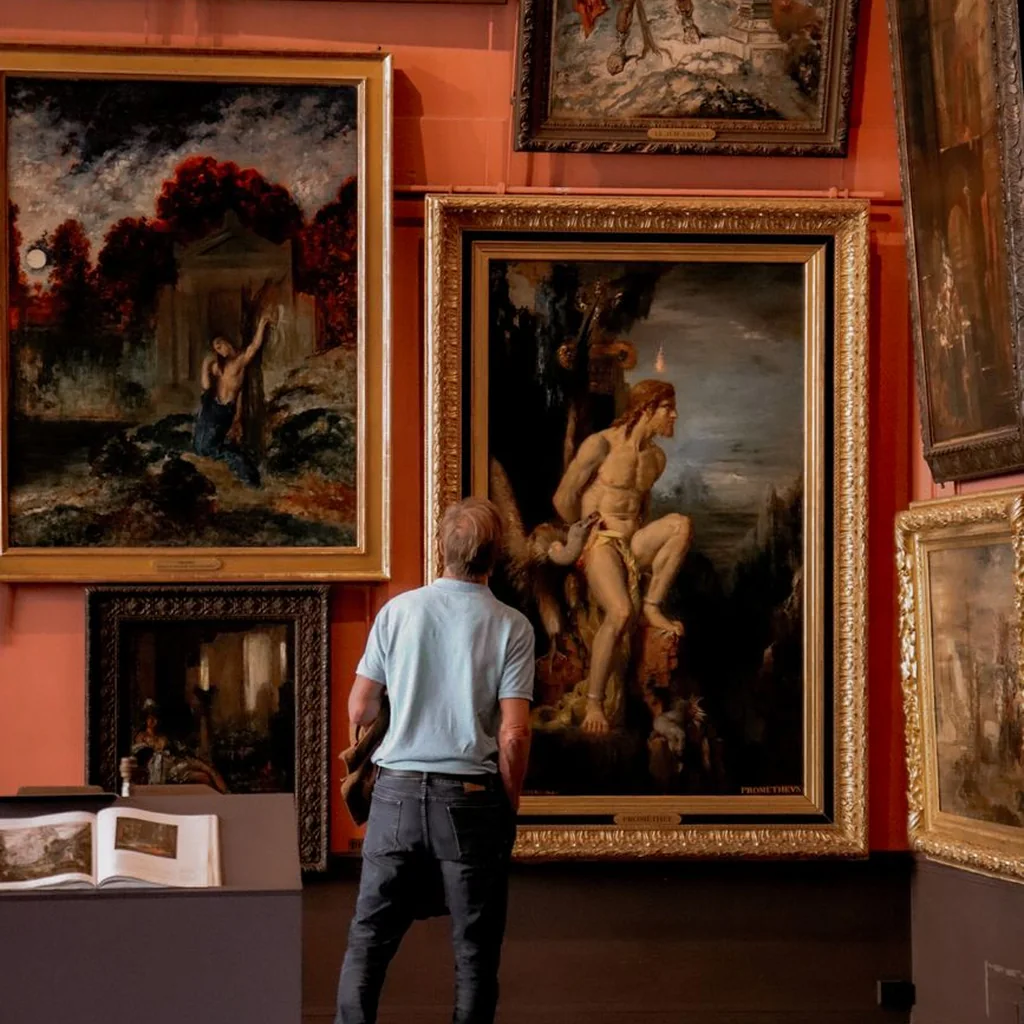
La Mona Lisa en el museo
The Mona Lisa at the Museum
Daniel visits a museum with his father and discovers that the famous Mona Lisa is much smaller than he imagined.
Three short parts. Read each part in Spanish first; tap “Show English” under a paragraph when you need the translation.


Part 1
El sábado, Daniel fue al museo con su padre. Era la primera vez que iba a París, y su padre le había prometido enseñarle un cuadro muy famoso: la Mona Lisa.
Show EnglishHide English
On Saturday, Daniel went to the museum with his father. It was his first time in Paris, and his father had promised to show him a very famous painting: the Mona Lisa.
Daniel imaginaba una pintura enorme, casi tan grande como una pared. Durante el camino, pensaba en sus colores y en la gran sala donde estaría.
Show EnglishHide English
Daniel imagined a huge painting, almost as big as a wall. On the way, he thought about its colors and the large room where it would be.
En el museo, siguieron a muchas personas hasta una sala llena de visitantes. Finalmente, Daniel vio el cuadro. Se quedó quieto y abrió mucho los ojos.
Show EnglishHide English
At the museum, they followed many people to a room full of visitors. Finally, Daniel saw the painting. He stood still and opened his eyes wide.
—¿Eso es todo? —preguntó.
Show EnglishHide English
“Is that all?” he asked.
La Mona Lisa era mucho más pequeña de lo que él había imaginado. Estaba detrás de un cristal y había una cuerda delante. Muchas personas levantaban sus teléfonos para hacer fotos.
Show EnglishHide English
The Mona Lisa was much smaller than he had imagined. It was behind glass, with a rope in front of it. Many people held up their phones to take pictures.
—Es pequeña, pero es muy famosa —dijo su padre—. Acércate y mírala con atención.
Show EnglishHide English
“It’s small, but it’s very famous,” his father said. “Come closer and look at it carefully.”
Daniel caminó despacio hasta la cuerda. Observó el rostro de la mujer y su sonrisa misteriosa. Luego miró a su padre y preguntó:
Show EnglishHide English
Daniel walked slowly up to the rope. He looked at the woman’s face and her mysterious smile. Then he looked at his father and asked:
—¿Puedo hacer una foto antes de que llegue aún más gente?
Show EnglishHide English
“Can I take a picture before even more people arrive?”
Part 2La Mona Lisa y la cámara(The Mona Lisa and the Camera)
—Sí, pero sin flash —respondió su padre—. Después, nos apartamos para dejar pasar a los demás.
Show EnglishHide English
“Yes, but without the flash,” his father replied. “Then we’ll move aside to let the others pass.”
Daniel levantó el teléfono y tomó una foto. En la pantalla, la Mona Lisa parecía aún más pequeña. Sin embargo, al verla de cerca, descubrió algunos detalles: sus manos, el color de su ropa y su sonrisa tranquila.
Show EnglishHide English
Daniel held up his phone and took a picture. On the screen, the Mona Lisa looked even smaller. However, when he saw it up close, he noticed some details: her hands, the color of her clothes, and her calm smile.
—Ahora la entiendo un poco mejor —dijo—. No es grande, pero tiene algo especial.
Show EnglishHide English
“Now I understand it a little better,” he said. “It isn’t big, but there’s something special about it.”
Su padre sonrió y guardó el teléfono de Daniel en el bolsillo.
Show EnglishHide English
His father smiled and put Daniel’s phone in his pocket.
—Mírala otra vez sin la cámara. A veces, una foto no muestra todo.
Show EnglishHide English
“Look at it again without the camera. Sometimes a photo doesn’t show everything.”
Daniel volvió a mirar el cuadro. Esta vez no pensó en su tamaño. Se fijó en los ojos de la mujer, que parecían seguirlo cuando él se movía.
Show EnglishHide English
Daniel looked at the painting again. This time, he didn’t think about its size. He focused on the woman’s eyes, which seemed to follow him when he moved.
—Papá, ¿me está mirando a mí?
Show EnglishHide English
“Dad, is she looking at me?”
Su padre no contestó enseguida. Señaló una sala pequeña al lado.
Show EnglishHide English
His father didn’t answer right away. He pointed to a small room next door.
—Allí hay otra exposición. Después podemos buscar un cuadro grande.
Show EnglishHide English
“There’s another exhibition in there. Afterward, we can look for a big painting.”
Part 3El cuadro grande(The Big Painting)
Daniel y su padre entraron en la sala pequeña. Allí vieron un cuadro enorme, con un paisaje verde y un cielo azul. Daniel sonrió al verlo.
Show EnglishHide English
Daniel and his father went into the small room. There they saw a huge painting, with a green landscape and a blue sky. Daniel smiled when he saw it.
—Este sí que es grande —dijo—. Es casi tan grande como me lo imaginaba.
Show EnglishHide English
“Now this one is big,” he said. “It’s almost as big as I imagined.”
Se acercó y miró los árboles, las montañas y un río que pasaba entre ellas. Había muchos detalles y también muchas personas delante del cuadro, pero la sala estaba más tranquila que la anterior.
Show EnglishHide English
He went closer and looked at the trees, the mountains, and a river that ran between them. There were many details and also many people in front of the painting, but the room was quieter than the previous one.
—¿Te gusta más este? —preguntó su padre.
Show EnglishHide English
“Do you like this one more?” his father asked.
Daniel pensó un momento.
Show EnglishHide English
Daniel thought for a moment.
—Me gusta porque es grande, pero la Mona Lisa también me gusta. Al principio solo vi su tamaño. Después vi su mirada y su sonrisa.
Show EnglishHide English
“I like it because it’s big, but I like the Mona Lisa too. At first, I only noticed its size. Then I noticed her gaze and her smile.”
Su padre le puso una mano en el hombro.
Show EnglishHide English
His father put a hand on his shoulder.
—Entonces has aprendido algo importante: un cuadro no tiene que ser grande para llamar la atención.
Show EnglishHide English
“Then you’ve learned something important: a painting doesn’t have to be big to catch your attention.”
Antes de salir del museo, Daniel miró una última vez la foto de la Mona Lisa en su teléfono. Luego guardó el teléfono y sonrió.
Show EnglishHide English
Before leaving the museum, Daniel looked one last time at the photo of the Mona Lisa on his phone. Then he put his phone away and smiled.
—La próxima vez quiero verla otra vez, pero sin imaginarla tan grande.
Show EnglishHide English
“Next time, I want to see her again, but without imagining her so big.”
Practise this Spanish story
Vocabulary in context
Important words and phrases
museo
nounmuseum
Fuimos al museo ayer.
We went to the museum yesterday.
cuadro
nounpainting
El cuadro es muy famoso.
The painting is very famous.
sala
nounroom
La sala está llena de gente.
The room is full of people.
visitantes
nounvisitors
Había muchos visitantes en el museo.
There were many visitors in the museum.
cuerda
nounrope
No pases la cuerda.
Do not cross the rope.
foto
nounphoto
Tomó una foto del cuadro.
He took a photo of the painting.
de cerca
phraseup close
Miró el cuadro de cerca.
He looked at the painting up close.
detalle
noundetail
Vimos un detalle pequeño en la pintura.
We saw a small detail in the painting.
paisaje
nounlandscape
El paisaje tiene árboles y un río.
The landscape has trees and a river.
llamar la atención
phraseto catch attention
Ese cuadro llama la atención por sus colores.
That painting catches attention because of its colors.
Check your understanding
Comprehension questions
Choose an answer, check it, then move to the next question.
Question 1 of 3
- Question 1: current not answered
- Question 2: not answered
- Question 3: not answered
Notice the language
Language notes
sin + sustantivo
Use sin + noun to say that something is 'without' another thing. It is common in rules, instructions, and short descriptions. In the story, 'sin flash' means the camera flash is not allowed. Example: "Puedes entrar sin mochila."
Puedes entrar sin mochila.
You can come in without a backpack.
More Spanish stories to read next
El paraguas compartido
The Shared Umbrella
Two strangers find the last umbrella in a shop and decide how to share it as they travel in different directions.
Leo y el cuento del oso
Leo and the Bear Story
At bedtime, Leo and his mother take turns finishing the lines of a story about a little bear.
El café de Pablo
Pablo’s Coffee
Pablo finds expired milk and a cup of coffee waiting for him, then faces a series of small decisions before work.
La alarma de Clara
Clara’s Alarm
After a sleepless night, Clara finally falls asleep just as her alarm starts ringing before an important online meeting.