
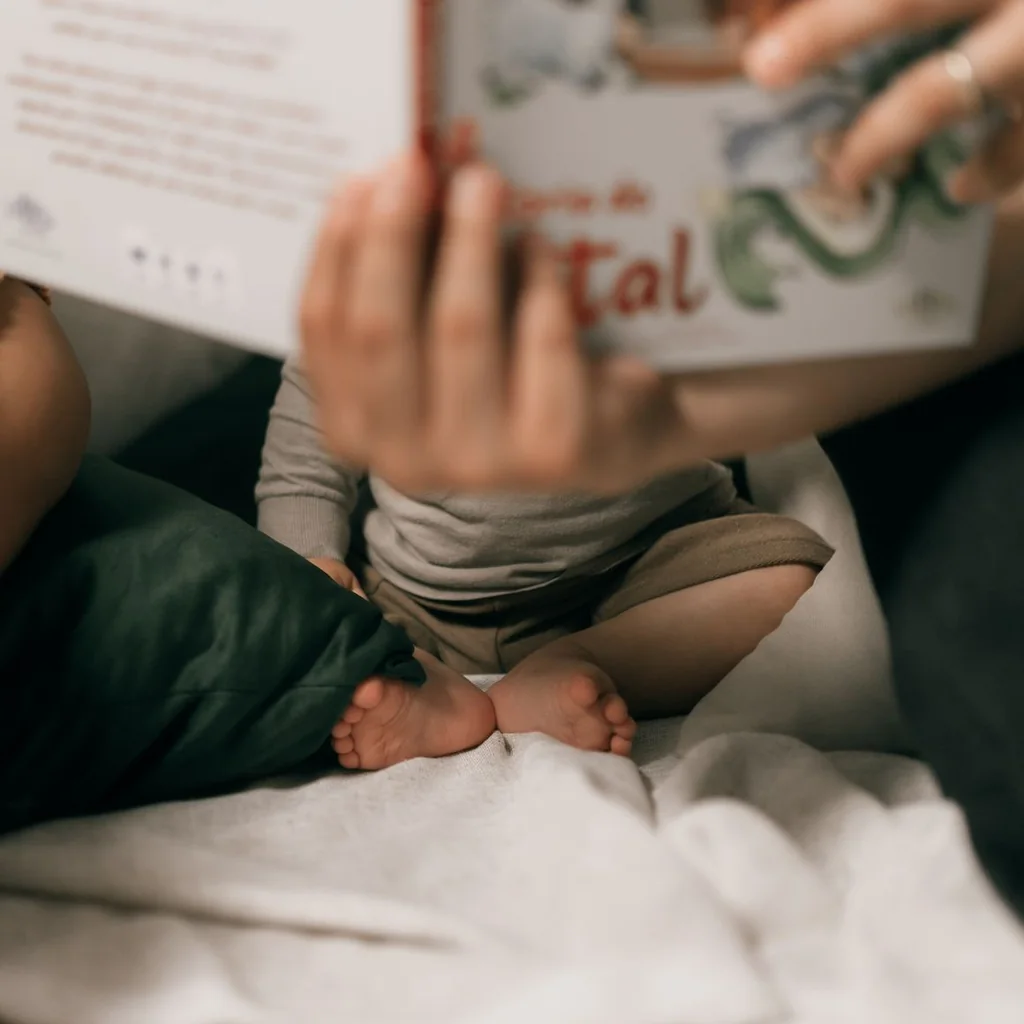
Photo: Alexander Mass on Pexels
Leo y el cuento del oso
Leo and the Bear Story
At bedtime, Leo and his mother take turns finishing the lines of a story about a little bear.
Three short parts. Read each part in Spanish first; tap “Show English” under a paragraph when you need the translation.


Part 1
Cada noche, Marta leía un cuento a su hijo Leo antes de dormir. Una noche, abrió un libro sobre un pequeño oso que vivía en el bosque.
Show EnglishHide English
Every night, Marta read a story to her son Leo before bed. One night, she opened a book about a little bear who lived in the forest.
—Había una vez un oso que salió de su casa para buscar… —empezó Marta.
Show EnglishHide English
“Once upon a time, a bear left his home to look for…” Marta began.
—¡Miel! —dijo Leo.
Show EnglishHide English
“Honey!” said Leo.
Marta sonrió y continuó:
Show EnglishHide English
Marta smiled and continued:
—El oso caminó hasta el río y vio un pez muy…
Show EnglishHide English
“The bear walked to the river and saw a very…”
—¡Grande! —terminó Leo.
Show EnglishHide English
“Big fish!” Leo finished.
—Después, encontró una casa con una puerta de color…
Show EnglishHide English
“Then he found a house with a door that was…”
—¡Rojo!
Show EnglishHide English
“Red!”
Marta miró a su hijo, sorprendida. Leo conocía el cuento de memoria. Cada vez que ella empezaba una frase, él decía las últimas palabras.
Show EnglishHide English
Marta looked at her son, surprised. Leo knew the story by heart. Every time she started a sentence, he said the last words.
—El oso llamó a la puerta y preguntó: «¿Hay alguien en…?»
Show EnglishHide English
“The bear knocked on the door and asked, ‘Is anyone in…?’”
—¡La casa! —respondió Leo, riendo.
Show EnglishHide English
“The house!” Leo answered, laughing.
Marta cerró el libro por un momento.
Show EnglishHide English
Marta closed the book for a moment.
—Creo que tú puedes leer este cuento mejor que yo.
Show EnglishHide English
“I think you can read this story better than I can.”
Leo tomó el libro con las dos manos y miró la primera página.
Show EnglishHide English
Leo took the book in both hands and looked at the first page.
—Está bien, mamá. Pero ahora tú tienes que terminar cada frase —dijo, mientras buscaba la siguiente palabra y sonreía.
Show EnglishHide English
“All right, Mom. But now you have to finish every sentence,” he said, smiling as he looked for the next word.
Marta esperó, lista para decirla.
Show EnglishHide English
Marta waited, ready to say it.
Part 2La nota del oso(The Bear’s Note)
Leo pasó una página y empezó a leer:
Show EnglishHide English
Leo turned a page and started reading:
—El oso abrió la puerta y encontró una mesa con tres platos. El primer plato estaba muy…
Show EnglishHide English
“The bear opened the door and found a table with three plates. The first plate was very…”
—¡Caliente! —dijo Marta rápidamente.
Show EnglishHide English
“Hot!” Marta said quickly.
Leo se rio.
Show EnglishHide English
Leo laughed.
—Muy bien, mamá. Ahora: el oso probó la sopa y dijo: «Está demasiado…».
Show EnglishHide English
“Very good, Mom. Now: the bear tasted the soup and said, ‘It is too…’”
—¡Salada! —respondió Marta.
Show EnglishHide English
“Salty!” Marta answered.
Los dos se miraron y rieron en silencio para no despertar al gato.
Show EnglishHide English
They looked at each other and laughed quietly so they would not wake the cat.
Leo siguió leyendo. Marta terminó varias frases: «un árbol alto», «una cama pequeña» y «una ventana abierta». Ella ya conocía casi todo el cuento, pero no podía leer tan rápido como su hijo.
Show EnglishHide English
Leo kept reading. Marta finished several phrases: “a tall tree,” “a small bed,” and “an open window.” She already knew almost the whole story, but she could not read as fast as her son.
De pronto, Leo dejó de leer y frunció el ceño.
Show EnglishHide English
Suddenly, Leo stopped reading and frowned.
—Mamá, aquí hay una frase que no recuerdo.
Show EnglishHide English
“Mom, there’s a sentence here that I don’t remember.”
Marta acercó el libro y miró la página. Era una frase nueva para los dos:
Show EnglishHide English
Marta brought the book closer and looked at the page. It was a new sentence for both of them:
—El oso volvió a casa y encontró una nota que decía…
Show EnglishHide English
“The bear went back home and found a note that said…”
Leo levantó la mirada.
Show EnglishHide English
Leo looked up.
—¿Qué decía, mamá?
Show EnglishHide English
“What did it say, Mom?”
Part 3Los autores del cuento(The Authors of the Story)
Marta leyó la nota en voz alta:
Show EnglishHide English
Marta read the note aloud:
—«Querido oso: gracias por compartir tu miel. Eres un amigo muy…»
Show EnglishHide English
“Dear Bear: Thank you for sharing your honey. You are a very…”
—¡Bueno! —dijo Leo.
Show EnglishHide English
“Good friend!” said Leo.
—¡Muy bien! Después dice: «Ven a cenar mañana».
Show EnglishHide English
“Very good! Then it says: ‘Come to dinner tomorrow.’”
—¡Con tus amigos! —terminó Leo.
Show EnglishHide English
“With your friends!” Leo finished.
—Muy bien. Has completado otra frase.
Show EnglishHide English
“Very good. You completed another sentence.”
Leo volvió a mirar la página.
Show EnglishHide English
Leo looked at the page again.
—No, mamá. Esa parte no estaba antes.
Show EnglishHide English
“No, Mom. That part wasn’t there before.”
Marta entendió que la nota era nueva. El libro tenía un pequeño espacio vacío para que cada niño pudiera inventar sus propias palabras.
Show EnglishHide English
Marta understood that the note was new. The book had a small empty space so each child could make up their own words.
—Entonces, ¿qué le contestamos al oso? —preguntó.
Show EnglishHide English
“Then, what should we say back to the bear?” she asked.
Leo pensó un momento y dijo:
Show EnglishHide English
Leo thought for a moment and said:
—«Sí, iremos. Llevaremos pan y manzanas».
Show EnglishHide English
“‘Yes, we’ll come. We’ll bring bread and apples.’”
Marta escribió la respuesta en una hoja y la puso junto al libro. Después, cerró la historia.
Show EnglishHide English
Marta wrote the reply on a sheet of paper and put it beside the book. Then she closed the story.
—Hoy has leído casi todo el cuento —dijo.
Show EnglishHide English
“You read almost the whole story today,” she said.
—Y tú has terminado muchas frases —respondió Leo.
Show EnglishHide English
“And you finished lots of sentences,” Leo replied.
Los dos se abrazaron. Marta apagó la luz y Leo cerró los ojos.
Show EnglishHide English
They hugged. Marta turned off the light, and Leo closed his eyes.
—Buenas noches, mamá.
Show EnglishHide English
“Good night, Mom.”
—Buenas noches, mi pequeño lector.
Show EnglishHide English
“Good night, my little reader.”
Esa noche, los dos fueron los autores del cuento.
Show EnglishHide English
That night, they were both the authors of the story.
Practise this Spanish story
Vocabulary in context
Important words and phrases
Cada noche
phraseEvery night
Cada noche estudio un poco.
Every night I study a little.
un cuento
noun phrasea story
Este cuento me gusta mucho.
I like this story a lot.
antes de dormir
phrasebefore sleeping
Leo un cuento antes de dormir.
I read a story before sleeping.
su hijo
noun phraseher son
Mi hijo tiene siete años.
My son is seven years old.
leía
verbwas reading
Leía un libro por la noche.
I was reading a book at night.
frase
nounsentence
¿Puedes terminar la frase?
Can you finish the sentence?
terminó
verbfinished
Ella terminó la sopa.
She finished the soup.
preguntó
verbasked
Le preguntó por el libro.
She asked him about the book.
una nota
noun phrasea note
Escribí una nota para mi madre.
I wrote a note for my mother.
respondió
verbanswered
Él respondió con una sonrisa.
He answered with a smile.
Check your understanding
Comprehension questions
Choose an answer, check it, then move to the next question.
Question 1 of 3
- Question 1: current not answered
- Question 2: not answered
- Question 3: not answered
Notice the language
Language notes
tener que + infinitivo
Use a conjugated form of tener + que + an infinitive to say that someone must do something or has to do it. In the story, 'tú tienes que terminar cada frase' means 'you have to finish each sentence.' This pattern is very reusable: for example, 'Mañana tengo que estudiar.'
Tú tienes que terminar cada frase.
You have to finish each sentence.
More Spanish stories to read next

El café de Pablo
Pablo’s Coffee
Pablo finds expired milk and a cup of coffee waiting for him, then faces a series of small decisions before work.
La alarma de Clara
Clara’s Alarm
After a sleepless night, Clara finally falls asleep just as her alarm starts ringing before an important online meeting.
La ropa y las semillas
The Clothes and the Seeds
Marta finds tiny seeds all over her washing and must decide how to keep it clean.
El mensaje que quedó
The Message That Remained
Daniel sorts through old messages from Marta and pauses before deciding what to do with their last one.