Back to Elementary (A2) stories

Unlock the Complete Learning Experience

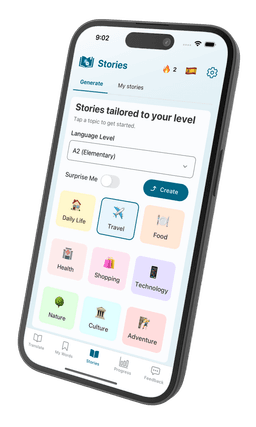
You're reading free stories on our website. Get the mobile app for audio narration, speaking practice, vocabulary saving, personalised stories, instant translations, and progress tracking.

Download on the App StoreGet it on Google Play
Audio
Translations
Progress

Путешествие на маленький остров

Elementary (A2)
5 min read

📖 You are reading the free text version. Get our mobile app for 🎧 audio narration, 💬 speaking practice, 🔄 instant translations, and 💾 vocabulary saving to enhance your learning experience.

Настя всегда мечтала увидеть море. Однажды летом она поехала на маленький остров недалеко от города.

Остров был очень красивый и тихий. Настя гуляла по пляжу и собирала ракушки. Вода была чистая и тёплая, и она плавала каждый день.

На третий день Настя заметила, что её телефон не работает — связь пропала. Она чуть не расстроилась, потому что не могла позвонить домой.

Но потом Настя решила использовать это время, чтобы отдохнуть по-настоящему. Она читала книги, рисовала и просто смотрела на море.

К вечеру к ней пришли местные жители и пригласили на небольшой праздник у костра. Настя танцевала и слушала интересные истории об острове.

Путешествие Насти было особенным: она поняла, что отдых — это не только телефоны и сообщения, но и моменты покоя и новых впечатлений.


Practise this Russian story

Vocabulary in context

Important words and phrases

  • море

    noun

    Transliteration: more

    sea

    Настя мечтала увидеть море.

    Nastya dreamed of seeing the sea.

  • маленький остров

    noun phrase

    Transliteration: malen'kiy ostrov

    small island

    Она поехала на маленький остров летом.

    She went to a small island in summer.

  • недалеко от города

    phrase

    Transliteration: nedaleko ot goroda

    not far from the city

    Остров был недалеко от города.

    The island was not far from the city.

  • по пляжу

    phrase

    Transliteration: po plyazhu

    along the beach

    Она гуляла по пляжу.

    She walked along the beach.

  • ракушки

    noun

    Transliteration: rakushki

    shells

    Дети собирали ракушки на берегу.

    The children collected shells on the shore.

  • каждый день

    phrase

    Transliteration: kazhdyy den'

    every day

    Я плаваю каждый день.

    I swim every day.

  • связь пропала

    phrase

    Transliteration: svyaz' propala

    the connection was lost

    Связь часто пропадает на острове.

    The connection often goes out on the island.

  • позвонить домой

    phrase

    Transliteration: pozvonit' domoy

    call home

    Я хочу позвонить домой.

    I want to call home.

  • отдохнуть по-настоящему

    phrase

    Transliteration: otdokhnut' po-nastoyashchemu

    to rest properly

    В отпуске я хочу отдохнуть по-настоящему.

    On vacation, I want to rest properly.

  • местные жители

    noun phrase

    Transliteration: mestnye zhiteli

    local residents

    Местные жители были очень дружелюбные.

    The local residents were very friendly.

  • праздник у костра

    phrase

    Transliteration: prazdnik u kostra

    a celebration by the fire

    Вечером у костра был небольшой праздник.

    In the evening, there was a small celebration by the fire.

Check your understanding

Comprehension questions

Choose an answer, check it, then move to the next question.

Question 1 of 3

  1. Question 1: current not answered
  2. Question 2: not answered
  3. Question 3: not answered
Куда Настя поехала летом?Where did Nastya go in summer?

Notice the language

Language notes

grammar

не только ..., но и ...

This pattern means 'not only ... but also ...'. It is used to add a second idea and show that both parts matter. You can reuse it in many topics. Example: "Отдых — это не только сон, но и прогулки."

  • Отдых — это не только сон, но и прогулки.

    Rest is not only sleep, but also walks.

Keep reading

More Elementary (A2) Stories
RussianElementary (A2)