


Back to Beginner (A1) stories

Unlock the Complete Learning Experience

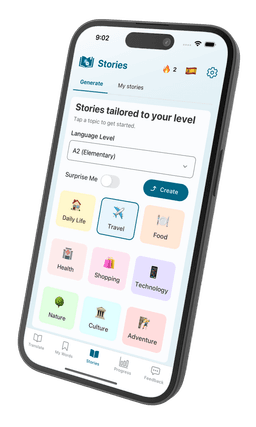
You're reading free stories on our website. Get the mobile app for audio narration, speaking practice, vocabulary saving, personalised stories, instant translations, and progress tracking.

Download on the App StoreGet it on Google Play
Audio
Translations
Progress

Письмо на скамейке

Beginner (A1)
5 min read

📖 You are reading the free text version. Get our mobile app for 🎧 audio narration, 💬 speaking practice, 🔄 instant translations, and 💾 vocabulary saving to enhance your learning experience.

Вика шла по парку и увидела на скамейке маленький конверт. Она взяла его и посмотрела — там было письмо.

Письмо было без имени, только слова: «Ты красивый человек. Спасибо за улыбку». Вика улыбнулась и подумала, кто мог это написать?

Прохожие шли мимо, и никто не обращал внимание на письмо. Вика решила оставить конверт на скамейке, чтобы автор мог прийти и найти его.

На следующий день она снова пришла в парк. На скамейке сидел молодой человек и смотрел на нее. Он сказал: «Это я написал письмо, но забыл взять. Спасибо за улыбку сегодня».

Вика почувствовала тепло в сердце. Они сели рядом и стали говорить о простых вещах — о солнце, парке и письмах.

Письмо не решило всех проблем, но дало начало чему-то новому и важному. Иногда слова меняют мир, даже если ты их не видишь сразу.

Вика и молодой человек не знали, что будет завтра, но сегодня им было хорошо вместе. И это было главное.

Practise this Russian story

Vocabulary in context

Important words and phrases

  • скамейка

    noun

    Transliteration: skameyka

    bench

    Она сидела на скамейке в парке.

    She was sitting on a bench in the park.

  • конверт

    noun

    Transliteration: konvert

    envelope

    Вика нашла маленький конверт.

    Vika found a small envelope.

  • письмо

    noun

    Transliteration: pis'mo

    letter

    Там было письмо без имени.

    There was a letter without a name.

  • улыбка

    noun

    Transliteration: ulybka

    smile

    Спасибо за улыбку.

    Thank you for the smile.

  • прохожие

    noun

    Transliteration: prokhozhie

    passersby

    Прохожие шли мимо.

    Passersby were walking by.

  • оставить

    verb

    Transliteration: ostavit'

    to leave; to leave behind

    Вика решила оставить конверт на скамейке.

    Vika decided to leave the envelope on the bench.

  • найти

    verb

    Transliteration: nayti

    to find

    Он хотел найти конверт.

    He wanted to find the envelope.

  • на следующий день

    phrase

    Transliteration: na sleduyushchiy den'

    the next day

    На следующий день она снова пришла в парк.

    The next day she came to the park again.

  • молодой человек

    noun phrase

    Transliteration: molodoy chelovek

    young man

    На скамейке сидел молодой человек.

    A young man was sitting on the bench.

  • рядом

    adverb

    Transliteration: ryadom

    next to; nearby

    Они сели рядом.

    They sat down next to each other.

  • вместе

    adverb

    Transliteration: vmeste

    together

    Им было хорошо вместе.

    They felt good together.

Check your understanding

Comprehension questions

Choose an answer, check it, then move to the next question.

Question 1 of 3

  1. Question 1: current not answered
  2. Question 2: not answered
  3. Question 3: not answered
Где Вика нашла конверт?Where did Vika find the envelope?

Notice the language

Language notes

grammar

стали + инфинитив

This pattern means that an action began. Use it with an infinitive after forms of 'стать' such as 'стали' or 'стала'. It is very useful for simple stories about actions starting. Example: 'Они сели рядом и стали говорить о простых вещах.' = 'They sat down next to each other and began to talk about simple things.'.

  • Они сели рядом и стали говорить о простых вещах.

    They sat down next to each other and began to talk about simple things.

Keep reading

More Beginner (A1) Stories
RussianBeginner (A1)