
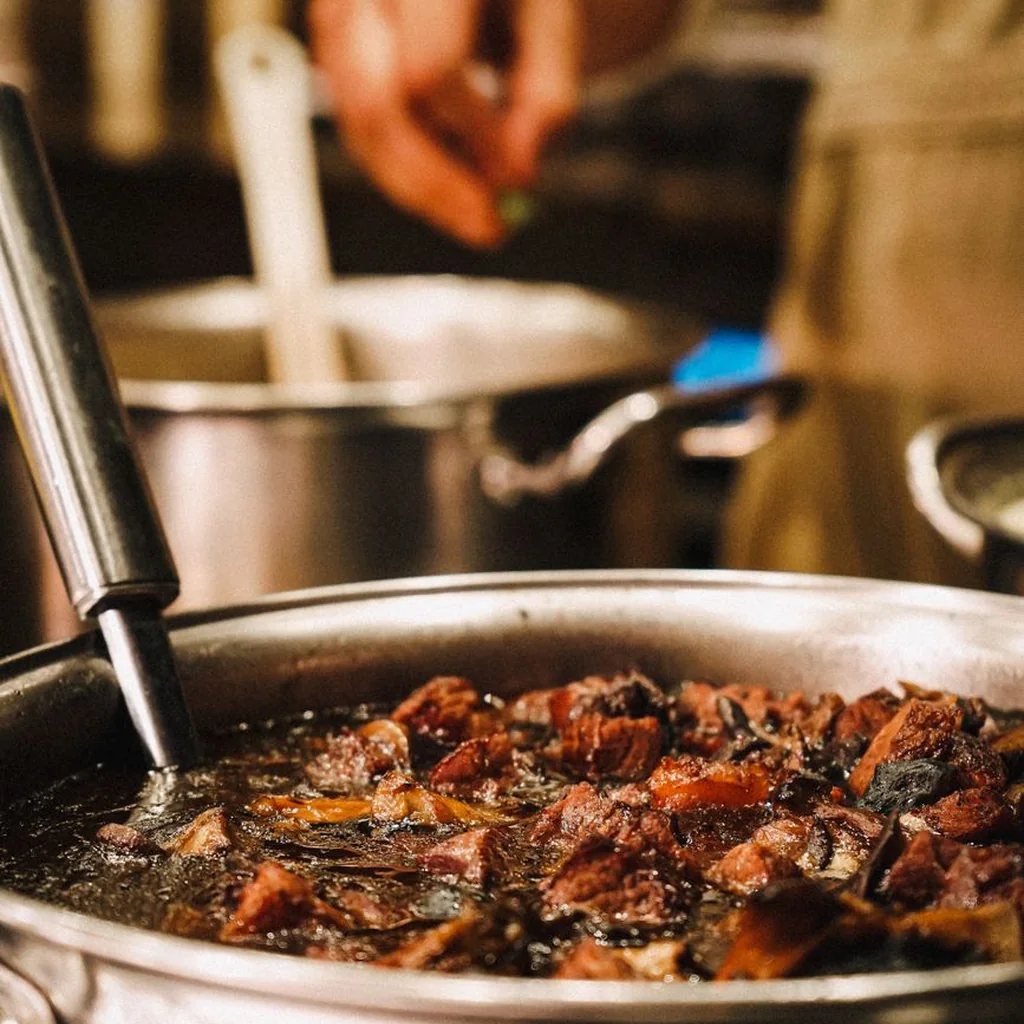
Photo: Thiago Kai on Pexels
Το φαγητό που περίμενε παρέα
The Meal That Waited for Company
Nikos slow-cooks a meal all day for his friends, but they cancel one by one.
Three short parts. Read each part in Greek first; tap “Show English” under a paragraph when you need the translation.


Part 1
Από νωρίς το πρωί, ο Νίκος ετοίμαζε φαγητό για τους φίλους του. Έβαλε κρέας, πατάτες, καρότα και ντομάτες σε μια μεγάλη κατσαρόλα και την άφησε να σιγομαγειρεύεται όλη μέρα.
Show EnglishHide English
Early in the morning, Nikos started preparing food for his friends. He put meat, potatoes, carrots, and tomatoes in a large pot and left it to cook slowly all day.
Το μεσημέρι έστειλε ένα μήνυμα στην παρέα: «Σας περιμένω στις οκτώ!» Λίγο αργότερα, η Ελένη έγραψε ότι δεν θα μπορούσε να έρθει, επειδή το παιδί της είχε πυρετό.
Show EnglishHide English
At noon, he sent a message to the group: “I’m expecting you at eight!” A little later, Eleni wrote that she wouldn’t be able to come because her child had a fever.
Ο Νίκος στενοχωρήθηκε, αλλά συνέχισε να μαγειρεύει. Μετά, ο Γιώργος έστειλε μήνυμα ότι είχε πολλή δουλειά και θα έμενε στο γραφείο. Η Μαρία τηλεφώνησε λίγο πριν από τις οκτώ και είπε ότι δεν ένιωθε καλά.
Show EnglishHide English
Nikos was disappointed, but he kept cooking. Then Giorgos sent a message saying he had a lot of work and would be staying at the office. Maria called shortly before eight and said she wasn’t feeling well.
Ο Νίκος έστρωσε το τραπέζι για έξι άτομα, αν και τώρα ήξερε ότι μάλλον θα έτρωγε μόνος. Το φαγητό μύριζε υπέροχα, αλλά η κουζίνα ήταν ήσυχη.
Show EnglishHide English
Nikos set the table for six people, although now he knew he would probably eat alone. The food smelled wonderful, but the kitchen was quiet.
Τότε έλαβε και το τελευταίο μήνυμα: «Συγγνώμη, Νίκο, δεν θα τα καταφέρω απόψε». Εκείνος κοίταξε την κατσαρόλα και μετά πήρε το κινητό του, έτοιμος να γράψει στην παρέα μια απάντηση.
Show EnglishHide English
Then he received the last message: “Sorry, Nikos, I won’t be able to make it tonight.” He looked at the pot and then picked up his phone, ready to write a reply to the group.
Part 2Το φαγητό που περίσσεψε(The Leftover Food)
Ο Νίκος πήρε μια βαθιά ανάσα και απάντησε στην παρέα: «Κρίμα που δεν θα έρθετε. Το φαγητό είναι έτοιμο και μυρίζει υπέροχα. Θα φάω και για τους έξι!» Έστειλε μαζί και μια φωτογραφία της κατσαρόλας. Οι φίλοι του έστειλαν αμέσως καρδούλες και πολλές συγγνώμες.
Show EnglishHide English
Nikos took a deep breath and replied to the group: “It’s a shame you can’t come. The food is ready and smells wonderful. I’ll eat for all six of us!” He also sent a photo of the pot. His friends immediately sent hearts and lots of apologies.
Ο Νίκος κάθισε μόνος στο τραπέζι και γέμισε το πιάτο του. Το κρέας ήταν μαλακό και οι πατάτες είχαν πάρει όλη τη γεύση της σάλτσας. Παρ’ όλα αυτά, μπροστά του υπήρχαν ακόμη πέντε άδεια πιάτα.
Show EnglishHide English
Nikos sat alone at the table and filled his plate. The meat was tender, and the potatoes had soaked up all the flavor of the sauce. Even so, there were still five empty plates in front of him.
Εκείνη τη στιγμή χτύπησε το κινητό του. Ήταν η Ελένη. «Νίκο, συγγνώμη που σε ξαναενοχλώ», είπε. «Ο μικρός δεν έχει όρεξη να φάει. Μήπως περισσεύει λίγο φαγητό για αύριο;»
Show EnglishHide English
At that moment, his phone rang. It was Eleni. “Nikos, I’m sorry to bother you again,” she said. “The little one doesn’t feel like eating. Is there perhaps some food left over for tomorrow?”
Ο Νίκος κοίταξε την κατσαρόλα και χαμογέλασε. Είχε περισσέψει πολύ περισσότερο από λίγο φαγητό. Το ερώτημα ήταν πώς θα το μοίραζε χωρίς να μείνει νηστικός κι ο ίδιος.
Show EnglishHide English
Nikos looked at the pot and smiled. There was much more than a little food left over. The question was how he could share it without going hungry himself.
Part 3Το φαγητό για όλους(Food for Everyone)
Ο Νίκος γέμισε ένα μεγάλο τάπερ με κρέας, πατάτες και καρότα για την Ελένη. Ύστερα έβαλε από μία μερίδα σε δύο μικρότερα δοχεία, για τον Γιώργο και τη Μαρία. Για τον εαυτό του κράτησε αρκετό φαγητό για τις επόμενες δύο μέρες.
Show EnglishHide English
Nikos filled a large food container with meat, potatoes, and carrots for Eleni. Then he put one serving in each of two smaller containers, for Giorgos and Maria. He kept enough food for himself for the next two days.
Έστειλε μήνυμα στην παρέα: «Έχω φαγητό για όλους. Ελένη, θα σου αφήσω το τάπερ έξω από την πόρτα. Γιώργο και Μαρία, περάστε αύριο να πάρετε τις μερίδες σας». Αυτή τη φορά, όλοι απάντησαν αμέσως και τον ευχαρίστησαν.
Show EnglishHide English
He sent a message to the group: “I have food for everyone. Eleni, I’ll leave the container outside your door. Giorgos and Maria, come by tomorrow to pick up your servings.” This time, everyone replied right away and thanked him.
Ο Νίκος έβαλε τα δοχεία στο ψυγείο και ξανακάθισε στο τραπέζι. Τα πέντε άδεια πιάτα δεν του φαίνονταν πια τόσο άδεια. Το φαγητό θα έφτανε τελικά στους φίλους του, έστω και λίγο αργότερα.
Show EnglishHide English
Nikos put the containers in the fridge and sat back down at the table. The five empty plates no longer looked quite so empty. The food would reach his friends after all, even if a little later.
Έφαγε αργά τη μερίδα του και απόλαυσε κάθε μπουκιά. Ύστερα μάζεψε το τραπέζι χαμογελώντας. Το δείπνο δεν έγινε όπως το είχε φανταστεί, αλλά κανείς δεν έμεινε νηστικός — ούτε κι εκείνος.
Show EnglishHide English
He ate his serving slowly and enjoyed every bite. Then he cleared the table with a smile. Dinner hadn’t turned out as he had imagined, but no one went hungry—not even him.
Practise this Greek story
Vocabulary in context
Important words and phrases
ετοίμαζε φαγητό
phraseRomanization: etoimaze fagito
was preparing food
Ετοίμαζε φαγητό για τους φίλους του.
He was preparing food for his friends.
σιγομαγειρεύεται
verbRomanization: sigomageirevetai
is simmering
Το φαγητό σιγομαγειρεύεται όλη μέρα.
The food is simmering all day.
έστρωσε το τραπέζι
phraseRomanization: estrose to trapezi
set the table
Έστρωσε το τραπέζι για έξι άτομα.
He set the table for six people.
δεν ένιωθε καλά
phraseRomanization: den enyothe kala
didn't feel well
Η Μαρία είπε ότι δεν ένιωθε καλά.
Maria said that she didn't feel well.
δεν θα τα καταφέρω
phraseRomanization: den tha ta katafero
I won't make it / I can't make it
Δεν θα τα καταφέρω απόψε.
I won't make it tonight.
πήρε μια βαθιά ανάσα
phraseRomanization: pire mia vathia anasa
took a deep breath
Πήρε μια βαθιά ανάσα πριν απαντήσει.
He took a deep breath before replying.
γέμισε το πιάτο του
phraseRomanization: gemise to piato tou
filled his plate
Γέμισε το πιάτο του με φαγητό.
He filled his plate with food.
περισσεύει λίγο φαγητό
phraseRomanization: perissevei ligo fagito
there is some food left over
Μήπως περισσεύει λίγο φαγητό για αύριο;
Is there any food left for tomorrow?
μερίδα
nounRomanization: merida
portion
Κράτησε μια μερίδα για τον εαυτό του.
He kept a portion for himself.
παρ’ όλα αυτά
phraseRomanization: par' ola afta
nevertheless
Ήταν αργά, παρ’ όλα αυτά έφαγε με όρεξη.
It was late; nevertheless, he ate with appetite.
έμεινε νηστικός
phraseRomanization: emine nistikos
went hungry
Κανείς δεν έμεινε νηστικός.
No one went hungry.
Check your understanding
Comprehension questions
Choose an answer, check it, then move to the next question.
Question 1 of 3
- Question 1: current not answered
- Question 2: not answered
- Question 3: not answered
Notice the language
Language notes
Μήπως περισσεύει λίγο φαγητό;
Μήπως is often used to make a question sound softer, more polite, or less direct. It is useful when asking tentatively, offering help, or making a gentle request. You can reuse it with many everyday questions, for example: "Μήπως έχεις λίγο χρόνο;" or "Μήπως θέλεις βοήθεια;" In the story, "Μήπως περισσεύει λίγο φαγητό για αύριο;" sounds considerate rather than demanding.
Μήπως έχεις λίγο χρόνο;
Do you perhaps have a little time?
More Greek stories to read next

Το γραφείο που ανέβαινε και κατέβαινε
The Desk That Went Up and Down
Maria tries a standing desk for the first time and finds it much harder than she expected.
Ο χαρταετός και ο άνεμος
The Kite and the Wind
Nikos spends an afternoon trying to fly his new kite in a park where there is no wind.

Η εξομολόγηση που δεν έγινε
The Confession That Never Happened
Maria plans to tell Nikos how she feels, but his happy news makes her confession difficult.

Δύο μπουκέτα στο πρώτο ραντεβού
Two Bouquets on a First Date
Nikos and Eleni bring each other flowers on their first date and discover they have to find a place for both bouquets.