


Back to Beginner (A1) stories

Unlock the Complete Learning Experience

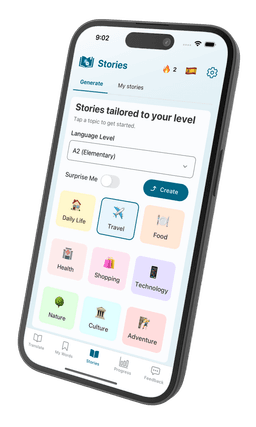
You're reading free stories on our website. Get the mobile app for audio narration, speaking practice, vocabulary saving, personalised stories, instant translations, and progress tracking.

Download on the App StoreGet it on Google Play
Audio
Translations
Progress

Το Παράξενο Πρωινό

Beginner (A1)
5 min read

📖 You are reading the free text version. Get our mobile app for 🎧 audio narration, 💬 speaking practice, 🔄 instant translations, and 💾 vocabulary saving to enhance your learning experience.

Ο Κώστας ξύπνησε πολύ πεινασμένος. Σκέφτηκε να φάει κάτι νόστιμο για πρωινό.

Πήγε στην κουζίνα και άνοιξε το ψυγείο. Βρήκε γάλα, ψωμί και μέλι. Ήθελε όμως κάτι διαφορετικό.

Ξαφνικά, είδε ένα παράξενο φρούτο που δεν είχε ξαναδοκιμάσει. Είχε χρώμα κόκκινο και γελαστό σχήμα.

Ο Κώστας ήταν λίγο φοβισμένος να το φάει, αλλά αποφάσισε να το δοκιμάσει. Ένιωσε μια γλυκιά γεύση, αλλά και κάτι μυστηριώδες στο στόμα του.

Μετά το πρωινό, σκέφτηκε την παραξενιά του φρούτου και αποφάσισε να ρωτήσει τη μητέρα του την επόμενη μέρα.

Το πρωινό ήταν απλό, αλλά το νέο φρούτο έκανε τη μέρα του ξεχωριστή και φρέσκια.

Ο ήλιος έμπαινε από το παράθυρο και ο Κώστας ένιωθε χαρούμενος με την απλή του περιπέτεια.

Practise this Greek story

Vocabulary in context

Important words and phrases

  • πεινασμένος

    adjective

    Romanization: peinasménos

    hungry

    Ο Κώστας ήταν πολύ πεινασμένος.

    Kostas was very hungry.

  • πρωινό

    noun

    Romanization: proinó

    breakfast

    Σκέφτηκε να φάει κάτι νόστιμο για πρωινό.

    He thought about eating something tasty for breakfast.

  • κουζίνα

    noun

    Romanization: kouzína

    kitchen

    Πήγε στην κουζίνα.

    He went to the kitchen.

  • ψυγείο

    noun

    Romanization: psigío

    fridge

    Άνοιξε το ψυγείο.

    He opened the fridge.

  • γάλα

    noun

    Romanization: gála

    milk

    Βρήκε γάλα στο ψυγείο.

    He found milk in the fridge.

  • ψωμί

    noun

    Romanization: psomí

    bread

    Το ψωμί είναι στο τραπέζι.

    The bread is on the table.

  • μέλι

    noun

    Romanization: méli

    honey

    Έβαλε μέλι στο ψωμί.

    He put honey on the bread.

  • διαφορετικό

    adjective

    Romanization: diaforetikó

    different

    Ήθελε κάτι διαφορετικό.

    He wanted something different.

  • παράξενο φρούτο

    noun phrase

    Romanization: paráxeno froúto

    strange fruit

    Είδε ένα παράξενο φρούτο.

    He saw a strange fruit.

  • δοκιμάσει

    verb

    Romanization: dokimásei

    to try / taste

    Αποφάσισε να το δοκιμάσει.

    He decided to try it.

  • γεύση

    noun

    Romanization: yefsi

    taste

    Η γεύση ήταν γλυκιά.

    The taste was sweet.

  • χαρούμενος

    adjective

    Romanization: charoúmenos

    happy

    Ο Κώστας ένιωθε χαρούμενος.

    Kostas felt happy.

Check your understanding

Comprehension questions

Choose an answer, check it, then move to the next question.

Question 1 of 3

  1. Question 1: current not answered
  2. Question 2: not answered
  3. Question 3: not answered
Τι βρήκε ο Κώστας στο ψυγείο;What did Kostas find in the fridge?

Notice the language

Language notes

usage

να + ρήμα

Greek often uses να + a verb after verbs like think, want, or decide to show an intention or plan. For example, Σκέφτηκε να φάει κάτι νόστιμο για πρωινό means 'He thought about eating something tasty for breakfast.' You can reuse this pattern for many everyday actions: θέλω να πάω, αποφάσισε να δοκιμάσει, and similar sentences.

  • Σκέφτηκε να φάει κάτι νόστιμο για πρωινό.

    He thought about eating something tasty for breakfast.

Keep reading

More Beginner (A1) Stories
GreekBeginner (A1)