
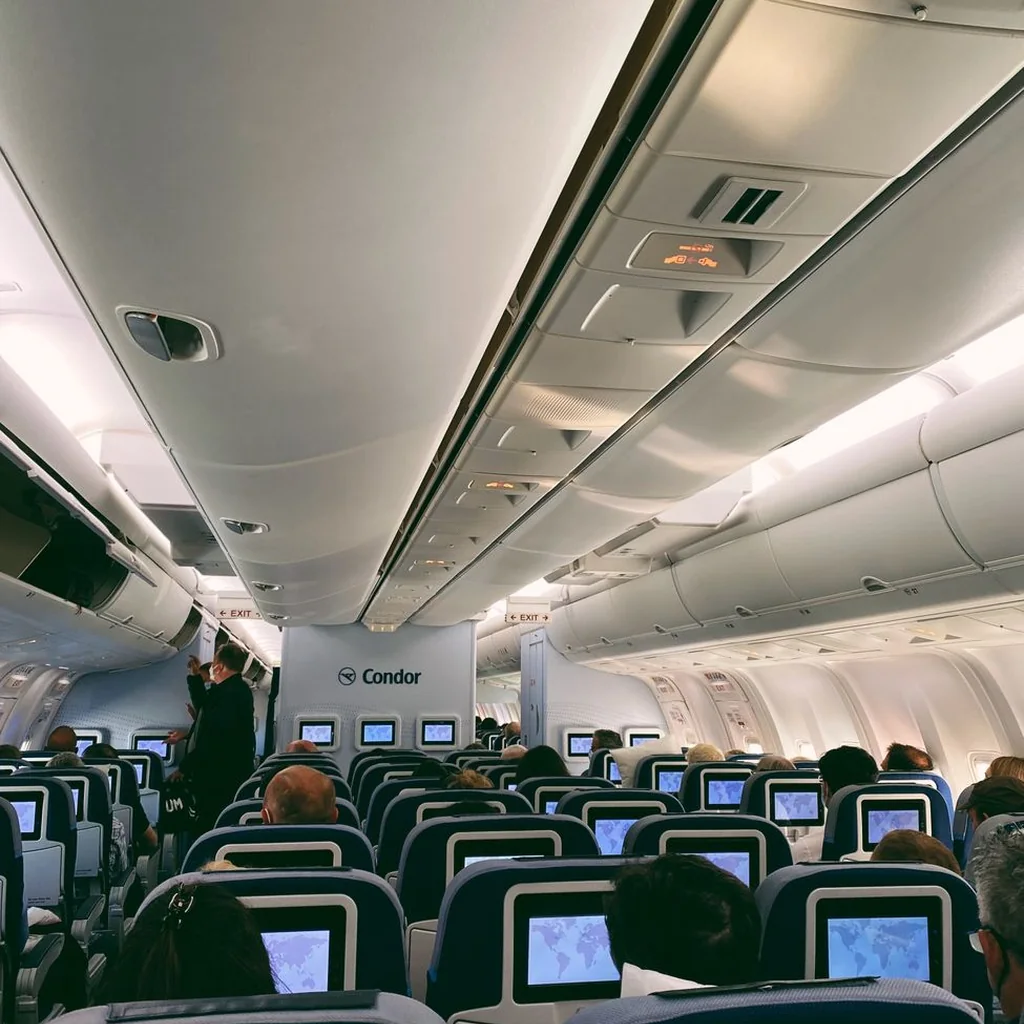
Photo: Annie Starichenko on Pexels
Une place en première
A First-Class Seat
At the station, Juliette finds that her ticket and app assign her a first-class seat, though she paid for second class.
Three short parts. Read each part in French first; tap “Show English” under a paragraph when you need the translation.


Part 1
Sur le quai, Juliette consulte son billet pour la troisième fois. Voiture 1, place 12 : les chiffres ne changent pas, et le petit « 1re » affiché à côté non plus. Au moment de payer, elle avait pourtant choisi le tarif le moins cher, celui qui lui avait valu un départ à l’aube et une correspondance de douze minutes, pas une de plus.
Show EnglishHide English
On the platform, Juliette checks her ticket for the third time. Carriage 1, seat 12: the numbers have not changed, nor has the little “1st” printed beside them. When she paid, though, she had chosen the cheapest fare, the one that had earned her a dawn departure and a twelve-minute connection, no more.
Elle monte quand même. À l’intérieur, les sièges sont larges, les dossiers impeccables, et personne ne semble avoir jugé bon d’y semer les miettes de son petit-déjeuner. Juliette pose son sac sur la place 12, puis le retire aussitôt : elle a l’impression de réserver une table dans un restaurant où elle n’aurait pas les moyens de dîner.
Show EnglishHide English
She gets on anyway. Inside, the seats are wide, the backs spotless, and nobody seems to have thought it appropriate to scatter crumbs from their breakfast over them. Juliette puts her bag on seat 12, then immediately takes it off again: she feels as though she is reserving a table at a restaurant where she could not afford to eat.
Elle compare le billet avec le reçu dans ses courriels. Le montant correspond bien à ce qu’elle a payé ; en revanche, le reçu indique une place en seconde. Elle actualise l’application, qui persiste à l’envoyer en première, comme si la question était réglée depuis longtemps.
Show EnglishHide English
She compares the ticket with the receipt in her emails. The amount matches what she paid; the receipt, however, says second class. She refreshes the app, which continues to send her to first class, as if the matter had been settled long ago.
« Tant pis, je demanderai au contrôleur », se dit-elle en s’installant. Le fauteuil s’incline juste assez pour qu’elle prenne goût à cette erreur ; elle le redresse un peu, par principe.
Show EnglishHide English
“Never mind, I’ll ask the conductor,” she tells herself as she sits down. The seat reclines just enough for her to start enjoying this mistake; she straightens it a little, on principle.
Au départ du train, elle a déjà sorti son café et son livre. Elle se promet de signaler le problème dès que quelqu’un passera, mais une annonce couvre le bruit des pas dans le couloir. Quand elle relève la tête, il n’y a plus personne.
Show EnglishHide English
By the time the train leaves, she has already taken out her coffee and her book. She promises herself she will report the problem as soon as someone comes by, but an announcement drowns out the sound of footsteps in the corridor. When she looks up, no one is there.
Puis un homme s’arrête devant elle, son téléphone à la main.
Show EnglishHide English
Then a man stops in front of her, phone in hand.
— Pardon, je crois que vous êtes à ma place.
Show EnglishHide English
“Excuse me, I think you’re in my seat.”
Part 2Le billet de trop(One Ticket Too Many)
Juliette referme son livre sur un doigt et se lève si vite qu’elle manque de renverser son café. L’homme lui montre son écran : voiture 1, place 12. Il a l’air aussi embarrassé qu’elle, ce qui ne l’aide pas beaucoup.
Show EnglishHide English
Juliette closes her book on one finger and gets up so quickly she nearly knocks over her coffee. The man shows her his screen: carriage 1, seat 12. He looks just as embarrassed as she is, which does not help much.
— J’ai la même chose, dit-elle. Enfin, je crois.
Show EnglishHide English
“I have the same thing,” she says. “Well, I think I do.”
Elle lui tend son téléphone. Il plisse les yeux, compare les deux billets, puis laisse échapper un petit rire en se passant la main sur le front.
Show EnglishHide English
She holds out her phone. He narrows his eyes, compares the two tickets, then lets out a little laugh and runs a hand over his forehead.
— Ah, c’est moi qui me suis planté. Mon billet est pour demain.
Show EnglishHide English
“Oh, I’m the one who messed up. My ticket is for tomorrow.”
— Vous êtes sûr ? demande Juliette, qui aurait préféré que ce soit moins clair.
Show EnglishHide English
“Are you sure?” Juliette asks, wishing it were less clear-cut.
— Malheureusement, oui. J’étais persuadé de rentrer aujourd’hui.
Show EnglishHide English
“Unfortunately, yes. I was convinced I was going home today.”
Il s’éloigne vers une agente qui vient d’entrer dans la voiture. Juliette entend quelques bribes de leur échange, puis l’agente lui indique une place libre au fond. L’homme y dépose son manteau avec un signe de remerciement avant de s’asseoir.
Show EnglishHide English
He walks over to a staff member who has just entered the carriage. Juliette catches a few snatches of their conversation, then the staff member points out an empty seat at the back. The man puts his coat there with a grateful nod before sitting down.
Juliette se rassoit et boit une gorgée de café tiède. L’incident lui a laissé les joues chaudes ; maintenant que sa place n’est plus réclamée, elle pourrait très bien se taire. Après tout, c’est l’application qui la lui a attribuée, et elle n’a rien touché aux détails de sa réservation.
Show EnglishHide English
Juliette sits back down and takes a sip of lukewarm coffee. The incident has left her cheeks warm; now that no one is claiming her seat, she could very well keep quiet. After all, the app assigned it to her, and she did not change anything in her booking details.
L’agente remonte l’allée en demandant les billets. Juliette ouvre le sien, puis, sans trop savoir pourquoi, affiche aussi le reçu qui indique la seconde. Quand l’agente arrive à sa hauteur, elle lui montre les deux documents à tour de rôle.
Show EnglishHide English
The staff member walks back up the aisle, asking to see tickets. Juliette opens hers, then, without quite knowing why, also brings up the receipt showing second class. When the staff member reaches her, she shows her the two documents in turn.
— Vous avez changé de classe après votre achat ?
Show EnglishHide English
“Did you change class after buying your ticket?”
Part 3Le billet de première(The First-Class Ticket)
— Non, dit Juliette. J’ai payé une place en seconde. J’ai vu que le billet indiquait la première en arrivant sur le quai, et je me suis installée quand même.
Show EnglishHide English
“No,” says Juliette. “I paid for a second-class seat. I saw that the ticket said first class when I got to the platform, and I sat down anyway.”
L’agente regarde le reçu, puis scanne le billet. Juliette s’attend à devoir ramasser ses affaires sous les yeux de toute la voiture ; elle repère déjà où elle a glissé son écharpe. Au fond, l’homme qui s’est trompé de jour fait semblant de chercher quelque chose dans son sac.
Show EnglishHide English
The staff member looks at the receipt, then scans the ticket. Juliette expects to have to gather her things in front of the whole carriage; she already remembers where she tucked her scarf. At the back, the man who got the day wrong pretends to search for something in his bag.
— Il y a bien eu un souci, dit l’agente. Votre réservation a été modifiée, mais je ne vois pas de supplément.
Show EnglishHide English
“There was a problem,” the staff member says. “Your booking was changed, but I can’t see any extra charge.”
Juliette hoche la tête et referme l’application.
Show EnglishHide English
Juliette nods and closes the app.
— Si vous préférez que je change de place, je peux y aller.
Show EnglishHide English
“If you’d rather I move, I can.”
— Attendez, je regarde ce qu’il reste.
Show EnglishHide English
“Wait, let me see what’s still available.”
L’agente consulte son appareil, descend jusqu’à la porte, puis revient. Juliette a déjà remis son livre dans son sac et refermé son gobelet ; il ne lui reste qu’à récupérer son écharpe.
Show EnglishHide English
The staff member checks her device, walks down to the door, then comes back. Juliette has already put her book back in her bag and closed her cup; all she has left to do is retrieve her scarf.
— La place est libre jusqu’au terminus. Puisque vous êtes là, restez. Je vais simplement signaler l’erreur.
Show EnglishHide English
“The seat is free until the last stop. Since you’re here, stay put. I’ll just report the error.”
— Même sans supplément ?
Show EnglishHide English
“Even without an extra charge?”
— Oui. Cette fois, on va faire comme ça.
Show EnglishHide English
“Yes. This time, we’ll leave it at that.”
L’agente poursuit son contrôle. Juliette ressort son livre, mais met un moment à retrouver sa page ; son marque-page est tombé au fond du sac. En relevant la tête, elle croise le regard de l’homme, qui lui adresse un sourire discret.
Show EnglishHide English
The staff member continues checking tickets. Juliette takes out her book again, but it takes her a while to find her page; her bookmark has fallen to the bottom of her bag. When she looks up, she catches the man’s eye, and he gives her a discreet smile.
À la gare suivante, il passe devant elle en direction de la voiture-bar.
Show EnglishHide English
At the next station, he passes her on his way to the café car.
— Je vous rapporte un café ? Le vôtre a l’air d’avoir vécu.
Show EnglishHide English
“Shall I bring you a coffee? Yours looks as if it’s been through a lot.”
Juliette soulève son gobelet et le soupèse. Il ne reste qu’un fond, froid depuis un bon moment.
Show EnglishHide English
Juliette lifts her cup and weighs it in her hand. There is only a little left, and it has been cold for quite some time.
— Volontiers. C’est gentil, je vous le rembourserai.
Show EnglishHide English
“That would be lovely. That’s kind of you; I’ll pay you back.”
Practise this French story
Vocabulary in context
Important words and phrases
correspondre à
verb phraseto match; to correspond to
Le montant correspond bien à ce que j’ai payé.
The amount matches what I paid.
en revanche
adverbial phraseon the other hand
Le tarif est moins cher ; en revanche, il impose un départ très tôt.
The fare is cheaper; on the other hand, it requires an early departure.
prendre goût à
verb phraseto start enjoying; to develop a taste for
J’ai fini par prendre goût à ces trajets matinaux.
I eventually started to enjoy these morning trips.
par principe
adverbial phraseas a matter of principle
Par principe, elle refuse de garder un avantage qu’elle n’a pas mérité.
As a matter of principle, she refuses to keep an advantage she hasn't earned.
faire semblant de
verb phraseto pretend to
Il a fait semblant de lire pour éviter la conversation.
He pretended to read in order to avoid the conversation.
à tour de rôle
adverbial phraseone after another; in turn
Les passagers ont présenté leurs billets à tour de rôle.
The passengers showed their tickets one after another.
laisser échapper
verb phraseto let slip; to let out
Elle a laissé échapper un soupir de soulagement.
She let out a sigh of relief.
jusqu’au terminus
prepositional phraseall the way to the final stop
Le train va jusqu’au terminus sans changement.
The train goes all the way to the final stop without changing.
a l’air d’avoir vécu
expressionlooks worn out; looks well used
Ce sac a l’air d’avoir vécu, mais il est encore solide.
This bag looks well used, but it is still sturdy.
Check your understanding
Comprehension questions
Choose an answer, check it, then move to the next question.
Question 1 of 3
- Question 1: current not answered
- Question 2: not answered
- Question 3: not answered
Notice the language
Language notes
prendre goût à + nom / infinitif
This expression means to start enjoying or appreciating something after some time or hesitation. It is reusable with a noun or an infinitive: 'J’ai fini par prendre goût aux trajets matinaux.' In the story, it shows Juliette beginning to enjoy the mistaken upgrade.
J’ai fini par prendre goût aux trajets matinaux.
I eventually started to enjoy the morning trips.
More French stories to read next
Le cours de danse
The Dance Class
At the back of a dance class, Mehdi tries to follow the music, hoping no one will notice that he is new to the class.
La dernière graine de basilic
The Last Basil Seed
On Sunday, Sarah plants the last basil seed from an almost empty packet in a pot on her kitchen windowsill.

L’écharpe et les mailles du silence
The Scarf and the Stitches of Silence
Céline’s grandmother has set out wool and knitting needles at her table to teach her granddaughter to knit, but her old needles keep clashing.
La remise en jeu
Back in Play
At the gym, veteran Philippe hears that rookie Théo will start in his place on Saturday and is asked to teach him to defend inbound plays.