
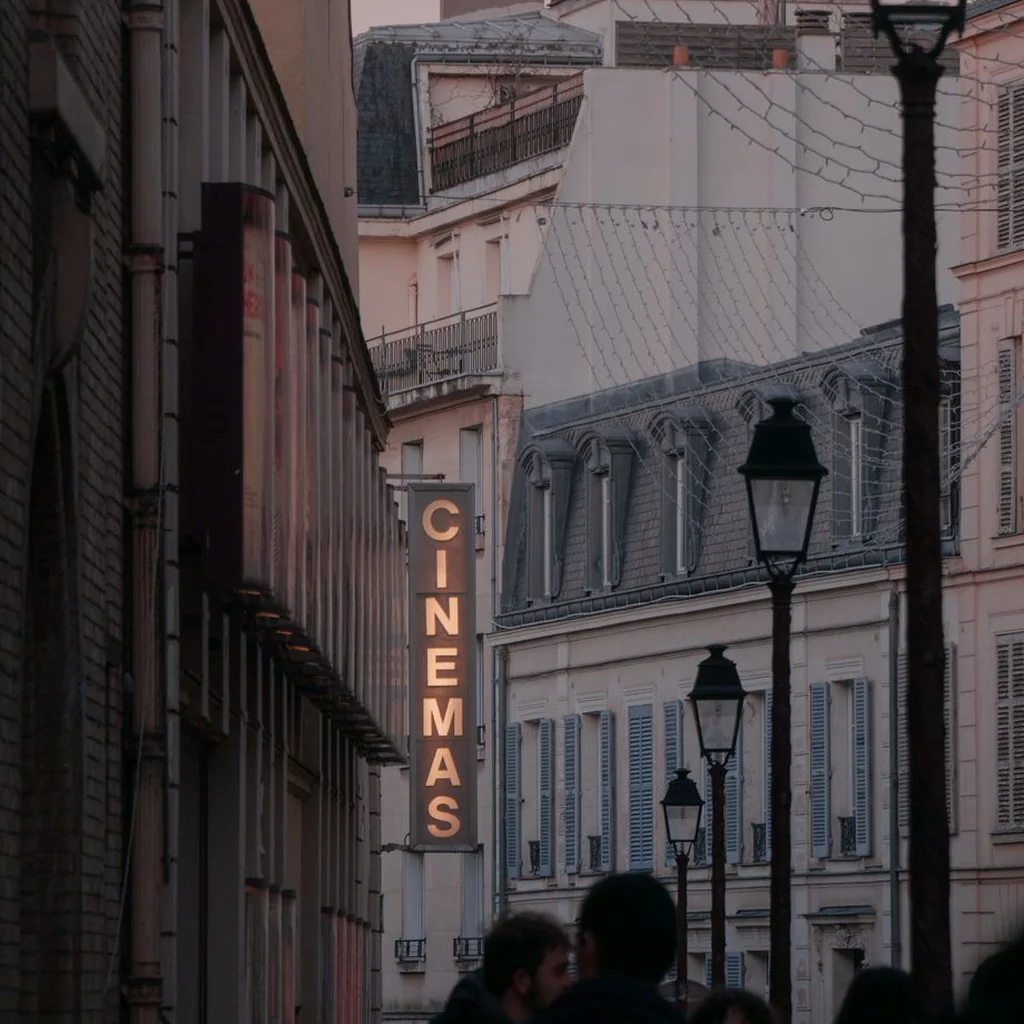
Photo: Amaury Michaux on Pexels
La función sin subtítulos
The Screening Without Subtitles
Clara’s grandfather takes her to a French comedy, but the tickets she booked are for a version without subtitles.
Three short parts. Read each part in Spanish first; tap “Show English” under a paragraph when you need the translation.


Part 1
El abuelo de Clara la llevó al cine el sábado por la tarde, tal como le había prometido. Ella se encargó de comprar las entradas por internet y eligió la película que él quería ver: una comedia francesa bastante famosa.
Show EnglishHide English
Clara’s grandfather took her to the cinema on Saturday afternoon, just as he had promised. She took care of buying the tickets online and chose the film he wanted to see: a fairly famous French comedy.
Cuando se apagaron las luces, los actores empezaron a hablar en francés. Al principio, el abuelo sonrió, convencido de que pronto aparecerían los subtítulos. Sin embargo, en la pantalla solo aparecieron unas letras pequeñas: «Versión original sin subtítulos».
Show EnglishHide English
When the lights went out, the actors began speaking French. At first, her grandfather smiled, convinced that subtitles would soon appear. Instead, the only words on the screen were: “Original version without subtitles.”
Clara se quedó inmóvil. Al hacer la reserva, había confundido esa opción con «versión doblada al español» y, además, había puesto el móvil en silencio para que nadie los molestara.
Show EnglishHide English
Clara froze. When making the booking, she had confused that option with “dubbed into Spanish” and, on top of that, had put her phone on silent so no one would disturb them.
—No pasa nada —dijo el abuelo, aunque no entendía casi nada—. Siempre quise aprender francés.
Show EnglishHide English
“It’s all right,” her grandfather said, although he understood almost nothing. “I’ve always wanted to learn French.”
Durante veinte minutos, los dos intentaron seguir la historia fijándose en los gestos de los actores. Entonces Clara vio que él miraba alternativamente la pantalla y el reloj.
Show EnglishHide English
For twenty minutes, the two of them tried to follow the story by watching the actors’ gestures. Then Clara noticed him looking back and forth between the screen and his watch.
—Podemos salir y pedir que nos cambien las entradas —susurró.
Show EnglishHide English
“We can go out and ask them to change our tickets,” she whispered.
El abuelo se inclinó hacia ella y respondió:
Show EnglishHide English
Her grandfather leaned toward her and replied:
—Sí, pero antes dime qué está pasando.
Show EnglishHide English
“Yes, but first tell me what’s going on.”
Part 2La película sin subtítulos(The Film Without Subtitles)
—Por lo que entiendo —susurró Clara—, él ha perdido el trabajo, ella quiere divorciarse y los dos fingen que todo va bien delante de sus vecinos.
Show EnglishHide English
“From what I can make out,” Clara whispered, “he’s lost his job, she wants a divorce, and they’re both pretending everything is fine in front of their neighbors.”
El abuelo frunció el ceño.
Show EnglishHide English
Her grandfather frowned.
—¿Estás segura?
Show EnglishHide English
“Are you sure?”
—No del todo. Pero acaba de esconder una maleta y ella le ha dado una bofetada. Eso suele significar algo.
Show EnglishHide English
“Not entirely. But he’s just hidden a suitcase, and she’s slapped him. That usually means something.”
Él volvió a mirar la pantalla con más atención. En la escena siguiente, los protagonistas estaban sentados en un restaurante, discutiendo mientras un camarero intentaba servirles el postre. Aunque no comprendía las palabras, el abuelo empezó a reírse.
Show EnglishHide English
He looked at the screen again, more closely. In the next scene, the main characters were sitting in a restaurant, arguing while a waiter tried to serve them dessert. Although he couldn’t understand the words, her grandfather began to laugh.
—Ese hombre no ha perdido el trabajo —dijo—. Ha hecho algo mucho peor. Mira cómo evita mirar a su mujer.
Show EnglishHide English
“That man hasn’t lost his job,” he said. “He’s done something much worse. Look at how he avoids looking at his wife.”
Clara tuvo que reconocer que su interpretación parecía más convincente que la suya. Durante unos minutos, los dos siguieron la película como si estuvieran resolviendo un rompecabezas. Cada gesto podía cambiar el sentido de la historia.
Show EnglishHide English
Clara had to admit that his interpretation seemed more convincing than hers. For a few minutes, they followed the film as if they were solving a puzzle. Every gesture could change the meaning of the story.
De pronto, el abuelo señaló la esquina de la pantalla.
Show EnglishHide English
Suddenly, her grandfather pointed to the corner of the screen.
—¿Qué significa esa palabra que acaba de aparecer?
Show EnglishHide English
“What does that word that just appeared mean?”
Clara se inclinó hacia delante. No era un subtítulo, sino un aviso del cine: la película iba a continuar en otra sala.
Show EnglishHide English
Clara leaned forward. It wasn’t a subtitle, but a notice from the cinema: the film was going to continue in another theater.
Part 3La película perdida y encontrada(The Film Lost and Found)
Clara se levantó y siguió las indicaciones que aparecían en la pantalla. El abuelo caminaba detrás de ella, todavía concentrado en la historia.
Show EnglishHide English
Clara got up and followed the directions appearing on the screen. Her grandfather walked behind her, still absorbed in the story.
—¿Y si nos perdemos el final? —preguntó.
Show EnglishHide English
“What if we miss the ending?” he asked.
—No creo. La película debe de estar empezando en la otra sala.
Show EnglishHide English
“I don’t think we will. The film must be starting in the other theater.”
Un empleado comprobó sus entradas y les señaló unas butacas libres. Cuando se sentaron, la escena continuaba exactamente donde la habían dejado: el hombre y la mujer discutían en el restaurante, mientras el camarero sostenía una tarta.
Show EnglishHide English
An employee checked their tickets and pointed out some empty seats. When they sat down, the scene continued exactly where they had left off: the man and woman were arguing in the restaurant while the waiter held a cake.
—Bueno —dijo el abuelo—, al menos no hemos perdido lo importante.
Show EnglishHide English
“Well,” her grandfather said, “at least we haven’t missed the important part.”
Clara sonrió, aunque seguía sintiéndose culpable. Entonces, en la pantalla, el protagonista se levantó y confesó algo. Por sus gestos, parecía admitir que había vendido el coche familiar para pagar una deuda.
Show EnglishHide English
Clara smiled, though she still felt guilty. Then, on the screen, the main character stood up and confessed something. Judging by his gestures, he seemed to be admitting that he had sold the family car to pay off a debt.
—¿Ves? —susurró el abuelo—. Yo tenía razón. Era algo peor que perder el trabajo.
Show EnglishHide English
“See?” her grandfather whispered. “I was right. It was something worse than losing his job.”
Clara no entendió todas las escenas, pero juntos reconstruyeron el final y se rieron más de una vez. Al salir, el abuelo le dio las gracias.
Show EnglishHide English
Clara didn’t understand every scene, but together they pieced the ending together and laughed more than once. As they left, her grandfather thanked her.
—La próxima vez eliges tú la película —dijo—, pero yo comprobaré el idioma.
Show EnglishHide English
“Next time, you choose the film,” he said, “but I’ll check the language.”
Practise this Spanish story
Vocabulary in context
Important words and phrases
tal como le había prometido
phrasejust as he had promised her
Fue al concierto tal como le había prometido a su amigo.
He went to the concert just as he had promised his friend.
se encargó de comprar las entradas
phraseshe took care of buying the tickets
Ella se encargó de reservar el hotel y de comprar las entradas.
She took care of booking the hotel and buying the tickets.
versión original sin subtítulos
phraseoriginal version without subtitles
Prefiero ver la película en versión original sin subtítulos.
I prefer to watch the film in the original version without subtitles.
al hacer la reserva
phrasewhen making the reservation
Al hacer la reserva, indicó que quería dos asientos juntos.
When making the reservation, she said she wanted two seats together.
por lo que entiendo
phraseas far as I understand
Por lo que entiendo, el problema empezó antes de la reunión.
As far as I understand, the problem started before the meeting.
frunció el ceño
phrasehe frowned
Frunció el ceño al leer el mensaje.
He frowned when he read the message.
parecía más convincente
phraseseemed more convincing
Su explicación parecía más convincente que la mía.
His explanation seemed more convincing than mine.
suele significar algo
phraseusually means something
Ese silencio suele significar algo importante.
That silence usually means something important.
al menos no hemos perdido lo importante
phraseat least we haven't missed the important part
Llegamos tarde, pero al menos no hemos perdido lo importante.
We arrived late, but at least we haven't missed the important part.
reconstruyeron el final
phrasethey pieced together the ending
Con las pistas que tenía, pudo reconstruir el final de la historia.
With the clues he had, he was able to piece together the ending of the story.
Check your understanding
Comprehension questions
Choose an answer, check it, then move to the next question.
Question 1 of 3
- Question 1: current not answered
- Question 2: not answered
- Question 3: not answered
Notice the language
Language notes
Por lo que entiendo
This frame introduces an inference based on partial evidence: it means 'from what I understand' or 'as far as I can tell.' It is especially useful in conversation when you are explaining a conclusion without complete certainty. You can reuse the pattern with other verbs, such as 'por lo que veo' or 'por lo que sé'. Example: 'Por lo que entiendo, la película ya ha empezado en la otra sala.'
Por lo que entiendo, la película ya ha empezado en la otra sala.
From what I understand, the film has already started in the other room.
More Spanish stories to read next
La oferta equivocada
The Wrong Offer
At the checkout, Daniel discovers that the buy-one-get-one-free deal applies to a different brand and size of coffee.
La decisión en el banquillo
The Decision on the Bench
A father coaching his daughter’s team weighs whether to play her or a stronger teammate in a tense final.

La última vuelta
The Final Lap
After months of trying to beat his father at a racing game, Leo must decide how to respond when he finally wins.
El aeropuerto y los pasaportes
The Airport and the Passports
At the airport, Clara and Marcos realize they have split up with both passports and both tickets in different terminals.