
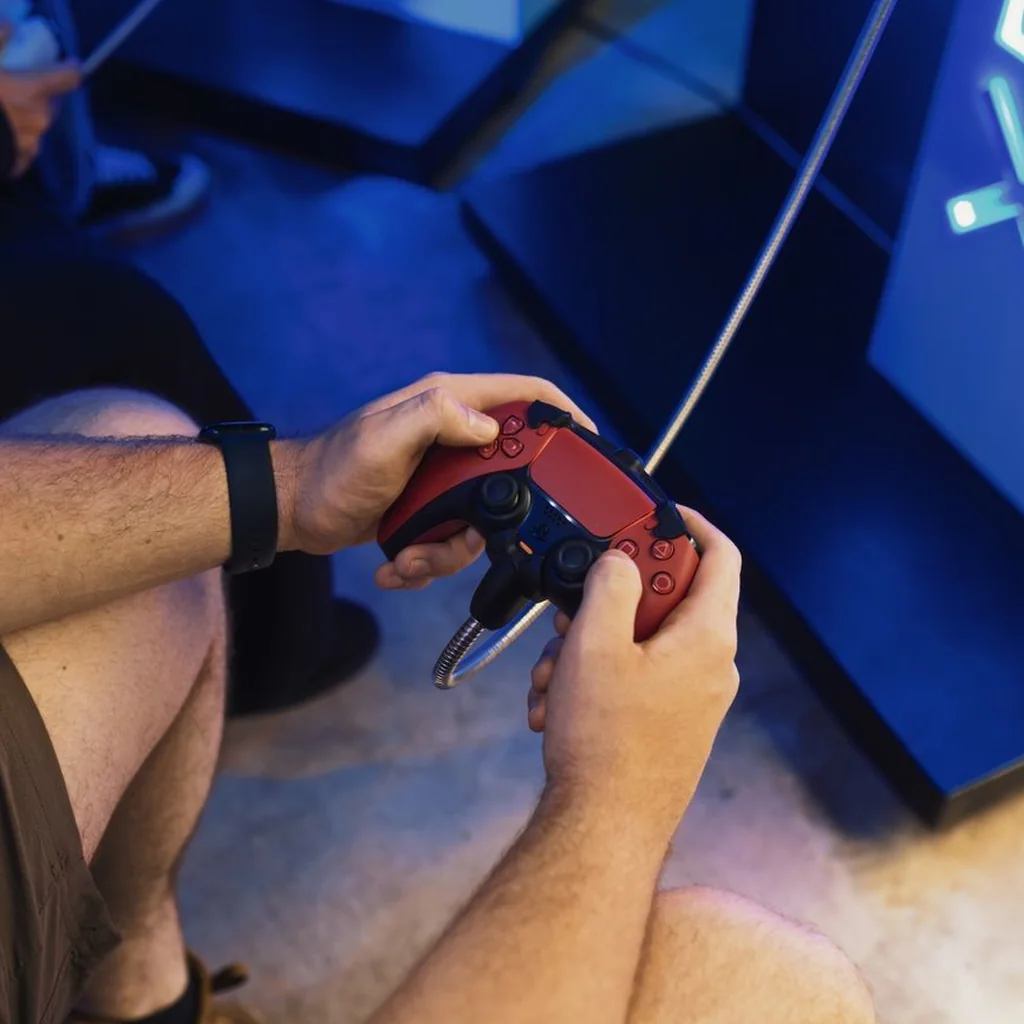
Photo: Matheus Bertelli on Pexels
La última vuelta
The Final Lap
After months of trying to beat his father at a racing game, Leo must decide how to respond when he finally wins.
Three short parts. Read each part in Spanish first; tap “Show English” under a paragraph when you need the translation.


Part 1
Leo llevaba meses intentando ganarle a su padre en el mismo videojuego de carreras. Su padre conocía cada curva de memoria y siempre encontraba la manera de adelantarlo en el último momento.
Show EnglishHide English
For months, Leo had been trying to beat his father at the same racing video game. His father knew every turn by heart and always found a way to overtake him at the last moment.
Aquella tarde, sin embargo, Leo llegó a la última vuelta en primera posición. Tenía las manos sudadas y apenas se atrevía a respirar. Cuando cruzó la meta, la pantalla mostró su nombre en lo más alto de la clasificación.
Show EnglishHide English
That afternoon, however, Leo reached the final lap in first place. His hands were sweaty, and he barely dared to breathe. When he crossed the finish line, the screen showed his name at the top of the leaderboard.
—¿He ganado? —preguntó, aunque lo había visto perfectamente.
Show EnglishHide English
“Did I win?” he asked, even though he had seen it perfectly well.
Su padre se quitó los auriculares y miró el resultado con una sonrisa de sorpresa.
Show EnglishHide English
His father took off his headset and looked at the result with a surprised smile.
—Parece que sí. Enhorabuena.
Show EnglishHide English
“Looks like it. Congratulations.”
Leo sintió una alegría enorme, pero también una duda incómoda. Podía celebrar la victoria, presumir un poco y pedir la revancha, o decir que había tenido suerte y quitarle importancia para que su padre no se sintiera mal.
Show EnglishHide English
Leo felt enormous joy, but also an uncomfortable doubt. He could celebrate the victory, boast a little, and ask for a rematch—or say he had been lucky and play it down so his father wouldn’t feel bad.
—Bueno, es que justo hoy… —empezó.
Show EnglishHide English
“Well, it’s just that today…” he began.
Su padre levantó una ceja, divertido.
Show EnglishHide English
His father raised an eyebrow, amused.
—¿Justo hoy, qué?
Show EnglishHide English
“Today, what?”
Leo miró la pantalla y luego a su padre. Todavía tenía el mando entre las manos y debía decidir si aceptar la victoria o esconderse detrás de una excusa.
Show EnglishHide English
Leo looked at the screen and then at his father. He still had the controller in his hands and had to decide whether to accept the victory or hide behind an excuse.
Part 2La primera victoria(The First Victory)
—Justo hoy he practicado un montón —admitió Leo—. Pero también he tenido suerte.
Show EnglishHide English
“It’s just that today I practiced a lot,” Leo admitted. “But I was lucky, too.”
Su padre soltó una risa breve y negó con la cabeza.
Show EnglishHide English
His father gave a brief laugh and shook his head.
—La suerte puede ayudarte en una curva, pero no puede conducir toda la carrera por ti. Has frenado en el momento exacto y no te has puesto nervioso cuando te alcancé.
Show EnglishHide English
“Luck can help you on one turn, but it can’t drive the whole race for you. You braked at exactly the right moment, and you didn’t get nervous when I caught up with you.”
Leo sonrió, aunque todavía le costaba aceptar el elogio. Por una vez, no quería esconderse detrás de una excusa.
Show EnglishHide English
Leo smiled, though it was still hard for him to accept the praise. For once, he didn’t want to hide behind an excuse.
—Entonces… ¿puedo celebrarlo?
Show EnglishHide English
“So… can I celebrate?”
—Por supuesto. Pero sin convertirte en un presumido.
Show EnglishHide English
“Of course. Just don’t turn into a show-off.”
Leo levantó los brazos como si acabara de ganar un campeonato. Su padre aplaudió despacio, exagerando el gesto, y los dos se echaron a reír.
Show EnglishHide English
Leo raised his arms as if he had just won a championship. His father applauded slowly, exaggerating the gesture, and they both burst out laughing.
Después, su padre volvió a coger el mando.
Show EnglishHide English
Afterward, his father picked up the controller again.
—Ahora podemos dejarlo aquí y conservar tu primera victoria —dijo— o jugar la revancha.
Show EnglishHide English
“Now we can leave it at that and preserve your first victory,” he said, “or play a rematch.”
Leo miró el circuito que acababa de ganar. Una parte de él quería terminar la tarde en lo más alto; otra necesitaba comprobar que aquello no había sido un accidente.
Show EnglishHide English
Leo looked at the track he had just won on. Part of him wanted to end the afternoon on a high note; another part needed to make sure it hadn’t been a fluke.
—¿Y si elegimos una pista distinta? —propuso.
Show EnglishHide English
“What if we chose a different track?” he suggested.
Su padre sonrió.
Show EnglishHide English
His father smiled.
—Eso ya suena a un verdadero desafío.
Show EnglishHide English
“Now that sounds like a real challenge.”
Part 3La revancha de Leo(Leo’s Rematch)
Eligieron una pista con muchas curvas y empezaron la revancha. Esta vez, Leo no salió tan bien y durante media carrera fue segundo. Su padre iba delante, tranquilo, como si quisiera demostrarle que todavía conocía algunos trucos.
Show EnglishHide English
They chose a track with lots of turns and began the rematch. This time, Leo didn’t get off to such a good start, and he was in second place for half the race. His father was ahead, calm, as if he wanted to show him that he still knew a few tricks.
Pero Leo no se rindió. Recordó lo que había hecho en la carrera anterior, esperó el momento adecuado y lo adelantó antes de la última curva. Cruzó la meta unos segundos por delante de su padre.
Show EnglishHide English
But Leo didn’t give up. He remembered what he had done in the previous race, waited for the right moment, and overtook his father before the final turn. He crossed the finish line a few seconds ahead of him.
—Vaya —dijo este—. Parece que la suerte se ha esforzado mucho hoy.
Show EnglishHide English
“Well,” his father said, “it seems luck has worked very hard today.”
Leo se echó a reír. Ya no necesitaba fingir que la primera victoria había sido cuestión de suerte.
Show EnglishHide English
Leo burst out laughing. He no longer needed to pretend that his first victory had been a matter of luck.
—Entonces puedo decir que soy mejor que tú, ¿no?
Show EnglishHide English
“So I can say I’m better than you, right?”
—Durante estas dos carreras, sí —respondió su padre—. Pero no te acostumbres demasiado.
Show EnglishHide English
“For these two races, yes,” his father replied. “But don’t get too used to it.”
Dejaron el mando sobre la mesa y fueron a buscar algo para merendar. Leo seguía sonriendo, orgulloso, pero no presumía. Había ganado porque había practicado, había mantenido la calma y había aprendido de sus errores. Por fin podía celebrar su primera victoria sin disculparse por ella.
Show EnglishHide English
They put the controller on the table and went to find something to eat. Leo was still smiling, proud, but not boasting. He had won because he had practiced, stayed calm, and learned from his mistakes. At last, he could celebrate his first victory without apologizing for it.
Practise this Spanish story
Vocabulary in context
Important words and phrases
adelantarlo en el último momento
verb phraseto overtake him at the last moment
El piloto lo adelantó en el último momento y ganó la carrera.
The driver overtook him at the last moment and won the race.
en lo más alto de la clasificación
phraseat the top of the leaderboard
Su nombre quedó en lo más alto de la clasificación.
His name ended up at the top of the leaderboard.
quitarle importancia
verb phraseto downplay it
Intentó quitarle importancia al error para no preocupar al equipo.
He tried to downplay the mistake so as not to worry the team.
levantó una ceja
verb phraseraised an eyebrow
Ella levantó una ceja al oír su excusa.
She raised an eyebrow when she heard his excuse.
presumido
adjectiveshow-off; smug
No te pongas presumido solo por una victoria.
Don't get smug just because of one win.
revancha
nounrematch
Pidió revancha después de perder la partida.
He asked for a rematch after losing the game.
verdadero desafío
noun phrasereal challenge
Resolver el problema fue un verdadero desafío.
Solving the problem was a real challenge.
no se rindió
verb phrasedid not give up
No se rindió aunque iba por detrás desde el principio.
He did not give up even though he had been behind from the start.
mantener la calma
verb phraseto stay calm
Mantener la calma le permitió tomar la mejor decisión.
Staying calm allowed him to make the best decision.
por fin
adverbfinally
Por fin pudo celebrar sin sentirse culpable.
Finally, he could celebrate without feeling guilty.
Check your understanding
Comprehension questions
Choose an answer, check it, then move to the next question.
Question 1 of 3
- Question 1: current not answered
- Question 2: not answered
- Question 3: not answered
Notice the language
Language notes
no puede ... por ti
This pattern means that something may help, but it cannot do the job in your place. It is useful when you want to stress limits, responsibility, or the difference between assistance and real effort. You can reuse it with many verbs: a tool, a person, or luck may help, but it cannot replace you. Example: "Un buen plan puede orientarte, pero no puede decidir por ti."
Un buen plan puede orientarte, pero no puede decidir por ti.
A good plan can guide you, but it cannot decide for you.
More Spanish stories to read next
El aeropuerto y los pasaportes
The Airport and the Passports
At the airport, Clara and Marcos realize they have split up with both passports and both tickets in different terminals.

La foto que faltaba
The Missing Photo
At a family reunion, Mateo realizes he has taken pictures of everyone except his grandmother and sets out to include her.

La función sin subtítulos
The Screening Without Subtitles
Clara’s grandfather takes her to a French comedy, but the tickets she booked are for a version without subtitles.
La oferta equivocada
The Wrong Offer
At the checkout, Daniel discovers that the buy-one-get-one-free deal applies to a different brand and size of coffee.