
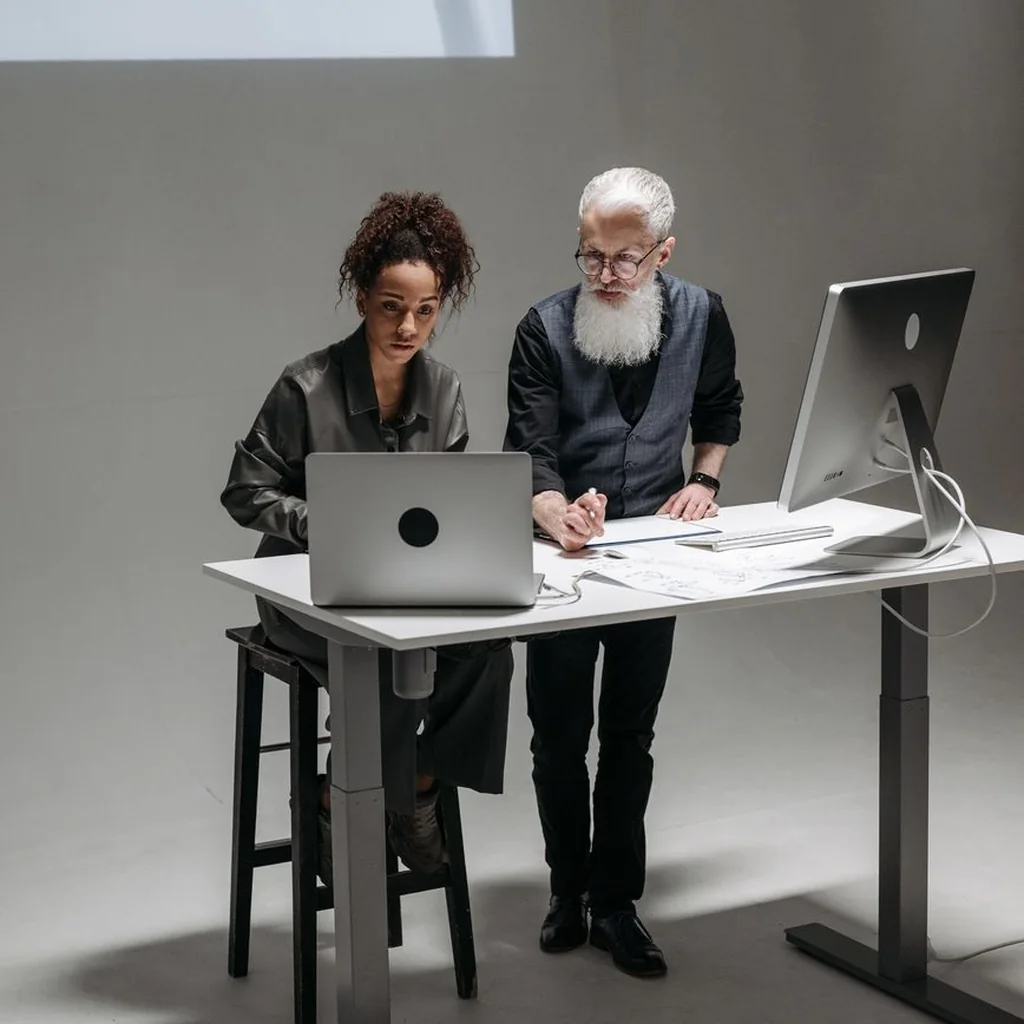
Photo: Pavel Danilyuk on Pexels
El escritorio de pie
The Standing Desk
Laura tries a standing desk for the first time and finds it much harder than she expected.
Three short parts. Read each part in Spanish first; tap “Show English” under a paragraph when you need the translation.


Part 1
El lunes, Laura decidió probar el escritorio de pie que había comprado para trabajar desde casa. Había leído que era bueno para la espalda y pensó que se sentiría más activa durante el día.
Show EnglishHide English
On Monday, Laura decided to try the standing desk she had bought for working from home. She had read that it was good for your back and thought she would feel more active during the day.
A las ocho de la mañana, colocó el ordenador a la altura adecuada, preparó un café y empezó a contestar correos. Al principio estaba contenta. Incluso caminaba un poco mientras hablaba por teléfono.
Show EnglishHide English
At eight in the morning, she set the computer at the right height, made a coffee, and started answering emails. At first, she was happy. She even walked around a little while talking on the phone.
Pero a las diez ya no podía más. Le dolían los pies, las piernas y hasta la espalda. Apoyó los codos en el escritorio y miró su silla con tristeza. «¿Cómo puede ser tan difícil estar de pie?», se preguntó.
Show EnglishHide English
But by ten, she couldn’t take it anymore. Her feet, legs, and even her back hurt. She rested her elbows on the desk and looked sadly at her chair. “How can standing be so difficult?” she wondered.
En ese momento, su compañero de trabajo la llamó para una reunión. Laura intentó sonreír y se colocó frente a la cámara, pero tuvo que cambiar el peso de una pierna a otra. Cuando terminó la llamada, volvió a mirar la silla y dudó unos segundos antes de decidir qué hacer.
Show EnglishHide English
At that moment, her coworker called her for a meeting. Laura tried to smile and positioned herself in front of the camera, but she had to shift her weight from one leg to the other. When the call ended, she looked at the chair again and hesitated for a few seconds before deciding what to do.
Part 2De pie y sentada(Standing and Sitting)
Laura dejó escapar un suspiro y se sentó. Durante unos segundos no hizo nada. Simplemente apoyó la espalda en el respaldo y estiró las piernas debajo del escritorio. El dolor no desapareció, pero poco a poco empezó a sentirse mejor.
Show EnglishHide English
Laura let out a sigh and sat down. For a few seconds, she did nothing. She simply leaned her back against the chair and stretched her legs under the desk. The pain did not disappear, but little by little she began to feel better.
Después de beber un poco de agua, decidió que no tenía que trabajar de pie todo el tiempo. Puso una alarma para levantarse cada media hora y bajó el escritorio para poder sentarse. La idea le pareció más razonable: estar de pie un rato y descansar otro.
Show EnglishHide English
After drinking a little water, she decided she did not have to work standing up all the time. She set an alarm to get up every half hour and lowered the desk so she could sit. The idea seemed more reasonable: stand for a while and rest for a while.
A las diez y media volvió a levantarse. Esta vez se puso unas zapatillas cómodas y colocó una pequeña alfombra bajo los pies. La diferencia fue enorme. Ya no le dolían tanto las piernas, aunque todavía las sentía cansadas.
Show EnglishHide English
At ten thirty, she stood up again. This time, she put on comfortable sneakers and placed a small mat under her feet. The difference was huge. Her legs did not hurt as much, although they still felt tired.
Entonces recibió otro mensaje de su compañero: la reunión de la tarde duraría una hora. Laura miró la silla y luego el escritorio. ¿Podría aguantar toda la reunión de pie?
Show EnglishHide English
Then she received another message from her coworker: the afternoon meeting would last an hour. Laura looked at the chair and then at the desk. Could she manage to stand for the whole meeting?
Part 3Trabajar de pie con equilibrio(Finding a Balance While Working Standing Up)
Laura pensó en la reunión de la tarde y decidió que no tenía que demostrar nada. Bajó un poco el escritorio y dejó la silla preparada a su lado. Durante los primeros veinte minutos de la reunión estuvo de pie, cambiando suavemente el peso de un pie al otro sobre la alfombra.
Show EnglishHide English
Laura thought about the afternoon meeting and decided she did not have to prove anything. She lowered the desk a little and left the chair ready beside her. For the first twenty minutes of the meeting, she stood, gently shifting her weight from one foot to the other on the mat.
Después empezó a sentir cansancio en los pies. Se sentó sin dejar de escuchar a su compañero. Al principio le dio un poco de vergüenza, pero luego recordó que nadie estaba pendiente de eso. La reunión continuó con normalidad y, cuando terminó, Laura se levantó para estirar las piernas.
Show EnglishHide English
Then her feet began to feel tired. She sat down without stopping listening to her coworker. At first, she felt a little embarrassed, but then she remembered that nobody was paying attention to it. The meeting continued as usual, and when it ended, Laura stood up to stretch her legs.
Por la tarde siguió usando el escritorio, pero cambió de posición varias veces. Trabajó sentada, caminó unos minutos y volvió a levantarse. Al final del día estaba cansada, aunque no tenía el mismo dolor que por la mañana.
Show EnglishHide English
In the afternoon, she continued using the desk, but changed positions several times. She worked sitting down, walked for a few minutes, and stood up again. At the end of the day, she was tired, although she did not have the same pain as in the morning.
Laura comprendió que el escritorio para trabajar de pie no era una solución mágica. Podía ser útil, pero solo si lo usaba con calma y escuchaba a su cuerpo. Al día siguiente, la silla seguiría siendo parte de su plan.
Show EnglishHide English
Laura understood that a standing desk was not a magic solution. It could be useful, but only if she used it calmly and listened to her body. The next day, the chair would still be part of her plan.
Practise this Spanish story
Vocabulary in context
Important words and phrases
escritorio de pie
noun phrasestanding desk
Compró un escritorio de pie para trabajar en casa.
She bought a standing desk to work at home.
estar de pie
verb phraseto stand; to be standing
Estuvo de pie durante la reunión.
He stood during the meeting.
a la altura adecuada
phraseat the right height
Colocó el ordenador a la altura adecuada.
She placed the computer at the right height.
cambiar el peso de una pierna a otra
verb phraseto shift one's weight from one leg to the other
Cuando se cansó, cambió el peso de una pierna a otra.
When she got tired, she shifted her weight from one leg to the other.
dejar escapar un suspiro
verb phraseto let out a sigh
Laura dejó escapar un suspiro.
Laura let out a sigh.
estirar las piernas
verb phraseto stretch one's legs
Después de la reunión, estiró las piernas.
After the meeting, he stretched his legs.
poner una alarma
verb phraseto set an alarm
Voy a poner una alarma para levantarme temprano.
I'm going to set an alarm to get up early.
bajar el escritorio
verb phraseto lower the desk
Bajó el escritorio para poder sentarse.
She lowered the desk so she could sit down.
dar un poco de vergüenza
idiomto feel a little embarrassed
Al principio le dio un poco de vergüenza.
At first she felt a little embarrassed.
escuchar a su cuerpo
verb phraseto listen to her body
Es importante escuchar a tu cuerpo cuando estás cansado.
It is important to listen to your body when you are tired.
solución mágica
noun phrasemagic solution
No existe una solución mágica para todo.
There is no magic solution for everything.
Check your understanding
Comprehension questions
Choose an answer, check it, then move to the next question.
Question 1 of 3
- Question 1: current not answered
- Question 2: not answered
- Question 3: not answered
Notice the language
Language notes
no tener que + infinitivo
Use no tener que + infinitive to say that something is not necessary or not an obligation. It is a useful pattern for reducing pressure or saying that a person can choose a different way. Example: No tenía que trabajar de pie todo el tiempo.
No tenía que trabajar de pie todo el tiempo.
She did not have to work standing up all the time.
More Spanish stories to read next
La cometa y el viento
The Kite and the Wind
Daniel tries to fly his new kite on a windless afternoon and keeps looking for a way to get it into the air.
Lo que no pudo decir
What She Could Not Say
Clara plans to confess her feelings to her friend Marcos, but he tells her he has met someone he likes.

Dos ramos para una primera cita
Two Bouquets for a First Date
Carlos and Laura arrive at their first date with flowers and discover they have both brought each other a gift.
La noticia del hermanito
The News About the New Baby
Lucía learns that a new baby is on the way and wonders how it will change her place in the family.