
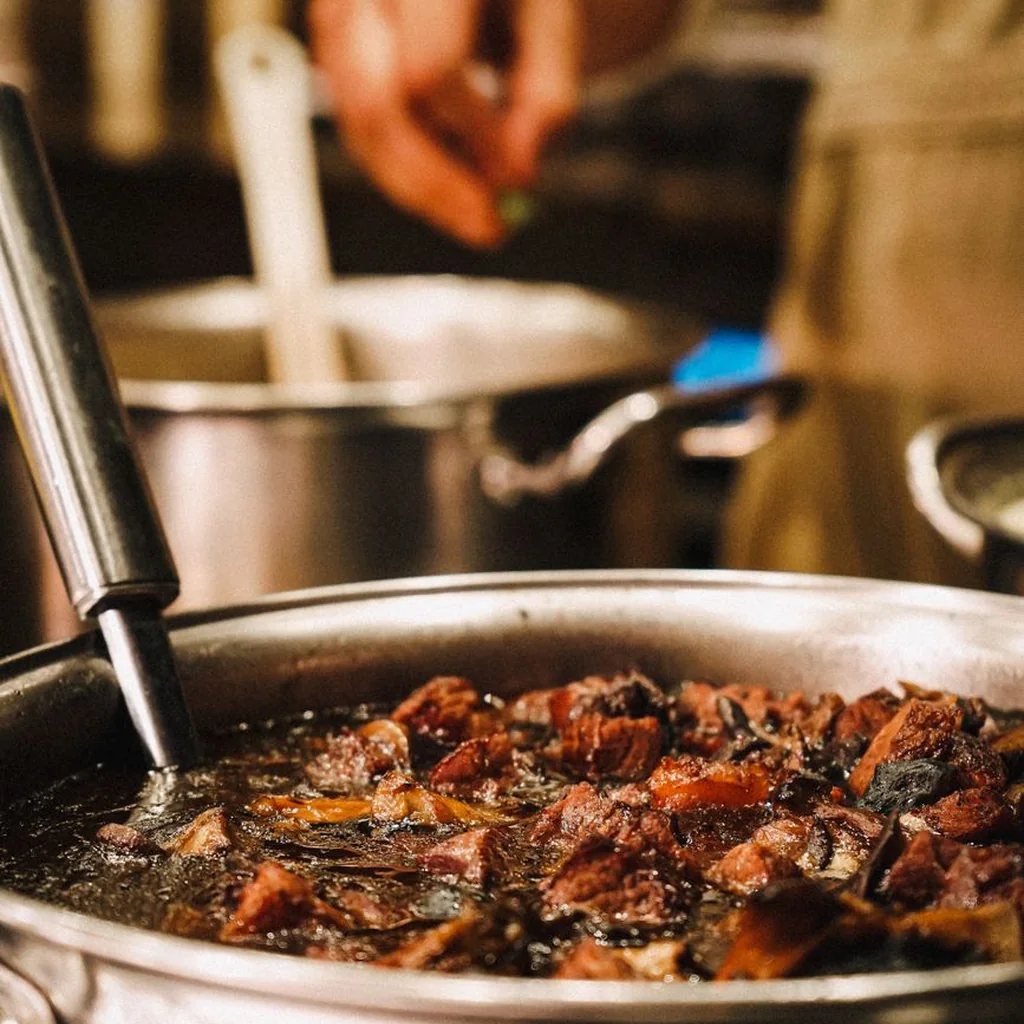
Photo: Thiago Kai on Pexels
La cena cancelada
The Canceled Dinner
Daniel spends the day cooking a meal for friends, but one by one they message to say they cannot come.
Three short parts. Read each part in Spanish first; tap “Show English” under a paragraph when you need the translation.


Part 1
Desde temprano, Daniel preparó una comida especial para sus amigos. Puso carne, patatas, zanahorias y cebollas en una olla grande, añadió algunas especias y dejó que todo se cocinara a fuego lento.
Show EnglishHide English
Early in the morning, Daniel began preparing a special meal for his friends. He put meat, potatoes, carrots, and onions in a large pot, added some spices, and left everything to cook slowly over low heat.
Al mediodía, recibió el primer mensaje: Marta no podía ir porque su hijo estaba enfermo. Daniel respondió que no pasaba nada y siguió poniendo la mesa.
Show EnglishHide English
At midday, he received the first message: Marta could not come because her son was sick. Daniel replied that it was no problem and continued setting the table.
Después, Luis escribió que tenía mucho trabajo y que iría otro día. Un poco más tarde, Ana canceló porque se encontraba mal. Daniel miró la olla y probó la salsa. Olía muy bien, pero la casa estaba completamente vacía.
Show EnglishHide English
After that, Luis wrote that he had a lot of work and would come another day. A little later, Ana canceled because she was feeling unwell. Daniel looked at the pot and tasted the sauce. It smelled very good, but the house was completely empty.
A las ocho, solo faltaba una hora para la cena. Daniel recibió otro mensaje, esta vez de Pablo: tampoco podía ir. «Lo siento mucho», decía.
Show EnglishHide English
At eight o’clock, there was only an hour left before dinner. Daniel received another message, this time from Pablo: he could not come either. “I’m really sorry,” it said.
Daniel dejó el teléfono sobre la mesa y miró toda la comida. Había preparado suficiente para ocho personas. Pensó en guardarla para el día siguiente, llamar a un vecino o salir a repartir platos por el barrio. Luego volvió a tomar el teléfono y empezó a escribir un mensaje.
Show EnglishHide English
Daniel put his phone on the table and looked at all the food. He had prepared enough for eight people. He thought about saving it for the next day, calling a neighbor, or going out to hand out plates around the neighborhood. Then he picked up his phone again and started writing a message.
Part 2La cena compartida(The Shared Dinner)
Daniel escribió en el grupo: «No os preocupéis. Tengo mucha comida. Si alguien quiere pasar a recoger un plato, será bienvenido». Después dejó el teléfono y empezó a llenar varios recipientes.
Show EnglishHide English
Daniel wrote in the group chat: “Don’t worry. I have plenty of food. If anyone wants to come by and pick up a plate, they’re welcome.” Then he put down his phone and began filling several containers.
A los pocos minutos, Marta respondió que no podía salir de casa, pero que su marido podía pasar a recoger la comida. Daniel sonrió y preparó una ración para los dos. Luego Luis dijo que todavía estaba trabajando y que quizá llegaría más tarde. Ana no contestó.
Show EnglishHide English
A few minutes later, Marta replied that she could not leave the house, but her husband could come by to pick up the food. Daniel smiled and prepared a serving for both of them. Then Luis said he was still working and might arrive later. Ana did not reply.
Daniel puso los recipientes junto a la puerta y volvió a mirar la olla. La cena seguía caliente y olía cada vez mejor. Por primera vez en toda la tarde, no se sintió completamente solo.
Show EnglishHide English
Daniel put the containers by the door and looked at the pot again. Dinner was still hot and smelled better and better. For the first time all afternoon, he did not feel completely alone.
Entonces sonó el timbre. Era el marido de Marta, con una bolsa vacía en la mano. Daniel le entregó el recipiente, pero el hombre miró la olla con una sonrisa.
Show EnglishHide English
Then the doorbell rang. It was Marta’s husband, with an empty bag in his hand. Daniel gave him the container, but the man looked at the pot with a smile.
—¿De verdad has preparado comida para ocho personas?
Show EnglishHide English
“Did you really make food for eight people?”
Daniel se rio y dijo que sí. En ese momento, recibió un nuevo mensaje de Luis: «Estoy saliendo ahora. ¿Todavía queda comida?».
Show EnglishHide English
Daniel laughed and said yes. Just then, he received a new message from Luis: “I’m leaving now. Is there still any food left?”
Part 3La comida que esperaba(The Food That Was Waiting)
Daniel respondió: «Sí, todavía queda mucha. Ven cuando puedas». Luego sirvió otro plato y puso un poco de pan en la mesa.
Show EnglishHide English
Daniel replied: “Yes, there’s still plenty. Come whenever you can.” Then he served another plate and put some bread on the table.
Media hora después, Luis llegó cansado, pero sonriendo. Dejó el abrigo en una silla y se sentó frente a Daniel. Mientras comían, le contó que había terminado el trabajo y que sentía mucho haber cancelado antes.
Show EnglishHide English
Half an hour later, Luis arrived, tired but smiling. He left his coat on a chair and sat down across from Daniel. As they ate, he told him he had finished work and was very sorry he had canceled earlier.
—No pasa nada —dijo Daniel—. La comida estaba esperando.
Show EnglishHide English
“It’s all right,” Daniel said. “The food was waiting.”
Entonces Ana escribió en el grupo. Se encontraba mejor, pero no podía salir de casa. Daniel le guardó una ración y se la llevó más tarde a la puerta de su casa. También dejó varios recipientes para Marta y guardó uno para el día siguiente.
Show EnglishHide English
Then Ana wrote in the group chat. She was feeling better, but she could not leave the house. Daniel saved a serving for her and took it to her door later. He also left several containers for Marta and saved one for the next day.
Al final, Luis se quedó un rato a tomar café. La mesa no estaba llena como Daniel había imaginado, pero ya no parecía vacía. La comida había servido para algo: unos amigos habían cenado juntos, otros habían recibido un plato y Daniel no tuvo que comer solo. Apagó el fuego satisfecho y guardó la última ración para mañana.
Show EnglishHide English
In the end, Luis stayed for a while to have coffee. The table was not full, as Daniel had imagined, but it no longer looked empty. The food had served a purpose: some friends had eaten dinner together, others had received a plate, and Daniel had not had to eat alone. He turned off the stove, feeling satisfied, and saved the last serving for tomorrow.
Practise this Spanish story
Vocabulary in context
Important words and phrases
preparó una comida especial
phraseprepared a special meal
Preparé una comida especial para celebrar su cumpleaños.
I prepared a special meal to celebrate her birthday.
a fuego lento
phraseover low heat
Cocina la salsa a fuego lento durante veinte minutos.
Cook the sauce over low heat for twenty minutes.
siguió poniendo la mesa
phrasekept setting the table
Mientras hablaban, siguió poniendo la mesa.
While they were talking, he kept setting the table.
recibir un mensaje
phraseto receive a message
Recibí un mensaje de Ana esta mañana.
I received a message from Ana this morning.
pasar a recoger un plato
phraseto stop by to pick up a plate of food
Puedes pasar a recoger un plato cuando termines de trabajar.
You can stop by to pick up a plate when you finish work.
llenar varios recipientes
phraseto fill several containers
Vamos a llenar varios recipientes con la sopa.
Let's fill several containers with the soup.
sentía mucho haber cancelado antes
phrasehe felt very sorry for having canceled earlier
Siento mucho haber cancelado antes.
I'm very sorry I canceled earlier.
se sentó frente a Daniel
phrasehe sat across from Daniel
Mi hermano se sentó frente a mí.
My brother sat across from me.
se sintió completamente solo
phrasehe felt completely alone
Después de mudarse, se sintió completamente solo.
After moving, he felt completely alone.
se quedó un rato a tomar café
phrasehe stayed a while to have coffee
Nos quedamos un rato a tomar café después de cenar.
We stayed a while to have coffee after dinner.
Check your understanding
Comprehension questions
Choose an answer, check it, then move to the next question.
Question 1 of 3
- Question 1: current not answered
- Question 2: not answered
- Question 3: not answered
Notice the language
Language notes
No pasa nada
This is a fixed, reusable expression used to reassure someone after a small problem, mistake, or cancellation. It means something like "it's okay" or "don't worry about it." You can use it in casual conversation to reduce tension: "No pasa nada, ven cuando puedas."
No pasa nada, ven cuando puedas.
It's okay, come whenever you can.
More Spanish stories to read next

El escritorio de pie
The Standing Desk
Laura tries a standing desk for the first time and finds it much harder than she expected.
La cometa y el viento
The Kite and the Wind
Daniel tries to fly his new kite on a windless afternoon and keeps looking for a way to get it into the air.

Lo que no pudo decir
What She Could Not Say
Clara plans to confess her feelings to her friend Marcos, but he tells her he has met someone he likes.

Dos ramos para una primera cita
Two Bouquets for a First Date
Carlos and Laura arrive at their first date with flowers and discover they have both brought each other a gift.