Back to Elementary (A2) stories

Unlock the Complete Learning Experience

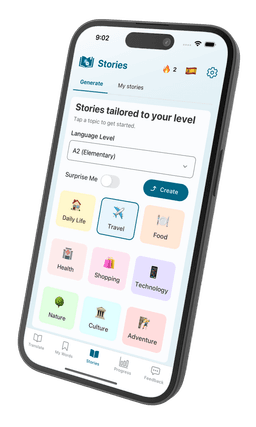
You're reading free stories on our website. Get the mobile app for audio narration, speaking practice, vocabulary saving, personalised stories, instant translations, and progress tracking.

Download on the App StoreGet it on Google Play
Audio
Translations
Progress

Un día inesperado en la panadería

Elementary (A2)
5 min read

📖 You are reading the free text version. Get our mobile app for 🎧 audio narration, 💬 speaking practice, 🔄 instant translations, and 💾 vocabulary saving to enhance your learning experience.

Sofía trabaja en una pequeña panadería en su barrio. Cada día, llega temprano para preparar el pan y los pasteles. Le gusta el aroma del pan caliente y ver a los clientes sonreír.

Un martes por la mañana, la panadería está muy llena. Sofía ve que falta harina y no tiene suficiente para hacer más pan. Está preocupada porque sabe que muchos clientes esperan comprar.

Decide llamar a la tienda de harina cercana para pedir ayuda. El dueño dice que puede enviar un poco rápidamente, pero puede tardar una hora.

Durante ese tiempo, Sofía limpia la panadería y prepara café para los clientes. Algunos empiezan a impacientarse porque no hay suficiente pan.

Finalmente, llega la harina y Sofía comienza a preparar más pan. Los clientes están contentos cuando pueden comprar y agradecen la buena atención. Al final, el día termina con sonrisas y Sofía siente que hizo lo mejor a pesar del problema.


Practise this Spanish story

Vocabulary in context

Important words and phrases

  • llega temprano

    phrase

    arrives early

    Cada día, llega temprano para preparar el pan.

    Every day, she arrives early to prepare the bread.

  • panadería

    noun

    bakery

    Sofía trabaja en una pequeña panadería.

    Sofia works in a small bakery.

  • preparar

    verb

    to prepare

    Cada día, llega temprano para preparar el pan y los pasteles.

    Every day, she arrives early to prepare the bread and pastries.

  • aroma

    noun

    smell; aroma

    Le gusta el aroma del pan caliente.

    She likes the smell of warm bread.

  • clientes

    noun

    customers

    Le gusta ver a los clientes sonreír.

    She likes seeing the customers smile.

  • harina

    noun

    flour

    Falta harina.

    There is not enough flour.

  • suficiente

    adjective

    enough

    No tiene suficiente para hacer más pan.

    She does not have enough to make more bread.

  • llamar

    verb

    to call

    Decide llamar a la tienda de harina cercana para pedir ayuda.

    She decides to call the nearby flour shop to ask for help.

  • ayuda

    noun

    help

    Decide llamar a la tienda de harina cercana para pedir ayuda.

    She decides to call the nearby flour shop to ask for help.

  • contentos

    adjective

    happy

    Los clientes están contentos.

    The customers are happy.

Check your understanding

Comprehension questions

Choose an answer, check it, then move to the next question.

Question 1 of 3

  1. Question 1: current not answered
  2. Question 2: not answered
  3. Question 3: not answered
¿Qué le falta a Sofía?What is Sofia missing?

Notice the language

Language notes

grammar

no tener suficiente para + infinitivo

Use this pattern when you want to say that something is not enough to do an action. Put the thing that is missing before 'para' and then add the infinitive. In the story, Sofía says 'no tiene suficiente para hacer más pan.' Example: 'No tengo suficiente tiempo para cocinar.'

  • No tengo suficiente tiempo para cocinar.

    I do not have enough time to cook.

Keep reading

More Elementary (A2) Stories
SpanishElementary (A2)