
Photo: Evelin Rotaru on Pexels
Η τελευταία θέση
The Last Seat
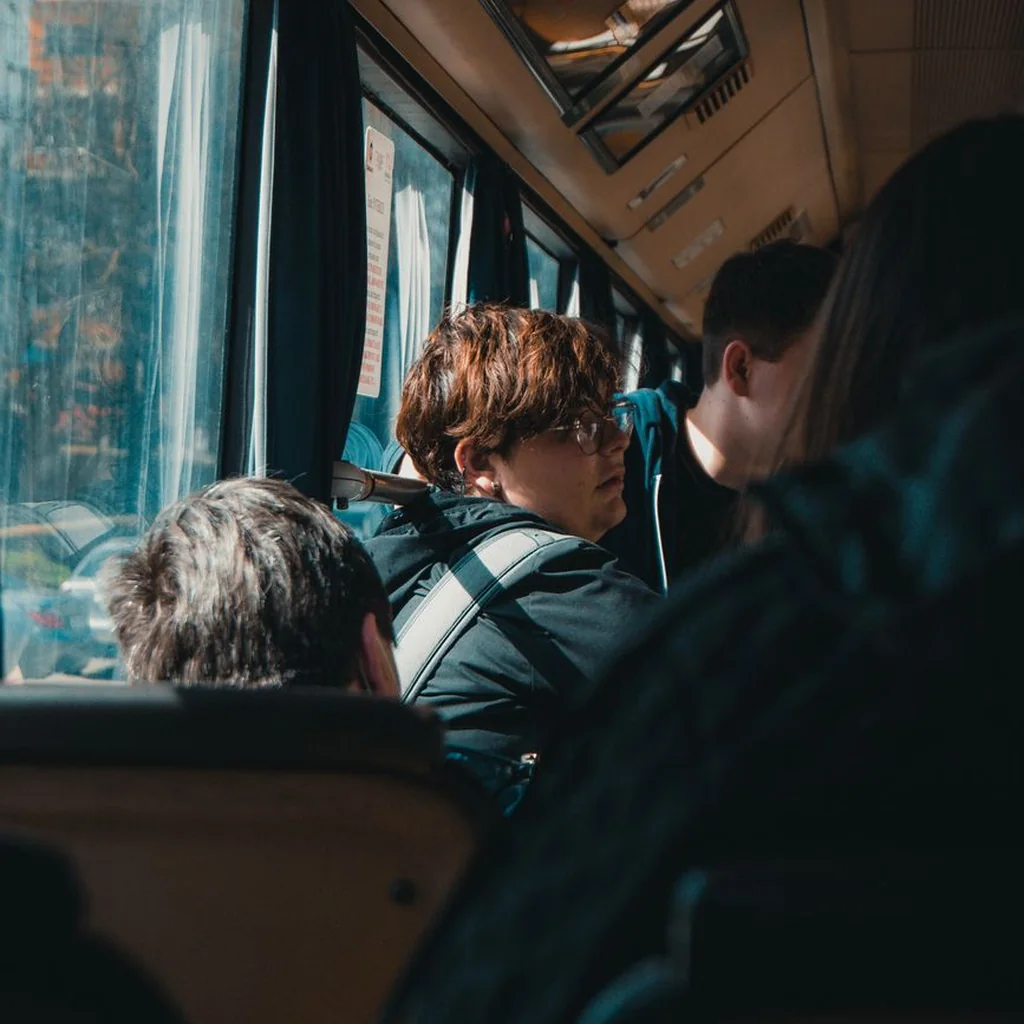
On a crowded bus, a man and a woman politely insist that the other take the last seat, carrying their disagreement all the way to the depot.
Three short parts. Read each part in Greek first; tap “Show English” under a paragraph when you need the translation.


Part 1
Στο κατάμεστο λεωφορείο, λίγο πριν τελειώσει η απογευματινή ώρα αιχμής, ένας άντρας και μια γυναίκα είδαν ταυτόχρονα την τελευταία ελεύθερη θέση. Έκαναν και οι δύο ένα βήμα μπροστά και σταμάτησαν απότομα.
Show EnglishHide English
On the crowded bus, just before the evening rush hour ended, a man and a woman spotted the last empty seat at the same time. They both took a step forward and stopped abruptly.
«Παρακαλώ, καθίστε εσείς», είπε ο άντρας, κάνοντας στην άκρη.
Show EnglishHide English
“Please, you sit down,” said the man, stepping aside.
«Όχι, εσείς. Φαίνεστε κουρασμένος», απάντησε εκείνη.
Show EnglishHide English
“No, you. You look tired,” she replied.
«Εγώ πηγαίνω μέχρι το αμαξοστάσιο. Εσείς μάλλον θα κατεβείτε νωρίτερα.»
Show EnglishHide English
“I’m going all the way to the depot. You’ll probably get off sooner.”
«Κι εγώ μέχρι το αμαξοστάσιο πηγαίνω, αλλά στέκομαι όρθια μια χαρά. Εσείς δυσκολεύεστε να κρατηθείτε.»
Show EnglishHide English
“I’m going all the way to the depot too, but I’m perfectly fine standing. You’re having trouble keeping your balance.”
Ο οδηγός τούς κοίταξε από τον καθρέφτη, ενώ οι επιβάτες γύρω τους άρχισαν να χαμογελούν. Ο άντρας ακούμπησε το χέρι του στην πλάτη του καθίσματος, αλλά η γυναίκα τον σταμάτησε ευγενικά.
Show EnglishHide English
The driver watched them in the mirror as the passengers around them began to smile. The man rested his hand on the back of the seat, but the woman gently stopped him.
«Σας παρακαλώ, μη με φέρνετε σε δύσκολη θέση. Καθίστε.»
Show EnglishHide English
“Please, don’t put me in an awkward position. Sit down.”
«Αν καθίσω, θα μείνετε εσείς όρθια μέχρι το τέρμα. Δεν το δέχομαι.»
Show EnglishHide English
“If I sit down, you’ll be left standing all the way to the end of the line. I won’t have it.”
Το λεωφορείο ξεκίνησε και οι δυο τους, στηριζόμενοι ο ένας στον άλλον για να κρατήσουν την ισορροπία τους, συνέχισαν να επιμένουν. Όταν ακούστηκε η ανακοίνωση για το αμαξοστάσιο, η γυναίκα πήρε μια ανάσα και άπλωσε το χέρι προς τη θέση, την ίδια στιγμή που ο άντρας έκανε το ίδιο.
Show EnglishHide English
The bus set off, and the two of them, leaning on each other to keep their balance, continued to insist. When the announcement for the depot came on, the woman took a breath and reached for the seat at the same moment the man did.
Part 2Η ελεύθερη θέση(The Empty Seat)
Τα χέρια τους συναντήθηκαν πάνω στην πλάτη του καθίσματος. Για μια στιγμή κοιτάχτηκαν αμήχανα και ύστερα τραβήχτηκαν και οι δύο.
Show EnglishHide English
Their hands met on the back of the seat. For a moment, they looked at each other awkwardly, then both pulled away.
«Βλέπετε; Ακόμα και η θέση καταλαβαίνει ότι πρέπει να καθίσετε εσείς», είπε ο άντρας.
Show EnglishHide English
“You see? Even the seat understands that you should sit down,” said the man.
«Μην το γυρίζετε στο αστείο. Εσείς στεκόσασταν τόση ώρα χωρίς να κρατιέστε καλά.»
Show EnglishHide English
“Don’t make a joke of it. You’ve been standing all this time without holding on properly.”
«Κι εσείς κουβαλάτε αυτή την τσάντα από την αρχή της διαδρομής.»
Show EnglishHide English
“And you’ve been carrying that bag since the start of the journey.”
Η γυναίκα κοίταξε την τσάντα της, σαν να την έβλεπε για πρώτη φορά. Την ακούμπησε στο πάτωμα και έκανε ένα βήμα στην άκρη.
Show EnglishHide English
The woman looked at her bag as if she were seeing it for the first time. She set it on the floor and stepped aside.
«Τώρα δεν έχετε δικαιολογία.»
Show EnglishHide English
“Now you have no excuse.”
Ο άντρας χαμογέλασε, αλλά δεν κάθισε. Αντίθετα, έπιασε τη χειρολαβή δίπλα στη θέση και της έκανε νόημα να καθίσει. Εκείνη κούνησε αρνητικά το κεφάλι.
Show EnglishHide English
The man smiled but did not sit down. Instead, he grasped the handrail beside the seat and motioned for her to sit. She shook her head.
Το λεωφορείο σταμάτησε στο αμαξοστάσιο. Οι περισσότεροι επιβάτες κατέβηκαν, ενώ εκείνοι έμειναν ο ένας απέναντι στον άλλο, με τη μοναδική ελεύθερη θέση ανάμεσά τους.
Show EnglishHide English
The bus stopped at the depot. Most of the passengers got off, while the two of them remained facing each other, with the only empty seat between them.
Ο οδηγός έσβησε τη μηχανή και γύρισε προς το μέρος τους.
Show EnglishHide English
The driver switched off the engine and turned toward them.
«Λοιπόν; Θα περιμένω να αποφασίσετε ή να σας αφήσω εδώ όλη τη νύχτα;»
Show EnglishHide English
“Well? Am I supposed to wait until you decide, or leave you here all night?”
Part 3Η διαφωνία για το κάθισμα(The Dispute over the Seat)
Ο οδηγός αναστέναξε θεατρικά και άνοιξε την μπροστινή πόρτα.
Show EnglishHide English
The driver sighed theatrically and opened the front door.
«Ακούστε τι θα κάνουμε. Θα καθίσετε εναλλάξ μέχρι να παρκάρω, αλλιώς θα χάσουμε όλοι το βραδινό μας.»
Show EnglishHide English
“Here’s what we’ll do. You’ll take turns sitting until I park, or we’ll all miss dinner.”
Η γυναίκα γέλασε πρώτη. «Εντάξει. Εσείς για τα τελευταία δύο λεπτά και μετά εγώ, μέχρι να κατεβούμε.»
Show EnglishHide English
The woman laughed first. “All right. You sit for the last two minutes, then I will, until we get off.”
«Συμφωνώ», είπε ο άντρας, αν και φαινόταν πως εξακολουθούσε να θεωρεί τη λύση άδικη για εκείνη.
Show EnglishHide English
“Agreed,” said the man, though he still seemed to think the arrangement was unfair to her.
Κάθισε προσεκτικά, ενώ εκείνη στάθηκε δίπλα του, κρατώντας την τσάντα της. Ύστερα από λίγο, ο οδηγός έβαλε μπρος και μετακίνησε το λεωφορείο λίγα μέτρα, μέχρι τη θέση στάθμευσης. Μόλις σταμάτησε, ο άντρας σηκώθηκε αμέσως.
Show EnglishHide English
He sat down carefully while she stood beside him, holding her bag. A little later, the driver started the engine and moved the bus a few metres to the parking space. As soon as it stopped, the man got up at once.
«Τώρα είναι η σειρά σας.»
Show EnglishHide English
“Now it’s your turn.”
«Μα δεν προλάβατε να ξεκουραστείτε.»
Show EnglishHide English
“But you haven’t had a chance to rest.”
«Ούτε εσείς.»
Show EnglishHide English
“Neither have you.”
Εκείνη κάθισε τελικά, περισσότερο για να τον ευχαριστήσει παρά επειδή το χρειαζόταν. Ο οδηγός κατέβηκε τελευταίος, κλείδωσε το λεωφορείο και τους είδε να απομακρύνονται μαζί, συζητώντας ποιος από τους δύο είχε υποχωρήσει περισσότερο.
Show EnglishHide English
In the end, she sat down, more to please him than because she needed to. The driver got off last, locked the bus, and watched them walk away together, discussing which of the two had given in more.
Practise this Greek story
Vocabulary in context
Important words and phrases
κατάμεστο
adjectiveRomanization: katamesto
packed; completely full
Το κατάμεστο θέατρο δεν είχε ούτε μία κενή θέση.
The packed theater had not a single empty seat.
απογευματινή ώρα αιχμής
noun phrasethe late-afternoon rush hour
Στην απογευματινή ώρα αιχμής, το λεωφορείο ήταν ασφυκτικά γεμάτο.
During the late-afternoon rush hour, the bus was packed to the brim.
κάνοντας στην άκρη
verb phraseRomanization: kanontas stin akri
moving aside; making room
Κάνοντας στην άκρη, της άφησε χώρο να περάσει.
By moving aside, he left her room to pass.
μη με φέρνετε σε δύσκολη θέση
idiomRomanization: mi me fernete se dyskoli thesi
don't put me in an awkward position
Μη με φέρνετε σε δύσκολη θέση μπροστά σε όλους.
Don't put me in an awkward position in front of everyone.
στέκομαι όρθια μια χαρά
verb phraseRomanization: stekomai orthia mia hara
I can stand just fine
Μπορώ να μείνω όρθια μια χαρά μέχρι να φτάσουμε.
I can stay standing just fine until we arrive.
στηριζόμενοι ο ένας στον άλλον
participle phraseRomanization: stirizomenoi o enas ston allon
supporting each other; leaning on each other
Στηριζόμενοι ο ένας στον άλλον, πέρασαν την κρίση πιο ήρεμα.
By leaning on each other, they got through the crisis more calmly.
αναστέναξε θεατρικά
verb phraseRomanization: anastenakse theatrika
he sighed theatrically
Αναστέναξε θεατρικά πριν απαντήσει στην ερώτηση.
He sighed theatrically before answering the question.
εναλλάξ
adverbRomanization: enallaks
alternately; in turns
Οι δύο ομιλητές απαντούσαν εναλλάξ στις ερωτήσεις.
The two speakers answered the questions in turn.
υποχωρήσει
verbgiven way; backed down
Κανείς δεν ήθελε να υποχωρήσει στη διαπραγμάτευση.
No one wanted to back down in the negotiation.
αμαξοστάσιο
nounRomanization: amaksostasio
bus depot
Το λεωφορείο γύρισε αργά στο αμαξοστάσιο.
The bus returned slowly to the depot.
Check your understanding
Comprehension questions
Choose an answer, check it, then move to the next question.
Question 1 of 3
- Question 1: current not answered
- Question 2: not answered
- Question 3: not answered
Notice the language
Language notes
Μην το γυρίζετε στο αστείο
This idiom means 'don't turn it into a joke' or 'don't trivialize it.' It is used when a speaker wants to keep a discussion serious, or to stop someone from deflecting with humor. It is reusable with many topics, not just the bus scene here. Example: «Μην το γυρίζεις στο αστείο· το θέμα είναι σοβαρό.»
Μην το γυρίζεις στο αστείο· το θέμα είναι σοβαρό.
Don't turn it into a joke; this is serious.
More Greek stories to read next
Το ανοιχτό κλουβί
The Open Cage
When Nikos discovers the classroom hamster is missing, he must decide whether to speak up before the bell rings for recess.

Η μικρή αντιγραφή
The Little Copycat
Nikos discovers that his little sister Maria is copying his habits and must decide how to respond to her admiration.

Το κομμάτι της σοκολατόπιτας
The Slice of Chocolate Cake
A man dining alone receives an unexpected dessert from strangers and wonders how to respond to their kindness.
Οι σκάλες της αυτοπειθαρχίας
The Stairs of Self-Discipline
Anna chooses the stairs for her health and encounters her very fit colleague halfway up, as they both pretend the climb is easy.