
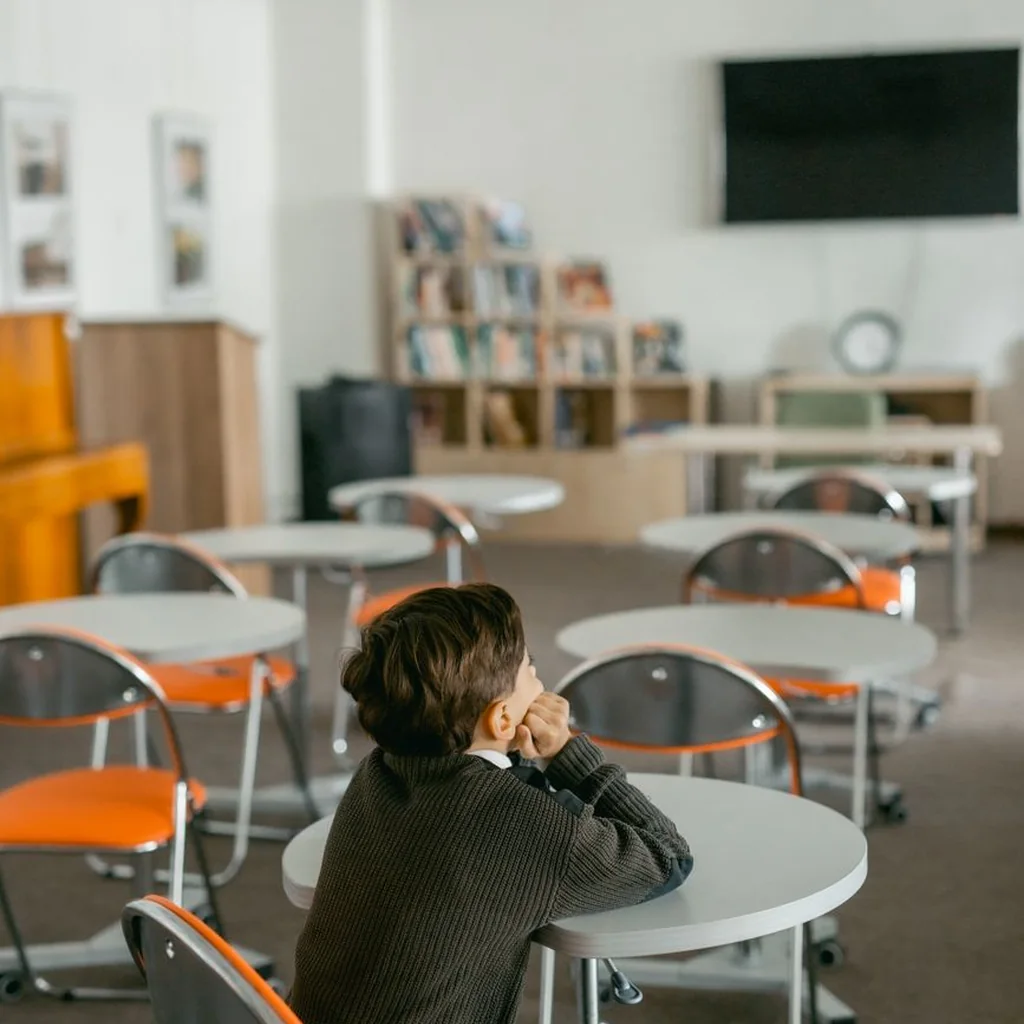
Photo: Mikhail Nilov on Pexels
Το ανοιχτό κλουβί
The Open Cage
When Nikos discovers the classroom hamster is missing, he must decide whether to speak up before the bell rings for recess.
Three short parts. Read each part in Greek first; tap “Show English” under a paragraph when you need the translation.


Part 1
Ο Νίκος ήταν ο πρώτος που πρόσεξε ότι η πόρτα του κλουβιού ήταν ανοιχτή. Πλησίασε, έσκυψε και έψαξε κάτω από το πριονίδι, πίσω από το μικρό ξύλινο σπιτάκι, ακόμη και μέσα στο μπολάκι με το φαγητό. Το χάμστερ, όμως, δεν ήταν πουθενά.
Show EnglishHide English
Nikos was the first to notice that the cage door was open. He went over, crouched down, and searched under the sawdust, behind the little wooden house, and even inside the food bowl. But the hamster was nowhere to be found.
Σε λίγα λεπτά θα χτυπούσε το κουδούνι του διαλείμματος και η δασκάλα είχε βγει από την τάξη για να πάρει κάτι από το γραφείο. Ο Νίκος φαντάστηκε τα παιδιά να τρέχουν στην αυλή, ενώ το μικρό ζώο θα μπορούσε να κρυφτεί οπουδήποτε μέσα στην τάξη. Αν το έλεγε αμέσως, ίσως οι άλλοι να τον κατηγορούσαν ότι είχε αφήσει εκείνος την πόρτα ανοιχτή. Αν δεν έλεγε τίποτα, όμως, θα γινόταν πολύ δυσκολότερο να το βρουν.
Show EnglishHide English
In a few minutes, the bell for recess would ring, and the teacher had left the classroom to fetch something from the office. Nikos imagined the children running out into the playground while the little animal could be hiding anywhere in the classroom. If he told someone straightaway, the others might accuse him of having left the door open. But if he said nothing, it would become much harder to find the hamster.
Άκουσε βήματα στον διάδρομο και είδε τη δασκάλα να πλησιάζει. Για μια στιγμή σκέφτηκε να κλείσει απλώς το κλουβί και να κάνει πως δεν είχε δει τίποτα. Ύστερα πήρε βαθιά ανάσα και σήκωσε το χέρι του, έτοιμος να της μιλήσει.
Show EnglishHide English
He heard footsteps in the corridor and saw the teacher approaching. For a moment, he thought about simply closing the cage and pretending he had seen nothing. Then he took a deep breath and raised his hand, ready to speak to her.
Part 2Το χαμένο χάμστερ(The Missing Hamster)
«Κυρία, το κλουβί είναι ανοιχτό και το χάμστερ λείπει», είπε ο Νίκος μόλις εκείνη μπήκε στην τάξη. «Δεν ξέρω πώς έγινε. Το βρήκα έτσι πριν από λίγο.»
Show EnglishHide English
“Miss, the cage is open and the hamster is missing,” Nikos said as soon as she came into the classroom. “I don’t know how it happened. I found it like this a little while ago.”
Η δασκάλα πλησίασε, κοίταξε το κλουβί και ύστερα χαμογέλασε καθησυχαστικά. «Καλά έκανες και μου το είπες. Μην ανησυχείς· πρώτα θα ψάξουμε ήρεμα και μετά θα αποφασίσουμε τι θα κάνουμε.» Έκλεισε την πόρτα του κλουβιού, χωρίς όμως να είναι βέβαιη ότι το χάμστερ βρισκόταν ακόμη μέσα στην τάξη.
Show EnglishHide English
The teacher came over, looked at the cage, and then smiled reassuringly. “You did the right thing by telling me. Don’t worry; first we’ll search calmly, and then we’ll decide what to do.” She closed the cage door, though she was not sure the hamster was still in the classroom.
Εκείνη τη στιγμή χτύπησε το κουδούνι. Τα παιδιά σηκώθηκαν αμέσως, αλλά η δασκάλα τούς ζήτησε να περιμένουν. Τους εξήγησε σύντομα τι είχε συμβεί και τους είπε να κοιτάξουν προσεκτικά, χωρίς να μετακινούν απότομα τις καρέκλες ή τα θρανία. Ο Νίκος ένιωθε ακόμη ένα σφίξιμο στο στομάχι, όμως τώρα, τουλάχιστον, δεν κουβαλούσε μόνος του όλο το βάρος.
Show EnglishHide English
Just then, the bell rang. The children stood up at once, but the teacher asked them to wait. She briefly explained what had happened and told them to look carefully, without moving the chairs or desks abruptly. Nikos still felt a knot in his stomach, but now, at least, he was not carrying the whole burden alone.
Ξαφνικά, η Μαρία είπε πως άκουσε ένα ελαφρύ ξύσιμο κοντά στη βιβλιοθήκη. Όλοι σώπασαν. Αν το χάμστερ είχε κρυφτεί εκεί, πώς θα το έβγαζαν χωρίς να το τρομάξουν;
Show EnglishHide English
Suddenly, Maria said she had heard a faint scratching near the bookcase. Everyone fell silent. If the hamster had hidden there, how could they get it out without frightening it?
Part 3Το χαμστεράκι στη βιβλιοθήκη(The Little Hamster by the Bookcase)
Η δασκάλα σήκωσε το χέρι της, ζητώντας από όλους να μείνουν ακίνητοι. Η Μαρία γονάτισε δίπλα στη βιβλιοθήκη και παραμέρισε προσεκτικά δύο βιβλία που είχαν πέσει πίσω της. Το ξύσιμο ακούστηκε ξανά, πιο καθαρά αυτή τη φορά.
Show EnglishHide English
The teacher raised her hand, asking everyone to stay still. Maria knelt beside the bookcase and carefully moved aside two books that had fallen behind it. The scratching sounded again, clearer this time.
«Μην απλώσετε τα χέρια σας», είπε η δασκάλα. «Θα το φοβίσουμε και μπορεί να κρυφτεί ακόμη περισσότερο.» Πήρε λίγους ηλιόσπορους από το μπολάκι και τους άφησε στο πάτωμα, σε μικρή απόσταση από τη βιβλιοθήκη. Όλοι περίμεναν σιωπηλοί, σχεδόν χωρίς να αναπνέουν.
Show EnglishHide English
“Don’t reach in,” the teacher said. “We’ll frighten it, and it may hide even farther away.” She took a few sunflower seeds from the bowl and left them on the floor, a short distance from the bookcase. Everyone waited silently, almost holding their breath.
Ύστερα από λίγο, εμφανίστηκε πρώτα η μυτούλα του χάμστερ και αμέσως μετά ολόκληρο το μικρό του σώμα. Ο Νίκος κράτησε χαμηλά ένα χαρτόκουτο, ενώ η δασκάλα το οδήγησε ήρεμα μέσα σε αυτό. Έπειτα το μετέφερε προσεκτικά και το έβαλε ξανά στο κλουβί.
Show EnglishHide English
After a little while, the hamster’s tiny nose appeared first, and then its whole little body. Nikos held a cardboard box low to the ground while the teacher gently guided the hamster into it. Then she carried it carefully and put it back in the cage.
Η δασκάλα ασφάλισε καλύτερα την πόρτα και ευχαρίστησε όλους για την ψυχραιμία τους. «Και ειδικά εσένα, Νίκο, που μου το είπες αμέσως», πρόσθεσε. Το κουδούνι είχε ήδη χτυπήσει, αλλά τώρα τα παιδιά βγήκαν ήσυχα και ανακουφισμένα στην αυλή. Ο Νίκος ένιωθε το σφίξιμο στο στομάχι του να έχει επιτέλους λυθεί.
Show EnglishHide English
The teacher secured the door more firmly and thanked everyone for keeping calm. “And you in particular, Nikos, for telling me right away,” she added. The bell had already rung, but now the children went quietly and with relief out into the playground. Nikos felt the knot in his stomach finally loosen.
Practise this Greek story
Vocabulary in context
Important words and phrases
πρόσεξε ότι
verb phraseRomanization: prosekse oti
noticed that
Πρόσεξε ότι όλοι είχαν σταματήσει να μιλούν.
He noticed that everyone had stopped talking.
να κάνει πως δεν είχε δει τίποτα
verb phraseRomanization: na kanei pos den eixe dei tipota
to pretend not to have seen anything
Έκανε πως δεν είχε δει τίποτα και συνέχισε ήρεμα.
He pretended not to have seen anything and carried on calmly.
καθησυχαστικά
adverbRomanization: kathisyhastika
reassuringly
Η φωνή της ακούστηκε καθησυχαστικά.
Her voice sounded reassuring.
σφίξιμο στο στομάχι
noun phraseRomanization: sfiksimo sto stomachi
a knot in the stomach
Πριν από την εξέταση ένιωσε ένα σφίξιμο στο στομάχι.
Before the exam, he felt a knot in his stomach.
να τον κατηγορούσαν
verb phraseRomanization: na ton katigorousan
would accuse him
Φοβόταν ότι οι άλλοι θα τον κατηγορούσαν άδικα.
He was afraid the others would accuse him unfairly.
χωρίς να μετακινούν απότομα
verb phraseRomanization: horis na metakinoún apotoma
without moving suddenly
Προσπάθησαν να πλησιάσουν χωρίς να μετακινούν απότομα τις καρέκλες.
They tried to approach without moving the chairs suddenly.
παραμέρισε προσεκτικά
verb phraseRomanization: paramerise prosektika
moved aside carefully
Παραμέρισε προσεκτικά τα έγγραφα πάνω στο γραφείο.
She carefully moved the papers aside on the desk.
σχεδόν χωρίς να αναπνέουν
phraseRomanization: schedon horis na anapneoun
almost without breathing
Περίμεναν το αποτέλεσμα σχεδόν χωρίς να αναπνέουν.
They waited for the result almost without breathing.
ασφάλισε καλύτερα
verb phraseRomanization: asfalise kalitera
secured more firmly
Ασφάλισε καλύτερα το παράθυρο πριν φύγει.
He secured the window more firmly before leaving.
κουβαλούσε μόνος του όλο το βάρος
verb phraseRomanization: kuvalouse monos tou olo to varos
was carrying the whole burden alone
Δεν ήθελε να κουβαλάει μόνος του όλο το βάρος της απόφασης.
He did not want to carry the whole burden of the decision alone.
Check your understanding
Comprehension questions
Choose an answer, check it, then move to the next question.
Question 1 of 3
- Question 1: current not answered
- Question 2: not answered
- Question 3: not answered
Notice the language
Language notes
κάνει πως + πρόταση
This pattern means “to pretend that …” and is common in both conversation and narrative when someone hides what they really know, feel, or plan. It can introduce a whole clause, often with a past tense, to show pretense or deliberate concealment. Example: «Έκανε πως δεν είχε ακούσει την ερώτηση.» = “He pretended not to have heard the question.”
Έκανε πως δεν είχε ακούσει την ερώτηση.
He pretended not to have heard the question.
More Greek stories to read next

Η μικρή αντιγραφή
The Little Copycat
Nikos discovers that his little sister Maria is copying his habits and must decide how to respond to her admiration.

Το κομμάτι της σοκολατόπιτας
The Slice of Chocolate Cake
A man dining alone receives an unexpected dessert from strangers and wonders how to respond to their kindness.
Οι σκάλες της αυτοπειθαρχίας
The Stairs of Self-Discipline
Anna chooses the stairs for her health and encounters her very fit colleague halfway up, as they both pretend the climb is easy.
Το μικρό πουλί κάτω από τη νεραντζιά
The Little Bird Beneath the Bitter Orange Tree
Eleni finds a helpless baby bird beneath a tree and must decide how to protect it while seeking the right help.