
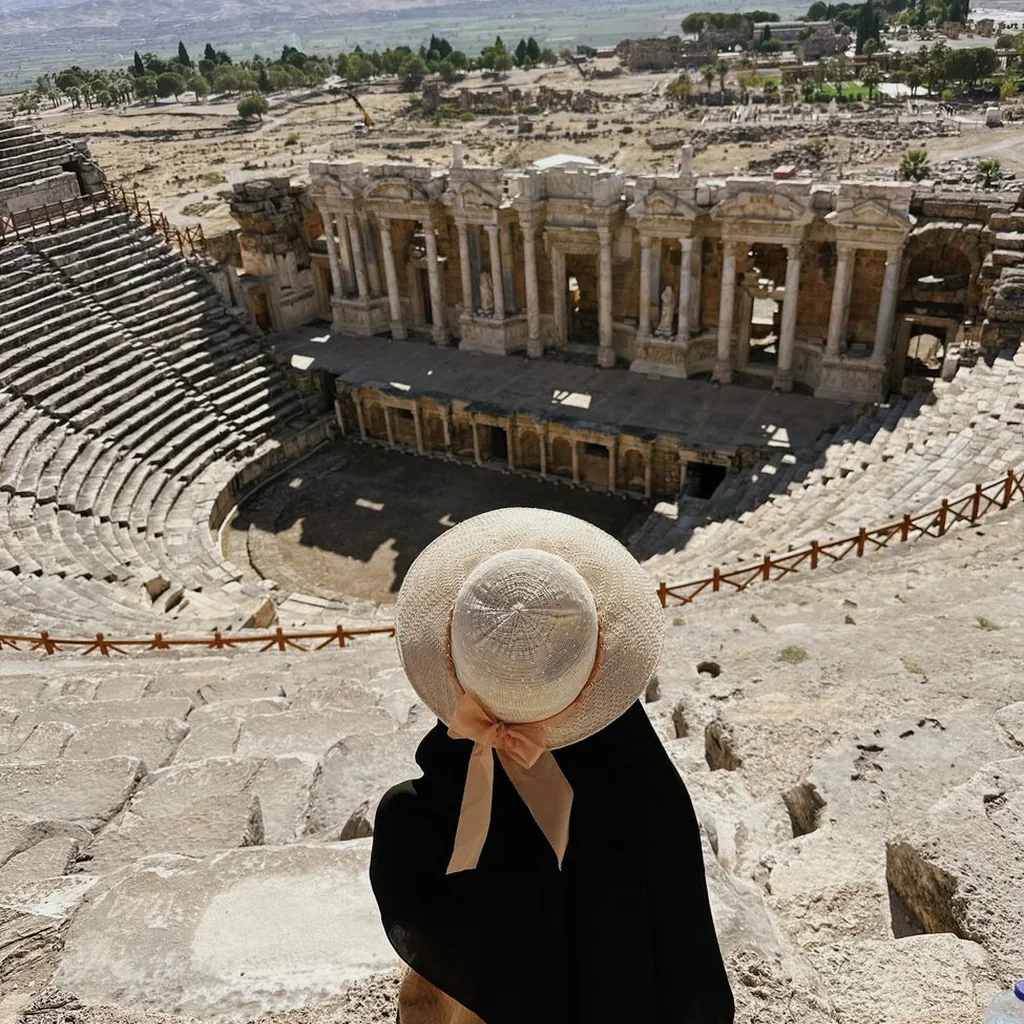
Η Μαρία στη σκηνή
Maria on Stage
During a visit to a famous old theatre in Athens, Maria opens the wrong door and finds herself on stage in the middle of a rehearsal.
Three short parts. Read each part in Greek first; tap “Show English” under a paragraph when you need the translation.


Part 1
Η Μαρία είχε έρθει στην Αθήνα για λίγες μέρες και αποφάσισε να επισκεφτεί ένα παλιό, διάσημο θέατρο. Το κτίριο ήταν μεγάλο και γεμάτο διαδρόμους, σκάλες και βαριές κόκκινες κουρτίνες. Καθώς έψαχνε την έξοδο, άνοιξε μια πόρτα και βρέθηκε σε έναν φωτισμένο χώρο.
Show EnglishHide English
Maria had come to Athens for a few days and decided to visit an old, famous theatre. The building was large and full of corridors, stairs, and heavy red curtains. As she searched for the exit, she opened a door and found herself in a brightly lit space.
Στην αρχή νόμιζε ότι η αίθουσα ήταν άδεια. Ύστερα, ένας άντρας με μαύρο κοστούμι φώναξε: «Μην κουνηθείς! Είσαι ακριβώς στη θέση σου!»
Show EnglishHide English
At first, she thought the room was empty. Then a man in a black suit shouted, “Don’t move! You’re exactly where you should be!”
Η Μαρία κοίταξε γύρω της και κατάλαβε ότι είχε ανέβει στη σκηνή. Μπροστά της στέκονταν τρεις ηθοποιοί, ενώ από την πλατεία την παρακολουθούσε ένας σκηνοθέτης με ένα τετράδιο στο χέρι. Μερικοί τεχνικοί χαμογελούσαν, αλλά κανείς δεν της έδειχνε πώς να φύγει.
Show EnglishHide English
Maria looked around and realized she had walked onto the stage. Three actors stood in front of her, while a director watched her from the auditorium with a notebook in his hand. Some technicians were smiling, but no one showed her how to leave.
«Συγγνώμη, έχασα τον προσανατολισμό μου», είπε εκείνη.
Show EnglishHide English
“I’m sorry, I’ve lost my way,” she said.
«Δεν πειράζει», απάντησε ο σκηνοθέτης. «Η σκηνή χρειάζεται έναν καινούριο χαρακτήρα. Μπορείς να διαβάσεις αυτή την ατάκα;»
Show EnglishHide English
“That’s all right,” the director replied. “The scene needs a new character. Can you read this line?”
Η Μαρία πήρε το χαρτί, κοίταξε τις λέξεις και άνοιξε το στόμα της, χωρίς ακόμη να ξέρει αν έπρεπε να μιλήσει ή να το βάλει στα πόδια.
Show EnglishHide English
Maria took the paper, looked at the words, and opened her mouth, still unsure whether she should speak or run away.
Part 2Η οντισιόν(The Audition)
Η Μαρία πήρε μια βαθιά ανάσα και διάβασε την ατάκα με καθαρή φωνή:
Show EnglishHide English
Maria took a deep breath and read the line in a clear voice:
«Δεν ήρθα εδώ για να μείνω, αλλά τώρα δεν μπορώ να φύγω.»
Show EnglishHide English
“I didn’t come here to stay, but now I can’t leave.”
Για λίγα δευτερόλεπτα επικράτησε σιωπή. Ύστερα, ο σκηνοθέτης χαμογέλασε και σημείωσε κάτι στο τετράδιό του. Οι τρεις ηθοποιοί συνέχισαν τη σκηνή σαν να ήταν όλα προγραμματισμένα. Ο άντρας με το μαύρο κοστούμι έδειξε στη Μαρία πού να σταθεί.
Show EnglishHide English
Silence fell for a few seconds. Then the director smiled and wrote something in his notebook. The three actors continued the scene as if everything had been planned. The man in the black suit showed Maria where to stand.
«Πολύ καλά. Μην κοιτάς εμάς· κοίτα εκείνη την άδεια θέση στην πρώτη σειρά.»
Show EnglishHide English
“Very good. Don’t look at us; look at that empty seat in the front row.”
Η Μαρία προσπάθησε να ακολουθήσει τις οδηγίες. Σιγά σιγά, όμως, ξεχνούσε ότι μπροστά της υπήρχαν δεκάδες άδειες θέσεις και άρχισε να μιλάει πιο φυσικά. Όταν τελείωσε η μικρή σκηνή, ακούστηκαν μερικά χειροκροτήματα από τους τεχνικούς.
Show EnglishHide English
Maria tried to follow the instructions. Gradually, though, she forgot that there were dozens of empty seats in front of her and began to speak more naturally. When the short scene ended, a few of the technicians applauded.
Τότε ο σκηνοθέτης σηκώθηκε.
Show EnglishHide English
Then the director stood up.
«Θα ήθελα να δοκιμάσουμε κάτι ακόμη», είπε. «Αυτή τη φορά, ένας από τους ηθοποιούς θα φύγει από τη σκηνή. Εσύ θα πρέπει να συνεχίσεις μόνη σου.»
Show EnglishHide English
“I’d like us to try something else,” he said. “This time, one of the actors will leave the stage. You’ll have to continue on your own.”
Η Μαρία τον κοίταξε έκπληκτη. Ποιος από τους τρεις ηθοποιούς θα έφευγε και τι θα έπρεπε να πει εκείνη;
Show EnglishHide English
Maria looked at him in surprise. Which of the three actors would leave, and what would she have to say?
Part 3
Ο σκηνοθέτης έδειξε τον νεότερο ηθοποιό, ο οποίος έκανε μια μικρή υπόκλιση και βγήκε από τη σκηνή. Η Μαρία έμεινε μόνη κάτω από τα δυνατά φώτα. Ο άλλος ηθοποιός τής είπε χαμηλόφωνα:
Show EnglishHide English
The director pointed to the youngest actor, who gave a small bow and left the stage. Maria was left alone under the bright lights. The other actor said to her quietly:
«Πες ό,τι θα έλεγες αν περίμενες κάποιον που έχει αργήσει πολύ».
Show EnglishHide English
“Say whatever you would say if you were waiting for someone who was very late.”
Η Μαρία σκέφτηκε για λίγο και κοίταξε την άδεια θέση στην πρώτη σειρά.
Show EnglishHide English
Maria thought for a moment and looked at the empty seat in the front row.
«Περίμενα να μου δείξει κάποιος τον δρόμο», είπε. «Τελικά, μάλλον πήρα λάθος δρόμο, αλλά ίσως αυτό να ήταν χρήσιμο».
Show EnglishHide English
“I was waiting for someone to show me the way,” she said. “In the end, I probably took the wrong way, but maybe that was useful.”
Ο σκηνοθέτης χαμογέλασε πλατιά.
Show EnglishHide English
The director smiled broadly.
«Αυτό ακριβώς χρειαζόταν η σκηνή. Δεν έπαιξες έναν ρόλο· μίλησες σαν πραγματικός άνθρωπος».
Show EnglishHide English
“That’s exactly what the scene needed. You didn’t act a role; you spoke like a real person.”
Ύστερα χτύπησε τα χέρια του και ανακοίνωσε ένα σύντομο διάλειμμα.
Show EnglishHide English
Then he clapped his hands and announced a short break.
Η Μαρία ένιωσε επιτέλους ότι μπορούσε να φύγει. Ο άντρας με το μαύρο κοστούμι τής έδειξε τον δρόμο προς την πόρτα και εκείνη κατέβηκε από τη σκηνή, αυτή τη φορά χωρίς να χαθεί. Πριν φύγει, ο σκηνοθέτης τής έδωσε ένα εισιτήριο για την παράσταση.
Show EnglishHide English
At last, Maria felt she could leave. The man in the black suit showed her the way to the door, and she came down from the stage, this time without getting lost. Before she left, the director gave her a ticket to the performance.
Η Μαρία τον ευχαρίστησε και χαμογέλασε. Είχε επισκεφτεί το θέατρο ως θεατής, αλλά έφυγε έχοντας γίνει, για λίγα λεπτά, μέρος της παράστασης.
Show EnglishHide English
Maria thanked him and smiled. She had visited the theatre as a spectator, but left having become, for a few minutes, part of the performance.
Practise this Greek story
Vocabulary in context
Important words and phrases
είχε έρθει στην Αθήνα
phraseRomanization: eiche erthi stin Athina
had come to Athens
Είχα έρθει στην Αθήνα μόνο για δύο μέρες.
I had come to Athens for only two days.
αποφάσισε να επισκεφτεί
phraseRomanization: apofasise na episkefti
decided to visit
Αποφάσισε να επισκεφτεί το παλιό θέατρο.
She decided to visit the old theatre.
έχασα τον προσανατολισμό μου
phraseRomanization: echasa ton prosanatolismo mou
I lost my bearings
Μέσα στο μεγάλο κτίριο έχασα τον προσανατολισμό μου.
Inside the large building, I lost my bearings.
ακριβώς στη θέση σου
phraseRomanization: akrivos sti thesi sou
exactly in your place
Μείνε ακριβώς στη θέση σου μέχρι να σου μιλήσω.
Stay exactly where you are until I speak to you.
είχε ανέβει στη σκηνή
phraseRomanization: eiche anevi sti skini
had gone up onto the stage
Ο ηθοποιός είχε ανέβει στη σκηνή πριν από όλους.
The actor had gone up onto the stage before everyone else.
σημείωσε κάτι στο τετράδιό του
phraseRomanization: simeiose kati sto tetradio tou
he noted something in his notebook
Ο σκηνοθέτης σημείωσε κάτι στο τετράδιό του.
The director noted something in his notebook.
να ακολουθήσει τις οδηγίες
phraseRomanization: na akolouthisi tis odigies
to follow the instructions
Προσπάθησε να ακολουθήσει τις οδηγίες πολύ προσεκτικά.
She tried to follow the instructions very carefully.
επικράτησε σιωπή
phraseRomanization: epikratise siopi
silence fell
Μετά την ερώτηση, επικράτησε σιωπή.
After the question, silence fell.
πήρα λάθος δρόμο
phraseRomanization: pira lathos dromo
I took the wrong road
Νόμιζα ότι ήξερα πού πάω, αλλά πήρα λάθος δρόμο.
I thought I knew where I was going, but I took the wrong road.
μέρος της παράστασης
phraseRomanization: meros tis parastasis
part of the performance
Για λίγα λεπτά, έγινε μέρος της παράστασης.
For a few minutes, she became part of the performance.
Check your understanding
Comprehension questions
Choose an answer, check it, then move to the next question.
Question 1 of 3
- Question 1: current not answered
- Question 2: not answered
- Question 3: not answered
Notice the language
Language notes
Μην + ρήμα
Use μην + verb to tell someone not to do something. It is common in direct instructions and warnings. In the story, 'Μην κουνηθείς!' and 'Μην κοιτάς εμάς' use this pattern. You can reuse it in everyday situations, for example: 'Μην ανοίξεις την πόρτα πριν χτυπήσεις.'
Μην ανοίξεις την πόρτα πριν χτυπήσεις.
Don't open the door before you knock.
More Greek stories to read next

Η επιστροφή των παπουτσιών
The Return of the Shoes
Maria goes to return a pair of shoes, but discovers that a mix-up has left her wearing one of the shoes she brought back.
Ο Νίκος και το κρυφό παιχνίδι στο γκρουπ
Nikos and the Hidden Game in the Breakaway
Nikos is in a breakaway with three other cyclists, but he realizes they are leaving all the hard work to him.

Το μήνυμα που άλλαξε το όνομα
The Message That Changed the Name
At the school cafeteria, Eleni’s autocorrect changes a message about Petros into an embarrassing mistake just as he approaches.
Η λάθος κάρτα επιβίβασης
The Wrong Boarding Pass
Mid-flight, Eleni discovers that her boarding pass bears another passenger’s name and asks a flight attendant for help.