


Back to Beginner (A1) stories

Unlock the Complete Learning Experience

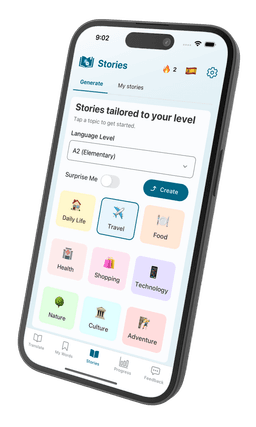
You're reading free stories on our website. Get the mobile app for audio narration, speaking practice, vocabulary saving, personalised stories, instant translations, and progress tracking.

Download on the App StoreGet it on Google Play
Audio
Translations
Progress

Η Έκπληξη για τα Γενέθλια του Νίκου

Beginner (A1)
5 min read

📖 You are reading the free text version. Get our mobile app for 🎧 audio narration, 💬 speaking practice, 🔄 instant translations, and 💾 vocabulary saving to enhance your learning experience.

Σήμερα είναι μια πολύ ξεχωριστή μέρα για τον Νίκο. Είναι τα γενέθλιά του και η οικογένειά του ετοιμάζει μια γιορτή.

Η μητέρα και ο πατέρας του στολίζουν το σπίτι με χρωματιστές μπάλες και φανάρια. Η μικρή του αδερφή φτιάχνει μια μεγάλη κάρτα με ζωγραφιές και ευχές.

Όμως, ο Νίκος δεν ξέρει τίποτα. Νομίζει ότι θα είναι μια συνηθισμένη μέρα στο σπίτι. Περιμένει να παίξει με τα παιχνίδια του.

Ξαφνικά, η πόρτα ανοίγει και μπαίνουν όλοι οι φίλοι του Νίκου με τραγούδια και χαμόγελα. Ο Νίκος είναι πολύ έκπληκτος και χαρούμενος.

Όλοι κάθονται γύρω από το τραπέζι και τρώνε κέικ σοκολάτας. Η μητέρα ανάβει τα κεριά στην τούρτα. Ο Νίκος σβήνει τα κεριά και λέει μια ευχή.

Καθώς η γιορτή συνεχίζεται, ο Νίκος σκέφτεται πόσο σημαντικό είναι να έχεις ανθρώπους κοντά σου. Δεν είναι μόνο τα δώρα, αλλά η αγάπη και η χαρά που μοιράζονται.

Όταν η γιορτή τελειώνει, ο Νίκος αισθάνεται χαρούμενος αλλά και λίγο κουρασμένος. Κοιμάται με μια μεγάλη χαμόγελο στο πρόσωπό του.

Ήταν μια μέρα γεμάτη φως, γέλια και πολλές αγκαλιές, που θα θυμάται για πολύ καιρό.

Practise this Greek story

Vocabulary in context

Important words and phrases

  • τα γενέθλιά του

    noun phrase

    Romanization: ta yenéthliá tu

    his birthday

    Τα γενέθλιά μου είναι αύριο.

    My birthday is tomorrow.

  • η οικογένειά του

    noun phrase

    Romanization: i ikoyénia tu

    his family

    Η οικογένειά μου είναι εδώ.

    My family is here.

  • μια γιορτή

    noun phrase

    Romanization: mia yiortí

    a celebration; a party

    Θέλουμε μια γιορτή για τον Νίκο.

    We want a party for Nikos.

  • στολίζουν το σπίτι

    verb phrase

    Romanization: stolízun to spíti

    decorate the house

    Στολίζουν το σπίτι με μπάλες.

    They decorate the house with balls.

  • μια μεγάλη κάρτα

    noun phrase

    Romanization: mia megáli kárta

    a big card

    Η αδερφή μου φτιάχνει μια μεγάλη κάρτα.

    My sister is making a big card.

  • δεν ξέρει τίποτα

    verb phrase

    Romanization: den kséri típota

    doesn't know anything

    Δεν ξέρω τίποτα.

    I don't know anything.

  • με τραγούδια και χαμόγελα

    phrase

    Romanization: me tragúdia ke hamóyela

    with songs and smiles

    Μπαίνουν με τραγούδια και χαμόγελα.

    They come in with songs and smiles.

  • τα κεριά

    noun phrase

    Romanization: ta keriá

    the candles

    Η μητέρα ανάβει τα κεριά.

    Mother lights the candles.

  • στην τούρτα

    prepositional phrase

    Romanization: stin túrta

    on the cake

    Τα κεριά είναι στην τούρτα.

    The candles are on the cake.

  • μια ευχή

    noun phrase

    Romanization: mia efhí

    a wish

    Ο Νίκος λέει μια ευχή.

    Nikos makes a wish.

  • πολύ έκπληκτος

    adjective phrase

    Romanization: polí ékpliktos

    very surprised

    Ο Νίκος είναι πολύ έκπληκτος.

    Nikos is very surprised.

  • χαρούμενος

    adjective

    Romanization: haroúmenos

    happy

    Είναι χαρούμενος σήμερα.

    He is happy today.

Check your understanding

Comprehension questions

Choose an answer, check it, then move to the next question.

Question 1 of 3

  1. Question 1: current not answered
  2. Question 2: not answered
  3. Question 3: not answered
Ποιος ετοιμάζει τη γιορτή;Who is preparing the celebration?

Notice the language

Language notes

usage

Δεν είναι μόνο ..., αλλά ...

This pattern is used to show contrast or emphasis: one thing is not the only important thing, and another idea follows. Put a noun or phrase after "δεν είναι μόνο" and another phrase after "αλλά". You can reuse it whenever you want to say that there is more than one important part. Example: "Δεν είναι μόνο τα δώρα, αλλά η αγάπη και η χαρά." = "It's not only the gifts, but the love and joy."

  • Δεν είναι μόνο τα δώρα, αλλά η αγάπη και η χαρά.

    It's not only the gifts, but the love and joy.

Keep reading

More Beginner (A1) Stories
GreekBeginner (A1)