
Photo: Emir Taha Ergün on Pexels
Der Apfelstand
The Apple Stand
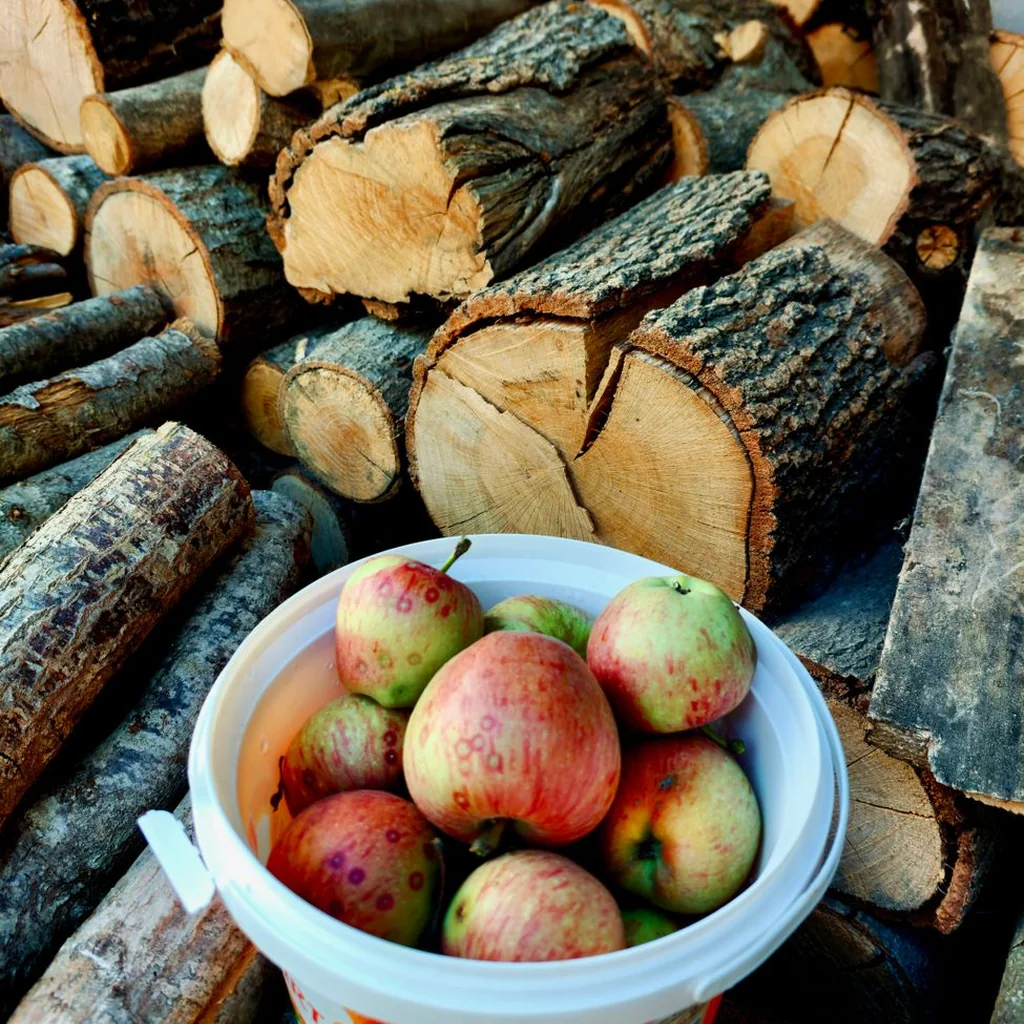
At a market stand, Klaus asks Johanna about the small, misshapen apples, which cost three euros a kilo.
Three short parts. Read each part in German first; tap “Show English” under a paragraph when you need the translation.


Part 1
Klaus blieb vor dem Apfelstand stehen, als hätte er dort nur zufällig auf jemanden zu warten. Erst als die Frau hinter den Kisten ihn ansah, nahm er die Hände aus den Manteltaschen.
Show EnglishHide English
Klaus stopped in front of the apple stand as if he just happened to be waiting there for someone. Only when the woman behind the crates looked at him did he take his hands out of his coat pockets.
„Was kosten denn die kleinen da?“ Er zeigte auf die Äpfel, die ein bisschen schief gewachsen waren und neben den glänzenden großen lagen.
Show EnglishHide English
“How much are the little ones?” He pointed to the apples that had grown a little crooked and lay beside the shiny, large ones.
„Drei Euro das Kilo“, sagte Johanna. „Die sind zwar keine Schönheiten, aber zum Essen taugen sie allemal.“
Show EnglishHide English
“Three euros a kilo,” Johanna said. “They may not be beauties, but they’re perfectly good to eat.”
Klaus nahm einen in die Hand, drehte ihn hin und her und legte ihn wieder zurück. „Ich hätte gern fünf. Wenn Sie mir die aussuchen würden? Meine Augen machen bei den kleinen Stellen nicht mehr so mit.“
Show EnglishHide English
Klaus picked one up, turned it this way and that, then put it back. “I’d like five, please. Would you choose them for me? My eyes aren’t so good with the little blemishes anymore.”
Johanna legte fünf Äpfel auf die Waage. Klaus zog ein zusammengefaltetes Taschentuch hervor, in dem ein paar Münzen lagen, und zählte sie auf seiner Handfläche ab.
Show EnglishHide English
Johanna put five apples on the scale. Klaus took out a folded handkerchief with a few coins inside and counted them out onto his palm.
„Wissen Sie was? Machen wir lieber vier. Einer allein schafft schließlich nicht alles, bevor es schrumpelig wird.“
Show EnglishHide English
“You know what? Let’s make it four instead. One person can’t get through all of them before they go wrinkly, after all.”
Hinter ihm räusperte sich jemand. Klaus trat zur Seite, doch Johanna schob die Tüte noch nicht über den Tresen. Sie nahm einen der kleineren Äpfel dazu und drückte die Tüte oben zusammen.
Show EnglishHide English
Someone behind him cleared their throat. Klaus stepped aside, but Johanna did not slide the bag across the counter yet. She added one of the smaller apples and squeezed the top of the bag closed.
„Das macht zwei Euro.“
Show EnglishHide English
“That’ll be two euros.”
Klaus zahlte passend, steckte das leere Taschentuch ein und griff nach der Tüte. Er wog sie in der Hand und sah hinein.
Show EnglishHide English
Klaus paid the exact amount, put away the empty handkerchief, and reached for the bag. He weighed it in his hand and looked inside.
„Moment mal“, sagte er. „Wie viele haben Sie mir denn da eingepackt?“
Show EnglishHide English
“Wait a minute,” he said. “How many did you put in there?”
Part 2Der Apfel und der Feierabend(The Apple and the End of the Workday)
Johanna beugte sich über den Tresen und zählte mit dem Finger nach. „Sechs. Da habe ich mich wohl verzählt.“
Show EnglishHide English
Johanna leaned over the counter and counted with her finger. “Six. I must have miscounted.”
Klaus sah sie an. „Und zwar gleich zweimal?“
Show EnglishHide English
Klaus looked at her. “Twice in a row?”
„Offenbar.“ Sie hielt ihm die offene Hand hin. „Geben Sie her, ich nehme den überzähligen raus.“
Show EnglishHide English
“Apparently.” She held out her open hand to him. “Give it here; I’ll take out the extra one.”
Er rückte die Tüte nicht heraus. Hinter ihm stellte eine Kundin ihren Korb ab und tat so, als interessiere sie sich brennend für die Birnen.
Show EnglishHide English
He did not hand over the bag. Behind him, a customer set down her basket and pretended to be intensely interested in the pears.
„Ich wollte vier“, sagte Klaus, nun etwas lauter. „Aber wenn Sie schon fünf abgewogen haben, will ich mal nicht so sein.“ Er legte Johanna ein paar Münzen hin. „Für den fünften.“
Show EnglishHide English
“I wanted four,” Klaus said, a little louder now. “But since you’ve already weighed out five, I won’t make a fuss.” He set a few coins down in front of Johanna. “For the fifth one.”
Johanna schob ihm das Geld zurück. „Lassen Sie gut sein. Den sechsten habe ich Ihnen ja aufgedrängt.“
Show EnglishHide English
Johanna pushed the money back to him. “Don’t worry about it. I’m the one who foisted the sixth on you.”
„Dann nehmen Sie ihn eben wieder.“ Klaus holte einen Apfel heraus und hielt ihn ihr hin. Es war der kleinste, mit einem braunen Fleck an der Seite.
Show EnglishHide English
“Then just take it back.” Klaus took out an apple and held it out to her. It was the smallest one, with a brown spot on its side.
„Ausgerechnet den wollte ich mir zum Feierabend selbst mitnehmen“, sagte Johanna. „Den kann ich jetzt schlecht zurücknehmen, nachdem Sie ihn sich schon ausgesucht haben.“
Show EnglishHide English
“That’s the very one I was planning to take home for myself at the end of the day,” Johanna said. “I can hardly take it back now that you’ve already picked it out.”
Die Kundin prustete los und griff hastig nach einer Birne. Klaus betrachtete den Apfel, dann steckte er ihn zurück in die Tüte. „Na schön. Aber nur, damit Sie pünktlich Feierabend machen können.“
Show EnglishHide English
The customer burst out laughing and hurriedly reached for a pear. Klaus looked at the apple, then put it back in the bag. “All right, then. But only so you can finish work on time.”
Als er die Tüte anhob, riss der feuchte Boden auf. Die Äpfel polterten über das Pflaster, und einer rollte direkt unter den Stand.
Show EnglishHide English
As he lifted the bag, its damp bottom split open. The apples clattered across the paving stones, and one rolled straight under the stand.
Part 3Die Äpfel vom Stand(The Apples from the Stand)
Klaus bückte sich nach dem nächsten Apfel, doch Johanna war schon um den Stand herum. „Bleiben Sie stehen, ich hab ihn gleich“, sagte sie und ging in die Hocke.
Show EnglishHide English
Klaus bent down for the nearest apple, but Johanna was already around the stand. “Stay there; I’ll get it,” she said, crouching down.
„Ich kann mich durchaus noch bücken.“ Klaus hob zwei Äpfel auf und richtete sich langsam wieder auf. Die Kundin reichte ihm einen dritten, den sie mit dem Fuß aufgehalten hatte, und sammelte die beiden anderen ein.
Show EnglishHide English
“I can still bend down perfectly well.” Klaus picked up two apples and slowly straightened up again. The customer handed him a third, which she had stopped with her foot, and picked up the other two.
Unter dem Stand lag der kleinste Apfel an einem Kistenbein. Johanna angelte ihn hervor und rieb ihn an ihrer Schürze ab. „Der hat sich ein schönes Plätzchen gesucht.“
Show EnglishHide English
Under the stand, the smallest apple lay beside a crate leg. Johanna fished it out and rubbed it on her apron. “It found itself a nice little spot.”
Klaus nahm ihn ihr ab. „Den wasche ich zu Hause sowieso.“ Er legte ihn zu den anderen auf den Tresen und klopfte sich die Hände sauber.
Show EnglishHide English
Klaus took it from her. “I’m going to wash it at home anyway.” He put it on the counter with the others and dusted off his hands.
Johanna holte eine neue Tüte und steckte sie vorsichtshalber in eine zweite. „Die erste muss unten nass geworden sein. Ich hätte besser aufpassen sollen.“
Show EnglishHide English
Johanna got a new bag and, just to be safe, put it inside a second one. “The first one must have got wet underneath. I should have been more careful.”
„Sie hätten sie auch nicht so voll machen müssen“, sagte Klaus. Er sah auf die sechs Äpfel, während sie sie einpackte. „Lassen Sie, ich trag sie von unten.“
Show EnglishHide English
“You didn’t have to fill it so full, either,” Klaus said. He looked at the six apples as she packed them. “Here, let me carry it from the bottom.”
Diesmal hielt die Tüte. Klaus nahm sie auf beide Hände, nickte der Kundin zu und wandte sich zum Gehen. Nach ein paar Schritten drehte er sich noch einmal um.
Show EnglishHide English
This time the bag held. Klaus took it in both hands, nodded to the customer, and turned to leave. After a few steps, he turned around once more.
„Der mit dem Fleck, den esse ich heute“, sagte er. „Bevor er noch jemandem unter die Füße kommt.“
Show EnglishHide English
“I’m eating the one with the spot today,” he said. “Before it gets under anyone else’s feet.”
„Eine Sorge weniger für uns alle“, erwiderte Johanna.
Show EnglishHide English
“One less thing for all of us to worry about,” Johanna replied.
Klaus hob die Tüte ein Stück, als wollte er mit ihr anstoßen, und ging zwischen den Ständen hindurch. Johanna sah ihm kurz nach, bevor sie nach einer trockenen Rolle Tüten griff.
Show EnglishHide English
Klaus raised the bag a little, as if making a toast with it, and walked off between the stalls. Johanna watched him go for a moment before reaching for a dry roll of bags.
Practise this German story
Vocabulary in context
Important words and phrases
schief gewachsen
adjective phrasemisshapen; unevenly grown
Die Äpfel waren schief gewachsen, schmeckten aber trotzdem gut.
The apples were misshapen, but they still tasted good.
zum Essen taugen
verb phraseto be good enough to eat
Die Früchte sehen nicht perfekt aus, taugen aber noch zum Essen.
The fruit does not look perfect, but it is still good enough to eat.
zusammengefaltet
adjectivefolded up
Er zog ein zusammengefaltetes Blatt Papier aus der Jackentasche.
He pulled a folded-up sheet of paper out of his jacket pocket.
auf seiner Handfläche abzählen
verb phraseto count off on his palm
Er zählte die Münzen auf seiner Handfläche ab, bevor er bezahlte.
He counted the coins off on his palm before paying.
sich verzählen
verbto miscount
Beim schnellen Nachzählen kann man sich leicht verzählen.
When counting quickly, it is easy to miscount.
aufdrängen
verbto foist on someone; to impose
Ich wollte ihm nichts aufdrängen und wartete lieber ab.
I did not want to foist anything on him and preferred to wait.
vorsichtshalber
adverbjust to be safe
Ich nehme vorsichtshalber noch eine Jacke mit.
Just to be safe, I am taking another jacket with me.
pünktlich Feierabend machen
verb phraseto finish work on time; to knock off on time
Heute will ich pünktlich Feierabend machen und nicht länger bleiben.
Today I want to finish work on time and not stay any longer.
Lassen Sie gut sein
idiomLet it go; never mind
Lassen Sie gut sein, das erledige ich schon.
Let it go, I will take care of it.
jemandem unter die Füße kommen
idiomto get in someone's way; to end up underfoot
Stell die Kiste bitte weg, sonst kommt sie noch jemandem unter die Füße.
Please move the box, or else it will get in someone's way.
Check your understanding
Comprehension questions
Choose an answer, check it, then move to the next question.
Question 1 of 3
- Question 1: current not answered
- Question 2: not answered
- Question 3: not answered
Notice the language
Language notes
jemandem unter die Füße kommen
Here the phrase is used literally and with humour: Klaus will eat the spotted apple today, before it rolls away again and ends up under someone’s feet. Compare the common idiom jemandem zwischen die Füße/Beine laufen or geraten, “to get under someone’s feet; to get in someone’s way.” Example: "Stell die Kiste bitte weg, sonst kommt sie noch jemandem unter die Füße."
Stell die Kiste bitte weg, sonst kommt sie noch jemandem unter die Füße.
Please move the box, or else it will get in someone's way.
More German stories to read next
Die Treppe zum Café
The Staircase to the Café
Mia follows her grandmother down four flights of stairs to a café, while Oma insists she does not need the handrail.

Im Waldweg
On the Forest Path
On a quiet forest path, Uwe hears something large moving in the hazel bushes ahead and wonders whether to keep going or turn back.
Der schief hängende Mond
The Crooked Moon
Thomas stands beside Mia’s bed, trying to keep her asleep by humming while she reaches for his sleeve whenever he stops.
Der Donnerstag auf dem Platz
Thursday on the Court
Lukas and Wolfgang play their weekly tennis match before work on a damp court, and Lukas believes he usually beats Wolfgang narrowly.