
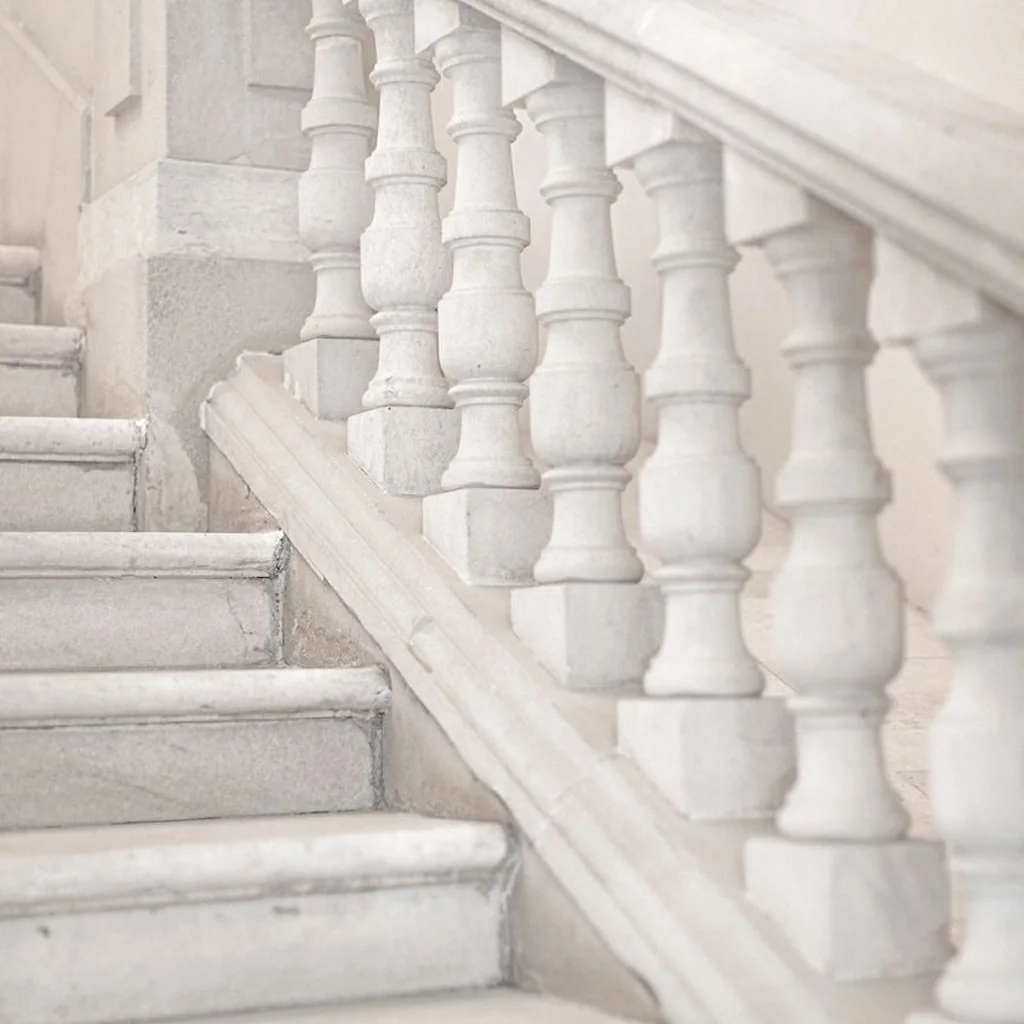
Photo: Martin de Arriba on Pexels
Die Treppe zum Café
The Staircase to the Café
Mia follows her grandmother down four flights of stairs to a café, while Oma insists she does not need the handrail.
Three short parts. Read each part in German first; tap “Show English” under a paragraph when you need the translation.


Part 1
„Den Handlauf brauche ich nicht“, sagte Oma, noch ehe Mia den Mund aufmachen konnte. Sie zog die Wohnungstür hinter sich zu und prüfte mit einem kurzen Ruck, ob sie wirklich ins Schloss gefallen war.
Show EnglishHide English
“I don’t need the handrail,” Oma said before Mia could open her mouth. She pulled the apartment door shut behind her and gave it a quick tug to check that it had really clicked into its lock.
Mia steckte den Schlüssel ein und ließ ihr auf dem Treppenabsatz den Vortritt. Draußen wartete das Café, in dem sie seit Wochen frühstücken wollten; drinnen lagen vier Stockwerke Altbau vor ihnen, mit Stufen, die in der Mitte ein wenig ausgetreten waren.
Show EnglishHide English
Mia put the key away and let her go first on the landing. Outside was the café where they had been meaning to have breakfast for weeks; inside lay four flights of stairs in an old apartment building, with steps worn down a little in the middle.
Oma setzte den Fuß auf die erste Stufe. Mia folgte ihr einen halben Schritt versetzt, nah genug, um nach ihr greifen zu können, und hoffentlich weit genug weg, damit es nicht danach aussah.
Show EnglishHide English
Oma set her foot on the first step. Mia followed half a step behind, close enough to catch her if necessary and, she hoped, far enough away not to make it look that way.
„Du atmest mir in den Nacken.“
Show EnglishHide English
“You’re breathing down my neck.”
„Ich atme einfach nur.“
Show EnglishHide English
“I’m just breathing.”
„Dann tu es woanders.“
Show EnglishHide English
“Then do it somewhere else.”
Mia blieb stehen. Oma ging weiter, eine Stufe, noch eine, und stützte sich mit zwei Fingern an der Wand ab. Als Mia wieder aufschloss, nahm sie die Hand weg und strich eine Falte aus ihrer Jacke.
Show EnglishHide English
Mia stopped. Oma went on, one step, then another, bracing herself against the wall with two fingers. When Mia caught up again, she took her hand away and smoothed a crease from her jacket.
„Die neue Hüfte sitzt da, wo sie hingehört“, sagte sie. „Das hat der Arzt höchstpersönlich bestätigt.“
Show EnglishHide English
“My new hip is right where it belongs,” she said. “The doctor himself confirmed it.”
„Die Treppe hat er sich aber nicht angesehen.“
Show EnglishHide English
“But he hasn’t looked at the stairs.”
„Soll ich ihn schnell anrufen?“
Show EnglishHide English
“Shall I call him right now?”
Mia grinste, obwohl Oma es nicht sehen konnte. Auf dem nächsten Absatz stand ein Paar nasser Turnschuhe, ordentlich nebeneinander, mitten im Weg. Oma blieb davor stehen und musterte sie.
Show EnglishHide English
Mia grinned, though Oma couldn’t see her. On the next landing stood a pair of wet sneakers, neatly side by side, right in the way. Oma stopped in front of them and examined them.
„Na wunderbar. Wenn ich jetzt drübersteige, fängst du mich bestimmt schon aus Gewohnheit auf.“
Show EnglishHide English
“Well, wonderful. If I step over them now, you’ll catch me out of habit, I’m sure.”
Sie drehte den Kopf ein Stück zu Mia. „Was schlägst du vor?“
Show EnglishHide English
She turned her head slightly toward Mia. “What do you suggest?”
Part 2Das Portemonnaie im Treppenhaus(The Wallet in the Stairwell)
„Ich stelle sie zur Seite“, sagte Mia und bückte sich. An einer Sohle hing ein nasses Blatt, das auf dem Absatz kleben blieb.
Show EnglishHide English
“I’ll move them aside,” Mia said, bending down. A wet leaf was stuck to one sole and remained stuck to the landing.
„Siehst du“, sagte Oma, „dafür habe ich dich mitgenommen.“
Show EnglishHide English
“See?” Oma said. “That’s why I brought you along.”
Mia schob die Schuhe an die Wand und kratzte das Blatt mit dem Fingernagel vom Boden. Oma wartete, bis sie aufgestanden war, und ging dann weiter. Ihre Hand blieb dicht über dem Handlauf, ohne ihn zu berühren.
Show EnglishHide English
Mia pushed the shoes against the wall and scraped the leaf off the floor with her fingernail. Oma waited until she had stood up, then continued. Her hand stayed close above the handrail without touching it.
Im zweiten Stock öffnete sich eine Tür. Eine Nachbarin steckte den Kopf heraus, grüßte und sah von Oma zu Mia.
Show EnglishHide English
On the second floor, a door opened. A neighbor poked her head out, said hello, and looked from Oma to Mia.
„Na, machen Sie heute einen Ausflug?“
Show EnglishHide English
“Oh, are you going on an outing today?”
„Wir gehen frühstücken“, sagte Oma. „Mia passt auf, dass ich unterwegs nicht verloren gehe.“
Show EnglishHide English
“We’re going to have breakfast,” Oma said. “Mia is making sure I don’t get lost along the way.”
„Ach, wie lieb.“
Show EnglishHide English
“Oh, how sweet.”
Mia spürte, wie ihr warm wurde. „Ich gehe nur hinterher.“
Show EnglishHide English
Mia felt herself getting warm. “I’m just following her.”
„Eben“, sagte Oma und setzte den Fuß auf die nächste Stufe. Diesmal landete er ein Stück schräg; sie fing sich sofort, doch Mia hatte schon nach ihrem Arm gegriffen.
Show EnglishHide English
“Exactly,” Oma said, and set her foot on the next step. This time it landed at a slight angle; she caught herself immediately, but Mia had already grabbed her arm.
Oma blieb stehen. Die Nachbarin murmelte etwas von frischen Brötchen und verschwand wieder in ihrer Wohnung.
Show EnglishHide English
Oma stopped. The neighbor mumbled something about fresh rolls and disappeared back into her apartment.
„Du kannst loslassen“, sagte Oma leise.
Show EnglishHide English
“You can let go,” Oma said quietly.
Mia nahm die Hand weg. „Entschuldige.“
Show EnglishHide English
Mia took her hand away. “Sorry.”
Eine Weile hörte man nur ihre Schritte. Dann blieb Oma vor dem letzten Treppenabsatz stehen und klopfte ihre Jackentaschen ab.
Show EnglishHide English
For a while, all they could hear was their footsteps. Then Oma stopped at the last landing and patted down her jacket pockets.
„Mein Portemonnaie.“ Sie sah Mia an. „Sag bitte, dass ich es dir gegeben habe.“
Show EnglishHide English
“My wallet.” She looked at Mia. “Please tell me I gave it to you.”
Part 3Der Weg zum Café(The Way to the Café)
Mia tastete ihre Manteltaschen ab und zog das Portemonnaie zwischen Schlüsselbund und Taschentuch hervor. „Du hast es mir gegeben, während du deinen Schal gesucht hast.“
Show EnglishHide English
Mia felt through her coat pockets and pulled out the wallet from between her keys and a tissue. “You gave it to me while you were looking for your scarf.”
„Na also.“ Oma streckte die Hand aus, und Mia legte es hinein. Oma steckte es in ihre Handtasche und schloss den Reißverschluss sorgfältig.
Show EnglishHide English
“There we are.” Oma held out her hand, and Mia placed it in her palm. Oma put it in her handbag and carefully zipped it closed.
Die letzten Stufen nahm sie langsamer. Mia blieb einen halben Schritt hinter ihr, ließ aber die Hände in den Taschen. Unten angekommen, setzte Oma sich auf die schmale Bank neben den Briefkästen und rückte ihren Schuh zurecht.
Show EnglishHide English
She took the last steps more slowly. Mia stayed half a step behind her, but kept her hands in her pockets. When they got downstairs, Oma sat on the narrow bench beside the mailboxes and adjusted her shoe.
„Vorhin habe ich mich erschrocken“, sagte Mia. „Nicht nur wegen deines Fußes.“
Show EnglishHide English
“I got a fright earlier,” Mia said. “Not just because of your foot.”
Oma zog die Schnalle fest. „Ich auch. Und dann hingst du an meinem Arm, während die Nachbarin zugeguckt hat.“
Show EnglishHide English
Oma tightened the buckle. “So did I. And then you were clinging to my arm while the neighbor watched.”
„Das war mir hinterher ziemlich peinlich.“
Show EnglishHide English
“I felt pretty embarrassed afterward.”
„Mir schon in dem Moment.“ Oma stand auf und strich ihren Rock glatt. „Du musst nicht so tun, als würdest du zufällig genau da laufen. Aber lass mich erst mal selbst zurechtkommen.“
Show EnglishHide English
“I felt that way at the time.” Oma stood up and smoothed her skirt. “You don’t have to pretend you just happen to be walking right there. But let me try to manage on my own first.”
Mia nickte und hielt ihr die Haustür auf. Draußen roch es nach Regen und frischem Kaffee; vom Café herüber klapperte Geschirr.
Show EnglishHide English
Mia nodded and held the front door open for her. Outside, the air smelled of rain and fresh coffee; dishes clattered from the café.
Auf dem Rückweg, sagte Oma, würde sie den Handlauf womöglich benutzen. „Bilde dir bloß nichts darauf ein. Nach dem Frühstück muss ich ja auch noch meine Tasche tragen.“
Show EnglishHide English
On the way back, Oma said, she might use the handrail. “Don’t get too smug about it. I’ll have to carry my bag after breakfast, too.”
„Die nehme ich dir gern ab.“
Show EnglishHide English
“I’d be happy to carry it for you.”
„Das sehen wir dann.“ Oma hakte sich bei Mia unter, und gemeinsam überquerten sie die Straße zum Café.
Show EnglishHide English
“We’ll see.” Oma linked her arm through Mia’s, and together they crossed the street to the café.
Practise this German story
Vocabulary in context
Important words and phrases
der Handlauf
nounhandrail
Im Treppenhaus gibt es einen Handlauf an der Wand.
There is a handrail on the wall in the stairwell.
ins Schloss fallen
verb phraseto click shut; to latch closed
Die Tür ist leise ins Schloss gefallen.
The door clicked shut quietly.
den Vortritt lassen
verb phraseto let someone go first
Ich lasse dir gern den Vortritt.
I’m happy to let you go first.
ausgetreten
adjectiveworn down; worn smooth by use
Die Stufen sind in der Mitte schon ausgetreten.
The steps are already worn down in the middle.
sich an der Wand abstützen
verb phraseto brace oneself against the wall
Er stützte sich kurz an der Wand ab, um nicht zu stolpern.
He briefly braced himself against the wall so he wouldn’t stumble.
höchstpersönlich
adverbin person; personally
Der Arzt hat das höchstpersönlich bestätigt.
The doctor confirmed it personally.
mitten im Weg
adverbial phraseright in the way
Der Koffer stand mitten im Weg.
The suitcase was right in the way.
zurechtkommen
verbto manage; to cope on one’s own
Lass mich erst mal selbst zurechtkommen.
Let me manage on my own first.
sich etwas darauf einbilden
idiomto get a big head about something; to be smug about it
Bild dir nicht zu viel darauf ein, dass du einmal recht hattest.
Don’t get too full of yourself just because you were right once.
sich unterhaken
verbto hook one’s arm through someone else’s
Sie hakte sich bei mir unter, als es glatt wurde.
She hooked her arm through mine when it got slippery.
Check your understanding
Comprehension questions
Choose an answer, check it, then move to the next question.
Question 1 of 3
- Question 1: current not answered
- Question 2: not answered
- Question 3: not answered
Notice the language
Language notes
sich etwas darauf einbilden
This idiom means to feel proud of something in a way that may come across as smug or exaggerated. In the negative or imperative, it often sounds teasing or corrective: the speaker is telling someone not to think the achievement is a big deal. You can reuse it with many different achievements or compliments.
Bild dir nicht zu viel darauf ein, dass du einmal recht hattest.
Don’t get too full of yourself because you were right once.
More German stories to read next
Im Waldweg
On the Forest Path
On a quiet forest path, Uwe hears something large moving in the hazel bushes ahead and wonders whether to keep going or turn back.
Der schief hängende Mond
The Crooked Moon
Thomas stands beside Mia’s bed, trying to keep her asleep by humming while she reaches for his sleeve whenever he stops.
Der Donnerstag auf dem Platz
Thursday on the Court
Lukas and Wolfgang play their weekly tennis match before work on a damp court, and Lukas believes he usually beats Wolfgang narrowly.

Die zerbrochene Schüssel
The Broken Bowl
In Lukas’s family kitchen, Lukas, Laura, and Finn are sweeping up an heirloom bowl that broke while they were secretly baking a birthday cake.