
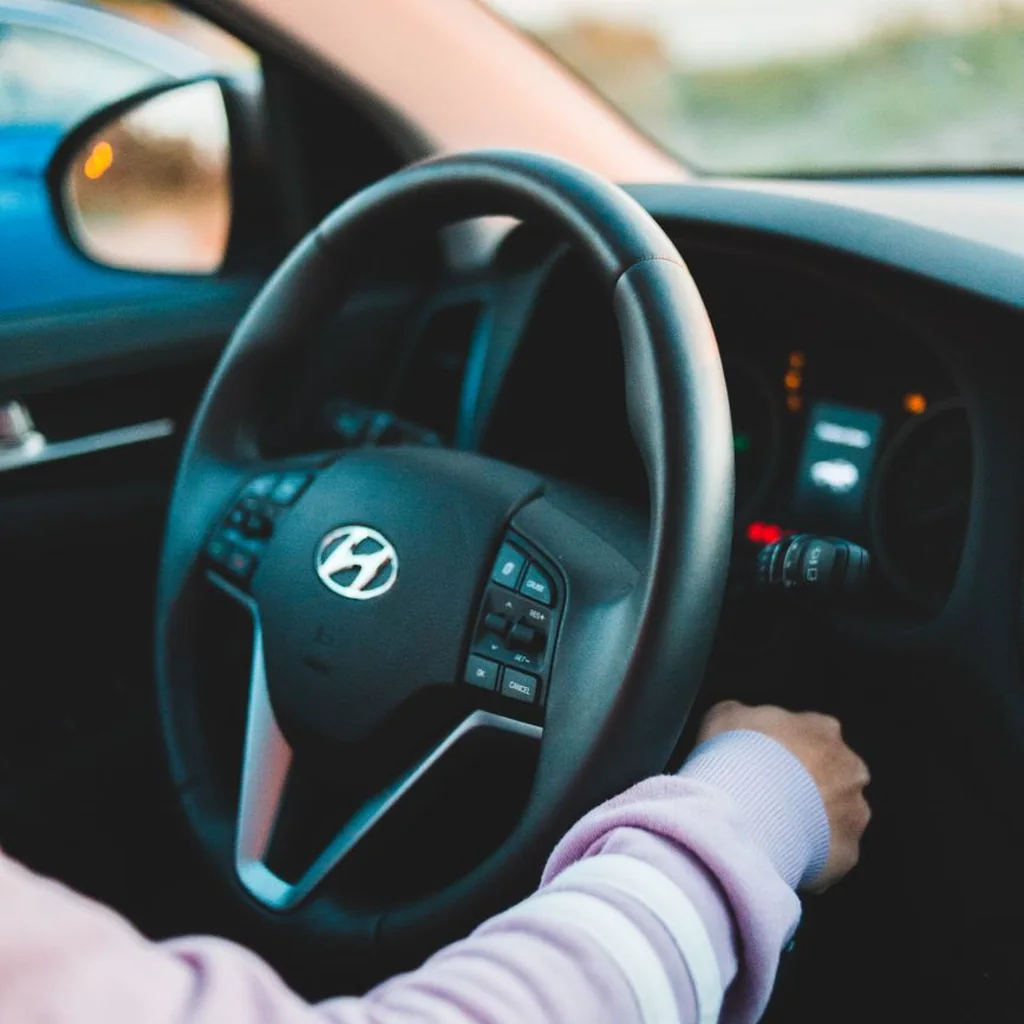
Photo: Erik Mclean on Pexels
Die erste Fahrstunde
The First Driving Lesson
Daniel sits behind the wheel for the first time in an almost empty parking lot, with his father Thomas beside him.
Three short parts. Read each part in German first; tap “Show English” under a paragraph when you need the translation.


Part 1
Daniel sitzt zum ersten Mal am Steuer. Neben ihm sitzt sein Vater Thomas. Sie stehen auf einem großen, fast leeren Parkplatz.
Show EnglishHide English
Daniel sits behind the wheel for the first time. His father, Thomas, sits beside him. They are in a large, almost empty parking lot.
„Erst die Kupplung ganz durchtreten“, sagt Thomas. Daniel nickt, schaut auf seine Füße und startet den Motor.
Show EnglishHide English
“First, press the clutch pedal all the way down,” says Thomas. Daniel nods, looks at his feet, and starts the engine.
Das Auto macht einen kleinen Sprung und bleibt stehen. Daniel wird rot. „Ich dachte, ich hätte die Kupplung schon durchgetreten.“
Show EnglishHide English
The car jumps a little and stops. Daniel turns red. “I thought I had already pressed the clutch all the way down.”
„Noch einmal“, sagt Thomas. „Wir haben Zeit.“
Show EnglishHide English
“Try again,” says Thomas. “We have time.”
Beim zweiten Versuch fährt das Auto langsam los. Thomas hält sich am Türgriff fest. Er möchte sagen: „Nicht so nah an die Linie!“ Aber er sagt nichts.
Show EnglishHide English
On the second try, the car moves off slowly. Thomas holds on to the door handle. He wants to say, “Not so close to the line!” But he says nothing.
Daniel fährt sehr langsam weiter. Dann kommt eine Kurve. Er dreht das Lenkrad zu spät, und das Auto fährt über die weiße Linie auf dem Boden.
Show EnglishHide English
Daniel drives on very slowly. Then they come to a turn. He turns the steering wheel too late, and the car drives over the white line on the ground.
Thomas öffnet den Mund. Daniel sieht ihn kurz an und fragt: „Willst du etwas sagen?“
Show EnglishHide English
Thomas opens his mouth. Daniel looks at him briefly and asks, “Do you want to say something?”
In diesem Moment rollt ein Einkaufswagen vor ihnen über den Parkplatz. Daniel nimmt schnell den Fuß vom Gas.
Show EnglishHide English
At that moment, a shopping cart rolls across the parking lot in front of them. Daniel quickly takes his foot off the gas.
Part 2Das Einparken lernen(Learning to Park)
Daniel drückt auf die Bremse. Das Auto bleibt stehen, und der Einkaufswagen rollt langsam an ihnen vorbei.
Show EnglishHide English
Daniel presses the brake. The car stops, and the shopping cart slowly rolls past them.
„Gut gemacht“, sagt Thomas und lässt den Türgriff los. „Und ja, ich wollte eben etwas sagen. Aber du sollst auch selbst sehen, wann du lenken musst.“
Show EnglishHide English
“Well done,” says Thomas and lets go of the door handle. “And yes, I was about to say something. But you should also see for yourself when you need to turn.”
Daniel atmet tief durch. „Ich habe den Einkaufswagen erst spät gesehen.“
Show EnglishHide English
Daniel takes a deep breath. “I didn’t see the shopping cart until late.”
„Jetzt ist der Weg frei. Fahr einfach langsam weiter.“
Show EnglishHide English
“The way is clear now. Just drive on slowly.”
Daniel fährt wieder an. Diesmal fährt er ruhig um die Kurve und bleibt zwischen den weißen Linien. Thomas lächelt und legt die Hände auf seine Knie.
Show EnglishHide English
Daniel starts moving again. This time, he drives calmly around the turn and stays between the white lines. Thomas smiles and puts his hands on his knees.
Nach einer Runde zeigt Thomas auf eine freie Parklücke. „Möchtest du dort parken?“
Show EnglishHide English
After one lap, Thomas points to an empty parking space. “Would you like to park there?”
Daniel nickt. Er fährt an der Lücke vorbei, hält an und sieht in den Spiegel. Dann fährt er langsam rückwärts.
Show EnglishHide English
Daniel nods. He drives past the space, stops, and looks in the mirror. Then he slowly reverses.
Das Auto steht bald in der Lücke, aber ziemlich schief. Daniel sieht zu seinem Vater. „Kann ich das noch besser machen?“
Show EnglishHide English
The car is soon in the space, but it is quite crooked. Daniel looks at his father. “Can I do that better?”
Thomas betrachtet die Linien und überlegt kurz, wie er es erklären soll.
Show EnglishHide English
Thomas looks at the lines and thinks for a moment about how to explain it.
Part 3Einparken mit Thomas(Parking with Thomas)
„Ja“, sagt Thomas. „Fahr ein Stück nach vorn und dreh das Lenkrad dabei ein wenig nach rechts.“
Show EnglishHide English
“Yes,” says Thomas. “Drive forward a little and turn the steering wheel slightly to the right as you do.”
Daniel macht es. Dann hält er an und schaut wieder in den Spiegel. „Und jetzt zurück?“
Show EnglishHide English
Daniel does it. Then he stops and looks in the mirror again. “And now reverse?”
„Genau. Ganz langsam.“
Show EnglishHide English
“Exactly. Very slowly.”
Diesmal steht das Auto gerade zwischen den Linien. Daniel stellt den Motor aus und lässt die Hände auf dem Lenkrad liegen.
Show EnglishHide English
This time, the car is straight between the lines. Daniel turns off the engine and leaves his hands on the steering wheel.
„Geschafft!“, sagt er und lacht. „Hast du gesehen, wie langsam ich war?“
Show EnglishHide English
“I did it!” he says and laughs. “Did you see how slowly I was going?”
„Ja“, sagt Thomas. „Ich hatte viel Zeit, mir den Parkplatz anzusehen.“
Show EnglishHide English
“Yes,” says Thomas. “I had plenty of time to look at the parking lot.”
Daniel sieht auf den Türgriff. „Und dich am Türgriff festzuhalten.“
Show EnglishHide English
Daniel looks at the door handle. “And to hold on to the door handle.”
Thomas lacht auch. „Das hast du also gemerkt.“
Show EnglishHide English
Thomas laughs too. “So you noticed.”
„Natürlich. Ich konnte deine Hand gut sehen.“
Show EnglishHide English
“Of course. I could see your hand clearly.”
Thomas schaut noch einmal auf die weißen Linien. „Das Einparken war gut. Die nächste Runde wird bestimmt leichter.“
Show EnglishHide English
Thomas looks at the white lines once more. “The parking was good. The next lap will surely be easier.”
Daniel öffnet seine Tür und steigt aus. Thomas steigt ebenfalls aus, und zusammen gehen sie einmal um das Auto. Es steht noch immer schön gerade. Daniel grinst, und Thomas klopft ihm auf die Schulter.
Show EnglishHide English
Daniel opens his door and gets out. Thomas gets out too, and together they walk once around the car. It is still nice and straight. Daniel grins, and Thomas pats him on the shoulder.
Practise this German story
Vocabulary in context
Important words and phrases
am Steuer
phrasebehind the wheel
Daniel sitzt am Steuer.
Daniel is behind the wheel.
der Parkplatz
nounparking lot
Sie stehen auf einem Parkplatz.
They are standing in a parking lot.
die Kupplung
nounclutch
Er tritt die Kupplung ganz durch.
He presses the clutch all the way down.
der Motor
nounengine
Daniel startet den Motor.
Daniel starts the engine.
der Türgriff
noundoor handle
Thomas hält sich am Türgriff fest.
Thomas is holding on to the door handle.
die Bremse
nounbrake
Daniel drückt auf die Bremse.
Daniel presses the brake.
das Lenkrad
nounsteering wheel
Daniel dreht das Lenkrad nach rechts.
Daniel turns the steering wheel to the right.
die Kurve
nounturn
Dann kommt eine Kurve.
Then a turn comes.
die Parklücke
nounparking space
Thomas zeigt auf eine freie Parklücke.
Thomas points to an empty parking space.
rückwärts
adverbin reverse
Er fährt langsam rückwärts.
He drives slowly in reverse.
einparken
verbto park into a space
Daniel kann gut einparken.
Daniel can park well.
Check your understanding
Comprehension questions
Choose an answer, check it, then move to the next question.
Question 1 of 3
- Question 1: current not answered
- Question 2: not answered
- Question 3: not answered
Notice the language
Language notes
sollen + Infinitiv
German uses sollen + infinitive to express an instruction or expectation, often from another person. In the story, “Aber du sollst auch selbst sehen, wann du lenken musst” means “But you should also see for yourself when you need to steer.” For gentle advice, the conditional form solltest is often more appropriate than sollst.
Du sollst langsam fahren.
You should drive slowly.
More German stories to read next
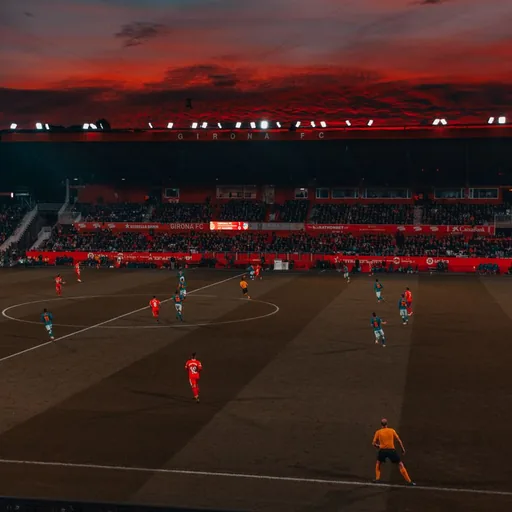
Die Liste für die Fußballmannschaft
The Soccer Team List
Noah and Tim, both fifteen and longtime teammates, wait outside the sports hall for the soccer team list, and only one place is left.
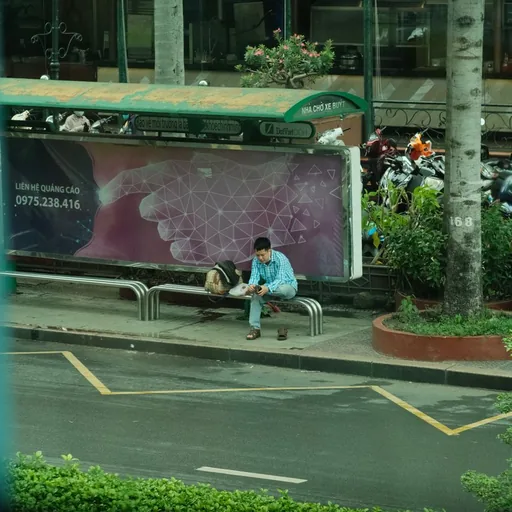
Der verpasste Bus
The Bus He Missed
Ben is waiting at a bus stop on his way to meet his friend Sophie for breakfast at a café at nine.
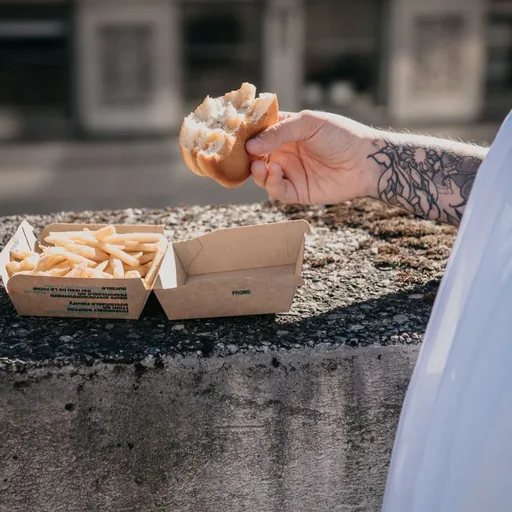
Die falsche Tüte
The Wrong Bag
Tobias waits for his lunch at a small takeaway shop while the woman behind him orders rice with vegetables and chicken.
Grünes Essen
Green Food
Julia puts two plates of green noodles, broccoli, and green sauce on the table, but her son Paul refuses to eat green food.