
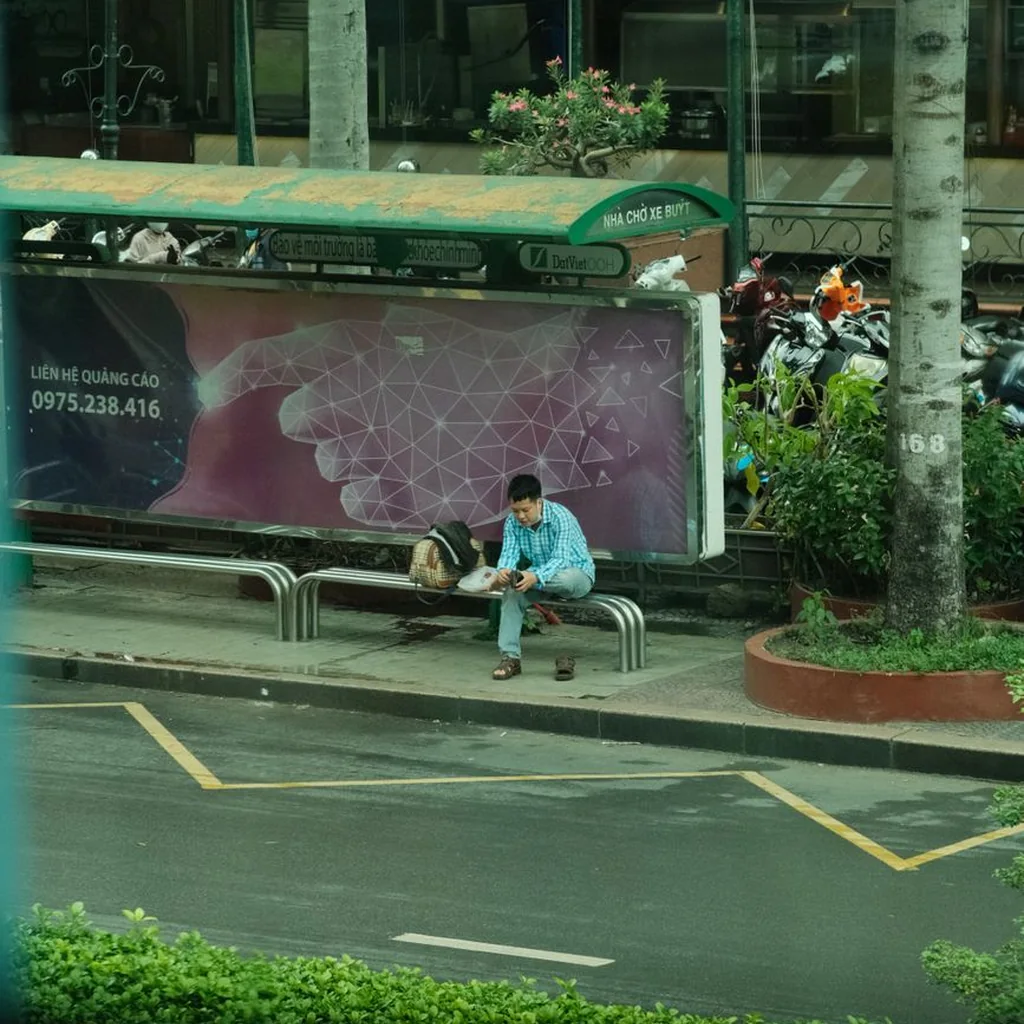
Photo: Pew Nguyen on Pexels
Der verpasste Bus
The Bus He Missed
Ben is waiting at a bus stop on his way to meet his friend Sophie for breakfast at a café at nine.
Three short parts. Read each part in German first; tap “Show English” under a paragraph when you need the translation.


Part 1
Ben steht an der Bushaltestelle und schaut auf sein Handy. Um neun Uhr möchte er mit seiner Freundin Sophie im Café frühstücken. Der Bus soll gleich kommen, und bis zum Café sind es nur drei Haltestellen.
Show EnglishHide English
Ben is standing at the bus stop and looking at his phone. He wants to have breakfast with his friend Sophie at a café at nine o’clock. The bus should arrive soon, and the café is only three stops away.
Da sieht Ben, dass sein linker Schuh offen ist. Er stellt seine Tasche auf die Bank und geht in die Hocke. Der Schnürsenkel ist nass, und er braucht einen Moment, um ihn zu binden.
Show EnglishHide English
Then Ben sees that his left shoe is untied. He puts his bag on the bench and squats down. The shoelace is wet, and he needs a moment to tie it.
Als er wieder aufsteht, fährt der Bus gerade los. Ben läuft ein paar Schritte und hebt die Hand, aber der Fahrer sieht ihn nicht. Durch das Fenster sieht Ben noch einen freien Platz.
Show EnglishHide English
When he stands up again, the bus is just pulling away. Ben runs a few steps and raises his hand, but the driver does not see him. Through the window, Ben can still see an empty seat.
„Oh nein!“, sagt er laut. Eine Frau neben der Bank lächelt. „Der nächste Bus kommt in zwanzig Minuten.“
Show EnglishHide English
“Oh no!” he says loudly. A woman beside the bench smiles. “The next bus comes in twenty minutes.”
Ben setzt sich und schreibt Sophie: „Ich komme später. Mein Bus ist ohne mich gefahren.“ Er schickt die Nachricht ab und steckt das Handy in die Tasche.
Show EnglishHide English
Ben sits down and texts Sophie: “I’ll be late. My bus left without me.” He sends the message and puts his phone in his pocket.
Kurz darauf hört er sein Handy. Sophie antwortet: „Das ist ja lustig.“
Show EnglishHide English
A little later, he hears his phone. Sophie replies: “That’s really funny.”
Part 2Die falsche Haltestelle(The Wrong Bus Stop)
Ben liest Sophies Nachricht noch einmal. Was ist daran lustig? Er wollte doch pünktlich im Café sein.
Show EnglishHide English
Ben reads Sophie’s message again. What is funny about it? He wanted to be at the café on time.
Dann kommt eine zweite Nachricht: „Ich sitze in diesem Bus. Ich habe dich an der Haltestelle gesehen.“ Ben wird rot. Er stellt sich vor, wie er hinter dem Bus herläuft und mit der Hand winkt.
Show EnglishHide English
Then another message arrives: “I’m on this bus. I saw you at the bus stop.” Ben turns red. He imagines himself running after the bus and waving his hand.
Er ruft Sophie an. „Hast du wirklich alles gesehen?“, fragt er. „Ja“, sagt sie und lacht. „Sogar deinen Schuh.“
Show EnglishHide English
He calls Sophie. “Did you really see everything?” he asks. “Yes,” she says, laughing. “Even your shoe.”
Ben muss jetzt auch lachen. „Du hättest dem Fahrer sagen können, dass er warten soll.“
Show EnglishHide English
Now Ben has to laugh too. “You could have told the driver to wait.”
„Ich saß ganz hinten“, sagt Sophie. „Aber ich steige an der nächsten Haltestelle aus und komme zu dir zurück. Dann gehen wir zusammen zum Café. Von deiner Haltestelle sind es zu Fuß nur zehn Minuten.“
Show EnglishHide English
“I was sitting right at the back,” Sophie says. “But I’ll get off at the next stop and come back to you. Then we’ll walk to the café together. It’s only a ten-minute walk from your stop.”
Ben steht auf und nimmt seine Tasche. Da sieht er auf seinem Handy eine neue Nachricht von Sophie: „Ich bin ausgestiegen. Es gibt hier aber zwei Straßen. Welche soll ich nehmen?“
Show EnglishHide English
Ben stands up and picks up his bag. Then he sees a new message from Sophie on his phone: “I’ve got off. But there are two streets here. Which one should I take?”
Part 3Frühstück nach dem Bus(Breakfast After the Bus)
Ben schaut auf den Plan an der Haltestelle. Er kennt die Gegend ein wenig und findet die Straße neben dem Park, die zurück zu ihm führt. „Nimm die Straße mit den großen Bäumen“, schreibt er Sophie.
Show EnglishHide English
Ben looks at the map at the bus stop. He knows the area a little and finds the street beside the park that leads back to him. “Take the street with the big trees,” he texts Sophie.
Kurz darauf sieht er sie schon kommen. Sie trägt eine rote Jacke und winkt ihm zu. Ben hebt seinen Fuß. „Beide Schuhe sind jetzt zu“, sagt er.
Show EnglishHide English
A little later, he sees her coming. She is wearing a red jacket and waves to him. Ben lifts his foot. “Both my shoes are tied now,” he says.
„Sehr gut“, sagt Sophie. „Dann können wir ja los.“ Sie gehen zusammen die Straße entlang und erzählen sich von ihrer Woche.
Show EnglishHide English
“Very good,” says Sophie. “Then we can get going.” They walk along the street together and tell each other about their week.
Vor dem Café stehen zwei kleine Tische in der Sonne. Drinnen bestellt Ben Kaffee und Brötchen. Sophie nimmt Tee und ein Ei.
Show EnglishHide English
There are two small tables in the sun outside the café. Inside, Ben orders coffee and bread rolls. Sophie has tea and an egg.
Als sie sich draußen hinsetzen, sagt Ben: „Es tut mir leid, dass du aus dem Bus aussteigen musstest.“
Show EnglishHide English
As they sit down outside, Ben says, “I’m sorry you had to get off the bus.”
Sophie lächelt. „Ich bin gern ein Stück mit dir gelaufen. Und wir sind ja noch rechtzeitig zum Frühstück hier.“
Show EnglishHide English
Sophie smiles. “I was happy to walk part of the way with you. And we’re still here in time for breakfast.”
Ben nimmt sein Brötchen. „Nächstes Mal binde ich meine Schuhe zu Hause.“ Sophie lacht, und Ben lacht mit.
Show EnglishHide English
Ben picks up his bread roll. “Next time I’ll tie my shoes at home.” Sophie laughs, and Ben laughs with her.
Practise this German story
Vocabulary in context
Important words and phrases
an der Bushaltestelle
phraseat the bus stop
Ich warte an der Bushaltestelle.
I am waiting at the bus stop.
Handy
nounmobile phone
Mein Handy ist in meiner Tasche.
My mobile phone is in my bag.
frühstücken
verbto have breakfast
Wir frühstücken heute im Café.
We are having breakfast at the café today.
Haltestelle
nounstop
Die nächste Haltestelle ist dort vorne.
The next stop is up there.
Schnürsenkel
nounshoelace
Mein Schnürsenkel ist locker.
My shoelace is loose.
binden
verbto tie
Ich muss meine Schuhe binden.
I have to tie my shoes.
Fahrer
noundriver
Der Fahrer wartet an der Haltestelle.
The driver is waiting at the stop.
Nachricht
nounmessage
Ich schreibe ihr eine Nachricht.
I am writing her a message.
aussteigen
verbto get off
Ich steige an der nächsten Haltestelle aus.
I get off at the next stop.
Straße
nounstreet
Diese Straße führt zum Park.
This street leads to the park.
Check your understanding
Comprehension questions
Choose an answer, check it, then move to the next question.
Question 1 of 3
- Question 1: current not answered
- Question 2: not answered
- Question 3: not answered
Notice the language
Language notes
Es tut mir leid, dass ...
Use this pattern to apologize for a situation or action. The clause after "dass" is a normal subordinate clause, so the verb goes to the end. It is useful for polite, everyday German.
Es tut mir leid, dass du warten musstest.
I'm sorry that you had to wait.
More German stories to read next

Die falsche Tüte
The Wrong Bag
Tobias waits for his lunch at a small takeaway shop while the woman behind him orders rice with vegetables and chicken.

Grünes Essen
Green Food
Julia puts two plates of green noodles, broccoli, and green sauce on the table, but her son Paul refuses to eat green food.
Der falsche Chat
The Wrong Chat
Mia waits for her friend Melanie at her favorite café, but she accidentally sends Leon a message meant for Melanie.
Zahlung abgelehnt
Payment Declined
Ida, a sixteen-year-old cashier at a small supermarket, has a problem when regular customer Mr. Weber’s card is declined.