
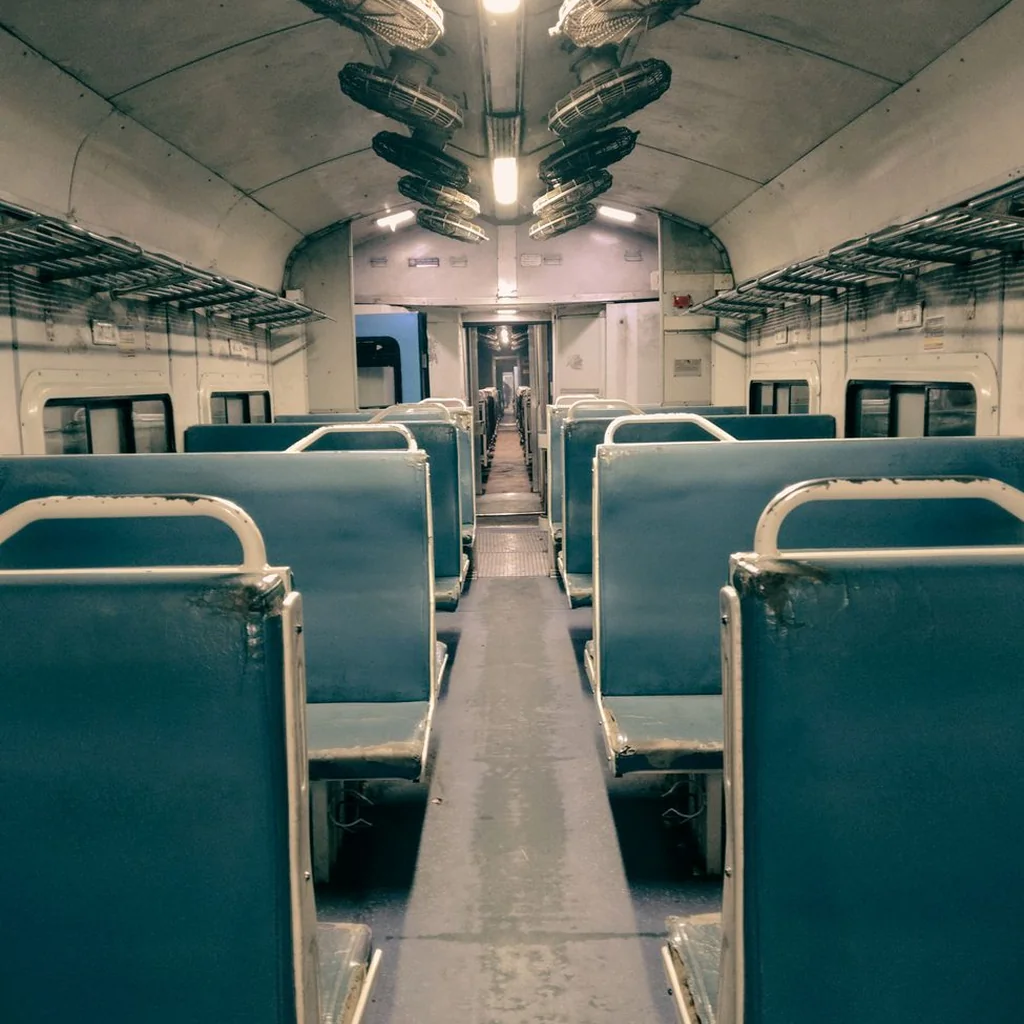
Perdu au dépôt
Lost at the Depot
After visiting his sister, Arthur takes a coach home and falls asleep, then wakes up alone at an unfamiliar depot.
Three short parts. Read each part in French first; tap “Show English” under a paragraph when you need the translation.


Part 1
Arthur prend le car pour rentrer chez lui après une journée chez sa sœur. Il s’assoit près de la fenêtre et pose son sac à ses pieds.
Show EnglishHide English
Arthur takes the coach home after spending the day at his sister’s. He sits by the window and puts his bag at his feet.
Dehors, il pleut. Le bruit du moteur est régulier et Arthur ferme les yeux quelques minutes.
Show EnglishHide English
It is raining outside. The sound of the engine is steady, and Arthur closes his eyes for a few minutes.
Quand il se réveille, le car ne roule plus. Il fait sombre et il n’y a personne autour de lui.
Show EnglishHide English
When he wakes up, the coach is no longer moving. It is dark, and there is no one around him.
Arthur regarde par la fenêtre. Il voit plusieurs cars, un petit bâtiment et une grande grille. Il ne reconnaît pas cet endroit.
Show EnglishHide English
Arthur looks out of the window. He sees several coaches, a small building, and a large gate. He does not recognize the place.
Il prend son sac et avance jusqu’à la porte. Elle est fermée. Il cherche le bouton pour l’ouvrir, mais il ne le trouve pas.
Show EnglishHide English
He picks up his bag and walks to the door. It is closed. He looks for the button to open it, but he cannot find it.
« Il y a quelqu’un ? » appelle-t-il.
Show EnglishHide English
“Is anyone there?” he calls.
Personne ne répond. Arthur sort son téléphone, mais il ne connaît pas l’adresse du dépôt. Il regarde de nouveau dehors et aperçoit une femme qui sort du petit bâtiment. Elle marche vers son car.
Show EnglishHide English
No one answers. Arthur takes out his phone, but he does not know the address of the depot. He looks outside again and sees a woman coming out of the small building. She walks toward his coach.
Part 2Le car pour la gare(The Coach to the Station)
Arthur frappe doucement à la vitre. La femme s’arrête, lève la tête et ouvre la porte du car.
Show EnglishHide English
Arthur knocks gently on the window. The woman stops, looks up, and opens the coach door.
« Vous êtes encore là ? Je croyais que tout le monde était descendu ! »
Show EnglishHide English
“You’re still here? I thought everyone had got off!”
Arthur descend, le visage rouge. « Désolé, je me suis endormi. C’est bien le car pour la gare ? »
Show EnglishHide English
Arthur gets off, his face red. “Sorry, I fell asleep. Is this the coach to the station?”
« Oui, mais nous sommes au dépôt, maintenant. Je suis la conductrice. Je m’appelle Louise. »
Show EnglishHide English
“Yes, but we’re at the depot now. I’m the driver. My name is Louise.”
Elle lui explique que la gare est à vingt minutes à pied. Arthur regarde la pluie et lui demande s’il y a un bus.
Show EnglishHide English
She explains that the station is a twenty-minute walk away. Arthur looks at the rain and asks her if there is a bus.
« Oui, l’arrêt est juste devant la grille. Venez, je vais vous montrer. »
Show EnglishHide English
“Yes, the bus stop is just in front of the gate. Come with me; I’ll show you.”
Ils traversent le dépôt ensemble. À l’arrêt, Louise regarde les horaires et grimace : le dernier bus est déjà passé.
Show EnglishHide English
They cross the depot together. At the bus stop, Louise looks at the timetable and grimaces: the last bus has already gone.
Arthur ouvre son sac pour chercher son parapluie. Il sort une bouteille d’eau, un livre, puis une écharpe. Son parapluie n’y est pas.
Show EnglishHide English
Arthur opens his bag to look for his umbrella. He takes out a bottle of water, a book, and then a scarf. His umbrella isn’t there.
Part 3Le parapluie bleu(The Blue Umbrella)
Arthur regarde dans son sac, puis regarde la pluie. « Je crois que mon parapluie est chez ma sœur. »
Show EnglishHide English
Arthur looks in his bag, then looks at the rain. “I think my umbrella is at my sister’s.”
Louise sourit. « Attendez ici. J’en ai un dans le bâtiment. Je reviens. »
Show EnglishHide English
Louise smiles. “Wait here. I have one in the building. I’ll be back.”
Elle revient avec un grand parapluie bleu et le lui donne. « Vous pourrez me le rendre à la gare demain. Je conduis le car de neuf heures. »
Show EnglishHide English
She comes back with a large blue umbrella and gives it to him. “You can return it to me at the station tomorrow. I’m driving the nine o’clock coach.”
« Merci ! Et pardon pour tout à l’heure. Vous avez dû avoir une surprise. »
Show EnglishHide English
“Thank you! And I’m sorry about earlier. You must have been surprised.”
« Un peu ! La prochaine fois, je regarderai derrière les sièges avant de partir. »
Show EnglishHide English
“A little! Next time, I’ll look behind the seats before I leave.”
Arthur rit. « Et moi, je mettrai une alarme sur mon téléphone. »
Show EnglishHide English
Arthur laughs. “And I’ll set an alarm on my phone.”
Louise lui montre la rue à prendre. Arthur ouvre le parapluie et marche jusqu’à la gare, les pieds un peu mouillés mais la tête au sec.
Show EnglishHide English
Louise shows him which street to take. Arthur opens the umbrella and walks to the station, his feet a little wet but his head dry.
Le lendemain matin, il rend le parapluie à Louise avant le départ du car. Ils se disent au revoir avec le sourire.
Show EnglishHide English
The next morning, he returns the umbrella to Louise before the coach leaves. They say goodbye with a smile.
Practise this French story
Vocabulary in context
Important words and phrases
car
nouncoach (long-distance bus)
Le car arrive à huit heures.
The coach arrives at eight o’clock.
fenêtre
nounwindow
Je regarde par la fenêtre.
I look out the window.
sac
nounbag
Mon sac est sur la chaise.
My bag is on the chair.
pluie
nounrain
Arthur regarde la pluie par la fenêtre.
Arthur looks at the rain through the window.
porte
noundoor
La porte est fermée.
The door is closed.
gare
nountrain station
La gare est loin d’ici.
The station is far from here.
arrêt
nounstop
L’arrêt est juste devant la grille.
The stop is right in front of the gate.
conductrice
nounfemale driver
La conductrice ouvre la porte.
The female driver opens the door.
horaires
nountimetables
Je regarde les horaires du bus.
I am looking at the bus timetable.
parapluie
nounumbrella
J’ai oublié mon parapluie.
I forgot my umbrella.
Check your understanding
Comprehension questions
Choose an answer, check it, then move to the next question.
Question 1 of 3
- Question 1: current not answered
- Question 2: not answered
- Question 3: not answered
Notice the language
Language notes
Il y a + nom
Use il y a to say that something exists or is in a place. It is very useful for pointing out people and things. You can reuse it in many everyday situations, for example to ask whether someone is present or to describe what is somewhere.
Il y a quelqu’un ?
Is anyone there?
More French stories to read next

La tasse bleue au marché
The Blue Cup at the Market
On vacation by the sea, Louise visits a market and sees a small blue cup with a white fish that she wants for her sister.
Le grand ours en peluche
The Big Teddy Bear
At the village festival, Yanis wins a big teddy bear and must choose which of his two sisters to give it to.
Les chaussures de Théo au musée
Théo’s Shoes at the Museum
Théo enters a museum with his mother, but his new shoes make a terrible noise on the floor in the quiet hall.

Une soirée chez Clara
An Evening at Clara’s
Camille arrives at Clara’s house for a sleepover with Martine, but she has forgotten her sleeping bag.