
Photo: Blue Arauz on Pexels
Les chaussures de Théo au musée
Théo’s Shoes at the Museum
Théo enters a museum with his mother, but his new shoes make a terrible noise on the floor in the quiet hall.
Three short parts. Read each part in French first; tap “Show English” under a paragraph when you need the translation.


Part 1
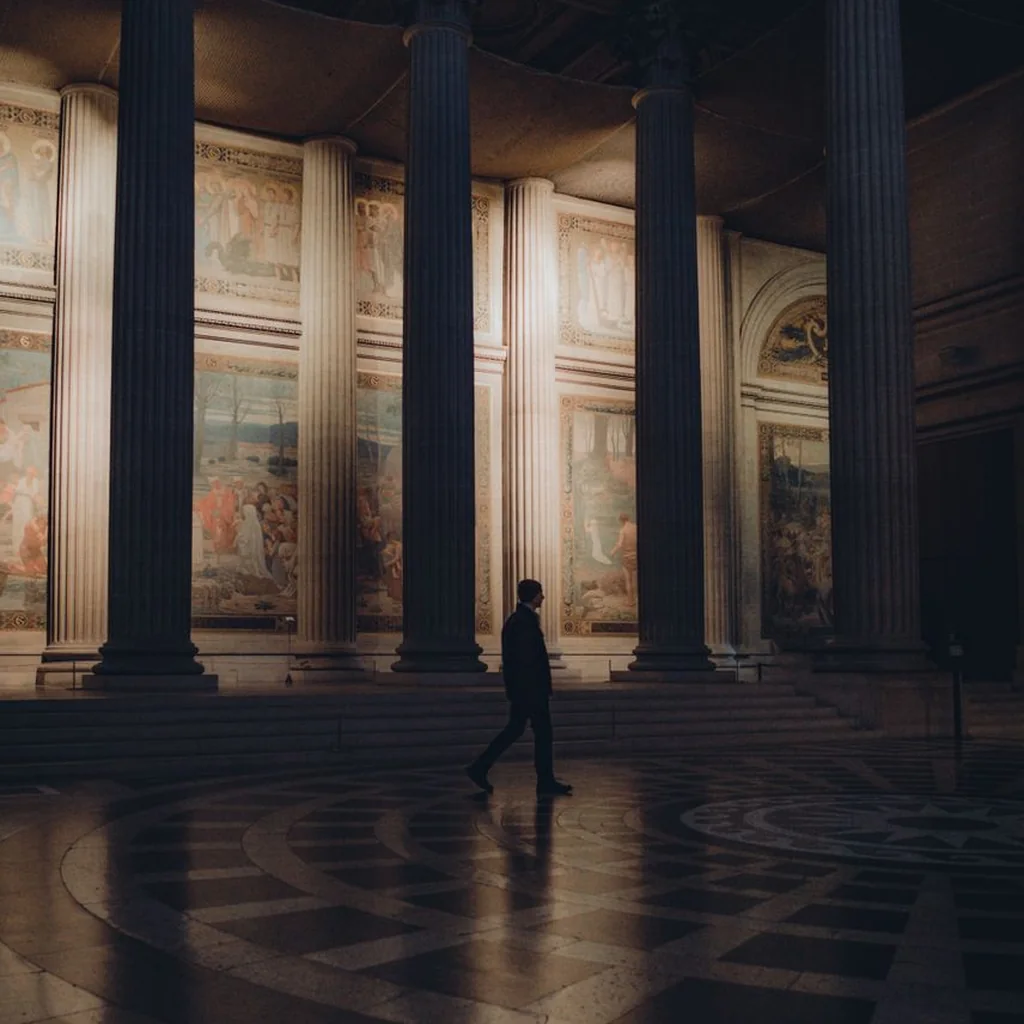
Théo entre au musée avec sa mère. Dans la grande salle, tout le monde parle à voix basse. Sur les murs blancs, il y a des tableaux de fleurs et de jardins.
Show EnglishHide English
Théo enters the museum with his mother. In the large hall, everyone speaks quietly. On the white walls, there are paintings of flowers and gardens.
Le garçon fait trois pas. Couic, couic, couic ! Ses chaussures neuves font un bruit terrible sur le sol.
Show EnglishHide English
The boy takes three steps. Squeak, squeak, squeak! His new shoes make a terrible noise on the floor.
Une dame se retourne. Théo baisse les yeux et s’arrête devant un tableau. Sa mère lui sourit, mais il voit qu’elle a envie de rire.
Show EnglishHide English
A woman turns around. Théo looks down and stops in front of a painting. His mother smiles at him, but he can see that she wants to laugh.
« Je ne peux pas marcher comme ça », dit-il tout bas.
Show EnglishHide English
“I can’t walk like this,” he says quietly.
Il essaie de marcher sur la pointe des pieds. Couic ! Le bruit est encore plus fort. Cette fois, un monsieur près de la porte lève la tête.
Show EnglishHide English
He tries to walk on tiptoe. Squeak! The noise is even louder. This time, a man near the door looks up.
Théo devient tout rouge. Il voudrait voir le grand tableau au fond de la salle, mais il n’ose plus bouger.
Show EnglishHide English
Théo turns bright red. He wants to see the big painting at the back of the hall, but he doesn’t dare move anymore.
Sa mère regarde ses chaussures, puis elle lui montre un banc près de la fenêtre.
Show EnglishHide English
His mother looks at his shoes, then points to a bench near the window.
« Viens t’asseoir. J’ai peut-être une idée. »
Show EnglishHide English
“Come and sit down. I may have an idea.”
Part 2Le banc silencieux(The Quiet Bench)
Théo traverse la salle jusqu’au banc. À chaque pas, ses chaussures font couic. Il entend même un petit rire derrière lui.
Show EnglishHide English
Théo crosses the hall to the bench. With every step, his shoes squeak. He even hears a little laugh behind him.
Quand il s’assoit enfin, sa mère ouvre son sac et sort un paquet de mouchoirs. Elle en donne deux à Théo.
Show EnglishHide English
When he finally sits down, his mother opens her bag and takes out a packet of tissues. She gives two to Théo.
« Passe-les sous tes chaussures. Il y a peut-être quelque chose sur les semelles. »
Show EnglishHide English
“Wipe the bottoms of your shoes with them. There may be something on the soles.”
Théo nettoie les semelles avec soin. Puis il se lève et fait un pas. Pas de bruit ! Il en fait un deuxième, puis un troisième.
Show EnglishHide English
Théo carefully cleans the soles. Then he stands up and takes a step. No noise! He takes a second step, then a third.
« Ça marche ! » dit-il, un peu trop fort.
Show EnglishHide English
“It works!” he says, a little too loudly.
Plusieurs personnes se tournent vers lui. Sa mère pose un doigt sur ses lèvres, et Théo étouffe un rire. Tous les deux avancent vers le grand tableau.
Show EnglishHide English
Several people turn toward him. His mother puts a finger to her lips, and Théo stifles a laugh. The two of them walk toward the big painting.
Mais devant les fleurs peintes, Théo bouge un pied. Couic ! Le bruit revient, et sa mère ouvre de grands yeux.
Show EnglishHide English
But in front of the painted flowers, Théo moves one foot. Squeak! The noise comes back, and his mother’s eyes widen.
Théo regarde le sol, puis les mouchoirs qu’il tient encore dans sa main.
Show EnglishHide English
Théo looks at the floor, then at the tissues he is still holding in his hand.
Part 3Les chaussures silencieuses(The Silent Shoes)
Théo garde les mouchoirs dans sa main et retourne au banc avec sa mère. Couic, couic ! Cette fois, il avance lentement et essaie de ne pas regarder les autres.
Show EnglishHide English
Théo keeps the tissues in his hand and returns to the bench with his mother. Squeak, squeak! This time, he walks slowly and tries not to look at the others.
Assis près de la fenêtre, il nettoie encore ses semelles. Sa mère remarque une petite étiquette sous chaque chaussure.
Show EnglishHide English
Sitting by the window, he cleans his soles again. His mother notices a little label under each shoe.
« Regarde, on les a oubliées ! On peut essayer de les enlever. »
Show EnglishHide English
“Look, we forgot them! We can try to take them off.”
Théo tire sur les étiquettes. Elles ne partent pas facilement, mais sa mère l’aide, et bientôt les deux petits papiers sont dans sa main.
Show EnglishHide English
Théo pulls on the labels. They don’t come off easily, but his mother helps him, and soon the two little pieces of paper are in his hand.
Le garçon se lève et fait quelques pas. Cette fois, ses chaussures restent silencieuses. Il traverse la salle avec un grand sourire.
Show EnglishHide English
The boy stands up and takes a few steps. This time, his shoes stay silent. He crosses the hall with a big smile.
Devant le tableau, il découvre un jardin plein de fleurs jaunes. Un petit chat dort sous une chaise.
Show EnglishHide English
In front of the painting, he discovers a garden full of yellow flowers. A little cat is sleeping under a chair.
« Je ne l’avais pas vu de loin », murmure-t-il.
Show EnglishHide English
“I couldn’t see it from far away,” he whispers.
Sa mère sourit. Ensemble, ils restent là un moment pour regarder le chat et les fleurs.
Show EnglishHide English
His mother smiles. Together, they stay there for a while to look at the cat and the flowers.
Practise this French story
Vocabulary in context
Important words and phrases
musée
nounmuseum
Nous allons au musée samedi.
We are going to the museum on Saturday.
à voix basse
phrasequietly; in a low voice
Parle à voix basse, s'il te plaît.
Speak quietly, please.
tableau
nounpainting
Le tableau est très grand.
The painting is very big.
chaussures neuves
noun phrasenew shoes
Mes chaussures neuves sont confortables.
My new shoes are comfortable.
sur la pointe des pieds
phraseon tiptoe
L'enfant marche sur la pointe des pieds.
The child walks on tiptoe.
banc
nounbench
Nous nous asseyons sur un banc.
We sit on a bench.
mouchoirs
nountissues
J'ai des mouchoirs dans mon sac.
I have tissues in my bag.
semelles
nounsoles
Les semelles sont sales.
The soles are dirty.
étiquette
nounlabel
Il y a une étiquette sur le pull.
There is a label on the sweater.
lentement
adverbslowly
Va lentement, s'il te plaît.
Go slowly, please.
Check your understanding
Comprehension questions
Choose an answer, check it, then move to the next question.
Question 1 of 3
- Question 1: current not answered
- Question 2: not answered
- Question 3: not answered
Notice the language
Language notes
ne pas pouvoir + infinitif
Use this pattern to say that you cannot do something. Put ne ... pas around pouvoir, then an infinitive: 'Je ne peux pas marcher comme ça.' It is very common for inability or impossibility.
Je ne peux pas marcher comme ça.
I can't walk like this.
More French stories to read next

Une soirée chez Clara
An Evening at Clara’s
Camille arrives at Clara’s house for a sleepover with Martine, but she has forgotten her sleeping bag.

Le chocolat en forme de cœur
The Heart-Shaped Chocolate
For her birthday, Élodie receives a box of chocolates and saves her favorite heart-shaped one for later.

Tu m’as manqué
I Missed You
On the bus to the airport, Nicolas practices what he wants to say to his sister Julie, who is returning after six months abroad.
La baguette et les dix centimes
The Baguette and the Ten Cents
This morning, Mathieu is at home in his pajamas when his mother sends him to the bakery with one euro and twenty cents to buy a baguette.