
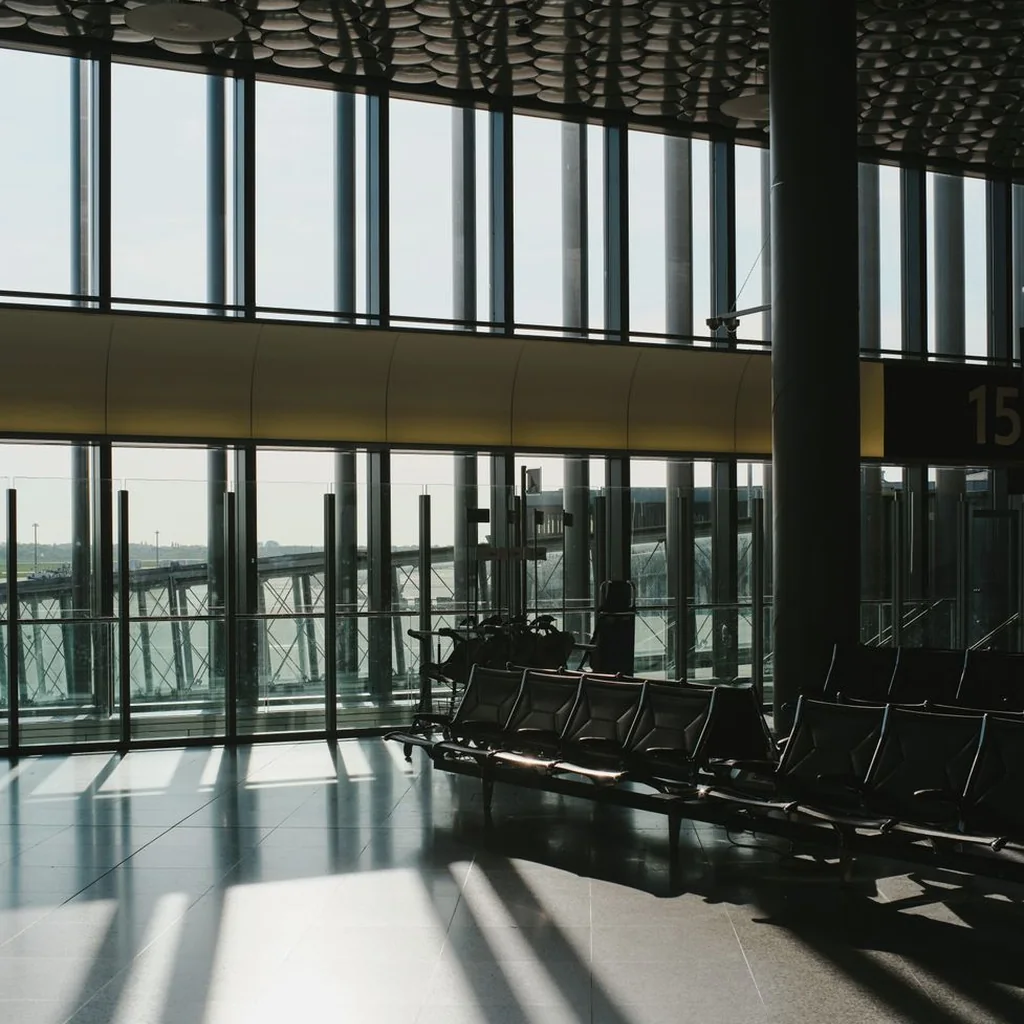
Photo: Calvin Seng on Pexels
Tu m’as manqué
I Missed You
On the bus to the airport, Nicolas practices what he wants to say to his sister Julie, who is returning after six months abroad.
Three short parts. Read each part in French first; tap “Show English” under a paragraph when you need the translation.


Part 1
Dans le bus pour l’aéroport, Nicolas regarde par la fenêtre et répète à voix basse : « Tu m’as manqué. » Il veut dire ces mots à sa sœur Julie, qui rentre après six mois à l’étranger.
Show EnglishHide English
On the bus to the airport, Nicolas looks out the window and repeats softly, “I missed you.” He wants to say these words to his sister Julie, who is coming home after six months abroad.
Il les répète aussi dans le hall, puis devant la porte des arrivées. Autour de lui, des gens attendent avec des fleurs ou des petits panneaux.
Show EnglishHide English
He repeats them in the terminal, too, and then in front of the arrivals door. Around him, people are waiting with flowers or small signs.
Nicolas n’a rien apporté. Il a seulement promis à Julie de lui payer un café avant de rentrer chez eux.
Show EnglishHide English
Nicolas hasn’t brought anything. He has only promised Julie that he will buy her a coffee before they go home.
Enfin, les portes s’ouvrent. Julie apparaît avec son sac sur le dos et une grande valise rouge.
Show EnglishHide English
At last, the doors open. Julie appears with her backpack and a large red suitcase.
Elle le voit et court vers lui. Nicolas la serre dans ses bras, puis recule pour la regarder.
Show EnglishHide English
She sees him and runs toward him. Nicolas hugs her, then steps back to look at her.
« Tu m’as manqué », dit-il, au moment où une annonce retentit dans le hall.
Show EnglishHide English
“I missed you,” he says, just as an announcement echoes through the terminal.
Julie tend l’oreille. « Pardon ? Qu’est-ce que tu as dit ? »
Show EnglishHide English
Julie leans in to listen. “Pardon? What did you say?”
Part 2Le café de l'aéroport(Airport Coffee)
Nicolas sent ses joues devenir chaudes. Il a répété ces mots pendant tout le trajet, et maintenant il doit les dire encore une fois.
Show EnglishHide English
Nicolas feels his cheeks getting warm. He has repeated these words throughout the whole journey, and now he has to say them again.
« J’ai dit que tu m’avais manqué », répond-il enfin, un peu plus fort.
Show EnglishHide English
“I said that I missed you,” he finally replies, a little louder.
Julie sourit, mais elle ne dit rien. Elle pose son sac par terre et le regarde.
Show EnglishHide English
Julie smiles, but she says nothing. She puts her bag on the floor and looks at him.
« Pourquoi tu me regardes comme ça ? » demande Nicolas.
Show EnglishHide English
“Why are you looking at me like that?” Nicolas asks.
« Parce que je ne t’entends pas souvent dire des choses comme ça ! Toi aussi, tu m’as manqué. »
Show EnglishHide English
“Because I don’t often hear you say things like that! I missed you too.”
Ils rient, puis Julie reprend son sac et sa valise. Nicolas propose d’aller boire le café promis, mais le café de l’aéroport est déjà fermé.
Show EnglishHide English
They laugh, then Julie picks up her bag and suitcase again. Nicolas suggests getting the coffee he promised, but the airport café is already closed.
« Il y a une machine là-bas », dit Julie.
Show EnglishHide English
“There’s a machine over there,” Julie says.
La machine ne prend que les pièces. Nicolas en trouve une dans sa poche, mais elle ne suffit pas pour deux cafés.
Show EnglishHide English
The machine only takes coins. Nicolas finds one in his pocket, but it isn’t enough for two coffees.
Julie ouvre son sac et cherche dans une petite poche. Soudain, elle sourit et sort quelque chose.
Show EnglishHide English
Julie opens her bag and looks in a small pocket. Suddenly, she smiles and takes something out.
Part 3Deux cafés et un trajet(Two Coffees and a Journey)
Julie montre à Nicolas deux pièces qu’elle a trouvées dans son sac.
Show EnglishHide English
Julie shows Nicolas two coins she found in her bag.
« Avec ça et ta pièce, on peut avoir nos deux cafés », dit-elle.
Show EnglishHide English
“With these and your coin, we can get our two coffees,” she says.
Nicolas met les pièces dans la machine et appuie sur le bouton pour chaque café. Deux gobelets tombent l’un après l’autre, et le café coule dans chacun d’eux.
Show EnglishHide English
Nicolas puts the coins into the machine and presses the button for each coffee. Two cups drop out one after the other, and coffee pours into each one.
Ils s’assoient près de la fenêtre. Julie pose les mains autour de son gobelet chaud et raconte son voyage, tandis que Nicolas l’écoute.
Show EnglishHide English
They sit by the window. Julie wraps her hands around her hot cup and tells him about her trip while Nicolas listens.
« Dans l’avion, j’avais envie de dormir, mais le petit garçon à côté de moi voulait jouer », dit-elle.
Show EnglishHide English
“On the plane, I wanted to sleep, but the little boy next to me wanted to play,” she says.
« Et tu as joué avec lui ? »
Show EnglishHide English
“And did you play with him?”
« Pendant deux heures ! Maintenant, je connais tous les noms de ses petites voitures. »
Show EnglishHide English
“For two hours! Now I know the names of all his little toy cars.”
Nicolas rit. Il lui raconte à son tour le trajet en bus et les mots qu’il a répétés tout le long du chemin.
Show EnglishHide English
Nicolas laughs. In turn, he tells her about the bus ride and the words he repeated all the way there.
Julie lui prend la main. Ils finissent leur café, puis sortent ensemble pour prendre le bus vers la maison.
Show EnglishHide English
Julie takes his hand. They finish their coffee, then go outside together to catch the bus home.
Practise this French story
Vocabulary in context
Important words and phrases
aéroport
nounairport
Nous allons à l’aéroport.
We are going to the airport.
porte des arrivées
phrasearrivals gate
Nous nous retrouvons devant la porte des arrivées.
We meet at the arrivals gate.
serre dans ses bras
phrasehugs
Elle me serre dans ses bras.
She hugs me.
payer
verbto pay
Je vais payer le café.
I’m going to pay for the coffee.
sac
nounbag
Mon sac est lourd.
My bag is heavy.
valise
nounsuitcase
Elle a une grande valise.
She has a big suitcase.
pièces
nouncoins
J’ai deux pièces dans ma poche.
I have two coins in my pocket.
machine
nounmachine
La machine prend seulement les pièces.
The machine takes only coins.
gobelet
nouncup
Mon café est dans un gobelet.
My coffee is in a cup.
fenêtre
nounwindow
Ils s’assoient près de la fenêtre.
They sit near the window.
Check your understanding
Comprehension questions
Choose an answer, check it, then move to the next question.
Question 1 of 3
- Question 1: current not answered
- Question 2: not answered
- Question 3: not answered
Notice the language
Language notes
manquer à quelqu’un
This pattern is used when one person misses another. In French, the person who is missed is the subject: 'Tu m’as manqué' means 'I missed you.' You can reuse it with other people too, for example: 'Vous m’avez manqué.'
Tu m’as manqué pendant le voyage.
I missed you during the trip.
More French stories to read next
La baguette et les dix centimes
The Baguette and the Ten Cents
This morning, Mathieu is at home in his pajamas when his mother sends him to the bakery with one euro and twenty cents to buy a baguette.
Le gâteau au chocolat
The Chocolate Cake
Nathan is trying to eat fewer sweets, but he is hungry, and there is a big chocolate cake in the fridge.
La bouteille d’eau
The Water Bottle
Thomas is hiking on a hot mountain trail with little water left in his bottle, while a woman and her dog walk ahead of him.
Les chaises manquantes
The Missing Chairs
For Christmas lunch, Clara is hosting her whole family at home, but there are only eight chairs for twelve people.