
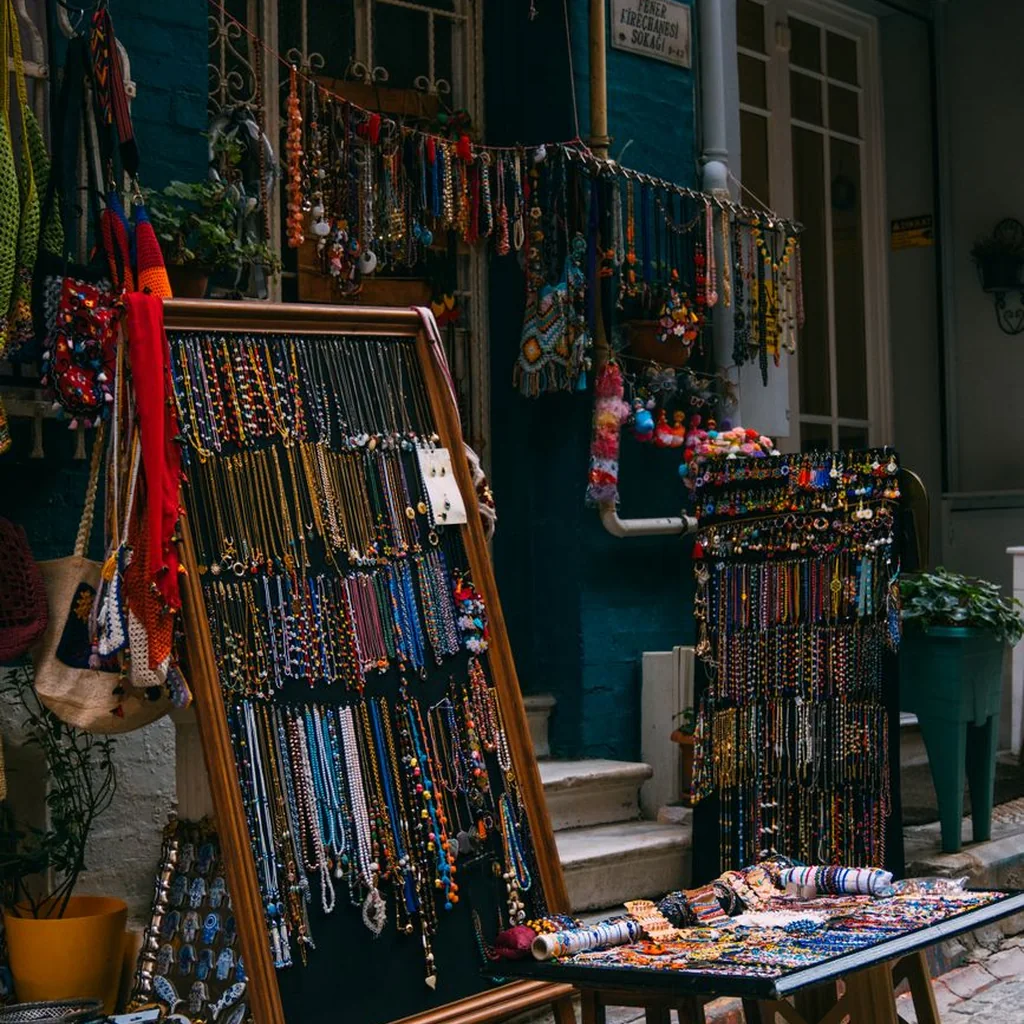
La tasse bleue au marché
The Blue Cup at the Market
On vacation by the sea, Louise visits a market and sees a small blue cup with a white fish that she wants for her sister.
Three short parts. Read each part in French first; tap “Show English” under a paragraph when you need the translation.


Part 1
En vacances au bord de la mer, Louise visite le marché. Sur une table, elle voit une petite tasse bleue avec un poisson blanc. Elle pense à sa sœur, qui aime boire son thé dans de jolies tasses.
Show EnglishHide English
On vacation by the sea, Louise visits the market. On a table, she sees a small blue cup with a white fish. She thinks of her sister, who likes to drink tea from pretty cups.
« Combien coûte celle-ci ? » demande Louise.
Show EnglishHide English
“How much is this one?” Louise asks.
« Douze euros », répond la vendeuse.
Show EnglishHide English
“Twelve euros,” the seller replies.
Louise regarde la tasse, puis son porte-monnaie. « Je vous en donne six. »
Show EnglishHide English
Louise looks at the cup, then at her wallet. “I’ll give you six.”
La vendeuse sourit. « Six euros ? Ce n’est pas assez. Je peux vous la laisser à dix. »
Show EnglishHide English
The seller smiles. “Six euros? That’s not enough. I can let you have it for ten.”
Louise repose la tasse et fait quelques pas. Puis elle revient. « Sept euros, et je la prends. »
Show EnglishHide English
Louise puts the cup down and walks a few steps. Then she comes back. “Seven euros, and I’ll take it.”
« Neuf », dit la vendeuse.
Show EnglishHide English
“Nine,” says the seller.
Elles discutent encore. Louise montre une petite marque sous la tasse. Enfin, la vendeuse accepte huit euros. Louise paie et range son cadeau dans son sac, très contente.
Show EnglishHide English
They keep haggling. Louise points to a small mark under the cup. At last, the seller accepts eight euros. Louise pays and puts her gift in her bag, very happy.
Deux stands plus loin, elle s’arrête devant une autre table. Au milieu des assiettes, elle reconnaît une tasse bleue avec un poisson blanc.
Show EnglishHide English
Two stalls farther on, she stops in front of another table. Among the plates, she recognizes a blue cup with a white fish.
Part 2La tasse à trois euros(The Three-Euro Cup)
Louise prend la tasse dans ses mains. Elle ressemble vraiment à celle qu’elle vient d’acheter. Dessous, une petite étiquette indique : « 3 € ».
Show EnglishHide English
Louise picks up the cup. It really looks like the one she has just bought. Underneath, a small label says: “€3.”
« Trois euros ? » demande-t-elle au vendeur.
Show EnglishHide English
“Three euros?” she asks the seller.
« Oui, madame. Il m’en reste quatre. »
Show EnglishHide English
“Yes, madam. I have four left.”
Louise sent ses joues devenir chaudes. Elle repense à sa longue discussion avec la première vendeuse. Elle était si fière d’avoir payé huit euros !
Show EnglishHide English
Louise feels her cheeks grow warm. She thinks again about her long discussion with the first seller. She had been so proud of paying eight euros!
Elle pose la tasse et regarde autour d’elle. La vendeuse du premier stand est juste là, à quelques mètres. Elle parle avec une cliente, mais elle tourne la tête et voit Louise.
Show EnglishHide English
She puts the cup down and looks around. The seller from the first stall is right there, a few meters away. She is talking to a customer, but she turns her head and sees Louise.
Louise baisse les yeux. Puis elle sort la tasse de son sac. Elle va au premier stand et attend que la cliente parte.
Show EnglishHide English
Louise looks down. Then she takes the cup out of her bag. She goes to the first stall and waits for the customer to leave.
« J’ai vu la même tasse à trois euros, dit-elle. Est-ce que je peux vous rendre celle-ci ? »
Show EnglishHide English
“I saw the same cup for three euros,” she says. “Can I return this one to you?”
La vendeuse regarde la tasse, puis le sac de Louise. « Je peux vous rembourser, dit-elle, mais où est le papier ? »
Show EnglishHide English
The seller looks at the cup, then at Louise’s bag. “I can refund you,” she says, “but where is the paper?”
Part 3La tasse du marché(The Market Cup)
Louise regarde dans son sac. Le papier est au fond, sous son guide de voyage. Elle le sort et le donne à la vendeuse.
Show EnglishHide English
Louise looks in her bag. The paper is at the bottom, under her travel guide. She takes it out and gives it to the seller.
« Merci », dit celle-ci. Elle remet la tasse dans le papier et rend huit euros à Louise.
Show EnglishHide English
“Thank you,” the seller says. She wraps the cup in the paper again and gives Louise eight euros back.
Louise tient les pièces dans sa main. « Je suis désolée. J’ai beaucoup discuté pour le prix. »
Show EnglishHide English
Louise holds the coins in her hand. “I’m sorry. I argued a lot about the price.”
La vendeuse hausse les épaules. « Ce n’est pas grave. Vous vouliez faire une bonne affaire. »
Show EnglishHide English
The seller shrugs. “It’s all right. You wanted to get a good deal.”
Louise sourit. « Je crois que je voulais surtout gagner ! » La vendeuse rit avec elle, puis Louise la remercie et retourne à l’autre stand.
Show EnglishHide English
Louise smiles. “I think I mostly wanted to win!” The seller laughs with her, then Louise thanks her and goes back to the other stall.
Elle achète une tasse à trois euros. Cette fois, elle paie sans discuter. Le vendeur l’enveloppe dans du papier et la met dans un sac.
Show EnglishHide English
She buys a three-euro cup. This time, she pays without arguing. The seller wraps it in paper and puts it in a bag.
Sur le chemin de l’hôtel, Louise imagine sa sœur avec son thé. Elle lui racontera l’histoire du marché en lui donnant son cadeau. Elles riront sûrement toutes les deux.
Show EnglishHide English
On the way to the hotel, Louise imagines her sister drinking tea. She will tell her the story of the market when she gives her the gift. They will surely both laugh.
Practise this French story
Vocabulary in context
Important words and phrases
marché
nounmarket
Nous allons au marché le samedi.
We go to the market on Saturday.
tasse
nouncup
J'ai acheté une tasse bleue.
I bought a blue cup.
porte-monnaie
nounwallet
Mon porte-monnaie est dans mon sac.
My wallet is in my bag.
vendeuse
nounsaleswoman
La vendeuse sourit.
The saleswoman smiles.
payer
verbto pay
Je paie huit euros.
I pay eight euros.
sac
nounbag
Je mets le papier dans mon sac.
I put the paper in my bag.
rembourser
verbto refund
La boutique peut me rembourser.
The shop can refund me.
discuter
verbto haggle; to discuss
Nous discutons du prix.
We haggle about the price.
bonne affaire
phrasegood deal
C'est une bonne affaire.
It's a good deal.
guide de voyage
noun phrasetravel guide
Je garde mon guide de voyage dans le sac.
I keep my travel guide in the bag.
Check your understanding
Comprehension questions
Choose an answer, check it, then move to the next question.
Question 1 of 3
- Question 1: current not answered
- Question 2: not answered
- Question 3: not answered
Notice the language
Language notes
Je peux vous la laisser à dix
This pattern is useful when bargaining in a shop or market. It means the speaker can agree to sell the item for that price. You can reuse it when you discuss prices. Example: « Je peux vous la laisser à dix euros. »
Je peux vous la laisser à dix euros.
I can let you have it for ten euros.
More French stories to read next
Le grand ours en peluche
The Big Teddy Bear
At the village festival, Yanis wins a big teddy bear and must choose which of his two sisters to give it to.

Les chaussures de Théo au musée
Théo’s Shoes at the Museum
Théo enters a museum with his mother, but his new shoes make a terrible noise on the floor in the quiet hall.

Une soirée chez Clara
An Evening at Clara’s
Camille arrives at Clara’s house for a sleepover with Martine, but she has forgotten her sleeping bag.
Le chocolat en forme de cœur
The Heart-Shaped Chocolate
For her birthday, Élodie receives a box of chocolates and saves her favorite heart-shaped one for later.