
Photo: Talha Resitoglu on Pexels
Le grand ours en peluche
The Big Teddy Bear
At the village festival, Yanis wins a big teddy bear and must choose which of his two sisters to give it to.
Three short parts. Read each part in French first; tap “Show English” under a paragraph when you need the translation.


Part 1
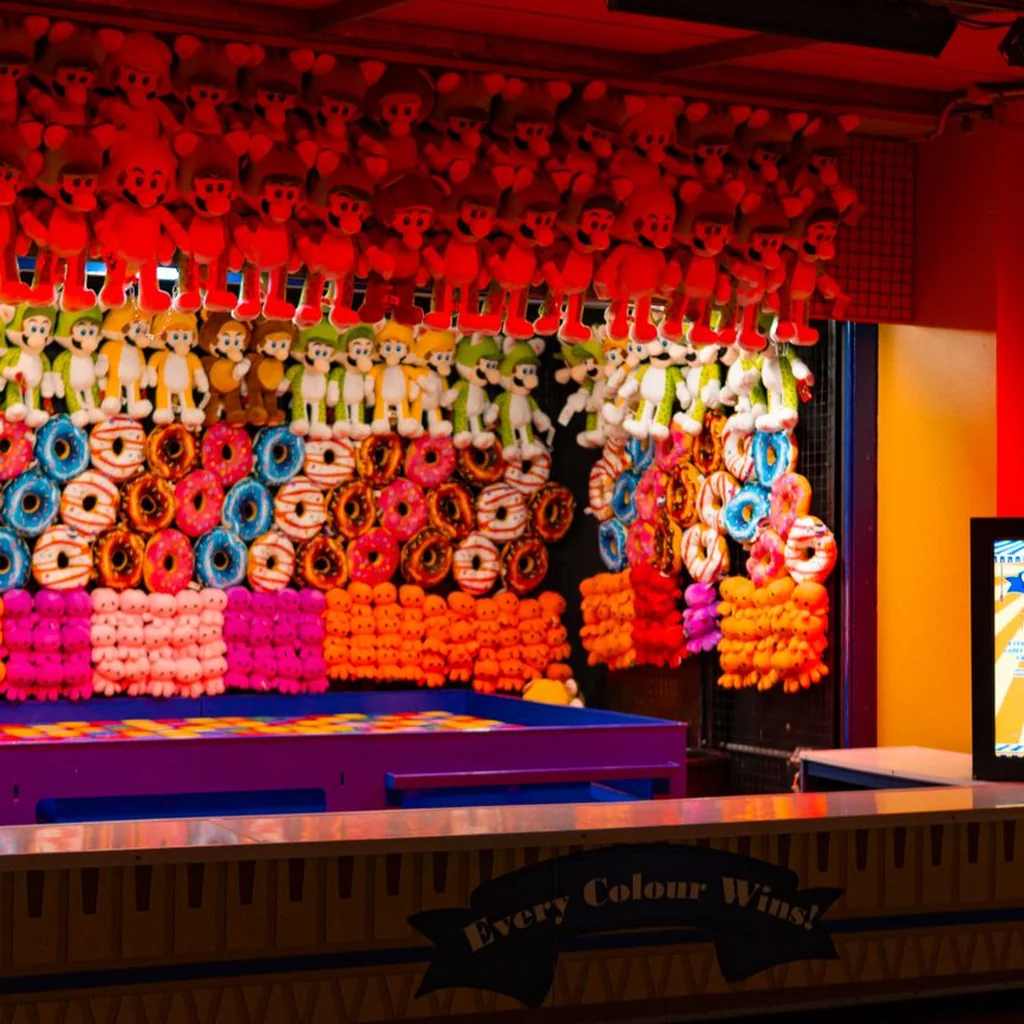
À la fête du village, Yanis lance sa dernière balle. Elle touche une boîte rouge, qui tombe par terre. Les gens applaudissent. Yanis a gagné !
Show EnglishHide English
At the village festival, Yanis throws his last ball. It hits a red box, which falls to the ground. People clap. Yanis has won!
Derrière la table, la dame du jeu lui montre son prix : un grand ours en peluche, doux et brun. Yanis le prend dans ses bras. Il est presque aussi grand que lui.
Show EnglishHide English
Behind the table, the game attendant shows him his prize: a big, soft, brown teddy bear. Yanis takes it in his arms. It is almost as big as he is.
« Tu peux l’offrir à quelqu’un », dit la dame avec un sourire. Yanis se tourne vers ses deux sœurs, Clara et Chloé.
Show EnglishHide English
“You can give it to someone,” the woman says with a smile. Yanis turns to his two sisters, Clara and Chloé.
« Il est trop mignon ! » dit Clara. Elle tend la main pour toucher les oreilles de l’ours.
Show EnglishHide English
“It’s so cute!” says Clara. She reaches out to touch the bear’s ears.
« Oh, moi aussi, je l’adore », dit Chloé. « Je peux le mettre sur mon lit ? »
Show EnglishHide English
“Oh, I love it too,” says Chloé. “Can I put it on my bed?”
Clara retire sa main. « Mais c’est moi qui l’ai vu la première ! »
Show EnglishHide English
Clara pulls her hand back. “But I was the first one to see it!”
Yanis regarde ses sœurs. Toutes les deux attendent sa réponse. Il serre l’ours contre lui, puis il aperçoit une petite étiquette attachée au bras de la peluche.
Show EnglishHide English
Yanis looks at his sisters. They are both waiting for his answer. He hugs the bear, then notices a small label attached to the bear’s arm.
Part 2Caramel le petit ours(Caramel the Little Bear)
Yanis lit l’étiquette à voix haute : « Je m’appelle Caramel. Prends bien soin de moi ! » Il montre le petit carton à ses sœurs.
Show EnglishHide English
Yanis reads the label aloud: “My name is Caramel. Please take good care of me!” He shows the little card to his sisters.
« Caramel ! C’est le nom parfait », dit Chloé. Elle caresse le ventre de l’ours. « Je lui ferai une place à côté de mon oreiller. »
Show EnglishHide English
“Caramel! That’s the perfect name,” says Chloé. She strokes the bear’s tummy. “I’ll make room for him next to my pillow.”
Clara croise les bras. « Et moi, alors ? J’ai aussi envie de dormir avec lui. »
Show EnglishHide English
Clara crosses her arms. “What about me? I want to sleep with him too.”
Yanis sent son visage devenir chaud. Il regarde autour de lui. Quelques personnes attendent leur tour devant le jeu, alors il emmène ses sœurs près d’un banc.
Show EnglishHide English
Yanis feels his face getting hot. He looks around. A few people are waiting for their turn at the game, so he takes his sisters over to a bench.
« Vous pouvez le garder à tour de rôle », propose-t-il. « Une nuit dans le lit de Clara, une nuit dans celui de Chloé. »
Show EnglishHide English
“You can take turns keeping him,” he suggests. “One night in Clara’s bed, one night in Chloé’s.”
Clara sourit. « D’accord, et je peux lui faire un petit lit pour la journée. »
Show EnglishHide English
Clara smiles. “All right, and I can make him a little bed for the daytime.”
« Bonne idée », dit Chloé. Puis elle regarde Yanis. « Mais qui va le garder ce soir ? »
Show EnglishHide English
“Good idea,” says Chloé. Then she looks at Yanis. “But who will keep him tonight?”
Clara et Chloé se tournent vers leur frère. Yanis pose Caramel sur le banc et réfléchit.
Show EnglishHide English
Clara and Chloé turn to their brother. Yanis puts Caramel on the bench and thinks.
Part 3La fête et l’ours Caramel(The Festival and Caramel the Bear)
Yanis s’assied à côté de l’ours. « Ce soir, je le donne à Clara », dit-il enfin. « Demain, Chloé pourra le garder. »
Show EnglishHide English
Yanis sits next to the bear. “Tonight, I’ll give him to Clara,” he says at last. “Tomorrow, Chloé can keep him.”
Chloé baisse les yeux. « Pourquoi Clara en premier ? »
Show EnglishHide English
Chloé looks down. “Why Clara first?”
« Parce que c’est elle qui a proposé de venir à ce jeu », répond Yanis. « Mais demain matin, tu pourras garder Caramel. »
Show EnglishHide English
“Because she was the one who suggested coming to this game,” Yanis replies. “But tomorrow morning, you can keep Caramel.”
Clara prend l’ours sur ses genoux. Elle regarde Chloé, puis lui tend une patte de la peluche. « Tu veux m’aider à choisir son lit ? »
Show EnglishHide English
Clara takes the bear onto her lap. She looks at Chloé, then holds out one of the bear’s paws to her. “Would you like to help me choose his bed?”
Chloé hésite un instant, puis elle prend l’autre patte. « Oui. Et demain, on pourra lui trouver un livre. »
Show EnglishHide English
Chloé hesitates for a moment, then takes the other paw. “Yes. And tomorrow, we can find him a book.”
Yanis se lève, soulagé. Les trois enfants quittent le banc et traversent la fête. Clara porte Caramel, mais elle laisse Chloé lui tenir la patte.
Show EnglishHide English
Yanis stands up, relieved. The three children leave the bench and walk across the festival. Clara carries Caramel, but lets Chloé hold his paw.
Près de la sortie, Yanis achète trois crêpes avec l’argent que leur mère lui a donné. Ils les mangent ensemble avant de rentrer à la maison.
Show EnglishHide English
Near the exit, Yanis buys three crêpes with the money their mother gave him. They eat them together before going home.
Practise this French story
Vocabulary in context
Important words and phrases
fête du village
noun phrasevillage festival
La fête du village commence ce soir.
The village festival starts tonight.
gagner
verbto win
J’ai gagné le jeu !
I won the game!
prix
nounprize
Le prix est sur la table.
The prize is on the table.
ours en peluche
noun phraseteddy bear
L’enfant dort avec son ours en peluche.
The child sleeps with his teddy bear.
prendre dans ses bras
verb phraseto hold in one's arms
Elle prend le chat dans ses bras.
She holds the cat in her arms.
étiquette
nounlabel
Il y a une étiquette sur le sac.
There is a label on the bag.
à voix haute
phrasealoud
Lis la phrase à voix haute.
Read the sentence aloud.
à tour de rôle
phraseone after another; taking turns
Nous lisons le livre à tour de rôle.
We take turns reading the book.
se tourner vers
verb phraseto turn toward
Il se tourne vers sa sœur.
He turns toward his sister.
sourire
nounsmile
Elle répond avec un sourire.
She answers with a smile.
Check your understanding
Comprehension questions
Choose an answer, check it, then move to the next question.
Question 1 of 3
- Question 1: current not answered
- Question 2: not answered
- Question 3: not answered
Notice the language
Language notes
à tour de rôle
Use à tour de rôle to say that people do something one after another, each taking a turn. It is useful for sharing an object, a task, or a time slot. Example: « Vous pouvez le garder à tour de rôle. » This means the children can each have the teddy bear in turn.
Vous pouvez le garder à tour de rôle.
You can take turns keeping him.
More French stories to read next

Les chaussures de Théo au musée
Théo’s Shoes at the Museum
Théo enters a museum with his mother, but his new shoes make a terrible noise on the floor in the quiet hall.

Une soirée chez Clara
An Evening at Clara’s
Camille arrives at Clara’s house for a sleepover with Martine, but she has forgotten her sleeping bag.
Le chocolat en forme de cœur
The Heart-Shaped Chocolate
For her birthday, Élodie receives a box of chocolates and saves her favorite heart-shaped one for later.

Tu m’as manqué
I Missed You
On the bus to the airport, Nicolas practices what he wants to say to his sister Julie, who is returning after six months abroad.