
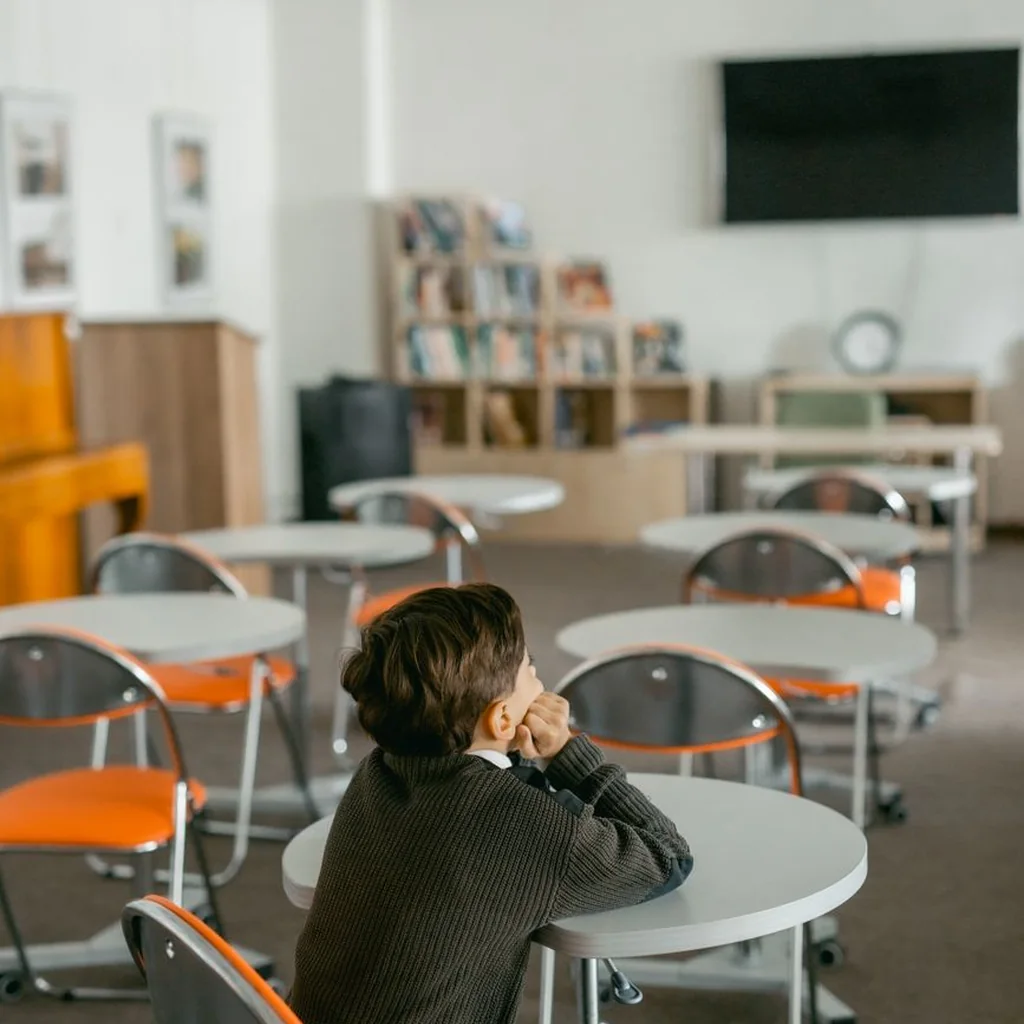
Photo: Mikhail Nilov on Pexels
La jaula abierta
The Open Cage
Nico finds the classroom hamster’s cage open and must decide whether to tell anyone before recess.
Three short parts. Read each part in Spanish first; tap “Show English” under a paragraph when you need the translation.


Part 1
Al llegar al aula, Nico fue directo a la mesa de ciencias para dejar la mochila. Entonces vio que la jaula del hámster estaba abierta. Dentro solo quedaban el bebedero, unas virutas esparcidas y la rueda, que aún giraba lentamente.
Show EnglishHide English
When Nico arrived in the classroom, he went straight to the science table to put down his backpack. Then he saw that the hamster’s cage was open. Inside, all that remained were the water bottle, some scattered shavings, and the wheel, which was still turning slowly.
Nico miró debajo de las mesas y detrás del armario, aunque sabía que el animal podía haberse escondido en cualquier rincón. La puerta de la jaula no parecía rota; quizá alguien la había dejado mal cerrada el día anterior.
Show EnglishHide English
Nico looked under the desks and behind the cabinet, although he knew the animal could have hidden in any corner. The cage door didn’t look broken; perhaps someone had left it improperly closed the day before.
Poco a poco fueron entrando sus compañeros. Todos hablaban de la excursión y nadie se fijó en la jaula. Nico pensó en avisar a la profesora, pero también imaginó las caras de sus compañeros cuando descubrieran que el hámster había desaparecido. Tal vez lo culparían por haberlo visto primero o cancelarían el recreo para buscarlo.
Show EnglishHide English
Little by little, his classmates came in. They were all talking about the field trip, and no one noticed the cage. Nico thought about telling the teacher, but he also imagined his classmates’ faces when they discovered the hamster had disappeared. Maybe they would blame him for being the first to see it, or cancel recess to look for the animal.
Sonó el timbre de la primera clase. Nico apoyó la mano en el borde de la mesa y levantó la vista hacia la profesora, que acababa de entrar. Ya no podía aplazar la decisión.
Show EnglishHide English
The bell for the first class rang. Nico rested his hand on the edge of the table and looked up at the teacher, who had just come in. He could put off the decision no longer.
Part 2El rastro del hámster(The Hamster’s Trail)
Nico levantó la mano antes de que la profesora empezara a pasar lista.
Show EnglishHide English
Nico raised his hand before the teacher began taking attendance.
—¿Sí, Nico?
Show EnglishHide English
“Yes, Nico?”
Él señaló la mesa de ciencias y explicó en voz baja que la jaula estaba abierta y vacía. La profesora se acercó enseguida. No parecía enfadada, pero su expresión cambió al ver que la rueda aún seguía girando.
Show EnglishHide English
He pointed to the science table and quietly explained that the cage was open and empty. The teacher came over at once. She didn’t look angry, but her expression changed when she saw that the wheel was still turning.
—Gracias por decírmelo. Buscaremos con calma, sin mover los muebles de cualquier manera.
Show EnglishHide English
“Thank you for telling me. We’ll search calmly, without moving the furniture around carelessly.”
Pidió a los alumnos que miraran alrededor de sus mesas mientras ella examinaba la jaula. Algunos se agacharon con entusiasmo; otros empezaron a hacer bromas sobre el escondite del hámster. Nico sintió alivio por haber hablado, aunque seguía temiendo que alguien lo acusara de haber dejado abierta la puerta.
Show EnglishHide English
She asked the students to look around their desks while she examined the cage. Some crouched down eagerly; others started joking about the hamster’s hiding place. Nico felt relieved that he had spoken up, although he was still afraid someone would accuse him of leaving the door open.
De pronto, Clara llamó a la profesora desde el rincón de lectura. Había encontrado unas virutas en el suelo que formaban un rastro irregular hasta debajo del armario. Todos se acercaron, pero la profesora los detuvo con un gesto.
Show EnglishHide English
Suddenly, Clara called the teacher from the reading corner. She had found some shavings on the floor that formed an irregular trail leading under the cabinet. Everyone came closer, but the teacher stopped them with a gesture.
—Si está ahí detrás, tendremos que pensar cómo sacarlo sin asustarlo. Y falta poco para el recreo.
Show EnglishHide English
“If it’s back there, we’ll have to think of how to get it out without frightening it. And recess is coming soon.”
Part 3El hámster escondido(The Hidden Hamster)
La profesora pidió a todos que regresaran a sus sitios y dejó junto al armario un pequeño cuenco con semillas. También pidió que apagaran la aspiradora del aula contigua y guardaran silencio. Durante unos segundos, solo se oyó el zumbido lejano del pasillo.
Show EnglishHide English
The teacher asked everyone to return to their seats and set a small bowl of seeds beside the cabinet. She also asked them to turn off the vacuum cleaner in the next classroom and keep quiet. For a few seconds, all they could hear was the distant hum of the hallway.
Entonces algo se movió bajo el mueble. El hámster asomó el hocico, olfateó el aire y salió despacio, con una viruta pegada al lomo. Clara contuvo una exclamación, y Nico acercó el cuenco sin intentar agarrarlo.
Show EnglishHide English
Then something moved beneath the piece of furniture. The hamster poked out its nose, sniffed the air, and slowly came out, with a shaving stuck to its back. Clara stifled an exclamation, and Nico brought the bowl closer without trying to grab it.
El animal siguió el olor de las semillas hasta meterse en el cuenco. La profesora lo recogió con cuidado, comprobó que estaba bien y lo devolvió a la jaula. Luego cerró la puerta y la aseguró con un pequeño pestillo.
Show EnglishHide English
The animal followed the smell of the seeds until it climbed into the bowl. The teacher picked it up carefully, checked that it was all right, and returned it to the cage. Then she closed the door and secured it with a small latch.
—Parece que ayer no quedó bien cerrada —dijo—. Gracias por avisarme, Nico. Si hubieras esperado, quizá habría pasado más tiempo escondido.
Show EnglishHide English
“It looks as though it wasn’t properly closed yesterday,” she said. “Thank you for telling me, Nico. If you had waited, it might have stayed hidden longer.”
Sonó el timbre del recreo. La profesora permitió que salieran todos y prometió explicar después lo ocurrido. Nico abandonó el aula con los demás, ya sin miedo a que lo culparan.
Show EnglishHide English
The recess bell rang. The teacher let everyone go outside and promised to explain what had happened later. Nico left the classroom with the others, no longer afraid that they would blame him.
Había hecho lo correcto: no había resuelto el problema él solo, pero sí había dado el primer paso para que el hámster volviera a casa.
Show EnglishHide English
He had done the right thing: he hadn’t solved the problem by himself, but he had taken the first step toward bringing the hamster home.
Practise this Spanish story
Vocabulary in context
Important words and phrases
pasar lista
verb phraseto take attendance
La profesora pasó lista antes de empezar la actividad.
The teacher took attendance before starting the activity.
aplazar la decisión
verb phraseto postpone the decision
No quiso aplazar la decisión y habló enseguida.
He didn't want to postpone the decision and spoke right away.
de cualquier manera
adverbial phrasecarelessly; in any old way
No muevas los muebles de cualquier manera.
Don't move the furniture carelessly.
de pronto
adverbial phrasesuddenly
De pronto, todos dejaron de hablar.
Suddenly, everyone stopped talking.
rastro irregular
noun phraseirregular trail
Vieron un rastro irregular de migas en el suelo.
They saw an irregular trail of crumbs on the floor.
guardar silencio
verb phraseto keep silent; to remain quiet
Nos pidieron guardar silencio durante unos minutos.
We were asked to keep quiet for a few minutes.
seguir el olor
verb phraseto follow the smell
El perro siguió el olor hasta la cocina.
The dog followed the smell into the kitchen.
hacer lo correcto
verb phraseto do the right thing
A veces hacer lo correcto es difícil.
Sometimes doing the right thing is difficult.
dar el primer paso
idiomto take the first step
Reconocer el error fue dar el primer paso para arreglar el problema.
Admitting the mistake was taking the first step toward fixing the problem.
Check your understanding
Comprehension questions
Choose an answer, check it, then move to the next question.
Question 1 of 3
- Question 1: current not answered
- Question 2: not answered
- Question 3: not answered
Notice the language
Language notes
dar el primer paso
This idiom means to start a difficult process or take the first necessary action, especially when the full solution is not yet clear. It is reusable whenever the emphasis is on initiative rather than literal movement. Example: "Reconocer el error fue dar el primer paso para arreglar el problema." — "Admitting the mistake was taking the first step toward fixing the problem."
Reconocer el error fue dar el primer paso para arreglar el problema.
Admitting the mistake was taking the first step toward fixing the problem.
More Spanish stories to read next

Como un loro
Like a Parrot
Álvaro notices his little sister copying him and must decide how to encourage her to find her own voice.

La tarta inesperada
The Unexpected Cake
Dining alone, Julián is sent a slice of cake by a couple of strangers at the next table and wonders how to respond.
Las escaleras del lunes
Monday’s Stairs
Marta takes the stairs for her health and meets her fit colleague Daniel, as they both try to make the climb seem easy.
El pajarillo bajo el árbol
The Little Bird Beneath the Tree
After finding a baby bird on the pavement, Clara weighs whether to intervene as she watches for its parents.