
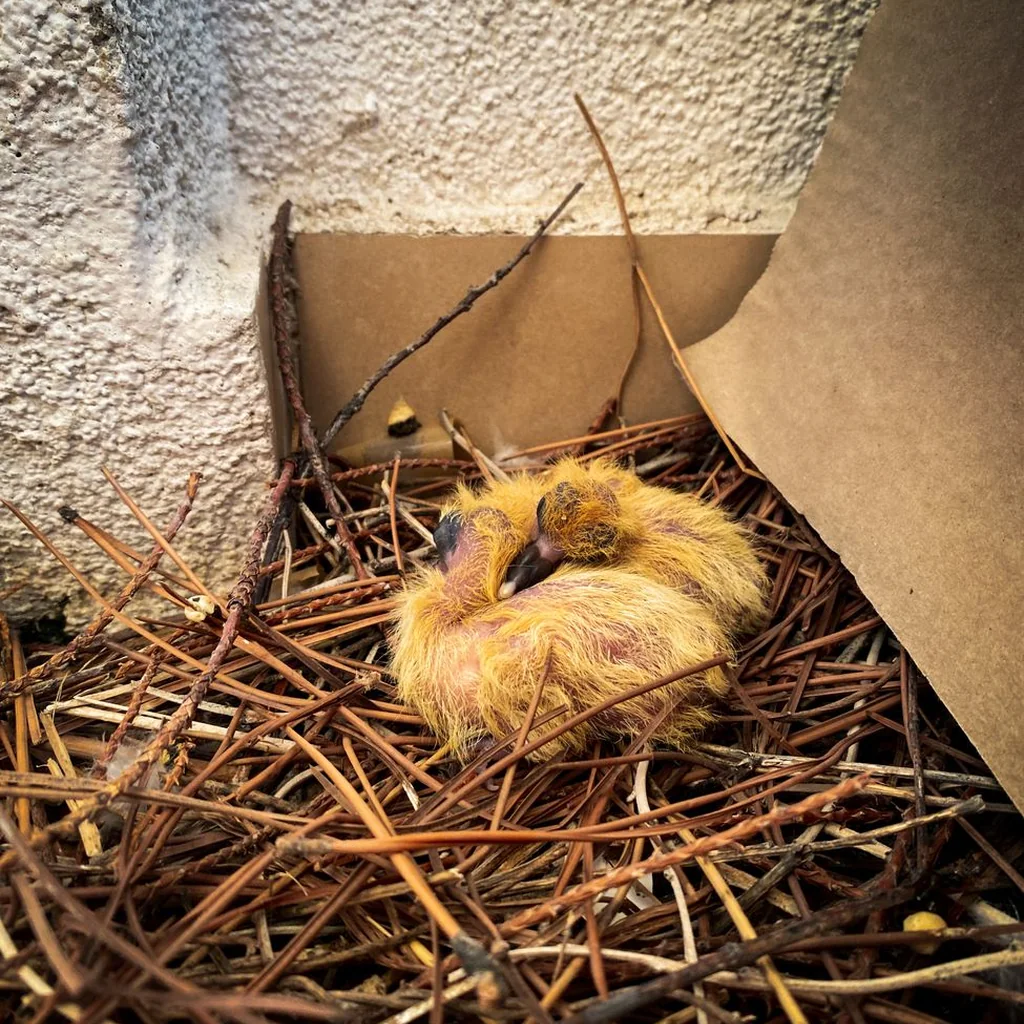
Photo: Özge Taşkıran on Pexels
El pajarillo bajo el árbol
The Little Bird Beneath the Tree
After finding a baby bird on the pavement, Clara weighs whether to intervene as she watches for its parents.
Three short parts. Read each part in Spanish first; tap “Show English” under a paragraph when you need the translation.


Part 1
Al salir del colegio, Clara encontró un pajarillo en medio de la acera, debajo de un árbol. Era tan pequeño que apenas tenía plumas y abría el pico cada vez que alguien pasaba, como si esperara que el mundo supiera qué hacer con él.
Show EnglishHide English
On her way out of school, Clara found a little bird in the middle of the sidewalk, beneath a tree. It was so small that it barely had any feathers, and it opened its beak whenever someone passed, as if it expected the world to know what to do with it.
Clara levantó la vista y distinguió un nido entre las ramas más altas. No parecía roto, pero no veía cómo devolver el pajarillo a su sitio. Se agachó y acercó las manos, aunque se detuvo antes de tocarlo. Su abuela siempre le había dicho que no recogiera a las crías, porque sus padres podían estar cerca y, si se las llevaba, quizá no volvieran a encontrarlas.
Show EnglishHide English
Clara looked up and spotted a nest among the highest branches. It did not seem to be broken, but she could not see how to return the little bird to its place. She crouched down and held out her hands, though she stopped before touching it. Her grandmother had always told her not to pick up young birds, because their parents might be nearby and, if she took them away, might not be able to find them again.
Pero ¿y si el pajarillo estaba herido? En cualquier momento podía pasarle una bicicleta por encima. Clara miró a ambos lados: no había ningún adulto, ni una caja, ni siquiera un rincón seguro donde apartarlo. Entonces oyó un chillido entre las hojas y vio que algo se movía en el nido.
Show EnglishHide English
But what if the little bird was hurt? A bicycle could run over it at any moment. Clara looked both ways: there was no adult, no box, not even a safe corner where she could move it out of harm’s way. Then she heard a squeal among the leaves and saw something move in the nest.
Extendió una mano, todavía indecisa, mientras con la otra buscaba el teléfono en el bolsillo.
Show EnglishHide English
She reached out one hand, still unsure, while with the other she searched her pocket for her phone.
Part 2El nido y la farola(The Nest and the Streetlight)
Con el teléfono en la mano, Clara enfocó el nido con la cámara. Entonces un pájaro adulto salió de entre las ramas y se posó en una farola cercana. No se acercó al pajarillo, pero empezó a llamarlo con insistencia. El pequeño respondió abriendo el pico y agitando las alas, como si aquel sonido le devolviera un poco de ánimo.
Show EnglishHide English
With her phone in hand, Clara aimed its camera at the nest. Then an adult bird emerged from among the branches and perched on a nearby streetlight. It did not approach the little bird, but began calling to it insistently. The little one responded by opening its beak and fluttering its wings, as if the sound gave it a little courage.
Clara llamó a su abuela y le explicó la situación. «Si no parece herido, no lo recojas todavía», le aconsejó ella. «Apártalo del paso solo lo imprescindible y aléjate un poco. Sus padres quizá no se acerquen mientras haya gente alrededor».
Show EnglishHide English
Clara called her grandmother and explained the situation. “If it doesn’t seem hurt, don’t pick it up yet,” she advised. “Move it out of the way only as much as necessary, then step back a little. Its parents may not come closer while there are people around.”
Clara encontró un trozo de cartón junto a una papelera y lo utilizó para desplazarlo hasta la sombra de un arbusto. Al hacerlo, observó que una de sus patas estaba atrapada entre unas briznas secas. ¿Era solo hierba o tenía la pata lastimada? El pájaro adulto seguía llamándolo desde la farola, y Clara tuvo que decidir si esperar o volver a acercarse.
Show EnglishHide English
Clara found a piece of cardboard beside a trash can and used it to move the bird into the shade of a bush. As she did, she noticed that one of its legs was caught among some dry blades of grass. Was it just grass, or was its leg injured? The adult bird was still calling to it from the streetlight, and Clara had to decide whether to wait or approach again.
Part 3Un rescate a distancia(A Rescue from a Distance)
Clara se acercó lo justo para observarlo mejor. La pata no estaba hinchada ni torcida; simplemente se había enredado en una brizna seca. Con la punta del cartón apartó la hierba, sin tocar al pajarillo. Este dio un pequeño salto y quedó libre. Después se acurrucó bajo el arbusto, agotado.
Show EnglishHide English
Clara moved close enough to get a better look. The leg was neither swollen nor crooked; it had simply become tangled in a dry blade of grass. Using the tip of the cardboard, she moved the grass aside without touching the little bird. It gave a small hop and was free. Then it huddled beneath the bush, exhausted.
Clara retrocedió varios pasos y se sentó en un banco, tal como le había indicado su abuela. Durante unos minutos, el pájaro adulto siguió llamando desde la farola. Al comprobar que ya no había gente cerca, bajó primero a una rama y luego al suelo. Se acercó al pajarillo, que abrió el pico de inmediato, y le metió algo antes de volver a saltar hacia el árbol.
Show EnglishHide English
Clara backed away several steps and sat on a bench, just as her grandmother had instructed. For a few minutes, the adult bird kept calling from the streetlight. Once it saw that there were no people nearby, it first flew down to a branch and then to the ground. It approached the little bird, which immediately opened its beak, and put something inside before hopping back toward the tree.
Clara sonrió y llamó a su abuela para contarle lo ocurrido. No había tenido que rescatarlo ni dejarlo a su suerte; bastaba con apartarlo del peligro y darles espacio a sus padres. Cuando se marchó, el pajarillo seguía bajo el arbusto, acompañado por el canto de sus padres.
Show EnglishHide English
Clara smiled and called her grandmother to tell her what had happened. She had not needed to rescue the bird or leave it to fend for itself; it was enough to move it out of danger and give its parents room. When she left, the little bird was still beneath the bush, accompanied by its parents’ calls.
Practise this Spanish story
Vocabulary in context
Important words and phrases
apenas tenía plumas
phraseit had hardly any feathers
El polluelo apenas tenía plumas cuando lo encontraron.
The chick had hardly any feathers when they found it.
abrir el pico
verb phraseto open its beak
Cada vez que oyó la voz de su madre, abrió el pico.
Every time it heard its mother’s voice, it opened its beak.
devolver el pajarillo a su sitio
verb phraseto put the little bird back where it belongs
No siempre es fácil devolver al animal a su sitio sin estresarlo.
It is not always easy to put the animal back where it belongs without stressing it.
apártalo del paso
imperative phrasemove it out of the way
Apártalo del paso solo si hay un peligro inmediato.
Move it out of the way only if there is immediate danger.
lo imprescindible
noun phraseonly what is strictly necessary
Tocó lo imprescindible para no alterar el nido.
She touched only what was strictly necessary so as not to disturb the nest.
con insistencia
adverbial phraseinsistently
El adulto llamó con insistencia desde la rama.
The adult bird called insistently from the branch.
quedó libre
verb phrasewas freed
La pata quedó libre después de retirar la hierba.
The leg was freed after the grass was removed.
se acurrucó
verbit huddled up
El cachorro se acurrucó bajo la manta para entrar en calor.
The puppy huddled under the blanket to warm up.
darles espacio
verb phraseto give them space
A veces conviene darles espacio a los animales para que se acerquen por sí mismos.
Sometimes it is advisable to give animals space so that they come closer on their own.
a su suerte
phraseto its own devices; to fend for itself
No es buena idea dejar a un animal herido a su suerte.
It is not a good idea to leave an injured animal to fend for itself.
Check your understanding
Comprehension questions
Choose an answer, check it, then move to the next question.
Question 1 of 3
- Question 1: current not answered
- Question 2: not answered
- Question 3: not answered
Notice the language
Language notes
Al + infinitivo
This construction introduces an action that happens at the same time as, or just before, the main action. It is compact and common in written narration, especially when the second action follows directly from the first. In the story, 'Al hacerlo, observó que...' means 'By doing so / When she did that, she noticed that...'. You can reuse it in sentences like: 'Al entrar en casa, apagó la luz.' or 'Al comprobar los datos, cambió de opinión.'
Al hacerlo, observó que una de sus patas estaba atrapada entre unas briznas secas.
By doing so, she noticed that one of its legs was trapped among some dry blades of grass.
More Spanish stories to read next
El último asiento
The Last Seat
On a crowded bus, a man and a woman politely insist that the other take the last seat, even as the journey continues.
La jaula abierta
The Open Cage
Nico finds the classroom hamster’s cage open and must decide whether to tell anyone before recess.
Como un loro
Like a Parrot
Álvaro notices his little sister copying him and must decide how to encourage her to find her own voice.
La tarta inesperada
The Unexpected Cake
Dining alone, Julián is sent a slice of cake by a couple of strangers at the next table and wonders how to respond.