
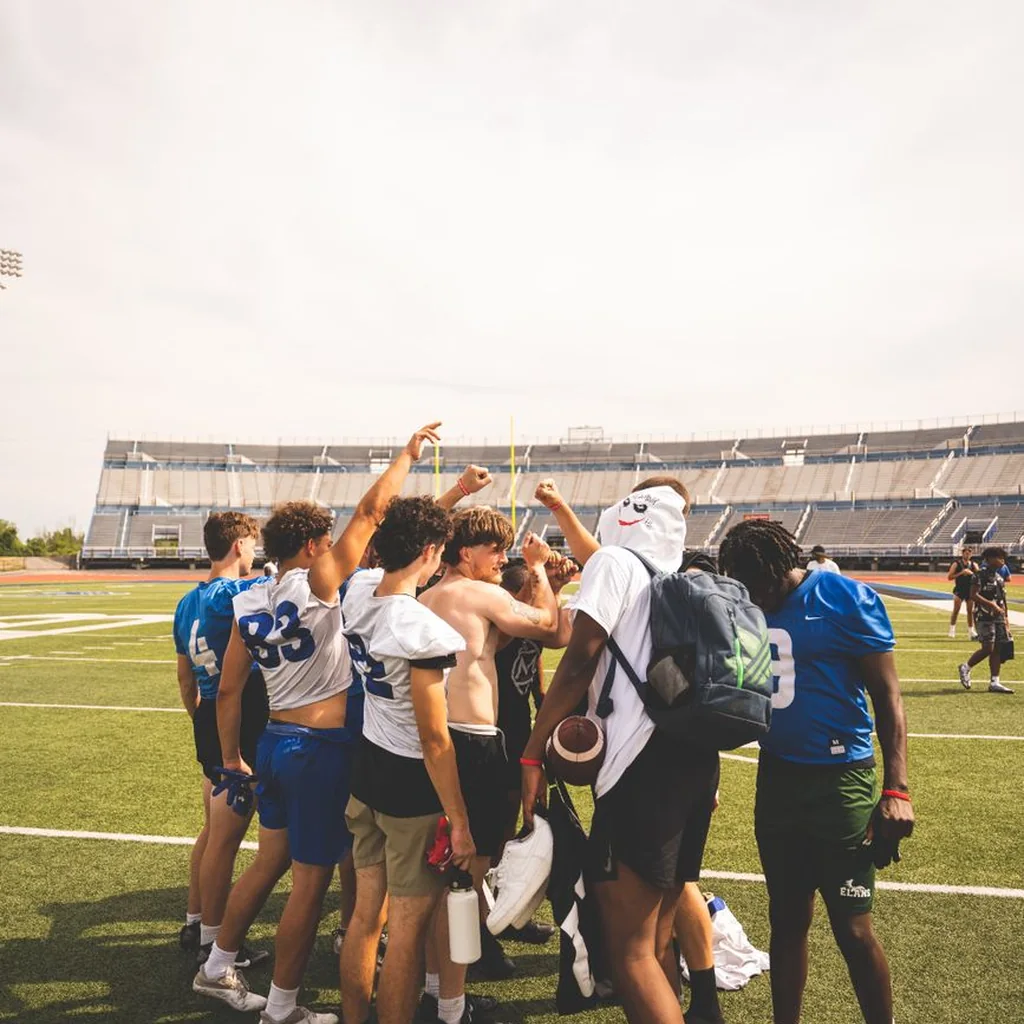
Photo: Jean-Daniel Francoeur on Pexels
El cántico del equipo
The Team Chant
New player Leo tries to follow his football team’s chant and faces the challenge of learning it.
Three short parts. Read each part in Spanish first; tap “Show English” under a paragraph when you need the translation.


Part 1
El sábado, Leo llegó por primera vez al equipo de fútbol del barrio. Estaba un poco nervioso, pero todos fueron amables con él.
Show EnglishHide English
On Saturday, Leo arrived at the neighborhood football team for the first time. He was a little nervous, but everyone was kind to him.
Antes del partido, los jugadores se pusieron en círculo. El capitán levantó las manos y empezó a cantar el cántico del equipo. Todos gritaban las mismas palabras y saltaban juntos.
Show EnglishHide English
Before the game, the players stood in a circle. The captain raised his hands and began to sing the team chant. Everyone shouted the same words and jumped together.
Leo no conocía el cántico. Miró a los demás y movió los labios, como si cantara. A veces decía «¡Vamos!» cuando todos lo decían, pero no sabía las otras palabras. Esperaba que nadie lo notara.
Show EnglishHide English
Leo didn’t know the chant. He looked at the others and moved his lips as if he were singing. Sometimes he said “Come on!” when everyone else did, but he didn’t know the other words. He hoped no one would notice.
Después del cántico, el entrenador sonrió y dijo:
Show EnglishHide English
After the chant, the coach smiled and said:
—Muy bien, chicos. Leo, ¿te ha gustado nuestro cántico?
Show EnglishHide English
“Very good, boys. Leo, did you like our chant?”
—Sí, mucho —respondió Leo.
Show EnglishHide English
“Yes, a lot,” Leo replied.
Su compañero Pablo se acercó y le dio una palmada en el hombro.
Show EnglishHide English
His teammate Pablo came over and patted him on the shoulder.
—Entonces, ven con nosotros después del partido. Te vamos a enseñar el cántico.
Show EnglishHide English
“Then come with us after the game. We’ll teach you the chant.”
Leo miró a sus compañeros. Todos esperaban su respuesta, y él todavía no sabía si debía decir la verdad.
Show EnglishHide English
Leo looked at his teammates. They were all waiting for his answer, and he still didn’t know if he should tell the truth.
Part 2
Leo respiró hondo y decidió decir la verdad.
Show EnglishHide English
Leo took a deep breath and decided to tell the truth.
—La verdad es que no conozco el cántico. Solo movía los labios.
Show EnglishHide English
“The truth is, I don’t know the chant. I was only moving my lips.”
Pablo sonrió.
Show EnglishHide English
Pablo smiled.
—No pasa nada. A todos nos costó aprenderlo al principio.
Show EnglishHide English
“That’s okay. It was hard for all of us to learn it at first.”
Después del partido, se sentaron en un banco junto al campo. Pablo dijo cada frase despacio y los demás la repitieron. Leo escuchó con atención.
Show EnglishHide English
After the game, they sat on a bench beside the field. Pablo said each line slowly, and the others repeated it. Leo listened carefully.
El cántico hablaba del equipo, del barrio y de jugar juntos. Esta vez, Leo pudo cantar algunas palabras.
Show EnglishHide English
The chant was about the team, the neighborhood, and playing together. This time, Leo was able to sing some of the words.
—¡Muy bien! —dijo el capitán—. Ya sabes la primera parte.
Show EnglishHide English
“Very good!” said the captain. “You know the first part now.”
Leo estaba contento, pero todavía tenía un problema: la segunda parte era muy rápida. Intentó repetirla, pero confundió las palabras y todos se rieron un poco. No se rieron de él; simplemente les pareció divertido.
Show EnglishHide English
Leo was happy, but he still had a problem: the second part was very fast. He tried to repeat it, but mixed up the words, and everyone laughed a little. They weren’t laughing at him; they just thought it was funny.
El entrenador levantó una mano.
Show EnglishHide English
The coach raised a hand.
—En el próximo partido, Leo puede empezar el cántico con nosotros.
Show EnglishHide English
“At the next game, Leo can start the chant with us.”
Leo dejó de sonreír. ¿Tendría que cantar delante de todo el equipo?
Show EnglishHide English
Leo stopped smiling. Would he have to sing in front of the whole team?
Part 3
Leo miró al entrenador con sorpresa.
Show EnglishHide English
Leo looked at the coach in surprise.
—¿Yo? ¿Delante de todos?
Show EnglishHide English
“Me? In front of everyone?”
—Sí —dijo el entrenador—. Pero no tienes que hacerlo solo. Nosotros te ayudaremos.
Show EnglishHide English
“Yes,” said the coach. “But you don’t have to do it alone. We’ll help you.”
Durante la semana, Pablo practicó con Leo después de cada entrenamiento. Primero cantaban muy despacio. Después, un poco más rápido. Leo se equivocaba algunas veces, pero ya no le daba tanta vergüenza.
Show EnglishHide English
During the week, Pablo practiced with Leo after every training session. First they sang very slowly. Then, a little faster. Leo made mistakes sometimes, but he wasn’t as embarrassed anymore.
El sábado siguiente, antes del partido, el equipo volvió a ponerse en círculo. Leo respiró hondo y levantó las manos, como había visto hacer al capitán.
Show EnglishHide English
The following Saturday, before the game, the team stood in a circle again. Leo took a deep breath and raised his hands, as he had seen the captain do.
—¡Somos un equipo! —gritó.
Show EnglishHide English
“We are a team!” he shouted.
Todos repitieron la frase. Luego Leo cantó la primera parte y el equipo lo acompañó. En la segunda parte olvidó una palabra, pero Pablo continuó a su lado y los demás cantaron más despacio.
Show EnglishHide English
Everyone repeated the line. Then Leo sang the first part, and the team joined in. In the second part, he forgot a word, but Pablo continued beside him, and the others sang more slowly.
Al terminar, todos aplaudieron. Leo sonrió. Ya no movía los labios sin cantar: ahora conocía el cántico y formaba parte del equipo.
Show EnglishHide English
When they finished, everyone applauded. Leo smiled. He wasn’t just moving his lips without singing anymore: now he knew the chant and was part of the team.
Practise this Spanish story
Vocabulary in context
Important words and phrases
por primera vez
phrasefor the first time
Llegó por primera vez al equipo.
He joined the team for the first time.
equipo
nounteam
Nuestro equipo es fuerte.
Our team is strong.
partido
nounmatch
El partido empieza a las diez.
The match starts at ten.
capitán
nouncaptain
El capitán levantó las manos.
The captain raised his hands.
entrenador
nouncoach
El entrenador sonrió.
The coach smiled.
en círculo
phrasein a circle
Se pusieron en círculo.
They stood in a circle.
cántico
nounchant
El equipo aprendió el cántico.
The team learned the chant.
amables
adjectivekind
Todos fueron amables con Leo.
Everyone was kind to Leo.
una palmada en el hombro
noun phrasea pat on the shoulder
Pablo le dio una palmada en el hombro.
Pablo gave him a pat on the shoulder.
respiró hondo
verb phrasetook a deep breath
Respiró hondo antes de hablar.
He took a deep breath before speaking.
no pasa nada
phraseit's okay / no problem
No pasa nada, puedes intentarlo otra vez.
It's okay, you can try again.
Check your understanding
Comprehension questions
Choose an answer, check it, then move to the next question.
Question 1 of 3
- Question 1: current not answered
- Question 2: not answered
- Question 3: not answered
Notice the language
Language notes
No pasa nada
This phrase is a very common way to reassure someone after a mistake or a small problem. It means "it's okay" or "no problem." You can reuse it when you want to sound calm and kind. Example: "No pasa nada, puedes intentarlo otra vez."
No pasa nada, puedes intentarlo otra vez.
It's okay, you can try again.
More Spanish stories to read next

La batería al uno por ciento
The Battery at One Percent
Lucía’s phone battery is almost dead as she tries to give her number to a friendly stranger.

La hora de diferencia
The One-Hour Difference
Martín arrives in a new country and tries to work out the time after forgetting to change his watch.

La tarta de cumpleaños
The Birthday Cake
Miguel tries to carry a birthday cake across the room while his dog Toby keeps getting in the way.
La danza del pueblo
The Village Dance
Marta goes to a village festival with her granddaughter and is invited to dance with the folk dancers.