Back to Elementary (A2) stories

Unlock the Complete Learning Experience

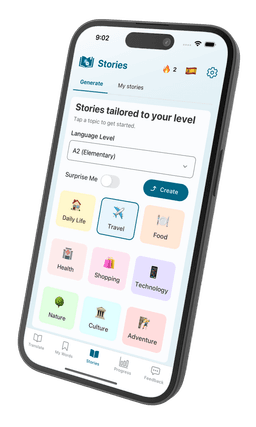
You're reading free stories on our website. Get the mobile app for audio narration, speaking practice, vocabulary saving, personalised stories, instant translations, and progress tracking.

Download on the App StoreGet it on Google Play
Audio
Translations
Progress

Το μικρό πουλί στον κήπο

Elementary (A2)
5 min read

📖 You are reading the free text version. Get our mobile app for 🎧 audio narration, 💬 speaking practice, 🔄 instant translations, and 💾 vocabulary saving to enhance your learning experience.

Στον ήσυχο κήπο πίσω από το σπίτι της Κατερίνας, ένα μικρό πουλί κάθε μέρα τραγουδούσε νωρίς το πρωί.

Η Κατερίνα παρατηρούσε το πουλί κάθε φορά που ανοίγει το παράθυρο της. Ήθελε να το καταγράψει με την κάμερα της, αλλά το πουλί ήταν πολύ γρήγορο και πετούσε συνεχώς.

Μία μέρα, το πουλί τραυματίστηκε σε ένα κλαδί και δεν μπορούσε να πετάξει. Η Κατερίνα ένιωσε λύπη και αποφάσισε να το βοηθήσει. Έβαλε το πουλί σε ένα μικρό κουτί με μαλακό ύφασμα.

Για αρκετές μέρες, η Κατερίνα φρόντιζε το μικρό πουλί, του έδινε νερό και τρόφιμα. Παρατήρησε πώς το πουλί γινόταν πιο δυνατό κάθε μέρα.

Όταν το πουλί ήταν έτοιμο να πετάξει, η Κατερίνα άνοιξε το παράθυρο και το κοίταζε να φεύγει στον μπλε ουρανό. Δεν ένιωσε χαρά μόνο για το πουλί, αλλά και για τον τρόπο που βοήθησε στη ζωή ενός μικρού πλασμάτων.

Την επόμενη μέρα, το πουλί επέστρεψε και τραγούδησε ξανά, αυτή τη φορά πιο δυνατά και πιο κοντά στο παράθυρο της Κατερίνας.


Practise this Greek story

Vocabulary in context

Important words and phrases

  • στον ήσυχο κήπο

    phrase

    Romanization: ston ísixo kípo

    in the quiet garden

    Ο παππούς κάθεται στον ήσυχο κήπο.

    Grandpa sits in the quiet garden.

  • πίσω από το σπίτι

    phrase

    Romanization: píso apó to spíti

    behind the house

    Η γάτα κρύβεται πίσω από το σπίτι.

    The cat is hiding behind the house.

  • τραγουδούσε

    verb

    Romanization: tragoudoúse

    was singing

    Το πουλί τραγουδούσε όλο το πρωί.

    The bird was singing all morning.

  • παρατηρούσε

    verb

    Romanization: paratiroúse

    was watching

    Η Μαρία παρατηρούσε το πουλί από το παράθυρο.

    Maria was watching the bird from the window.

  • το παράθυρο

    noun phrase

    Romanization: to paráthyro

    the window

    Άνοιξε το παράθυρο.

    She opened the window.

  • τραυματίστηκε

    verb

    Romanization: travmatístike

    got injured

    Το πουλί τραυματίστηκε στο πόδι.

    The bird got injured on its leg.

  • να το βοηθήσει

    phrase

    Romanization: na to voithísei

    to help it

    Η Κατερίνα θέλει να το βοηθήσει.

    Catherine wants to help it.

  • ένα μικρό κουτί

    noun phrase

    Romanization: éna mikró koutí

    a small box

    Έβαλε το κλειδί σε ένα μικρό κουτί.

    She put the key in a small box.

  • φρόντιζε

    verb

    Romanization: fróndize

    was taking care of

    Η γιαγιά φρόντιζε το λουλούδι κάθε μέρα.

    Grandma took care of the flower every day.

  • νερό

    noun

    Romanization: neró

    water

    Το φυτό χρειάζεται νερό.

    The plant needs water.

  • επέστρεψε

    verb

    Romanization: epéstrepse

    returned

    Ο φίλος επέστρεψε αργά το βράδυ.

    The friend returned late at night.

Check your understanding

Comprehension questions

Choose an answer, check it, then move to the next question.

Question 1 of 3

  1. Question 1: current not answered
  2. Question 2: not answered
  3. Question 3: not answered
Τι έκανε το μικρό πουλί κάθε μέρα νωρίς το πρωί;What did the little bird do every day early in the morning?

Notice the language

Language notes

grammar

να + ρήμα

Greek often uses να + verb after verbs like θέλω, αποφασίζω, and μπορώ to show an action someone wants, plans, or decides to do. In the story, 'αποφάσισε να το βοηθήσει' means 'she decided to help it.' You can reuse this pattern in many sentences: 'Η Κατερίνα θέλει να βοηθήσει το πουλί.' = 'Catherine wants to help the bird.'

  • Η Κατερίνα θέλει να βοηθήσει το πουλί.

    Catherine wants to help the bird.

Keep reading

More Elementary (A2) Stories
GreekElementary (A2)