
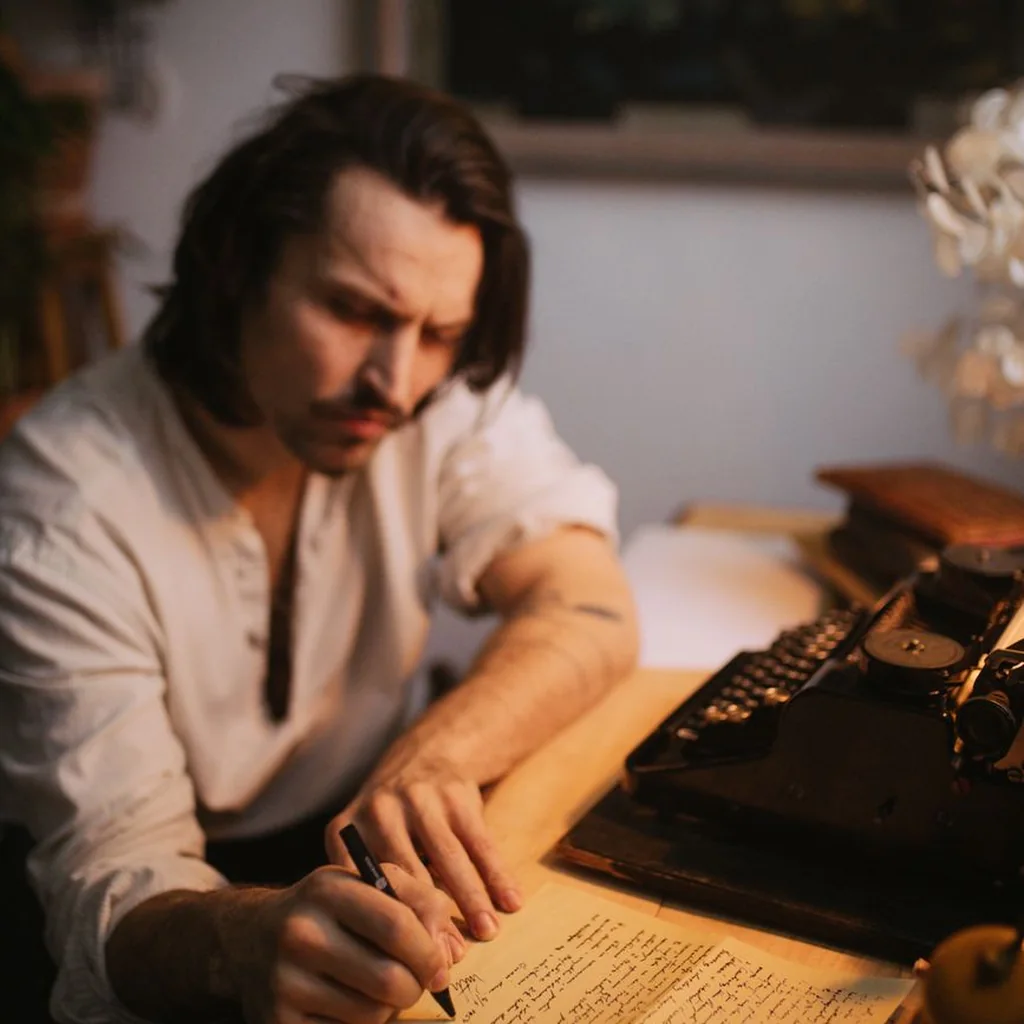
Photo: KoolShooters on Pexels
Das Licht bleibt noch am Tisch
The Light Lingers at the Table
At a café poetry reading, Michael is surprised when the poet asks him what a line of her poem means.
Three short parts. Read each part in German first; tap “Show English” under a paragraph when you need the translation.


Part 1
Michael saß in der zweiten Reihe eines kleinen Cafés. Vor ihm stand eine Tasse Tee, die längst kalt geworden war. Er war zum ersten Mal bei einer Lesung und kannte die Dichterin nicht.
Show EnglishHide English
Michael sat in the second row of a small café. In front of him was a cup of tea that had gone cold long ago. He was at a reading for the first time and did not know the poet.
Eigentlich hatte er nur auf einen Freund warten wollen. Doch der hatte abgesagt, und nun saß Michael zwischen zwölf fremden Menschen, die aufmerksam nach vorne sahen.
Show EnglishHide English
Actually, he had only meant to wait for a friend. But his friend had canceled, and now Michael was sitting among twelve strangers who were looking attentively toward the front.
Die Dichterin hieß Hannah. Sie las ein Gedicht über einen Sonntagmorgen, über ungewaschenes Geschirr und einen leeren Stuhl am Küchentisch. Michael verstand die Wörter, aber er wusste nicht genau, was sie zusammen bedeuteten.
Show EnglishHide English
The poet’s name was Hannah. She read a poem about a Sunday morning, unwashed dishes, and an empty chair at the kitchen table. Michael understood the words, but he did not know exactly what they meant together.
Dann las Hannah: „Das Licht bleibt noch am Tisch.“ Sie machte eine Pause und sah direkt zu ihm.
Show EnglishHide English
Then Hannah read: “The light still lingers at the table.” She paused and looked straight at him.
„Was glauben Sie, was diese Zeile bedeutet?“, fragte sie.
Show EnglishHide English
“What do you think this line means?” she asked.
Michael richtete sich auf. Jemand hinter ihm hörte auf, in einer Tasche zu suchen. Er spürte, wie sein Gesicht warm wurde.
Show EnglishHide English
Michael sat up straight. Someone behind him stopped searching in a bag. He felt his face growing warm.
„Ich?“, fragte er und zeigte auf sich. Hannah nickte und lächelte freundlich. „Ja, Sie. Es gibt keine falsche Antwort.“
Show EnglishHide English
“Me?” he asked, pointing at himself. Hannah nodded and smiled kindly. “Yes, you. There is no wrong answer.”
Michael blickte auf den leeren Stuhl neben sich. Dann holte er Luft und begann zu sprechen.
Show EnglishHide English
Michael looked at the empty chair beside him. Then he took a breath and began to speak.
Part 2Abschied im Café(Goodbye at the Café)
„Vielleicht ist jemand gegangen“, sagte Michael langsam. „Und die Person, die noch da ist, sitzt am Tisch und denkt an sie.“
Show EnglishHide English
“Maybe someone has gone away,” Michael said slowly. “And the person who is still there sits at the table and thinks about them.”
Hannah nickte, sagte aber nichts. Michael war sich nicht sicher, ob er weitersprechen sollte. Also fügte er hinzu: „Das Licht macht den leeren Platz ein bisschen weniger traurig.“
Show EnglishHide English
Hannah nodded but said nothing. Michael was not sure whether he should keep talking. So he added, “The light makes the empty place a little less sad.”
Im Café blieb es still. Dann sagte Hannah: „Das gefällt mir.“ Michael lehnte sich zurück und griff nach seinem kalten Tee.
Show EnglishHide English
The café stayed quiet. Then Hannah said, “I like that.” Michael leaned back and reached for his cold tea.
Doch nun meldete sich eine Frau in der ersten Reihe. „Ich dachte, es geht einfach um die Sonne, die morgens auf den Tisch scheint.“ Einige Leute lachten leise, und Michael stellte seine Tasse wieder ab.
Show EnglishHide English
But now a woman in the front row spoke up. “I thought it was simply about the sun shining on the table in the morning.” A few people laughed softly, and Michael put his cup down again.
„Das kann natürlich auch sein“, sagte er. „Ich habe wohl zu viel hineingelesen.“ Er hörte selbst, wie enttäuscht er klang.
Show EnglishHide English
“That could certainly be true too,” he said. “I guess I read too much into it.” He could hear how disappointed he sounded.
Hannah legte ihr Blatt auf den kleinen Tisch vor sich. „Beides passt“, sagte sie. „Ich habe das Gedicht an einem Sonntag geschrieben, als ich allein in meiner Küche saß.“
Show EnglishHide English
Hannah put her sheet of paper on the small table in front of her. “Both interpretations fit,” she said. “I wrote the poem on a Sunday when I was sitting alone in my kitchen.”
Michael lächelte erleichtert. Dann sah Hannah ihn wieder an. „Darf ich Sie noch etwas fragen? Warum haben Sie gerade an einen Abschied gedacht?“
Show EnglishHide English
Michael smiled with relief. Then Hannah looked at him again. “May I ask you something else? Why did you think of a goodbye in particular?”
Part 3Zwei Teller auf dem Tisch(Two Plates on the Table)
Michael sah auf seine Tasse. „Meine Tochter ist vor Kurzem ausgezogen“, sagte er. „Am ersten Sonntag danach habe ich zwei Teller auf den Tisch gestellt, ganz automatisch.“
Show EnglishHide English
Michael looked at his cup. “My daughter moved out recently,” he said. “On the first Sunday afterward, I put two plates on the table, quite automatically.”
Ein paar Leute lächelten. Michael lächelte auch, obwohl ihm der Morgen damals schwergefallen war. „Als ich es gemerkt habe, musste ich selbst lachen.“
Show EnglishHide English
A few people smiled. Michael smiled too, although that morning had been difficult for him. “When I noticed what I’d done, I had to laugh at myself.”
„Danke, dass Sie das erzählt haben“, sagte Hannah. Sie nahm ihr Blatt wieder in die Hand und las das Gedicht zu Ende. Diesmal hörte Michael aufmerksam zu, ohne sich zu fragen, ob er alles richtig verstand.
Show EnglishHide English
“Thank you for telling us that,” Hannah said. She picked up her sheet of paper again and finished reading the poem. This time Michael listened carefully without wondering whether he understood everything correctly.
Nach der Lesung blieben einige Gäste noch im Café. Michael wollte gerade seine Jacke holen, als Hannah zu ihm kam. „Ich hoffe, meine Frage war nicht zu unangenehm“, sagte sie.
Show EnglishHide English
After the reading, some guests stayed in the café. Michael was just about to get his jacket when Hannah came over to him. “I hope my question wasn’t too uncomfortable,” she said.
„Zuerst schon“, gab er zu. „Ich dachte, ich müsste eine Prüfung bestehen.“ Hannah lachte und versprach, beim nächsten Mal vorher zu erklären, dass niemand antworten musste.
Show EnglishHide English
“At first, it was,” he admitted. “I thought I had to pass a test.” Hannah laughed and promised to explain beforehand next time that no one had to answer.
Michael bestellte sich einen frischen Tee. Dann schrieb er seiner Tochter: „Hast du am Sonntag Zeit zum Frühstück?“ Ihre Antwort kam schnell: „Ja, gern. Ich bringe Brötchen mit.“
Show EnglishHide English
Michael ordered himself a fresh tea. Then he texted his daughter: “Are you free for breakfast on Sunday?” Her reply came quickly: “Yes, I’d love to. I’ll bring rolls.”
Er steckte das Handy lächelnd ein und setzte sich wieder an seinen Tisch.
Show EnglishHide English
He put his phone away with a smile and sat back down at his table.
Practise this German story
Vocabulary in context
Important words and phrases
Lesung
nounreading event
Wir gehen heute Abend zu einer Lesung im Buchladen.
We are going to a reading event at the bookstore tonight.
aufmerksam
adjective/adverbattentively
Die Gäste hörten aufmerksam zu.
The guests listened attentively.
absagen
verbto cancel
Der Termin wurde gestern abgesagt.
The appointment was canceled yesterday.
Zeile
nounline
Diese Zeile klingt sehr schön.
This line sounds very beautiful.
Abschied
nounfarewell; departure
Der Abschied fiel ihm schwer.
The farewell was difficult for him.
hineinlesen
verbto read too much into something
Man sollte nicht zu viel in einen kurzen Satz hineinlesen.
You should not read too much into a short sentence.
erleichtert
adjectiverelieved
Als sie anrief, war er sofort erleichtert.
When she called, he was immediately relieved.
unangenehm
adjectiveuncomfortable; awkward
Die Frage war ihm unangenehm.
The question was uncomfortable for him.
automatisch
adverbautomatically; without thinking
Ich griff automatisch nach meinem Handy.
I automatically reached for my phone.
weitersprechen
verbto keep speaking
Er wusste nicht, ob er weitersprechen sollte.
He did not know whether he should keep speaking.
Check your understanding
Comprehension questions
Choose an answer, check it, then move to the next question.
Question 1 of 3
- Question 1: current not answered
- Question 2: not answered
- Question 3: not answered
Notice the language
Language notes
Es geht um + Akkusativ
Use this pattern to say what a text, conversation, or situation is about. In the story, Michael hears: „Es geht einfach um die Sonne.“ You can reuse it with many topics: „Es geht um die Frage, wie man jemanden loslässt.“ or „Es geht um Abschied und Erinnerung.“ The pattern is very common in spoken and written German.
Es geht um die Frage, wie man jemanden loslässt.
It is about the question of how to let someone go.
More German stories to read next

Der Zettel in der Manteltasche
The Note in the Coat Pocket
Johanna is about to donate her old winter coat when she finds an old note from Thomas in its pocket.
Die Blumen zum Geburtstag
The Birthday Flowers
At closing time, Jonas enters a flower shop to buy flowers for his neighbor after forgetting her birthday that morning.

Das Haus mit der blauen Tür
The House with the Blue Door
On Saturday morning, Yasmin receives a message from a real estate website about a new house for sale in her area and recognizes her childhood home.

Das falsche Bett im Hostel
The Wrong Bed at the Hostel
Leyla returns to her hostel room to find that someone has slept in her bed and left a blue T-shirt there.