
Photo: Mateus Bonifacio de Ávila on Pexels
Peters Rede für Gisela
Peter’s Speech for Gisela
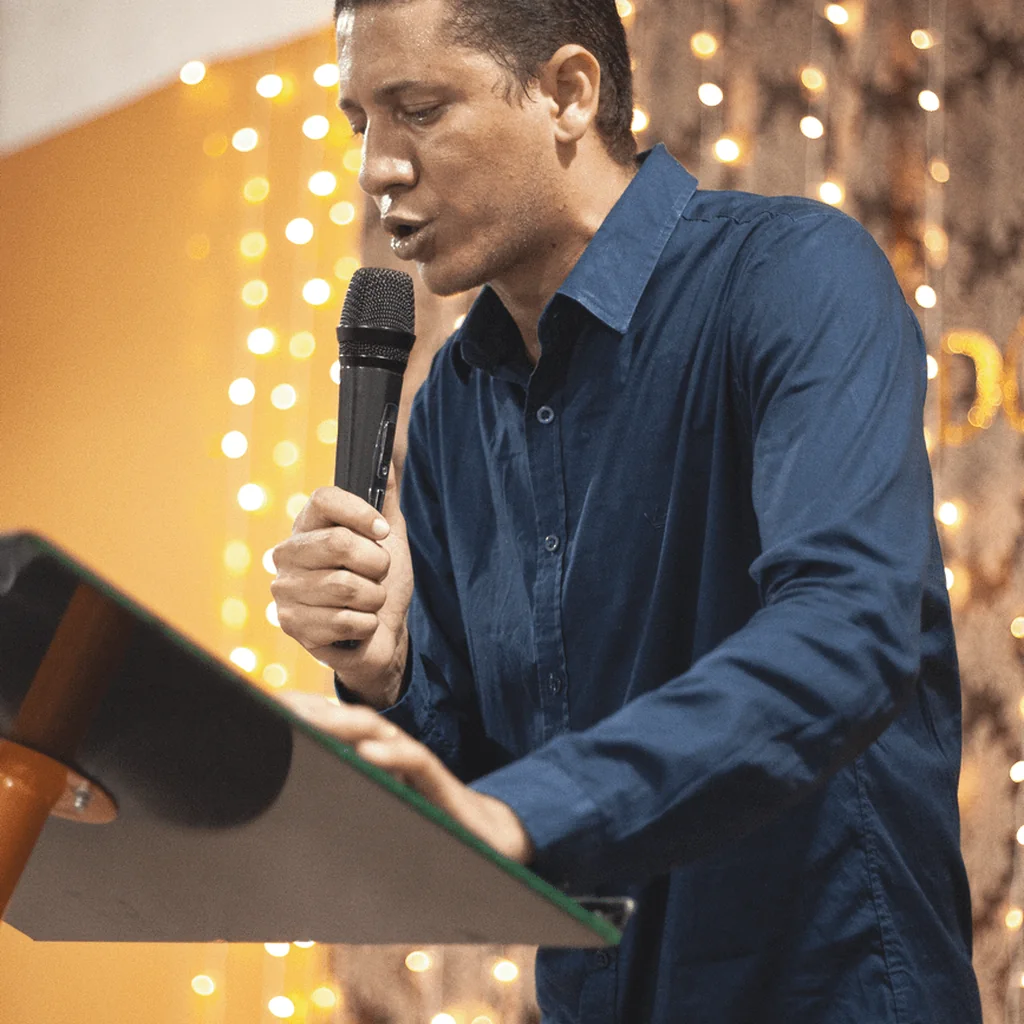
At the sports club hall, Peter is about to give a speech celebrating Gisela, who is leaving her job as a coach after twenty years.
Three short parts. Read each part in German first; tap “Show English” under a paragraph when you need the translation.


Part 1
Die ganze Woche hatte Peter seine Rede geübt: morgens beim Frühstück, abends vor dem Spiegel und einmal sogar im Bus. Da hatte ihn eine Frau freundlich angelächelt, weil sie dachte, er spreche mit ihr.
Show EnglishHide English
All week, Peter had practiced his speech: in the morning at breakfast, in the evening in front of the mirror, and even once on the bus. A woman had smiled at him kindly because she thought he was talking to her.
Heute stand er im Saal des Sportvereins. An den Tischen saßen Mitglieder jeden Alters. Sie waren gekommen, um Gisela zu feiern, die nach zwanzig Jahren als Trainerin aufhörte.
Show EnglishHide English
Today he was standing in the sports club hall. Members of all ages were sitting at the tables. They had come to celebrate Gisela, who was leaving her job as a coach after twenty years.
Peter hatte die Rede geschrieben, weil Gisela ihm als Kind gezeigt hatte, dass Sport auch Spaß machen konnte. Jetzt lagen seine Notizen vor ihm auf dem Pult. Seine Hände waren feucht.
Show EnglishHide English
Peter had written the speech because, when he was a child, Gisela had shown him that sport could be fun too. Now his notes lay in front of him on the lectern. His hands were damp.
„Du schaffst das“, sagte Gisela, als sie an ihm vorbeiging. Sie trug ihr rotes Vereinshemd und setzte sich in die erste Reihe.
Show EnglishHide English
“You can do it,” Gisela said as she walked past him. She was wearing her red club shirt and sat down in the front row.
Peter nahm das Mikrofon. „Liebe …“
Show EnglishHide English
Peter picked up the microphone. “Dear …”
Ein kurzes Geräusch kam aus dem Lautsprecher, dann war es still. Peter sagte noch einmal „Liebe“, diesmal etwas lauter. Nichts.
Show EnglishHide English
A short noise came from the speaker, then it went quiet. Peter said “Dear” once more, a little louder this time. Nothing.
Er klopfte vorsichtig gegen das Mikrofon. Ein paar Leute lachten, und Peter spürte, wie sein Gesicht heiß wurde.
Show EnglishHide English
He tapped the microphone carefully. A few people laughed, and Peter felt his face grow hot.
Er sah zu Frank, der am Eingang neben dem Lautsprecher stand. Frank hob die Hand und kam auf ihn zu.
Show EnglishHide English
He looked at Frank, who was standing by the entrance next to the speaker. Frank raised his hand and came toward him.
Part 2Die Rede ohne Mikrofon(The Speech Without a Microphone)
Frank nahm Peter das Mikrofon ab und prüfte das Kabel. Es steckte fest. Er drückte auf einen kleinen Knopf, doch aus dem Lautsprecher kam kein Ton.
Show EnglishHide English
Frank took the microphone from Peter and checked the cable. It was plugged in securely. He pressed a small button, but no sound came from the speaker.
„Könnt ihr mich auch so hören?“, fragte Peter in Richtung der letzten Reihe.
Show EnglishHide English
“Can you hear me like this?” Peter asked, facing the back row.
„Wenn du laut sprichst!“, rief jemand zurück. Andere nickten. Frank legte das Mikrofon auf einen Tisch, und Peter stellte sich vor das Pult.
Show EnglishHide English
“If you speak loudly!” someone called back. Others nodded. Frank put the microphone on a table, and Peter stood in front of the lectern.
Er begann noch einmal. Seine Stimme klang zuerst dünn, aber nach ein paar Sätzen wurde sie kräftiger. Er erzählte, wie Gisela ihm als Kind beim ersten Training den Ball zugespielt hatte, obwohl er immer danebenwarf.
Show EnglishHide English
He began again. At first, his voice sounded weak, but after a few sentences it grew stronger. He told them how, during his first training session as a child, Gisela had passed him the ball even though he kept missing the target.
„Du hast trotzdem nie aufgegeben“, sagte er zu ihr. Gisela lachte. „Du auch nicht.“
Show EnglishHide English
“You never gave up, though,” he said to her. Gisela laughed. “Neither did you.”
Die Leute hörten zu, und Peter entspannte sich. Dann fiel sein Blick auf seine Notizen: Der letzte Teil fehlte. Er hatte das zweite Blatt zu Hause auf dem Küchentisch liegen lassen.
Show EnglishHide English
The people listened, and Peter relaxed. Then his eyes fell on his notes: the last part was missing. He had left the second page at home on the kitchen table.
Dort stand die Geschichte, die er zum Schluss erzählen wollte. Peter hielt inne und sah Gisela an. Sie lächelte und wartete, während er nach den richtigen Worten suchte.
Show EnglishHide English
That was where the story he wanted to tell at the end was written. Peter paused and looked at Gisela. She smiled and waited while he searched for the right words.
Part 3Peters Rede bei der Feier(Peter’s Speech at the Celebration)
Peter atmete tief ein. Er erinnerte sich noch gut an den Tag, über den er hatte sprechen wollen. Er musste nicht jeden Satz genauso sagen, wie er ihn aufgeschrieben hatte.
Show EnglishHide English
Peter took a deep breath. He still remembered clearly the day he had wanted to talk about. He did not have to say every sentence exactly as he had written it.
„Vor zwei Jahren“, begann er, „habe ich selbst angefangen, Kinder zu trainieren. Nach meiner ersten Stunde war ich sicher, dass ich alles falsch gemacht hatte.“
Show EnglishHide English
“Two years ago,” he began, “I started coaching children myself. After my first lesson, I was sure I had done everything wrong.”
Einige Leute lächelten. Peter sah zu Gisela. „Du hast mir damals gesagt: Wenn die Kinder morgen wiederkommen wollen, war es eine gute Stunde.“
Show EnglishHide English
A few people smiled. Peter looked at Gisela. “Back then, you told me: If the children want to come back tomorrow, it was a good lesson.”
„Und?“, fragte sie. „Sind sie wiedergekommen?“
Show EnglishHide English
“And?” she asked. “Did they come back?”
„Alle. Sogar das Kind, das sich die ganze Stunde hinter der Tür versteckt hatte.“ Diesmal lachte der ganze Saal. Peter wartete, bis es wieder ruhig war.
Show EnglishHide English
“All of them. Even the child who had hidden behind the door for the whole lesson.” This time the whole hall laughed. Peter waited until it was quiet again.
„Von dir haben wir gelernt, dass hier jeder mitmachen darf. Dafür möchte ich dir im Namen von uns allen danken.“
Show EnglishHide English
“We learned from you that everyone is welcome to take part here. For that, I would like to thank you on behalf of all of us.”
Er nahm einen Blumenstrauß vom Tisch und gab ihn Gisela. Sie umarmte ihn, und die Leute klatschten lange.
Show EnglishHide English
He picked up a bouquet of flowers from the table and gave it to Gisela. She hugged him, and the people clapped for a long time.
Als Peter sich wieder setzte, beugte Gisela sich zu ihm. „Deine Rede war schön. Und bis hinten konnte man dich auch hören.“
Show EnglishHide English
When Peter sat down again, Gisela leaned toward him. “Your speech was lovely. And people at the back could hear you too.”
Peter lächelte. Zum ersten Mal an diesem Abend vergaß er seine Notizen ganz.
Show EnglishHide English
Peter smiled. For the first time that evening, he completely forgot about his notes.
Practise this German story
Vocabulary in context
Important words and phrases
die Rede üben
verb phraseto practice a speech
Ich muss heute Abend meine Rede üben.
I have to practice my speech this evening.
vor dem Spiegel
prepositional phrasein front of the mirror
Er probte vor dem Spiegel.
He rehearsed in front of the mirror.
im Saal des Sportvereins
prepositional phrasein the hall of the sports club
Die Feier findet im Saal des Sportvereins statt.
The celebration takes place in the sports club hall.
aufhören
verbto stop; to quit (a job)
Sie hörte nach zwanzig Jahren auf.
She stopped after twenty years.
das Mikrofon
nounmicrophone
Das Mikrofon funktioniert heute nicht.
The microphone is not working today.
die letzte Reihe
noun phrasethe back row
Die Kinder saßen in der letzten Reihe.
The children sat in the back row.
nie aufgegeben
verb phrasenever gave up
Er hat nie aufgegeben.
He never gave up.
nach ein paar Sätzen
adverbial phraseafter a few sentences
Nach ein paar Sätzen wurde seine Stimme sicherer.
After a few sentences, his voice became more confident.
tief einatmen
verb phraseto breathe in deeply
Atme tief ein und sprich langsam.
Take a deep breath and speak slowly.
im Namen von uns allen danken
verb phraseto thank on behalf of all of us
Wir möchten dir im Namen von uns allen danken.
We want to thank you on behalf of all of us.
Check your understanding
Comprehension questions
Choose an answer, check it, then move to the next question.
Question 1 of 3
- Question 1: current not answered
- Question 2: not answered
- Question 3: not answered
Notice the language
Language notes
sich an etwas erinnern
Use sich erinnern an + accusative to say that someone remembers a person, thing, or event. It is a very reusable pattern in German. In the story, Peter recalls a day from the past: "Er erinnerte sich noch gut an den Tag, über den er hatte sprechen wollen." Example: "Ich erinnere mich an unser erstes Training."
Ich erinnere mich an unser erstes Training.
I remember our first training session.
More German stories to read next
Das Licht bleibt noch am Tisch
The Light Lingers at the Table
At a café poetry reading, Michael is surprised when the poet asks him what a line of her poem means.

Der Zettel in der Manteltasche
The Note in the Coat Pocket
Johanna is about to donate her old winter coat when she finds an old note from Thomas in its pocket.

Die Blumen zum Geburtstag
The Birthday Flowers
At closing time, Jonas enters a flower shop to buy flowers for his neighbor after forgetting her birthday that morning.

Das Haus mit der blauen Tür
The House with the Blue Door
On Saturday morning, Yasmin receives a message from a real estate website about a new house for sale in her area and recognizes her childhood home.