


Back to Beginner (A1) stories

Unlock the Complete Learning Experience

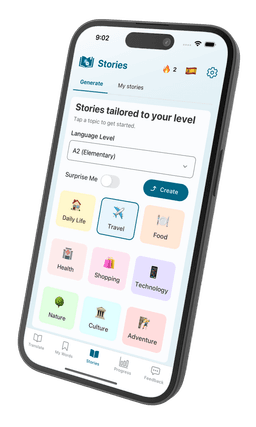
You're reading free stories on our website. Get the mobile app for audio narration, speaking practice, vocabulary saving, personalised stories, instant translations, and progress tracking.

Download on the App StoreGet it on Google Play
Audio
Translations
Progress

Sophie geht zum Arzt

Beginner (A1)
5 min read

📖 You are reading the free text version. Get our mobile app for 🎧 audio narration, 💬 speaking practice, 🔄 instant translations, and 💾 vocabulary saving to enhance your learning experience.

Sophie fühlt sich seit zwei Tagen nicht gut. Sie hat Kopfweh und sie ist müde.

Heute geht Sophie zum Arzt. Im Wartezimmer sieht sie viele Menschen. Einige lesen, andere sprechen leise miteinander.

Der Arzt fragt Sophie viele Fragen. Er misst ihre Temperatur und sieht in ihren Hals.

"Du hast eine Erkältung," sagt der Arzt. "Du brauchst viel Wasser und Ruhe. Du musst nicht zur Arbeit gehen."

Sophie freut sich, dass sie bald besser wird. Sie geht nach Hause und trinkt einen Tee. Danach legt sie sich ins Bett.

Am nächsten Tag fühlt Sophie sich schon besser. Der Kopfweh ist fast weg und sie lacht wieder.

Sie weiß jetzt, wie wichtig es ist, auf den Körper zu hören und sich auszuruhen.

Practise this German story

Vocabulary in context

Important words and phrases

  • sich nicht gut fühlen

    phrase

    to feel unwell

    Ich fühle mich heute nicht gut.

    I don't feel well today.

  • müde

    adjective

    tired

    Ich bin müde.

    I am tired.

  • der Arzt

    noun

    doctor

    Der Arzt ist freundlich.

    The doctor is friendly.

  • das Wartezimmer

    noun

    waiting room

    Im Wartezimmer warten viele Menschen.

    Many people are waiting in the waiting room.

  • die Temperatur

    noun

    temperature

    Der Arzt misst meine Temperatur.

    The doctor measures my temperature.

  • der Hals

    noun

    throat

    Mein Hals tut weh.

    My throat hurts.

  • die Erkältung

    noun

    cold

    Ich habe eine Erkältung.

    I have a cold.

  • Wasser

    noun

    water

    Ich trinke viel Wasser.

    I drink a lot of water.

  • Ruhe

    noun

    rest

    Ich brauche Ruhe.

    I need rest.

  • nach Hause

    phrase

    home

    Ich gehe nach Hause.

    I go home.

  • ins Bett

    phrase

    to bed

    Ich gehe ins Bett.

    I go to bed.

  • sich ausruhen

    verb phrase

    to rest

    Ich ruhe mich nach der Schule aus.

    I rest after school.

Check your understanding

Comprehension questions

Choose an answer, check it, then move to the next question.

Question 1 of 3

  1. Question 1: current not answered
  2. Question 2: not answered
  3. Question 3: not answered
Wohin geht Sophie heute?Where does Sophie go today?

Notice the language

Language notes

grammar

sich ... fühlen

Use sich fühlen to say how someone feels. The reflexive pronoun changes with the subject: ich fühle mich, du fühlst dich, er/sie fühlt sich. You can add an adjective to describe the feeling: Ich fühle mich müde. Sophie fühlt sich schon besser. This pattern is very useful for talking about health and emotions.

  • Ich fühle mich müde.

    I feel tired.

  • Sophie fühlt sich schon besser.

    Sophie already feels better.

Keep reading

More Beginner (A1) Stories
GermanBeginner (A1)