
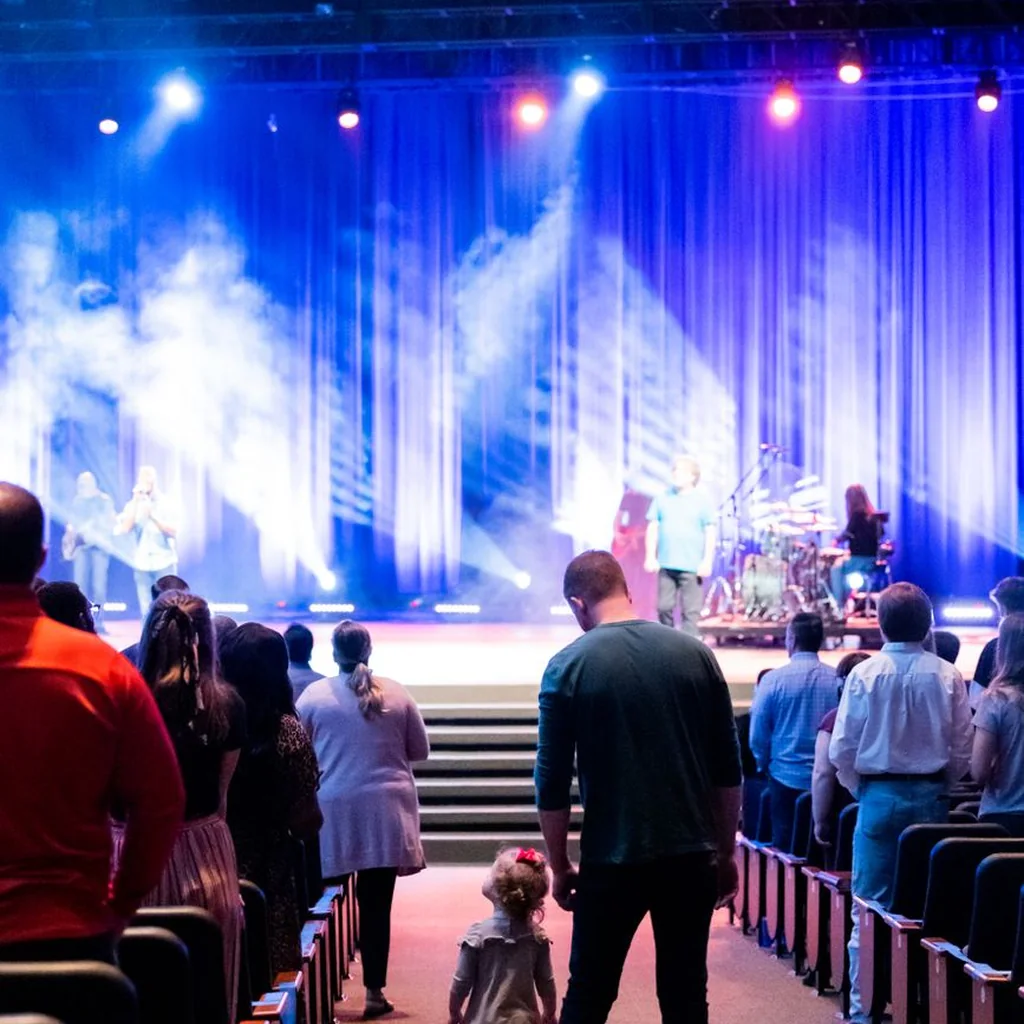
Photo: Caleb Oquendo on Pexels
Le concert de l’école
The School Concert
At the school concert, Léna waits backstage with her flute, but she cannot see her parents in the audience.
Three short parts. Read each part in French first; tap “Show English” under a paragraph when you need the translation.


Part 1
Derrière le rideau de la salle des fêtes, Léna serre sa flûte entre ses mains. Dans quelques minutes, sa classe va jouer au concert de l’école. Elle se met sur la pointe des pieds pour regarder le public.
Show EnglishHide English
Behind the curtain in the assembly hall, Léna holds her flute tightly in her hands. In a few minutes, her class will play at the school concert. She rises onto her tiptoes to look at the audience.
Les chaises se remplissent. Elle voit des parents avec des manteaux sur les genoux, un petit garçon qui agite la main et une dame qui cherche sa place. Mais elle ne voit ni son père ni sa mère.
Show EnglishHide English
The chairs are filling up. She sees parents with coats on their knees, a little boy waving, and a woman looking for her seat. But she sees neither her father nor her mother.
« Tu les as trouvés ? » demande Inès, qui joue à côté d’elle.
Show EnglishHide English
“Have you found them?” asks Inès, who is playing next to her.
Léna secoue la tête. Ses parents lui ont promis d’être là avant le début du concert. Elle sort son téléphone de sa poche : aucun message.
Show EnglishHide English
Léna shakes her head. Her parents promised they would be there before the concert began. She takes her phone out of her pocket: there are no messages.
La professeure fait signe aux élèves de se préparer. Léna range son téléphone et suit les autres jusqu’à la scène. Les lumières l’empêchent de bien voir le fond de la salle.
Show EnglishHide English
The teacher signals for the students to get ready. Léna puts her phone away and follows the others to the stage. The lights make it hard for her to see the back of the room.
Elle prend place, pose sa flûte sur ses genoux et cherche encore une fois ses parents dans le public. Puis, au moment où la professeure lève les mains, la porte du fond s’ouvre.
Show EnglishHide English
She takes her place, rests her flute on her knees, and looks for her parents in the audience one more time. Then, just as the teacher raises her hands, the door at the back opens.
Part 2Le concert de flûte(The Flute Concert)
Léna tourne la tête vers la porte. C’est sa mère, suivie de son père. Ils avancent entre les rangées en cherchant deux places libres.
Show EnglishHide English
Léna turns her head toward the door. It is her mother, followed by her father. They walk between the rows, looking for two empty seats.
Léna leur fait un grand signe. Son père lui sourit, mais sa mère ne la voit pas tout de suite. Celle-ci montre deux chaises près du mur, et tous deux s’assoient enfin.
Show EnglishHide English
Léna waves to them enthusiastically. Her father smiles at her, but her mother does not see her right away. Her mother points to two chairs near the wall, and they both finally sit down.
Soulagée, Léna porte sa flûte à ses lèvres. Elle a pourtant raté le signe de départ : les autres ont déjà commencé. Elle se met à jouer trop tôt et joue une note toute seule pendant une pause.
Show EnglishHide English
Relieved, Léna raises her flute to her lips. But she has missed the starting signal: the others have already begun. She starts playing too early and plays a note all by herself during a pause.
Quelques personnes sourient. Léna sent ses joues devenir chaudes. Elle baisse les yeux, puis regarde Inès, qui lui montre discrètement la bonne ligne sur sa partition.
Show EnglishHide English
A few people smile. Léna feels her cheeks grow warm. She lowers her eyes, then looks at Inès, who discreetly points to the right line on her sheet music.
Léna attend le passage suivant et reprend avec la classe. Cette fois, ses doigts trouvent les bonnes notes. À la fin du morceau, les parents applaudissent et la professeure sourit aux élèves.
Show EnglishHide English
Léna waits for the next section and starts again with the class. This time, her fingers find the right notes. At the end of the piece, the parents applaud, and the teacher smiles at the students.
« Ça va mieux ? » murmure Inès.
Show EnglishHide English
“Are you feeling better?” Inès whispers.
Léna hoche la tête, puis regarde sa partition pour le morceau suivant. Une feuille manque sur son pupitre : elle a glissé par terre, juste devant la scène.
Show EnglishHide English
Léna nods, then looks at her sheet music for the next piece. A page is missing from her music stand: it has slipped onto the floor, right in front of the stage.
Part 3Le concert de Léna(Léna’s Concert)
Léna se penche, mais la feuille est trop loin. La professeure se prépare déjà à annoncer le morceau suivant. Inès lui donne un petit coup de coude.
Show EnglishHide English
Léna leans down, but the page is too far away. The teacher is already getting ready to announce the next piece. Inès gives her a little nudge with her elbow.
« On peut regarder la mienne toutes les deux », murmure-t-elle.
Show EnglishHide English
“We can both look at mine,” she whispers.
Elle déplace sa partition entre leurs pupitres. Les notes sont un peu petites pour Léna, alors les deux filles rapprochent leurs chaises. Un pied de la chaise de Léna fait du bruit sur le sol, et son père lève le pouce dans le public.
Show EnglishHide English
She moves her sheet music between their music stands. The notes are a little small for Léna, so the two girls move their chairs closer together. One of Léna’s chair legs makes a noise on the floor, and her father gives her a thumbs-up from the audience.
Elle sourit malgré elle. Quand la professeure donne le signal, Léna respire et commence en même temps que les autres. Elle regarde les notes, puis les doigts d’Inès, et joue jusqu’à la dernière mesure.
Show EnglishHide English
She cannot help smiling. When the teacher gives the signal, Léna takes a breath and begins at the same time as the others. She looks at the notes, then at Inès’s fingers, and plays until the last bar.
Après les applaudissements, sa mère ramasse la feuille et la lui tend au bord de la scène. « Pardon pour le retard. On a eu du mal à trouver une place pour la voiture. »
Show EnglishHide English
After the applause, her mother picks up the page and hands it to her at the edge of the stage. “Sorry we’re late. We had trouble finding a parking spot for the car.”
« J’ai joué toute seule au mauvais moment », dit Léna en descendant les marches.
Show EnglishHide English
“I played all by myself at the wrong moment,” Léna says as she walks down the steps.
« Je t’ai entendue, répond son père. Mais j’ai surtout aimé la suite. »
Show EnglishHide English
“I heard you,” her father replies. “But what I liked most was the rest.”
Léna rit et rejoint ses parents, sa flûte sous le bras.
Show EnglishHide English
Léna laughs and joins her parents, her flute under her arm.
Practise this French story
Vocabulary in context
Important words and phrases
sur la pointe des pieds
expressionon tiptoe
Elle avance sur la pointe des pieds pour ne pas faire de bruit.
She walks on tiptoe so as not to make noise.
se remplir
verb phraseto fill up
La salle se remplit rapidement avant le spectacle.
The hall fills up quickly before the show.
faire signe
verb phraseto wave; to signal
Je lui fais signe depuis le fond de la classe.
I wave to her from the back of the classroom.
au moment où
conjunction phrasejust as; at the moment when
Au moment où le concert commence, tout le monde se tait.
Just as the concert starts, everyone falls silent.
se mettre à
verb phraseto start to
Il se met à rire quand il entend la musique.
He starts laughing when he hears the music.
reprendre
verbto continue; to resume
Après la pause, nous reprenons le travail.
After the break, we resume work.
avoir du mal à
expressionto have trouble doing something
J’ai du mal à trouver une place pour me garer.
I have trouble finding a parking space.
a glissé par terre
verb phraseslid onto the floor
La feuille a glissé par terre.
The sheet slid onto the floor.
lever le pouce
verb phraseto give a thumbs-up
Son père lui lève le pouce depuis le public.
Her father gives her a thumbs-up from the audience.
sous le bras
prepositional phraseunder one’s arm
Elle sort de la classe avec son cahier sous le bras.
She leaves the classroom with her notebook under her arm.
Check your understanding
Comprehension questions
Choose an answer, check it, then move to the next question.
Question 1 of 3
- Question 1: current not answered
- Question 2: not answered
- Question 3: not answered
Notice the language
Language notes
avoir du mal à + infinitif
This pattern means that something is difficult to do. Use avoir du mal à + infinitive when a person struggles with an action. In the story, « On a eu du mal à trouver une place pour la voiture » shows that finding parking was difficult. You can reuse it in everyday French: « J’ai du mal à me concentrer. »
J’ai du mal à me concentrer.
I have trouble concentrating.
More French stories to read next
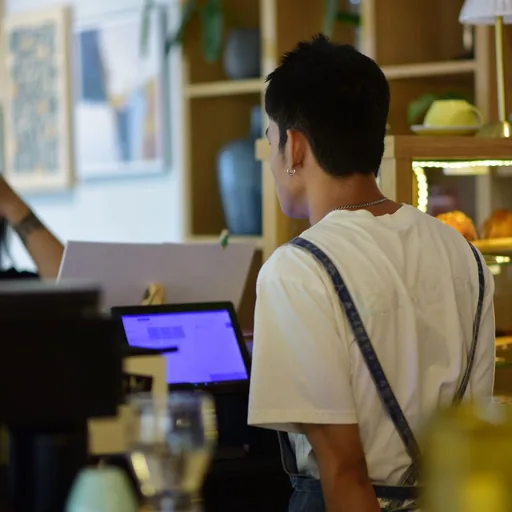
La phrase oubliée
The Forgotten Sentence
Michel, newly arrived in France, rehearses ordering coffee in French at home because he wants to order without looking at his phone.
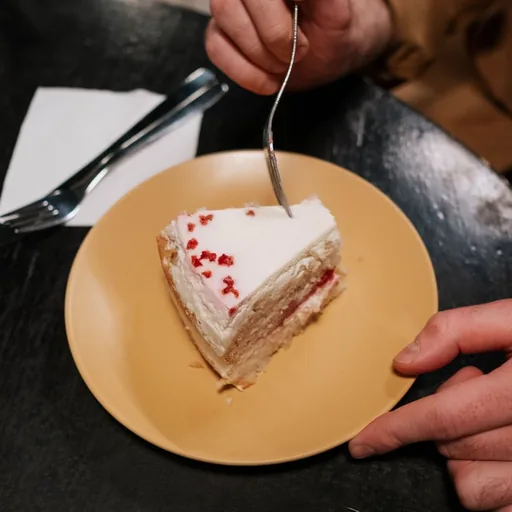
Le gâteau d’anniversaire
The Birthday Cake
At four o’clock in the break room, Félix, who is on a strict diet, is handed the first slice of a coworker’s birthday cake.
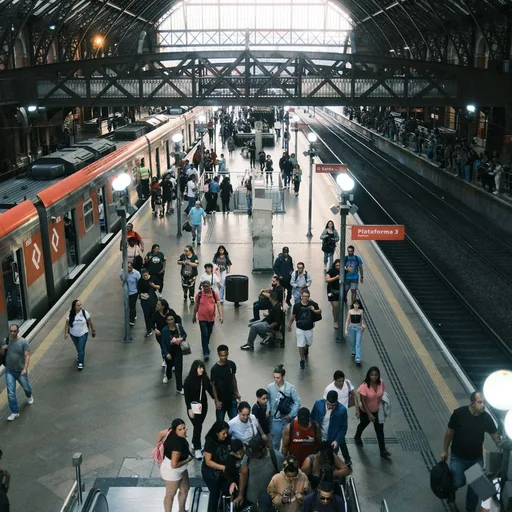
La rencontre sur le quai
The Meeting on the Platform
Mathieu waits for his train in a crowded station, holding a very hot coffee, when he spots a woman across the platform.
La bouilloire au magasin
The Kettle at the Store
At a store, Clara brings back a kettle she bought three weeks ago because it stops before the water gets hot.