
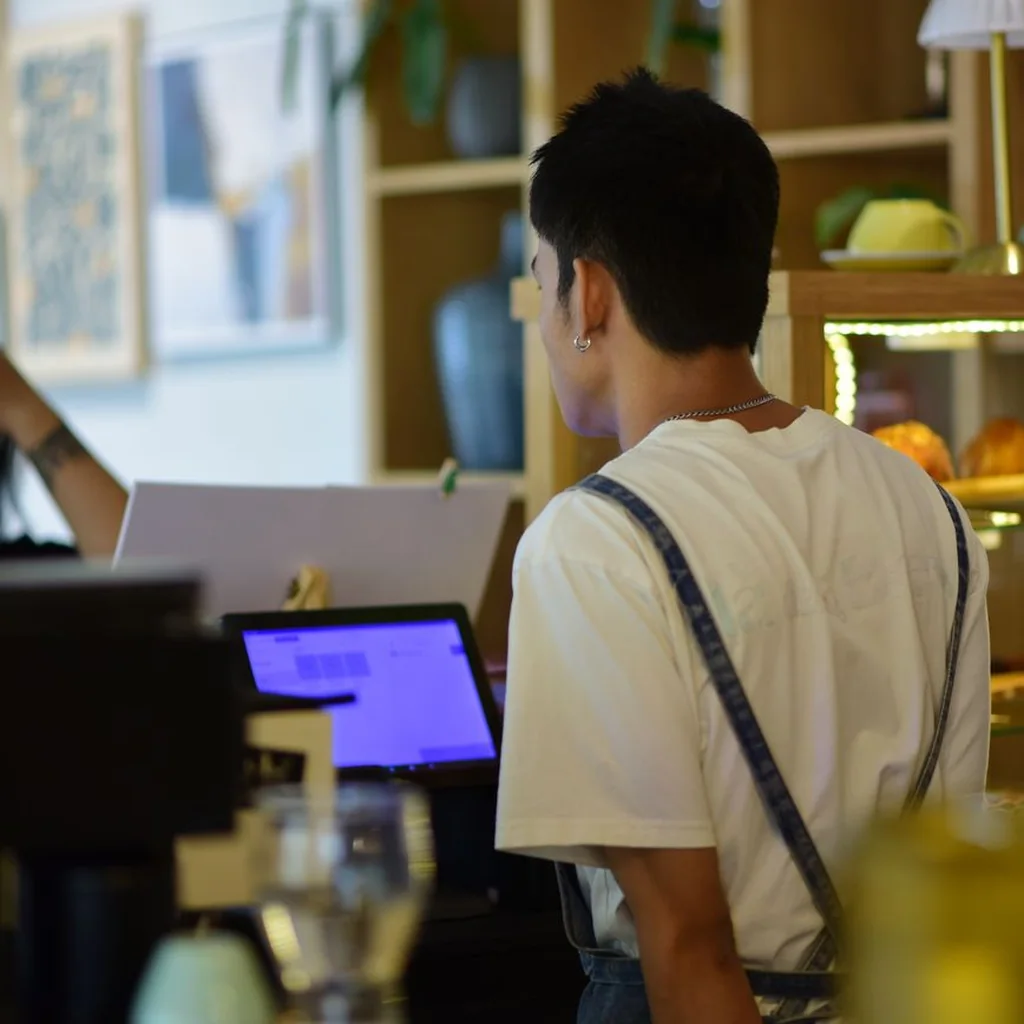
Photo: Sóc Năng Động on Pexels
La phrase oubliée
The Forgotten Sentence
Michel, newly arrived in France, rehearses ordering coffee in French at home because he wants to order without looking at his phone.
Three short parts. Read each part in French first; tap “Show English” under a paragraph when you need the translation.


Part 1
Depuis ce matin, Michel répète la même phrase dans sa cuisine. Il vient d’arriver en France et veut commander son café en français, sans regarder son téléphone.
Show EnglishHide English
Since this morning, Michel has been repeating the same sentence in his kitchen. He has just arrived in France and wants to order his coffee in French without looking at his phone.
« Bonjour, je voudrais un café au lait, s’il vous plaît. » Devant le miroir, il sourit et recommence. Il essaie de parler plus lentement, puis un peu plus fort.
Show EnglishHide English
“Hello, I’d like a coffee with milk, please.” In front of the mirror, he smiles and says it again. He tries speaking more slowly, then a little louder.
À dix heures, il écrit la phrase sur un petit papier. Il la lit encore en mettant sa veste, puis la glisse dans la poche intérieure, avec son téléphone. Il connaît chaque mot, mais il a peur de les oublier au mauvais moment.
Show EnglishHide English
At ten o’clock, he writes the sentence on a small piece of paper. He reads it again as he puts on his jacket, then slips it into the inside pocket with his phone. He knows every word, but he is afraid he will forget them at the wrong moment.
Le café est à deux rues de chez lui. En entrant, Michel sent l’odeur du pain chaud. Quelques personnes attendent devant le comptoir, et la serveuse prépare les commandes avec un grand sourire.
Show EnglishHide English
The café is two streets from his home. As he goes in, Michel smells warm bread. A few people are waiting at the counter, and the waitress is preparing orders with a big smile.
Michel se place derrière un homme qui porte un sac de sport. Il répète sa phrase en silence. L’homme commande deux cafés à emporter, paie et s’écarte.
Show EnglishHide English
Michel stands behind a man carrying a sports bag. He repeats his sentence silently. The man orders two coffees to go, pays, and steps aside.
La serveuse regarde Michel. « Bonjour, qu’est-ce que je vous sers ? »
Show EnglishHide English
The waitress looks at Michel. “Hello, what can I get you?”
Michel ouvre la bouche, mais aucun mot ne sort. Il met la main dans la poche intérieure de sa veste et ne trouve pas son petit papier.
Show EnglishHide English
Michel opens his mouth, but no words come out. He puts his hand in the inside pocket of his jacket and cannot find his little piece of paper.
Part 2Le café au lait(The Coffee with Milk)
Michel cherche dans les autres poches de sa veste, puis dans celles de son pantalon. La serveuse attend, le crayon à la main. Derrière lui, quelqu’un avance d’un pas.
Show EnglishHide English
Michel searches the other pockets of his jacket, then the pockets of his trousers. The waitress waits, pencil in hand. Behind him, someone takes a step forward.
« Je suis désolé, dit Michel. J’apprends le français et j’ai oublié ma phrase. » Ses joues deviennent chaudes. Il voudrait sortir, mais il a passé toute la matinée à préparer ce moment.
Show EnglishHide English
“I’m sorry,” says Michel. “I’m learning French, and I’ve forgotten my sentence.” His cheeks grow warm. He would like to leave, but he has spent the whole morning preparing for this moment.
La serveuse pose son crayon. « Prenez votre temps. Vous voulez boire quelque chose ? »
Show EnglishHide English
The waitress puts down her pencil. “Take your time. Would you like something to drink?”
« Oui, un café… avec du lait, s’il vous plaît. » Michel laisse échapper un petit rire. Ce ne sont pas les mots qu’il avait appris, mais la serveuse a compris.
Show EnglishHide English
“Yes, a coffee… with milk, please.” Michel lets out a little laugh. These aren’t the words he had learned, but the waitress understands.
« Un café au lait, bien sûr. Vous le prenez ici ? »
Show EnglishHide English
“A coffee with milk, of course. Are you having it here?”
Michel regarde les petites tables près de la fenêtre. Il avait prévu de rentrer avec son café, mais il se sent déjà mieux. « Ici, merci. »
Show EnglishHide English
Michel looks at the small tables near the window. He had planned to go home with his coffee, but he is already feeling better. “Here, thank you.”
Au moment de payer, il ouvre son portefeuille. Il n’y trouve qu’un billet de cinquante euros. La serveuse regarde dans sa caisse, puis lève les yeux vers lui.
Show EnglishHide English
When it is time to pay, he opens his wallet. There is only a fifty-euro note inside. The waitress looks in her cash register, then looks up at him.
« Je suis désolée, je n’ai pas assez de monnaie. Vous avez une carte ? »
Show EnglishHide English
“I’m sorry, I don’t have enough change. Do you have a card?”
Part 3À demain au café(See You Tomorrow at the Café)
Michel fouille dans son portefeuille et trouve sa carte derrière une vieille photo. « Oui, la voilà ! » dit-il. Cette fois, il n’a pas besoin de chercher ses mots.
Show EnglishHide English
Michel searches his wallet and finds his card behind an old photograph. “Yes, here it is!” he says. This time, he doesn’t need to search for his words.
La serveuse lui tend le petit appareil. Michel paie, la remercie et va s’asseoir près de la fenêtre. Dehors, les gens passent avec leurs sacs, pressés de rentrer avant la pluie.
Show EnglishHide English
The waitress hands him the small machine. Michel pays, thanks her, and goes to sit near the window. Outside, people walk by with their bags, hurrying to get home before the rain.
Quand elle lui apporte son café, la serveuse lui dit : « Vous parlez très bien français. »
Show EnglishHide English
When she brings him his coffee, the waitress says, “You speak French very well.”
Michel sourit. « Merci. J’ai répété ma commande toute la matinée, et je l’ai oubliée devant vous. »
Show EnglishHide English
Michel smiles. “Thank you. I repeated my order all morning, and I forgot it in front of you.”
« Ça arrive ! répond-elle. Mon frère apprend l’italien. La première fois qu’il a commandé un café à Rome, il a demandé un verre de lait. »
Show EnglishHide English
“That happens!” she replies. “My brother is learning Italian. The first time he ordered a coffee in Rome, he asked for a glass of milk.”
Michel rit et goûte son café. Il est exactement comme il l’aime. Il sort son téléphone de la poche intérieure de sa veste pour noter quelques mots nouveaux, puis trouve son petit papier, coincé sous le téléphone.
Show EnglishHide English
Michel laughs and tastes his coffee. It is exactly the way he likes it. He takes his phone out of the inside pocket of his jacket to write down some new words, then finds his little piece of paper, tucked under the phone.
Il le relit une dernière fois et le plie. En partant, il dit à la serveuse : « À demain ! » Cette phrase-là vient toute seule.
Show EnglishHide English
He reads it one last time and folds it. As he leaves, he says to the waitress, “See you tomorrow!” That sentence comes out all by itself.
Practise this French story
Vocabulary in context
Important words and phrases
commander
verbto order
Je voudrais commander un café, s’il vous plaît.
I would like to order a coffee, please.
s’il vous plaît
expressionplease
Un café, s’il vous plaît.
A coffee, please.
avoir peur de
expressionto be afraid of
J’ai peur de parler trop vite.
I’m afraid of speaking too fast.
oublier
verbto forget
J’ai oublié mon mot de passe.
I forgot my password.
poche intérieure
noun phraseinside pocket
Je mets mon téléphone dans la poche intérieure de ma veste.
I put my phone in the inside pocket of my jacket.
à emporter
expressionto go; takeaway
Je prends ce sandwich à emporter.
I’m taking this sandwich to go.
monnaie
nounchange
Vous avez de la monnaie ?
Do you have any change?
prendre son temps
expressionto take your time
Prenez votre temps, je vous attends.
Take your time, I’ll wait for you.
se sentir mieux
expressionto feel better
Après le déjeuner, je me sens mieux.
After lunch, I feel better.
remercier
verbto thank
Je remercie la serveuse pour son aide.
I thank the waitress for her help.
Check your understanding
Comprehension questions
Choose an answer, check it, then move to the next question.
Question 1 of 3
- Question 1: current not answered
- Question 2: not answered
- Question 3: not answered
Notice the language
Language notes
Vous voulez + infinitif
In a café or shop, "vous voulez" + an infinitive is a polite, reusable way to ask what someone wants to do or have. It sounds natural in service situations and is often softer than a direct command. Example: « Vous voulez boire quelque chose ? » You can reuse this pattern with many verbs: « Vous voulez manger ici ? », « Vous voulez essayer ce modèle ? ».
Vous voulez boire quelque chose ?
Would you like to drink something?
More French stories to read next
Le gâteau d’anniversaire
The Birthday Cake
At four o’clock in the break room, Félix, who is on a strict diet, is handed the first slice of a coworker’s birthday cake.
La rencontre sur le quai
The Meeting on the Platform
Mathieu waits for his train in a crowded station, holding a very hot coffee, when he spots a woman across the platform.
La bouilloire au magasin
The Kettle at the Store
At a store, Clara brings back a kettle she bought three weeks ago because it stops before the water gets hot.
La fête d’été sous la pluie
The Summer Celebration in the Rain
On Saturday, Clara arrives first in the village field and must set out one hundred chairs before the guests arrive at noon.