
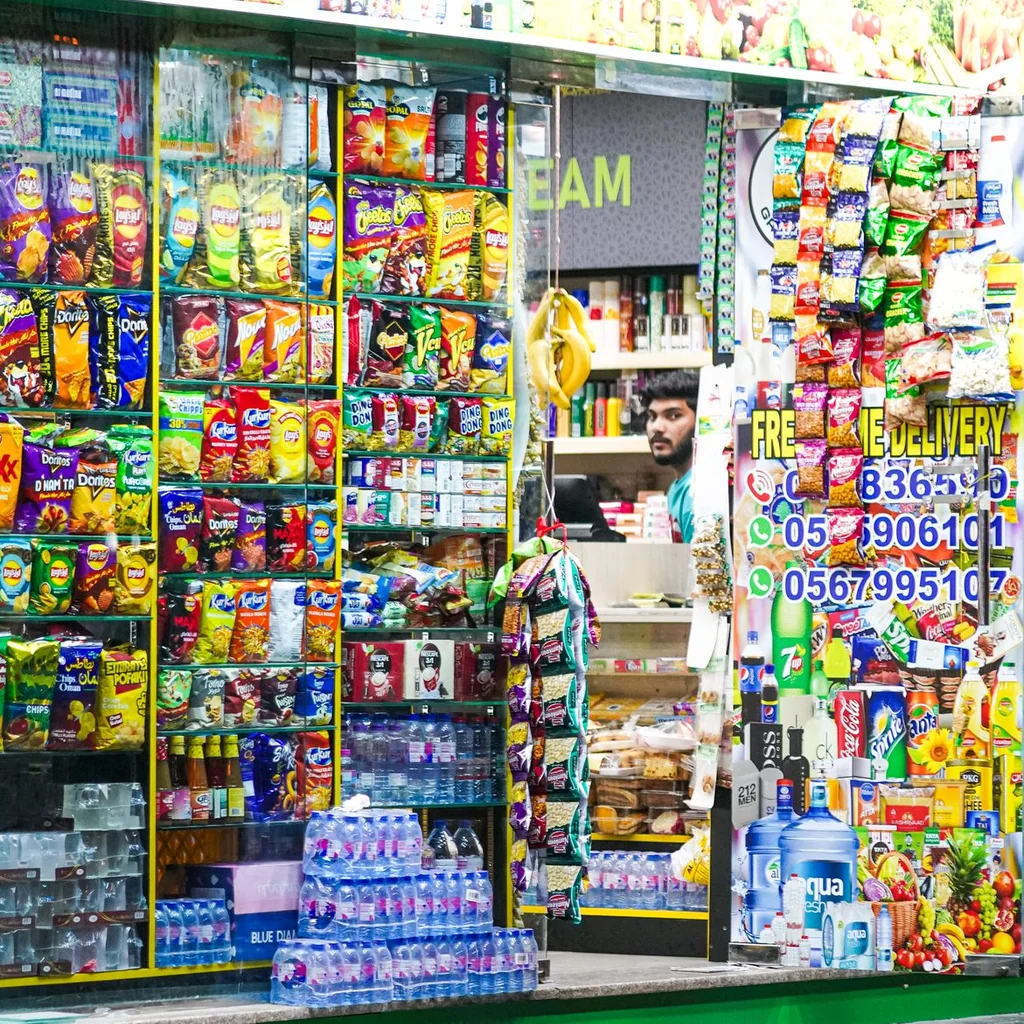
Photo: aboodi vesakaran on Pexels
La petite épicerie
The Little Grocery Store
Retired Mamadou visits the little grocery store on his street every morning to buy bread and talk with Julie, the shopkeeper.
Three short parts. Read each part in French first; tap “Show English” under a paragraph when you need the translation.


Part 1
Chaque matin, Mamadou va à la petite épicerie au coin de sa rue. Il est à la retraite. Depuis trente ans, il achète son pain et parle un peu avec Julie, la vendeuse.
Show EnglishHide English
Every morning, Mamadou goes to the little grocery store on the corner of his street. He is retired. For thirty years, he has bought his bread there and talked a little with Julie, the shopkeeper.
Ce lundi, il entre comme tous les jours. Mais Julie ne sourit pas. Une feuille est sur la porte, derrière lui.
Show EnglishHide English
This Monday, he comes in as he does every day. But Julie is not smiling. A notice is on the door behind him.
« Bonjour, Mamadou. Vous avez vu le message ? »
Show EnglishHide English
“Hello, Mamadou. Did you see the notice?”
Il se tourne et lit : « L’épicerie ferme vendredi soir. » Il regarde Julie. « Vendredi ? Mais pourquoi ? »
Show EnglishHide English
He turns around and reads: “The grocery store is closing on Friday evening.” He looks at Julie. “Friday? But why?”
« Je suis fatiguée, dit-elle. Je veux arrêter de travailler et voir plus souvent ma famille. »
Show EnglishHide English
“I am tired,” she says. “I want to stop working and see my family more often.”
Mamadou reste devant le pain. Il est triste, mais Julie a le droit de se reposer, elle aussi.
Show EnglishHide English
Mamadou stays in front of the bread. He is sad, but Julie has the right to rest too.
« Je peux acheter une baguette ? » demande-t-il enfin.
Show EnglishHide English
“Can I buy a baguette?” he asks at last.
« Bien sûr ! » Julie lui donne le pain. Puis elle prend une petite boîte sous le comptoir.
Show EnglishHide English
“Of course!” Julie gives him the bread. Then she takes a small box from under the counter.
Part 2Les photos de l’épicerie(The Grocery Store Photos)
Julie ouvre la boîte. Dedans, il y a de vieilles photos de l’épicerie. Sur l’une d’elles, Mamadou est devant la porte, avec un sac de pommes.
Show EnglishHide English
Julie opens the box. Inside, there are old photos of the grocery store. In one of them, Mamadou is in front of the door with a bag of apples.
« C’est moi ? demande-t-il. J’ai encore des cheveux ! »
Show EnglishHide English
“Is this me?” he asks. “I still have hair!”
Julie rit. Il rit aussi et oublie sa tristesse pendant un moment. Il regarde les autres photos avec elle.
Show EnglishHide English
Julie laughs. He laughs too and forgets his sadness for a moment. He looks at the other photos with her.
« Vendredi, pour le dernier jour, je veux mettre ces photos sur la table, dit Julie. Vous pouvez venir prendre un café ? »
Show EnglishHide English
“On Friday, for the last day, I want to put these photos on the table,” Julie says. “Can you come for a coffee?”
« Avec plaisir. Je peux apporter un gâteau ? »
Show EnglishHide English
“With pleasure. Can I bring a cake?”
« Oui, merci ! »
Show EnglishHide English
“Yes, thank you!”
Vendredi après-midi, Mamadou arrive avec son gâteau. Julie le pose sur la table, près des photos, puis ouvre le placard pour prendre des tasses.
Show EnglishHide English
On Friday afternoon, Mamadou arrives with his cake. Julie puts it on the table, near the photos, then opens the cupboard to get some cups.
Elle regarde dans le placard et dit : « Oh, j’ai déjà tout mis dans un carton ! »
Show EnglishHide English
She looks in the cupboard and says, “Oh, I have already put everything in a box!”
Part 3Le café et les souvenirs(Coffee and Memories)
Julie montre le carton près de la porte. « Les tasses sont là, je crois. » Mamadou pose le carton sur la table et l’ouvre avec elle.
Show EnglishHide English
Julie points to the box near the door. “I think the cups are in there.” Mamadou puts the box on the table and opens it with her.
Il y a des assiettes, des verres et, tout au fond, deux tasses. Julie les prend et prépare le café. Mamadou coupe le gâteau.
Show EnglishHide English
There are plates, glasses, and, at the very bottom, two cups. Julie takes them and makes the coffee. Mamadou cuts the cake.
Ils s’assoient devant les photos. « Vous vous souvenez de ce jour ? » demande Julie. Elle montre une photo de Mamadou devant la porte, avec son sac de pommes.
Show EnglishHide English
They sit in front of the photos. “Do you remember this day?” Julie asks. She points to a photo of Mamadou in front of the door with his bag of apples.
« Oui ! J’ai fait une tarte avec ces pommes », dit-il. Ils mangent leur gâteau et parlent de leurs matins à l’épicerie.
Show EnglishHide English
“Yes! I made a pie with those apples,” he says. They eat their cake and talk about their mornings at the grocery store.
À six heures, Julie ferme la porte. Mamadou lui donne une petite carte. « Merci pour toutes ces années. »
Show EnglishHide English
At six o’clock, Julie closes the door. Mamadou gives her a small card. “Thank you for all these years.”
« Merci à vous », dit-elle. Ils se disent au revoir avec un sourire.
Show EnglishHide English
“No, thank you,” she says. They say goodbye with a smile.
Practise this French story
Vocabulary in context
Important words and phrases
la petite épicerie
noun phrasethe small grocery store
La petite épicerie est au coin de la rue.
The small grocery store is at the corner of the street.
au coin de sa rue
prepositional phraseat the corner of his street
Le café est au coin de la rue.
The café is at the corner of the street.
à la retraite
adjective phraseretired
Mon voisin est à la retraite.
My neighbor is retired.
la vendeuse
nounthe saleswoman
La vendeuse dit bonjour.
The saleswoman says hello.
ferme
verbcloses
Le magasin ferme à six heures.
The store closes at six o'clock.
fatiguée
adjectivetired
Julie est fatiguée.
Julie is tired.
une baguette
noun phrasea baguette
Je peux acheter une baguette ?
Can I buy a baguette?
un gâteau
noun phrasea cake
Mamadou apporte un gâteau.
Mamadou brings a cake.
un carton
nouna box; a carton
Les tasses sont dans un carton.
The cups are in a box.
se souvenir de
verb phraseto remember
Je me souviens de ce jour.
I remember that day.
Check your understanding
Comprehension questions
Choose an answer, check it, then move to the next question.
Question 1 of 3
- Question 1: current not answered
- Question 2: not answered
- Question 3: not answered
Notice the language
Language notes
avoir le droit de + infinitif
Use avoir le droit de + infinitive to say that someone is allowed to do something or has the right to do it. It is a reusable pattern for permission and rights. Example: "Julie a le droit de se reposer." You can reuse it in sentences like "J’ai le droit de partir tôt aujourd’hui."
Julie a le droit de se reposer.
Julie has the right to rest.
More French stories to read next
Le premier jour à la boulangerie
Léa’s First Day at the Bakery
On her first day at the bakery, sixteen-year-old Léa works with Monique, who tells her that one tray of bread has already been sold.
Le livre souligné
The Underlined Book
Julie visits Mehdi to return a book he lent her two weeks ago.
La lampe bleue
The Blue Lamp
On Sunday morning, Aurélie goes to a flea market, where she sees a small blue lamp and asks the seller how much it costs.

La jambe de Félix
Félix’s Leg
Félix is sitting in a café with his friend Jade, but when he wants to stand up, he can’t feel his left leg.