
Photo: Esra Nur Kalay on Pexels
La lampe bleue
The Blue Lamp
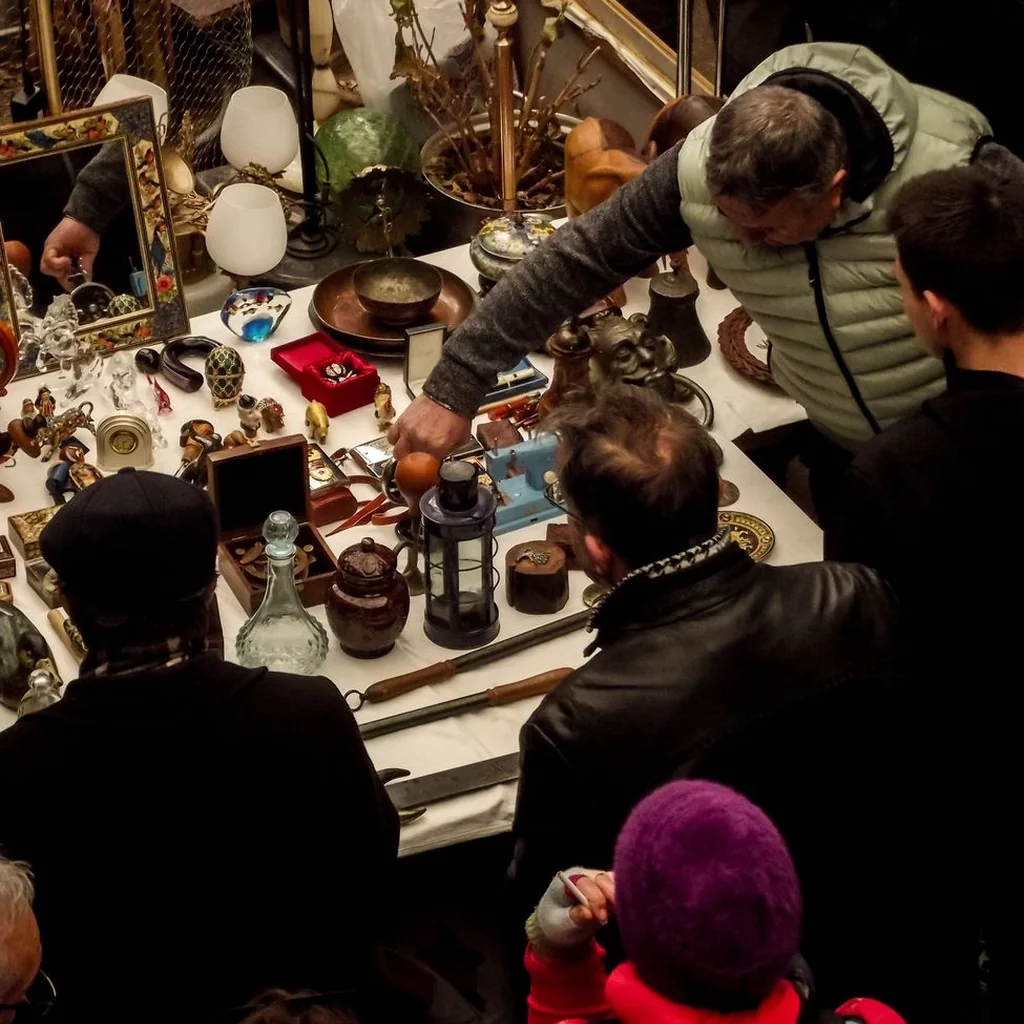
On Sunday morning, Aurélie goes to a flea market, where she sees a small blue lamp and asks the seller how much it costs.
Three short parts. Read each part in French first; tap “Show English” under a paragraph when you need the translation.


Part 1
Le dimanche matin, Aurélie va au marché aux puces. Elle aime regarder les vieux objets sur les tables.
Show EnglishHide English
On Sunday morning, Aurélie goes to the flea market. She likes looking at old objects on the tables.
Sur une table, elle voit une petite lampe bleue. Elle est simple, mais Aurélie la trouve très jolie.
Show EnglishHide English
On a table, she sees a small blue lamp. It is simple, but Aurélie thinks it is very pretty.
« Bonjour, madame. Combien coûte cette lampe ? » demande-t-elle.
Show EnglishHide English
“Hello, ma’am. How much does this lamp cost?” she asks.
La vendeuse sourit. « Dix euros. Elle marche très bien. »
Show EnglishHide English
The seller smiles. “Ten euros. It works very well.”
Aurélie regarde dans son sac. Elle a un billet de vingt euros, mais elle aime discuter les prix.
Show EnglishHide English
Aurélie looks in her bag. She has a twenty-euro bill, but she likes to haggle.
« Est-ce que vous pouvez me la vendre pour huit euros ? » demande-t-elle.
Show EnglishHide English
“Can you sell it to me for eight euros?” she asks.
La vendeuse regarde la lampe, puis Aurélie. « Vous l’aimez vraiment ? »
Show EnglishHide English
The seller looks at the lamp, then at Aurélie. “Do you really like it?”
« Oui, beaucoup. Je cherche une lampe pour ma chambre. »
Show EnglishHide English
“Yes, very much. I’m looking for a lamp for my bedroom.”
La vendeuse branche la lampe. Une lumière douce apparaît, et Aurélie sourit.
Show EnglishHide English
The seller plugs in the lamp. A soft light appears, and Aurélie smiles.
« Elle est belle, n’est-ce pas ? » dit la vendeuse. « Alors, je vous propose un autre prix. »
Show EnglishHide English
“It’s pretty, isn’t it?” says the seller. “Then I’ll offer you a different price.”
Part 2La petite lampe bleue(The Little Blue Lamp)
« Donnez-moi un euro », dit la vendeuse.
Show EnglishHide English
“Give me one euro,” says the seller.
Aurélie ouvre de grands yeux. « Un euro ? Mais je vous ai proposé huit euros ! »
Show EnglishHide English
Aurélie opens her eyes wide. “One euro? But I offered you eight euros!”
« Je sais », répond la vendeuse. « J’ai déjà une lampe chez moi. Je veux simplement trouver quelqu’un qui aime celle-ci. »
Show EnglishHide English
“I know,” replies the seller. “I already have a lamp at home. I just want to find someone who likes this one.”
Aurélie regarde encore la petite lampe bleue. Elle est en bon état et sa lumière est jolie.
Show EnglishHide English
Aurélie looks at the little blue lamp again. It is in good condition, and its light is pretty.
« Un euro, ce n’est pas assez », dit-elle. « Je peux vous donner huit euros. »
Show EnglishHide English
“One euro isn’t enough,” she says. “I can give you eight euros.”
La vendeuse rit. « C’est drôle ! Vous voulez payer plus ? »
Show EnglishHide English
The seller laughs. “That’s funny! You want to pay more?”
Aurélie sent ses joues devenir rouges. « Oui. Je suis un peu mal à l’aise. »
Show EnglishHide English
Aurélie feels her cheeks turn red. “Yes. I feel a little uncomfortable.”
« D’accord pour huit euros », dit la vendeuse. « Mais je n’ai pas de monnaie. »
Show EnglishHide English
“All right, eight euros,” says the seller. “But I don’t have any change.”
Aurélie ouvre son porte-monnaie. Elle a un billet de vingt euros et cherche des pièces dans la petite poche.
Show EnglishHide English
Aurélie opens her wallet. She has a twenty-euro bill and looks for coins in the small pocket.
Part 3La nouvelle lampe d’Aurélie(Aurélie’s New Lamp)
Dans la petite poche, Aurélie trouve une pièce de deux euros, puis une autre. Elle les pose sur la table.
Show EnglishHide English
In the small pocket, Aurélie finds a two-euro coin, then another one. She puts them on the table.
« Quatre euros », dit-elle. Elle cherche encore et trouve deux pièces d’un euro.
Show EnglishHide English
“Four euros,” she says. She looks again and finds two one-euro coins.
« Six euros. » Elle regarde au fond de son porte-monnaie et sourit. Il reste une pièce de deux euros.
Show EnglishHide English
“Six euros.” She looks at the bottom of her wallet and smiles. There is one two-euro coin left.
« Voilà, huit euros ! » Elle donne les pièces à la vendeuse.
Show EnglishHide English
“There you are, eight euros!” She gives the coins to the seller.
« Merci », dit la vendeuse. « Je suis contente que la lampe vous plaise. »
Show EnglishHide English
“Thank you,” says the seller. “I’m happy that you like the lamp.”
Elle débranche la lampe et la met doucement dans un sac. Aurélie prend le sac et regarde une dernière fois la table.
Show EnglishHide English
She unplugs the lamp and gently puts it in a bag. Aurélie takes the bag and looks at the table one last time.
« Je vais la mettre près de mon lit. Le soir, je pourrai lire avec cette lumière. »
Show EnglishHide English
“I’m going to put it next to my bed. In the evening, I’ll be able to read by this light.”
« Alors, bonne lecture ! » répond la vendeuse.
Show EnglishHide English
“Then, happy reading!” replies the seller.
Aurélie la remercie et rentre chez elle, contente de son achat. Le soir, elle allume sa nouvelle lampe et ouvre son livre.
Show EnglishHide English
Aurélie thanks her and goes home, happy with her purchase. In the evening, she turns on her new lamp and opens her book.
Practise this French story
Vocabulary in context
Important words and phrases
marché aux puces
noun phraseflea market
Je vais au marché aux puces.
I am going to the flea market.
vieux objets
noun phraseold objects
J’aime regarder les vieux objets.
I like looking at old objects.
lampe
nounlamp
Cette lampe est bleue.
This lamp is blue.
vendeuse
nounfemale seller
La vendeuse sourit.
The female seller smiles.
Combien coûte
phraseHow much does ... cost?
Combien coûte cette table ?
How much does this table cost?
billet
nounbanknote
J’ai un billet de vingt euros.
I have a twenty-euro banknote.
porte-monnaie
nounwallet
Mon porte-monnaie est dans mon sac.
My wallet is in my bag.
monnaie
nounchange
Je n’ai pas de monnaie.
I do not have any change.
pièces
nouncoins
Elle a des pièces d’un euro.
She has one-euro coins.
bon état
noun phrasegood condition
La lampe est en bon état.
The lamp is in good condition.
lire
verbto read
Le soir, je peux lire avec cette lumière.
In the evening, I can read with this light.
Check your understanding
Comprehension questions
Choose an answer, check it, then move to the next question.
Question 1 of 3
- Question 1: current not answered
- Question 2: not answered
- Question 3: not answered
Notice the language
Language notes
Je vais + infinitif
This pattern means “I am going to” do something. It is used for a planned or near-future action. You can reuse it with many verbs: Je vais la mettre près de mon lit. = I am going to put it near my bed.
Je vais la mettre près de mon lit.
I am going to put it near my bed.
More French stories to read next

La jambe de Félix
Félix’s Leg
Félix is sitting in a café with his friend Jade, but when he wants to stand up, he can’t feel his left leg.

Léo sous l’arbre
Léo Under the Tree
Léo is walking across a large field on a small path, with no jacket, and wants to get home before lunch.
L’album de famille
The Family Album
On Sunday, Julie visits her grandmother with her father, Philippe, and after lunch her grandmother brings out a large album.

Le panier de Jade
Jade’s Basket
Jade plays basketball with her friends in a park, and her team is tied with the other team.