
Photo: cottonbro studio on Pexels
L’album de famille
The Family Album
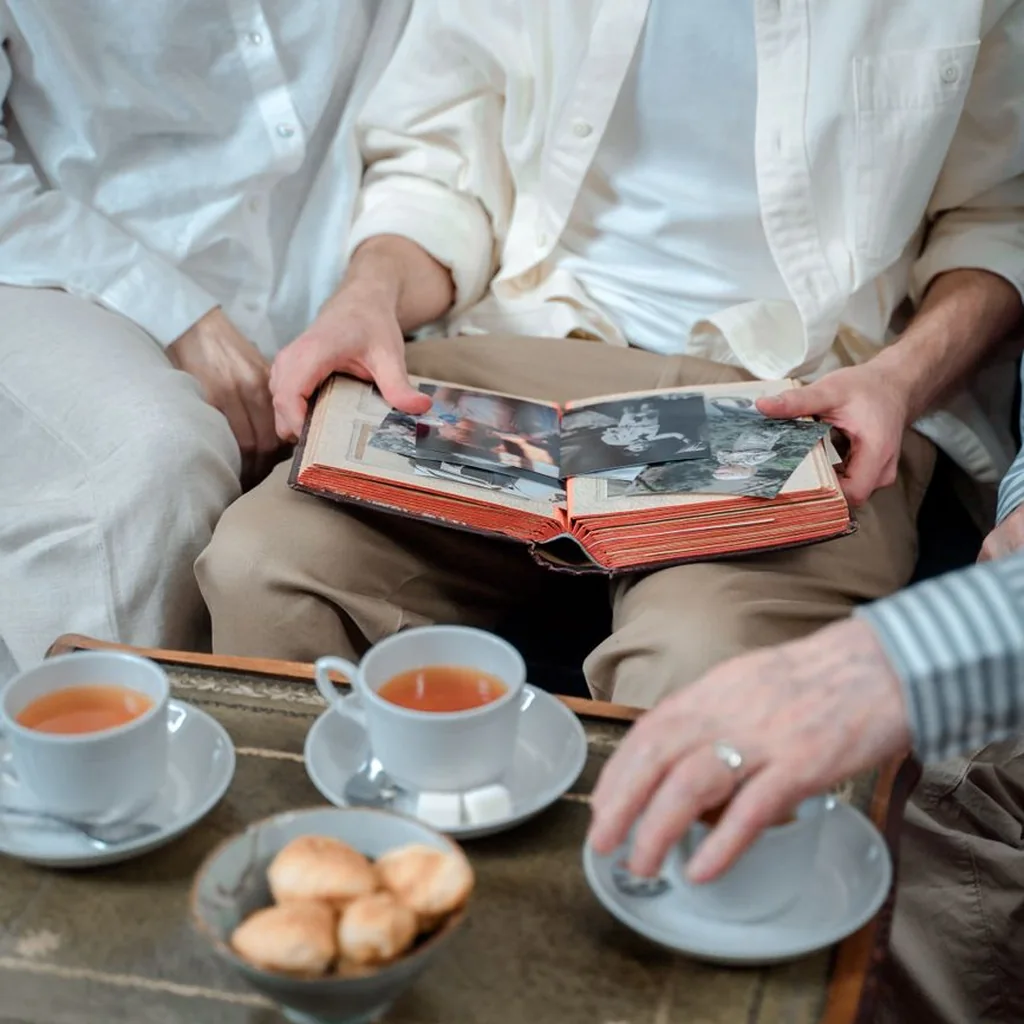
On Sunday, Julie visits her grandmother with her father, Philippe, and after lunch her grandmother brings out a large album.
Three short parts. Read each part in French first; tap “Show English” under a paragraph when you need the translation.


Part 1
Le dimanche, Julie va chez sa grand-mère avec son père, Philippe. Après le déjeuner, sa grand-mère apporte un grand album. Ils s’installent tous les trois sur le canapé.
Show EnglishHide English
On Sunday, Julie goes to her grandmother’s house with her father, Philippe. After lunch, her grandmother brings out a large album. The three of them sit down on the sofa.
Sur la première photo, Philippe est un petit garçon. Il porte un chapeau trop grand. Julie rit et montre la photo à son père.
Show EnglishHide English
In the first photo, Philippe is a little boy. He is wearing a hat that is too big. Julie laughs and shows the photo to her father.
« Tu es drôle avec ce chapeau ! » dit-elle.
Show EnglishHide English
“You look funny in that hat!” she says.
Philippe sourit. « C’est le chapeau de mon père. Je l’aime beaucoup. »
Show EnglishHide English
Philippe smiles. “It’s my father’s hat. I love it very much.”
Ils regardent encore des photos : un jardin, un chien, une table avec un gâteau. Puis la grand-mère s’arrête devant une photo en noir et blanc.
Show EnglishHide English
They look at more photos: a garden, a dog, a table with a cake. Then the grandmother stops at a black-and-white photo.
On voit une jeune femme devant une maison. Elle tient un panier et sourit à la personne qui prend la photo.
Show EnglishHide English
It shows a young woman in front of a house. She is holding a basket and smiling at the person taking the photo.
La grand-mère regarde longtemps son visage. Puis elle demande : « Vous savez qui c’est ? »
Show EnglishHide English
The grandmother looks at her face for a long time. Then she asks, “Do you know who this is?”
Part 2La photo et le papier blanc(The Photo and the White Paper)
Julie regarde la photo de plus près. « C’est peut-être une personne de la famille ? »
Show EnglishHide English
Julie looks more closely at the photo. “Maybe she’s someone in the family?”
Philippe prend l’album. « Je ne connais pas cette femme. Et toi, maman, tu sais qui c’est ? »
Show EnglishHide English
Philippe takes the album. “I don’t know this woman. And you, Mom, do you know who she is?”
La grand-mère sourit un peu. « Oui, bien sûr. Mais je ne trouve pas son nom. Je la vois dans ma tête, devant la maison. »
Show EnglishHide English
The grandmother smiles a little. “Yes, of course. But I can’t remember her name. I can see her in my mind, in front of the house.”
Julie montre le panier. « Elle apporte un gâteau ? »
Show EnglishHide English
Julie points to the basket. “Is she bringing a cake?”
« Non, je crois que ce sont des pommes », dit Philippe.
Show EnglishHide English
“No, I think they’re apples,” says Philippe.
« Des pommes ? Dans un panier si petit ? » La grand-mère rit. Philippe rit aussi, mais elle regarde encore la photo sans parler.
Show EnglishHide English
“Apples? In such a small basket?” The grandmother laughs. Philippe laughs too, but she looks at the photo again without speaking.
Puis elle tourne la page. Derrière la photo suivante, un petit papier blanc dépasse. Elle le prend et le montre à Julie.
Show EnglishHide English
Then she turns the page. A small piece of white paper sticks out from behind the next photo. She takes it and shows it to Julie.
« Regarde, il y a quelque chose sur ce papier. »
Show EnglishHide English
“Look, there’s something on this paper.”
Part 3Le nom de la voisine(The Neighbor’s Name)
Julie prend le papier et lit à voix haute : « Pour ma chère voisine. De Julie. »
Show EnglishHide English
Julie takes the paper and reads aloud: “For my dear neighbor. From Julie.”
La grand-mère lève la tête. « Julie ! C’est son nom. Elle habitait à côté de chez nous quand j’étais petite. »
Show EnglishHide English
The grandmother looks up. “Julie! That’s her name. She lived next door to us when I was little.”
La jeune Julie sourit. « Comme moi ! »
Show EnglishHide English
Young Julie smiles. “Like me!”
« Oui », dit sa grand-mère. « Mais tu as le même prénom que ta tante. » Elle montre le panier sur la photo. « Maintenant, je me souviens. Notre voisine apportait des fleurs à ma mère. »
Show EnglishHide English
“Yes,” says her grandmother. “But you have the same first name as your aunt.” She points to the basket in the photo. “Now I remember. Our neighbor used to bring flowers to my mother.”
Philippe regarde le panier. « Alors, ce ne sont pas des pommes ! »
Show EnglishHide English
Philippe looks at the basket. “So they aren’t apples!”
« Ni un gâteau », ajoute Julie. Tous les trois se mettent à rire.
Show EnglishHide English
“And they aren’t a cake either,” adds Julie. All three of them start laughing.
La grand-mère pose le papier à côté de la photo. Sur la page, elle écrit : « Julie, notre voisine. »
Show EnglishHide English
The grandmother puts the paper next to the photo. On the page, she writes: “Julie, our neighbor.”
Puis elle ferme doucement l’album. « Je suis contente de retrouver son nom. Elle était toujours très gentille avec moi. »
Show EnglishHide English
Then she gently closes the album. “I’m happy to remember her name. She was always very kind to me.”
Practise this French story
Vocabulary in context
Important words and phrases
sa grand-mère
noun phrasehis grandmother / her grandmother
Ma grand-mère aime les photos.
My grandmother likes photos.
un grand album
noun phrasea large photo album
Nous regardons un album de famille.
We are looking at a family photo album.
sur le canapé
prepositional phraseon the sofa
Nous nous asseyons sur le canapé.
We sit on the sofa.
Sur la première photo
phraseIn the first photo
Sur la première photo, il sourit.
In the first photo, he is smiling.
un chapeau trop grand
noun phrasea hat that is too big
Il porte un chapeau noir.
He is wearing a black hat.
sourit
verbsmiles
La grand-mère sourit.
The grandmother smiles.
un panier
noun phrasea basket
Elle tient un panier.
She is holding a basket.
un petit papier blanc
noun phrasea small white piece of paper
Il y a un papier blanc sur la table.
There is a white piece of paper on the table.
le même prénom
noun phrasethe same first name
J’ai le même prénom que ma tante.
I have the same first name as my aunt.
ma chère voisine
noun phrasemy dear neighbor
Ma voisine est gentille.
My neighbor is kind.
de la famille
prepositional phraseof the family
C’est une amie de la famille.
She is a friend of the family.
Check your understanding
Comprehension questions
Choose an answer, check it, then move to the next question.
Question 1 of 3
- Question 1: current not answered
- Question 2: not answered
- Question 3: not answered
Notice the language
Language notes
Il y a
Use il y a to say that something is present or exists. It works for one thing or for many things. In the story: “Il y a quelque chose sur ce papier.” A reusable example is: “Il y a un chien dans le jardin.” It means “there is/are” in English.
Il y a quelque chose sur ce papier.
There’s something on this paper.
More French stories to read next

Le panier de Jade
Jade’s Basket
Jade plays basketball with her friends in a park, and her team is tied with the other team.

Le téléphone de Yasmine
Yasmine’s Phone
Yasmine is in the doctor’s waiting room, where a loud video suddenly plays when she turns on her phone.

Le message envoyé à tous
The Message Sent to Everyone
At the office, Élodie gets a message from her colleague Nicolas asking the whole team whether they want coffee or tea for tomorrow’s meeting.

Le bateau est parti
The Boat Has Left
Alain’s suitcase is already on the boat to his sister’s island, but he reaches the port thirty seconds too late.