
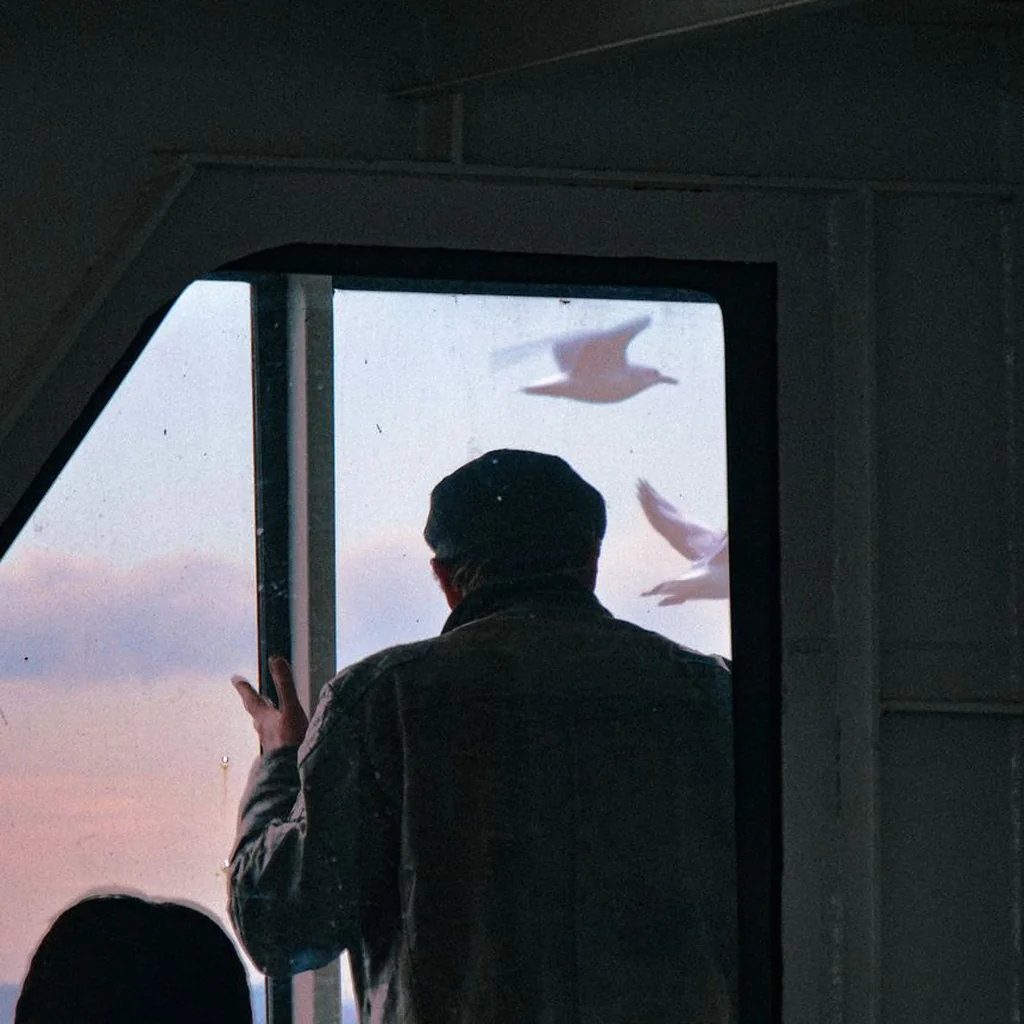
Photo: Yusuf Emir Han on Pexels
Le bateau est parti
The Boat Has Left
Alain’s suitcase is already on the boat to his sister’s island, but he reaches the port thirty seconds too late.
Three short parts. Read each part in French first; tap “Show English” under a paragraph when you need the translation.


Part 1
Alain arrive au port avec un café à la main. Il va sur une petite île pour voir sa sœur. Ce matin, il a déjà mis sa valise sur le bateau.
Show EnglishHide English
Alain arrives at the port with a coffee in his hand. He is going to a small island to see his sister. This morning, he has already put his suitcase on the boat.
Il regarde sa montre et se met à courir. Mais il arrive trente secondes trop tard. Le bateau quitte déjà le port, et sa valise est à bord.
Show EnglishHide English
He looks at his watch and starts to run. But he arrives thirty seconds too late. The boat is already leaving the port, and his suitcase is on board.
« Attendez ! » crie Alain. Une femme sur le bateau lui fait signe, mais le bateau continue.
Show EnglishHide English
“Wait!” Alain shouts. A woman on the boat waves to him, but the boat continues on.
Alain pose son café et regarde l’eau. Dans sa valise, il y a ses vêtements et le cadeau pour sa sœur. Il prend son téléphone et l’appelle.
Show EnglishHide English
Alain puts down his coffee and looks at the water. His clothes and his sister’s gift are in his suitcase. He takes his phone and calls her.
« Le dernier bateau est parti sans moi », dit-il. Sa sœur rit un peu, puis elle demande : « Et ta valise ? »
Show EnglishHide English
“The last boat left without me,” he says. His sister laughs a little, then asks, “And your suitcase?”
Avant de répondre, Alain voit un homme devant la petite maison du port. Il porte un pull bleu, comme les personnes qui travaillent sur le bateau.
Show EnglishHide English
Before he answers, Alain sees a man in front of the small port house. He is wearing a blue sweater, like the people who work on the boat.
Part 2La valise sur le bateau(The Suitcase on the Boat)
Alain dit à sa sœur : « Attends une minute. Je vois quelqu’un du port. » Il va vers l’homme au pull bleu et lui explique son problème.
Show EnglishHide English
Alain says to his sister, “Wait a minute. I see someone from the port.” He goes over to the man in the blue sweater and explains his problem.
« Ma valise est sur le bateau. Elle est rouge, avec mon nom dessus. »
Show EnglishHide English
“My suitcase is on the boat. It’s red, with my name on it.”
L’homme prend son téléphone et appelle le bateau. Après un moment, il sourit. « Oui, votre valise est là. Elle peut rester sur le bateau cette nuit. Demain matin, vous pouvez la prendre ici. »
Show EnglishHide English
The man takes his phone and calls the boat. After a moment, he smiles. “Yes, your suitcase is there. It can stay on the boat tonight. You can pick it up here tomorrow morning.”
« Merci ! Et à quelle heure est le premier bateau pour l’île ? »
Show EnglishHide English
“Thank you! And what time is the first boat to the island?”
« À huit heures. Votre valise arrive à sept heures trente. »
Show EnglishHide English
“At eight o’clock. Your suitcase arrives at seven thirty.”
Alain reprend son téléphone pour parler à sa sœur. Mais il voit que son téléphone est éteint. Son chargeur est dans sa valise. Il regarde l’homme au pull bleu : il a peut-être un chargeur.
Show EnglishHide English
Alain picks up his phone again to talk to his sister. But he sees that his phone is switched off. His charger is in his suitcase. He looks at the man in the blue sweater: maybe he has a charger.
Part 3La valise au port(The Suitcase at the Port)
« Excusez-moi, vous avez un chargeur ? » demande Alain à l’homme. « Mon téléphone est éteint et je veux rappeler ma sœur. »
Show EnglishHide English
“Excuse me, do you have a charger?” Alain asks the man. “My phone is switched off and I want to call my sister again.”
« Oui, venez », dit l’homme. Dans la petite maison du port, il branche le téléphone. Alain attend quelques minutes, puis il appelle sa sœur.
Show EnglishHide English
“Yes, come in,” the man says. In the small port house, he plugs in the phone. Alain waits a few minutes, then calls his sister.
« Ma valise revient demain matin », dit-il. « Je prends le bateau de huit heures. »
Show EnglishHide English
“My suitcase is coming back tomorrow morning,” he says. “I’m taking the eight o’clock boat.”
« Très bien ! Je viens te chercher au port », répond-elle. « Et ce soir, tu dors où ? »
Show EnglishHide English
“Very good! I’ll come and meet you at the port,” she replies. “And where are you sleeping tonight?”
L’homme indique à Alain un petit hôtel près du port. Alain remercie sa sœur et l’homme, puis il va à l’hôtel.
Show EnglishHide English
The man points out a small hotel near the port to Alain. Alain thanks his sister and the man, then goes to the hotel.
Le lendemain, il revient à sept heures trente. Sa valise rouge est là. Il la prend et monte sur le bateau avec elle.
Show EnglishHide English
The next day, he comes back at seven thirty. His red suitcase is there. He picks it up and gets on the boat with it.
Sur l’île, sa sœur l’attend. Alain ouvre sa valise et lui donne son cadeau. « Cette fois, ma valise et moi, nous sommes là », dit-il en riant.
Show EnglishHide English
On the island, his sister is waiting for him. Alain opens his suitcase and gives her her gift. “This time, my suitcase and I are here,” he says, laughing.
Practise this French story
Vocabulary in context
Important words and phrases
au port
phraseat the port
Alain arrive au port.
Alain arrives at the port.
le bateau
nounthe boat
Le bateau quitte le port.
The boat leaves the port.
une petite île
phrasea small island
Il va sur une petite île.
He goes to a small island.
sa sœur
noun phrasehis sister
Sa sœur l'attend.
His sister is waiting for him.
sa valise
noun phrasehis suitcase
Sa valise est rouge.
His suitcase is red.
fait signe
verb phrasewaves; signals
La femme lui fait signe.
The woman waves to him.
son téléphone
noun phrasehis phone
Son téléphone est éteint.
His phone is off.
son chargeur
noun phrasehis charger
Son chargeur est dans sa valise.
His charger is in his suitcase.
à l’hôtel
phraseat the hotel
Il va à l'hôtel.
He goes to the hotel.
demain matin
time phrasetomorrow morning
Demain matin, il prend le bateau.
Tomorrow morning, he takes the boat.
Check your understanding
Comprehension questions
Choose an answer, check it, then move to the next question.
Question 1 of 3
- Question 1: current not answered
- Question 2: not answered
- Question 3: not answered
Notice the language
Language notes
Il y a
Use il y a to say that something exists or is in a place. It is very common in French and can introduce one thing or several things. Example from the story: Dans sa valise, il y a ses vêtements et le cadeau pour sa sœur.
Dans sa valise, il y a ses vêtements et le cadeau pour sa sœur.
In his suitcase, there are his clothes and the gift for his sister.
More French stories to read next

La bague de Jules
Jules’s Ring
At the wedding hall, Jules carries a small white cushion with a ring on it because his mother is getting married.
La fête du club de danse
The Dance Club Party
Pascal is new to his dance club and attends his first party, where the students give flowers to their teacher.

La petite épicerie
The Little Grocery Store
Retired Mamadou visits the little grocery store on his street every morning to buy bread and talk with Julie, the shopkeeper.

Le premier jour à la boulangerie
Léa’s First Day at the Bakery
On her first day at the bakery, sixteen-year-old Léa works with Monique, who tells her that one tray of bread has already been sold.