
Photo: Nano Erdozain on Pexels
Le premier jour à la boulangerie
Léa’s First Day at the Bakery
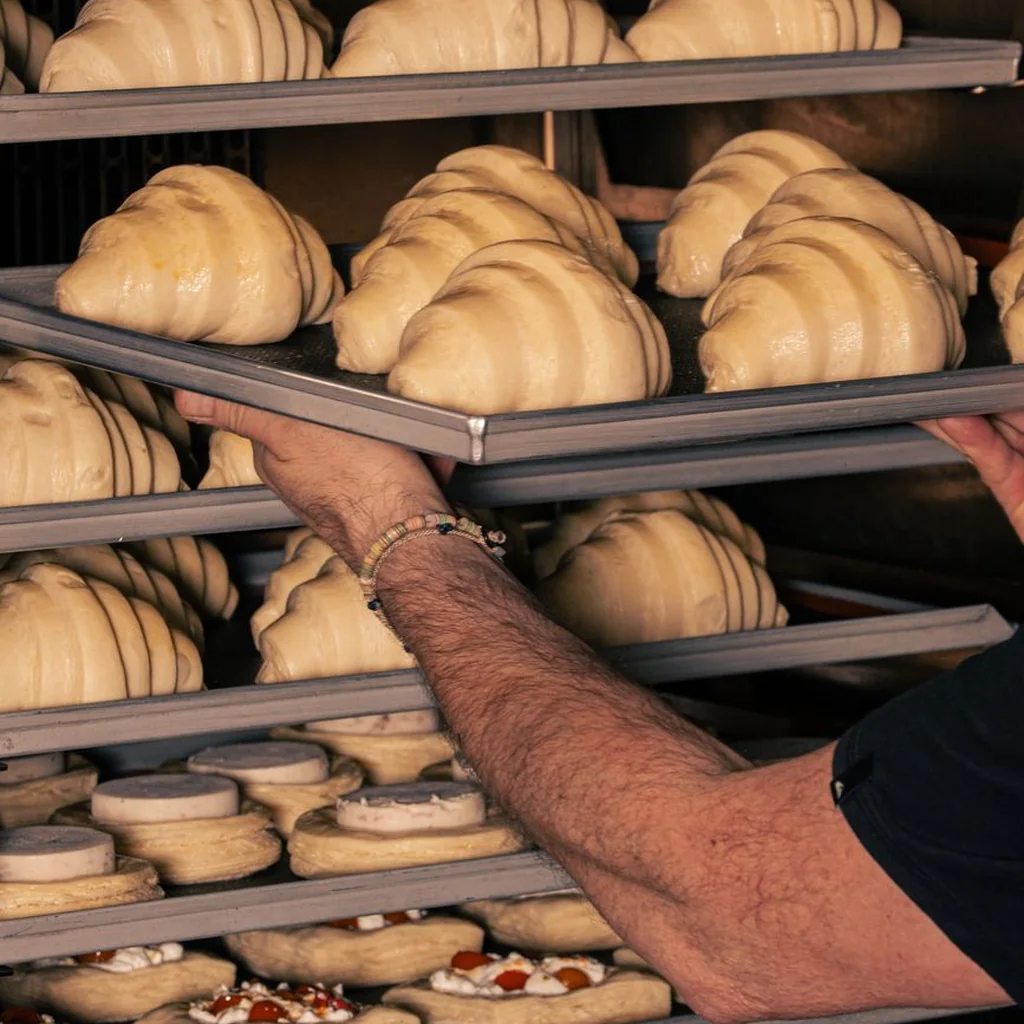
On her first day at the bakery, sixteen-year-old Léa works with Monique, who tells her that one tray of bread has already been sold.
Three short parts. Read each part in French first; tap “Show English” under a paragraph when you need the translation.


Part 1
C’est le premier jour de Léa à la boulangerie. Elle a seize ans et elle travaille avec Monique, la boulangère.
Show EnglishHide English
It is Léa’s first day at the bakery. She is sixteen years old and works with Monique, the baker.
Sur la table, il y a deux grands plateaux de pain. Monique montre les plateaux à Léa.
Show EnglishHide English
There are two large trays of bread on the table. Monique shows Léa the trays.
« Attention, le pain sur ce plateau est déjà vendu. Un client arrive à dix heures pour le prendre. »
Show EnglishHide English
“Be careful, the bread on this tray has already been sold. A customer is coming at ten o’clock to pick it up.”
Puis Monique va dans la cuisine pour préparer des gâteaux. Léa reste seule devant les plateaux.
Show EnglishHide English
Then Monique goes into the kitchen to make cakes. Léa stays alone in front of the trays.
Les pains sont beaux et encore chauds. Léa prend un plateau pour faire de la place sur la table, puis elle le pose à côté de l’autre.
Show EnglishHide English
The loaves look beautiful and are still warm. Léa picks up one tray to make room on the table, then puts it down next to the other one.
Soudain, elle ne sait plus quel plateau est déjà vendu. Elle regarde l’heure : il est presque dix heures.
Show EnglishHide English
Suddenly, she can no longer remember which tray has already been sold. She looks at the time: it is almost ten o’clock.
À ce moment-là, un homme entre dans la boulangerie. Il sourit et dit : « Bonjour, je viens chercher mon pain. »
Show EnglishHide English
Just then, a man comes into the bakery. He smiles and says, “Good morning. I’m here to pick up my bread.”
Part 2Les pains ronds(The Round Loaves)
Léa regarde les deux plateaux, puis le client. Elle sent que ses joues sont chaudes.
Show EnglishHide English
Léa looks at the two trays, then at the customer. She feels her cheeks getting hot.
« Bonjour, monsieur. Je suis désolée, je ne sais plus quel plateau est pour vous. »
Show EnglishHide English
“Good morning, sir. I’m sorry, I can’t remember which tray is for you.”
Le client regarde les pains. « J’ai acheté six pains pour ma famille. Ils sont tous ronds. »
Show EnglishHide English
The customer looks at the loaves. “I bought six loaves for my family. They are all round.”
Léa compte les pains sur le premier plateau : un, deux, trois, quatre, cinq, six. Elle sourit, mais elle compte aussi six pains sur l’autre plateau.
Show EnglishHide English
Léa counts the loaves on the first tray: one, two, three, four, five, six. She smiles, but she counts six loaves on the other tray too.
« Oh non ! Ils sont tous ronds », dit-elle. Le client regarde les deux plateaux et rit un peu.
Show EnglishHide English
“Oh no! They are all round,” she says. The customer looks at the two trays and laughs a little.
Léa appelle Monique. La boulangère arrive et montre le plateau près de la fenêtre. « Voici votre pain, monsieur. »
Show EnglishHide English
Léa calls Monique. The baker comes over and points to the tray by the window. “Here is your bread, sir.”
Léa prend un grand sac pour le client. Mais, quand elle met les pains dedans, le sac se casse sous leur poids.
Show EnglishHide English
Léa gets a large bag for the customer. But when she puts the loaves inside, the bag breaks under their weight.
Part 3Le premier jour de Léa(Léa’s First Day)
Les pains tombent sur la table. Léa reste immobile une seconde, puis elle regarde le client.
Show EnglishHide English
The loaves fall onto the table. Léa stands still for a second, then looks at the customer.
« Je suis vraiment désolée. C’est mon premier jour », dit-elle.
Show EnglishHide English
“I’m really sorry. It’s my first day,” she says.
« Ce n’est pas grave, répond-il. Les pains sont encore sur la table, pas par terre ! »
Show EnglishHide English
“It’s all right,” he replies. “The loaves are still on the table, not on the floor!”
Monique apporte deux sacs. Ensemble, elles mettent trois pains dans chaque sac. Cette fois, Léa prend les sacs par le dessous et les donne au client.
Show EnglishHide English
Monique brings two bags. Together, they put three loaves in each bag. This time, Léa holds the bags from underneath and gives them to the customer.
« Merci, et bonne journée ! » dit-il avant de sortir.
Show EnglishHide English
“Thank you, and have a nice day!” he says before leaving.
Léa regarde le plateau vide et pousse un petit soupir. Monique sourit et lui donne une feuille de papier.
Show EnglishHide English
Léa looks at the empty tray and gives a small sigh. Monique smiles and gives her a piece of paper.
« La prochaine fois, nous allons écrire “vendu” et poser la feuille sur le bon plateau. »
Show EnglishHide English
“Next time, we’ll write ‘sold’ and put the piece of paper on the right tray.”
Léa écrit le mot en grandes lettres. Puis elle regarde Monique et sourit à son tour : elle est prête pour le prochain client.
Show EnglishHide English
Léa writes the word in large letters. Then she looks at Monique and smiles too: she is ready for the next customer.
Practise this French story
Vocabulary in context
Important words and phrases
à la boulangerie
phraseat the bakery
Je travaille à la boulangerie.
I work at the bakery.
la boulangère
nounthe baker (female)
La boulangère prépare des gâteaux.
The baker is making cakes.
les plateaux
nounthe trays
Les plateaux sont sur la table.
The trays are on the table.
le pain
nounbread
Le pain est encore chaud.
The bread is still warm.
le client
nounthe customer
Le client arrive à dix heures.
The customer arrives at ten o'clock.
la cuisine
nounthe kitchen
Elle va dans la cuisine.
She goes into the kitchen.
la table
nounthe table
La table est près de la fenêtre.
The table is near the window.
le sac
nounthe bag
Le sac est lourd.
The bag is heavy.
déjà vendu
adjective phrasealready sold
Ce pain est déjà vendu.
This bread is already sold.
je suis désolée
expressionI'm sorry
Je suis désolée pour l'erreur.
I'm sorry for the mistake.
Check your understanding
Comprehension questions
Choose an answer, check it, then move to the next question.
Question 1 of 3
- Question 1: current not answered
- Question 2: not answered
- Question 3: not answered
Notice the language
Language notes
venir chercher quelque chose
This pattern means "to come to pick up / get something." Use venir + chercher + an object when someone comes to collect something. Example: "Je viens chercher mon pain." = "I'm here to pick up my bread." You can reuse it for many everyday situations, like picking up food, a package, or a person.
Je viens chercher mon pain.
I'm here to pick up my bread.
More French stories to read next
Le livre souligné
The Underlined Book
Julie visits Mehdi to return a book he lent her two weeks ago.
La lampe bleue
The Blue Lamp
On Sunday morning, Aurélie goes to a flea market, where she sees a small blue lamp and asks the seller how much it costs.

La jambe de Félix
Félix’s Leg
Félix is sitting in a café with his friend Jade, but when he wants to stand up, he can’t feel his left leg.

Léo sous l’arbre
Léo Under the Tree
Léo is walking across a large field on a small path, with no jacket, and wants to get home before lunch.