Back to Advanced (C1) stories

Unlock the Complete Learning Experience

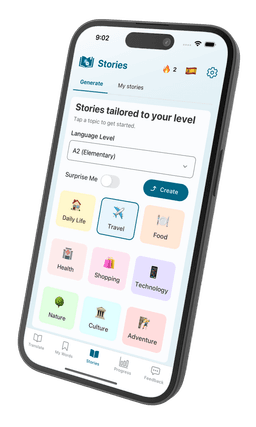
You're reading free stories on our website. Get the mobile app for audio narration, speaking practice, vocabulary saving, personalised stories, instant translations, and progress tracking.

Download on the App StoreGet it on Google Play
Audio
Translations
Progress

El misterio del mapa antiguo

Advanced (C1)
5 min read

📖 You are reading the free text version. Get our mobile app for 🎧 audio narration, 💬 speaking practice, 🔄 instant translations, and 💾 vocabulary saving to enhance your learning experience.

Ana, una apasionada exploradora, encontró un mapa antiguo mientras limpiaba el sótano de su abuelo en una ciudad costera.

El mapa mostraba una isla desconocida con un camino marcado hacia un tesoro perdido hace siglos. Intrigada, Ana decidió organizar una expedición para descubrir si el tesoro era real.

Junto con un equipo pequeño, Ana navegó hacia la isla. Cuando llegaron, la isla parecía desierta y cubierta por una densa selva. Sin embargo, al seguir el mapa, comenzaron a enfrentar varios desafíos: ríos caudalosos, senderos difíciles y extrañas señales grabadas en árboles.

La mayor sorpresa llegó cuando, cerca del final del camino, encontraron una antigua cueva custodiada por mecanismos que parecían trampas. Ana y su equipo tuvieron que usar su ingenio para evitar las trampas y avanzar.

Finalmente, la expedición logró entrar en la cueva y halló no un cofre lleno de oro, sino un conjunto de documentos y objetos que narraban la historia y cultura de una civilización olvidada.

Ana comprendió que el verdadero tesoro no era el oro, sino el valor de preservar y conocer el pasado. Decidió entonces compartir sus hallazgos con la comunidad científica y las personas interesadas en la historia.

La aventura terminó con Ana planeando la próxima expedición para explorar más sitios desconocidos y proteger este valioso patrimonio cultural.


Practise this Spanish story

Vocabulary in context

Important words and phrases

  • mapa antiguo

    noun phrase

    ancient map

    Encontró un mapa antiguo en el sótano.

    She found an ancient map in the basement.

  • tesoro perdido

    noun phrase

    lost treasure

    La leyenda hablaba de un tesoro perdido.

    The legend spoke of a lost treasure.

  • intrigada

    adjective

    intrigued

    Intrigada, decidió investigar más a fondo.

    Intrigued, she decided to investigate further.

  • expedición

    noun

    expedition

    Organizaron una expedición para explorar la isla.

    They organized an expedition to explore the island.

  • cubierta por una densa selva

    adjectival phrase

    covered by a dense jungle

    La isla estaba cubierta por una densa selva.

    The island was covered by a dense jungle.

  • enfrentar varios desafíos

    verb phrase

    to face several challenges

    Durante el viaje tuvieron que enfrentar varios desafíos.

    During the journey they had to face several challenges.

  • ríos caudalosos

    noun phrase

    powerful rivers

    El sendero cruzaba ríos caudalosos.

    The path crossed powerful rivers.

  • usar su ingenio

    verb phrase

    to use their ingenuity

    Tuvieron que usar su ingenio para resolver el problema.

    They had to use their ingenuity to solve the problem.

  • hallar

    verb

    to find, discover

    Hallaron una cueva oculta detrás de la roca.

    They found a hidden cave behind the rock.

  • preservar y conocer el pasado

    verb phrase

    to preserve and understand the past

    Es importante preservar y conocer el pasado.

    It is important to preserve and understand the past.

  • patrimonio cultural

    noun phrase

    cultural heritage

    Ese museo protege el patrimonio cultural de la región.

    That museum protects the region's cultural heritage.

Check your understanding

Comprehension questions

Choose an answer, check it, then move to the next question.

Question 1 of 3

  1. Question 1: current not answered
  2. Question 2: not answered
  3. Question 3: not answered
¿Por qué Ana decidió organizar una expedición?Why did Ana decide to organize an expedition?

Notice the language

Language notes

grammar

no ... sino ...

This contrastive structure rejects one idea and replaces it with a stronger or more accurate one. It is useful for correcting expectations, emphasizing the real focus, or making a sharp contrast. It often pairs two nouns, noun phrases, or clauses. Example: "El verdadero tesoro no era el oro, sino el valor de preservar y conocer el pasado."

  • El verdadero tesoro no era el oro, sino el valor de preservar y conocer el pasado.

    The real treasure was not the gold, but the value of preserving and understanding the past.

Keep reading

More Advanced (C1) Stories
SpanishAdvanced (C1)