
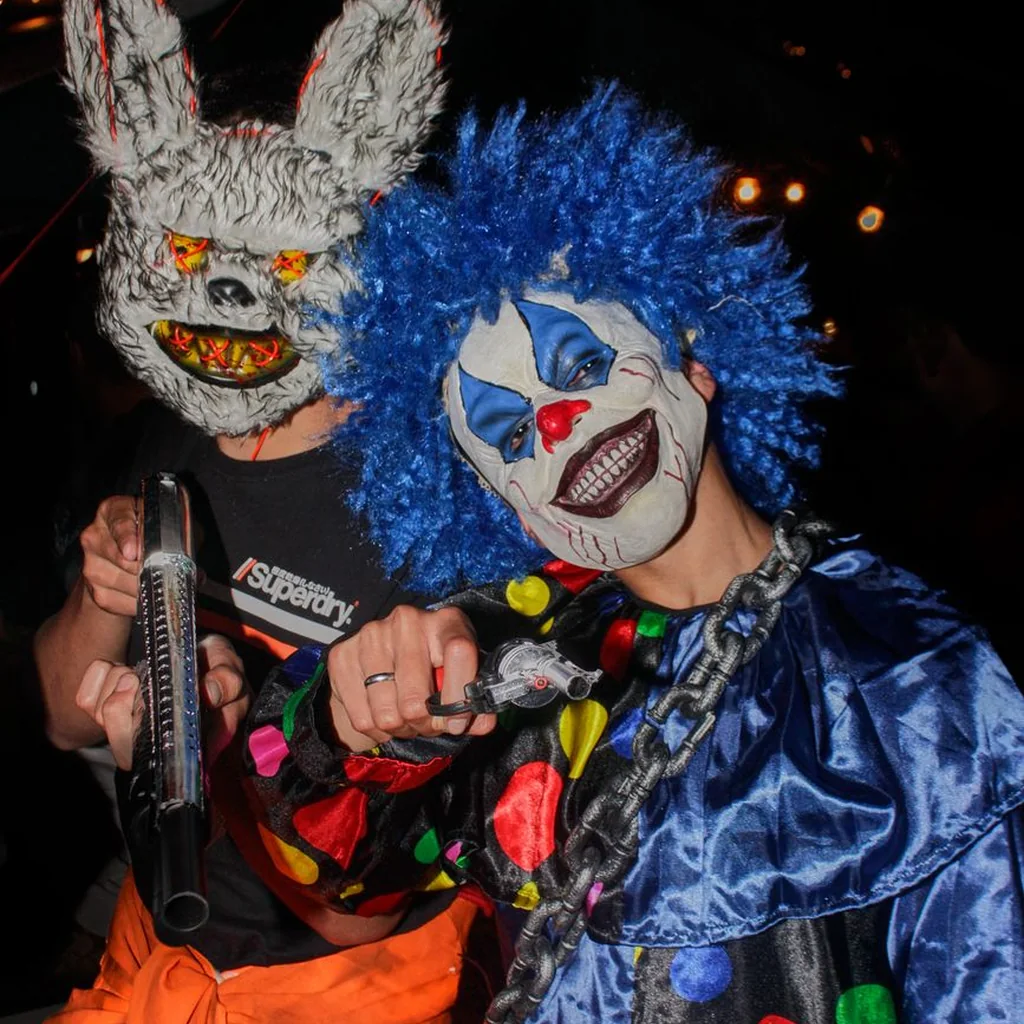
Photo: Mariana Hernández Castro on Pexels
La fiesta de disfraces
The Costume Party
Lucas arrives at a party dressed casually, only to find that all his friends are wearing costumes.
Three short parts. Read each part in Spanish first; tap “Show English” under a paragraph when you need the translation.


Part 1
Lucas llega a la fiesta de Ana a las ocho. Lleva vaqueros y una camiseta porque Ana dijo: «La fiesta es informal. No hace falta disfrazarse».
Show EnglishHide English
Lucas arrives at Ana’s party at eight. He is wearing jeans and a T-shirt because Ana said, “The party is casual. You don’t need to wear a costume.”
Pero, al abrir la puerta, Lucas ve que todos sus amigos llevan disfraces. Ana va vestida de bruja, Pablo lleva un disfraz de pirata y Marta tiene unas alas de hada. Incluso el perro lleva un pequeño sombrero.
Show EnglishHide English
But when he opens the door, Lucas sees that all his friends are wearing costumes. Ana is dressed as a witch, Pablo is wearing a pirate costume, and Marta has fairy wings. Even the dog is wearing a little hat.
Todos miran a Lucas y se ríen, pero sin mala intención. Ana le dice:
Show EnglishHide English
Everyone looks at Lucas and laughs, but they are not being mean. Ana says to him:
—¡Pensábamos que era una fiesta de disfraces!
Show EnglishHide English
“We thought it was a costume party!”
Lucas se pone rojo. Mira su camiseta y después mira la mesa. Allí hay muchos sombreros, máscaras y gafas de colores.
Show EnglishHide English
Lucas turns red. He looks at his T-shirt and then at the table. There are lots of hats, masks, and colorful glasses there.
—Lo siento —dice—. Yo entendí otra cosa.
Show EnglishHide English
“I’m sorry,” he says. “I understood something else.”
Ana le ofrece una máscara azul.
Show EnglishHide English
Ana offers him a blue mask.
—Puedes ponerte esta. Seguro que te queda bien.
Show EnglishHide English
“You can wear this one. I’m sure it will look good on you.”
Lucas toma la máscara y la mira. También puede llamar a su madre para volver a casa. Sus amigos esperan en silencio, y Lucas todavía no sabe qué hacer.
Show EnglishHide English
Lucas takes the mask and looks at it. He could also call his mother so he can go home. His friends wait quietly, and Lucas still doesn’t know what to do.
Part 2La máscara azul(The Blue Mask)
Lucas mira a sus amigos y sonríe un poco. Después se pone la máscara azul. Es grande y le tapa casi toda la cara, pero todos aplauden.
Show EnglishHide English
Lucas looks at his friends and smiles a little. Then he puts on the blue mask. It is big and covers almost his whole face, but everyone claps.
—¡Muy bien! —dice Ana—. Ahora eres un superhéroe.
Show EnglishHide English
“Very good!” says Ana. “Now you’re a superhero.”
—¿Un superhéroe azul? —pregunta Lucas.
Show EnglishHide English
“A blue superhero?” asks Lucas.
—Claro —responde Pablo—. Un superhéroe muy moderno.
Show EnglishHide English
“Of course,” answers Pablo. “A very modern superhero.”
Lucas empieza a sentirse mejor. Toma un vaso de zumo y habla con Marta sobre sus alas de hada. Ella le cuenta que las hizo con papel y pintura. Lucas también se ríe cuando el perro intenta quitarse su sombrero.
Show EnglishHide English
Lucas begins to feel better. He takes a glass of juice and talks to Marta about her fairy wings. She tells him that she made them with paper and paint. Lucas also laughs when the dog tries to take off its hat.
Entonces Ana pone música y llama a todos.
Show EnglishHide English
Then Ana puts on some music and calls everyone.
—¡Vamos a hacer una foto! —dice—. Primero, una foto de grupo.
Show EnglishHide English
“Let’s take a photo!” she says. “First, a group photo.”
Todos se colocan delante de la mesa. Lucas se pone en el centro, pero la máscara se mueve y cae al suelo. Al mismo tiempo, Ana mira una caja pequeña.
Show EnglishHide English
Everyone stands in front of the table. Lucas stands in the middle, but the mask moves and falls to the floor. At the same time, Ana looks at a small box.
—Espera —dice—. Creo que tengo algo perfecto para ti.
Show EnglishHide English
“Wait,” she says. “I think I have something perfect for you.”
Part 3
Ana abre la caja y saca una pequeña capa roja.
Show EnglishHide English
Ana opens the box and takes out a small red cape.
—Era de mi hermano —dice—. Creo que es de tu talla.
Show EnglishHide English
“It belonged to my brother,” she says. “I think it’s your size.”
Lucas se pone la capa sobre los hombros. Después recoge la máscara azul y se la vuelve a poner. Ahora sí parece un superhéroe. Todos aplauden y Pablo le da unas gafas grandes de color amarillo.
Show EnglishHide English
Lucas puts the cape over his shoulders. Then he picks up the blue mask and puts it on again. Now he really looks like a superhero. Everyone claps, and Pablo gives him a pair of big yellow glasses.
—¡Perfecto! —grita Marta.
Show EnglishHide English
“Perfect!” shouts Marta.
Ana pone el temporizador en su teléfono y corre hacia el grupo. Todos sonríen para la foto. El perro se sienta delante de Lucas con su pequeño sombrero.
Show EnglishHide English
Ana sets the timer on her phone and runs over to the group. Everyone smiles for the photo. The dog sits in front of Lucas with its little hat on.
Después de la foto, Lucas ya no siente vergüenza. Se ríe con sus amigos y baila un poco con la capa.
Show EnglishHide English
After the photo, Lucas no longer feels embarrassed. He laughs with his friends and dances a little with the cape on.
—La próxima vez —dice Lucas—, pregunta si la fiesta es de verdad informal.
Show EnglishHide English
“Next time,” says Lucas, “ask if the party is really casual.”
—Sí —responde Ana—. Y yo escribiré «fiesta de disfraces» en el mensaje.
Show EnglishHide English
“Yes,” Ana answers. “And I’ll write ‘costume party’ in the message.”
Lucas vuelve a casa más tarde, todavía con la capa. No era el disfraz que había elegido, pero fue una noche muy divertida.
Show EnglishHide English
Lucas goes home later, still wearing the cape. It wasn’t the costume he had chosen, but it was a very fun night.
Practise this Spanish story
Vocabulary in context
Important words and phrases
fiesta
nounparty
La fiesta empieza a las ocho.
The party starts at eight.
disfraz
nouncostume
Lleva un disfraz de gato.
He is wearing a cat costume.
máscara
nounmask
Ana le da una máscara azul.
Ana gives him a blue mask.
capa
nouncape
El niño lleva una capa roja.
The boy is wearing a red cape.
sombrero
nounhat
Mi abuelo lleva un sombrero negro.
My grandfather is wearing a black hat.
camiseta
nounT-shirt
Llevo una camiseta blanca.
I am wearing a white T-shirt.
vaqueros
nounjeans
Hoy llevo vaqueros.
Today I am wearing jeans.
amigos
nounfriends
Mis amigos me esperan.
My friends are waiting for me.
ponerse
verbto put on
Me pongo el abrigo.
I put on my coat.
foto de grupo
noun phrasegroup photo
Vamos a hacer una foto de grupo.
We are going to take a group photo.
Check your understanding
Comprehension questions
Choose an answer, check it, then move to the next question.
Question 1 of 3
- Question 1: current not answered
- Question 2: not answered
- Question 3: not answered
Notice the language
Language notes
No hace falta + infinitivo
Use no hace falta + infinitive to say something is not necessary. It is common in advice and rules. Example: No hace falta disfrazarse.
No hace falta disfrazarse.
You don't need to dress up.
More Spanish stories to read next

El ramo de la novia
The Bride’s Bouquet
At her friend’s wedding, Ana catches the bouquet and faces an awkward moment with her boyfriend.

Tomás en el museo
Tomás at the Museum
During a class visit to a museum, Tomás presses his face to the glass of a dinosaur exhibit and sets off a quiet alarm.

El teléfono en la biblioteca
The Phone in the Library
A woman’s phone keeps buzzing in a quiet library while she tries to decide how to handle the calls.

La carpeta vieja
The Old Folder
While cleaning a closet, Ana finds her school reports and discovers that her quiet father kept them all.