
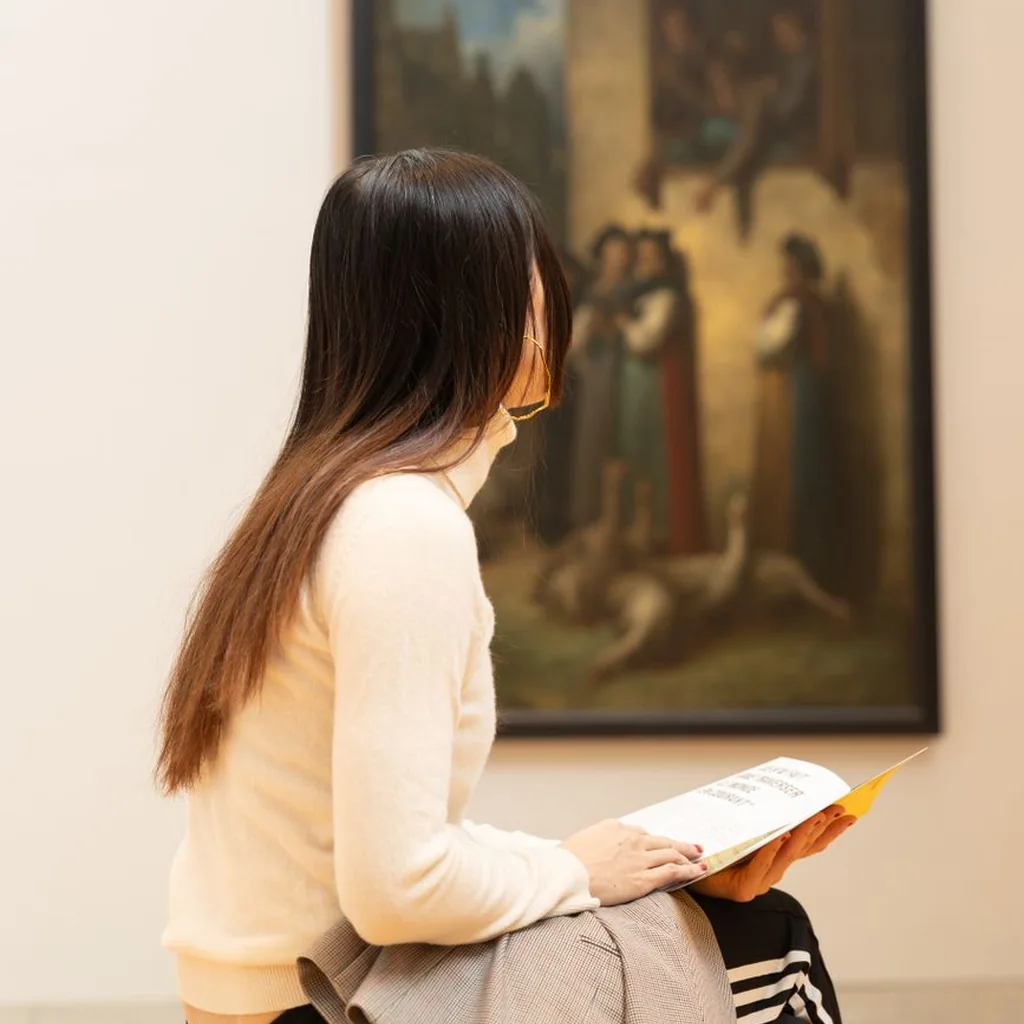
눈으로만 보는 귤
Tangerines to Be Seen, Not Touched
At a gallery, Boram rests before a painting of tangerines as a child reaches toward it, and she hesitates to intervene.
Three short parts. Read each part in Korean first; tap “Show English” under a paragraph when you need the translation.


Part 1
보람은 그림 앞에 놓인 긴 의자에 앉아 있었다. 전시장을 한 바퀴 돌고 나니 발이 아팠는데, 마침 맞은편 그림이 마음에 들어 좀 더 쉬어 가기로 한 참이었다.
Show EnglishHide English
Boram was sitting on a long bench in front of a painting. After walking around the gallery, her feet hurt, and she had just decided to rest a little longer because she liked the painting opposite her.
그림에는 식탁과 귤 몇 개가 놓여 있었다. 귤껍질은 손톱으로 살짝 들추면 금방이라도 벗겨질 것처럼 두툼하게 칠해져 있었고, 식탁 한쪽에는 물이 반쯤 남은 컵이 놓여 있었다.
Show EnglishHide English
The painting showed a dining table with a few tangerines on it. Their peels were painted thickly, as if they would come right off if you lifted an edge with a fingernail, and a glass half full of water sat at one end of the table.
옆에서 아이가 엄마 소매를 잡아당겼다. “저거 진짜 귤 아니지?”
Show EnglishHide English
Beside her, a child tugged at his mother’s sleeve. “Those aren’t real tangerines, are they?”
“그림이잖아.” 엄마는 전시 안내문을 읽다가 눈만 들어 대답했다. 아이는 그림 앞으로 바짝 다가가 고개를 이리저리 기울였다.
Show EnglishHide English
“It’s a painting.” His mother looked up from the exhibition notes she was reading to answer. The child moved right up to the painting and tilted his head this way and that.
보람도 처음엔 그림에 유리라도 씌워 놓은 줄 알았다. 가까이서 보고서야 아무것도 없다는 걸 알았으니, 아이 눈에는 더 헷갈릴 만했다.
Show EnglishHide English
At first, Boram had thought the painting was covered with glass, too. She had only realized there was nothing there when she looked closely, so it was even more understandable that the child was confused.
아이가 팔을 들자 보람은 의자 끝에 걸터앉았다. 아직 닿지는 않았지만 손가락은 귤이 있는 쪽으로 곧장 가고 있었다.
Show EnglishHide English
When the child raised his arm, Boram perched on the edge of the bench. He hadn’t reached it yet, but his finger was headed straight toward the tangerines.
“저기요” 하고 부르면 그만이었다. 그런데 아이 엄마가 바로 옆에 있는데 괜히 나섰다가 유난 떤다는 눈총이나 받지 않을까 싶었다.
Show EnglishHide English
All she had to do was call out, “Excuse me.” But with the child’s mother right beside him, she wondered whether she would just seem meddlesome if she got involved.
엄마는 안내문 맨 아래에 적힌 작가 이름을 휴대전화에 옮겨 적고 있었다. 아이의 손끝은 이제 그림자가 캔버스에 드리울 만큼 가까워졌다.
Show EnglishHide English
The mother was copying the artist’s name, written at the very bottom of the exhibition notes, into her phone. The child’s fingertips were now so close that their shadow fell across the canvas.
보람은 결국 자리에서 일어났다. “얘야, 그건 눈으로만 봐야 하지 않을까?”
Show EnglishHide English
At last, Boram stood up. “Sweetie, shouldn’t you only look at that with your eyes?”
아이는 손을 멈춘 채 보람을 돌아봤다. 엄마도 휴대전화에서 눈을 떼고 두 사람을 번갈아 보더니 아이에게 물었다.
Show EnglishHide English
The child stopped his hand and turned to look at Boram. His mother took her eyes off her phone, glanced from one to the other, and then asked her child,
“너 지금 뭐 하려고 했어?”
Show EnglishHide English
“What were you about to do just now?”
Part 2귤 그림 앞에서(In Front of the Tangerine Painting)
아이는 손을 내리지도 못한 채 대답했다. “진짜 귤이면 떼어 먹으려고.”
Show EnglishHide English
Without even lowering his hand, the child answered, “If they were real tangerines, I was going to pick one and eat it.”
엄마의 눈썹이 올라갔다. 보람은 웃음이 나올 뻔했지만 입술을 깨물었고, 아이는 어른들이 둘 다 쳐다보자 손을 뒤로 숨겼다.
Show EnglishHide English
His mother’s eyebrows rose. Boram nearly laughed, but bit her lip, and when both adults looked at him, the child hid his hand behind his back.
“집에 가면 귤 있어.” 엄마가 말했다.
Show EnglishHide English
“There are tangerines at home,” his mother said.
“집에 있는 건 이런 귤 아니잖아. 이건 껍질이 울퉁불퉁해서 까기 쉬울 것 같단 말이야.”
Show EnglishHide English
“The ones at home aren’t like these. These have bumpy peels, so they look easy to peel.”
“그래도 남의 그림에 손대면 안 되지.” 엄마는 아이를 자기 옆으로 불렀다. 그러고는 보람에게 “제가 못 봤네요. 말씀해 주셔서 고마워요” 하고 고개를 숙였다.
Show EnglishHide English
“Even so, you mustn’t touch someone else’s painting.” His mother called him over to her side. Then she bowed her head to Boram and said, “I didn’t notice. Thank you for telling me.”
“닿기 전에 멈췄는걸요.” 보람도 멋쩍게 웃으며 의자 쪽으로 물러났다. 아이는 엄마 옆에 붙어 섰지만 귤에서 눈을 떼지는 않았다.
Show EnglishHide English
“He stopped before he touched it.” Boram gave an awkward smile and backed toward the bench. The child stood close beside his mother, but kept his eyes on the tangerines.
“근데 저 컵은 왜 저기 있어?” 아이가 물었다. “귤 먹는데 물을 왜 마셔?”
Show EnglishHide English
“But why is that glass there?” the child asked. “Why drink water when you’re eating tangerines?”
“목이 마를 수도 있지.”
Show EnglishHide English
“You might get thirsty.”
“귤 먹으면 안 마르잖아.” 아이는 잠깐 생각하더니 보람을 올려다봤다. “아줌마는 알아요?”
Show EnglishHide English
“You don’t get thirsty when you eat tangerines.” The child thought for a moment, then looked up at Boram. “Do you know, ma’am?”
갑자기 질문을 넘겨받은 보람은 그림을 다시 봤다. 컵 옆에는 하얀 약봉지 같은 게 있었는데, 가까이 가 보니 접힌 냅킨이었다.
Show EnglishHide English
Caught off guard by the question, Boram looked at the painting again. Beside the glass was something like a white packet of medicine, but when she went closer, she saw it was a folded napkin.
“글쎄. 귤 먹기 전에 물을 마셨나?”
Show EnglishHide English
“I wonder. Maybe they drank the water before eating the tangerines?”
아이는 고개를 갸웃했다. “그럼 물 마시고 컵을 왜 안 치웠지?”
Show EnglishHide English
The child tilted his head. “Then why didn’t they put the glass away?”
엄마가 웃으며 말했다. “집에서는 컵 좀 치우라고 해도 안 치우는 사람이 남 걱정은.”
Show EnglishHide English
His mother laughed. “Look who’s worrying about someone else’s cup—you won’t even put yours away at home when I ask you to.”
아이는 입을 삐죽 내밀었다. “그림 그린 사람한테 물어보면 되잖아.”
Show EnglishHide English
The child stuck out his lower lip. “We could just ask the person who painted it.”
그때 엄마가 안내문을 다시 펼쳤다. “오늘 작가가 전시장에 나온다는데, 몇 시랬더라?”
Show EnglishHide English
Just then, his mother unfolded the exhibition notes again. “It says the artist will be here today. What time was it?”
Part 3귤과 그림 앞에서(Before the Tangerines and the Painting)
엄마가 안내문을 뒤집어 보더니 시간을 짚었다. “세 시부터 네 시까지래. 지금 네 시 십 분인데, 벌써 가셨나 봐.”
Show EnglishHide English
His mother turned the exhibition notes over and pointed to the time. “It says from three to four. It’s ten past four now, so I guess they’ve already left.”
아이는 안내문을 올려다보다가 그림 쪽으로 돌아섰다. “그럼 못 물어보네.”
Show EnglishHide English
The child looked up at the notes, then turned back toward the painting. “Then we can’t ask.”
“다음에 또 오시면 물어보자.” 엄마가 말하자 아이는 “다음에도 이 그림 있어?” 하고 물었다. 엄마는 안내문을 다시 훑었다.
Show EnglishHide English
“Let’s ask the next time they come.” When his mother said this, the child asked, “Will this painting still be here next time?” His mother scanned the notes again.
“전시는 다음 주 일요일까지야. 그 전에 오면 볼 수 있겠다.”
Show EnglishHide English
“The exhibition runs until next Sunday. We can see it if we come before then.”
보람은 컵을 가리켰다. “꼭 물어보지 않아도 우리끼리 한번 맞혀 볼까? 나는 누가 귤 먹으려고 앉았다가 잠깐 나간 것 같아.”
Show EnglishHide English
Boram pointed to the glass. “Instead of asking, why don’t we try guessing together? I think someone sat down to eat a tangerine, then stepped out for a moment.”
“화장실?” 아이가 곧장 물었다.
Show EnglishHide English
“To go to the bathroom?” the child asked at once.
“그럴 수도 있고.”
Show EnglishHide English
“Could be.”
“그럼 손 씻고 와서 귤 까겠네.” 아이는 그림 속 식탁을 찬찬히 보더니 덧붙였다. “근데 저기 앉으면 컵을 엎지를 것 같은데.”
Show EnglishHide English
“Then they’ll wash their hands and come back to peel the tangerine.” The child studied the table in the painting and added, “But if you sat there, you might knock the glass over.”
엄마가 웃었다. “너처럼 팔을 크게 휘두르지만 않으면 괜찮겠지.”
Show EnglishHide English
His mother laughed. “You’d be fine as long as you didn’t swing your arms around as much as you do.”
“엄마도 어제 물 쏟았거든.”
Show EnglishHide English
“You spilled water yesterday, too, Mom.”
“그래, 우리 둘 다 저 식탁에서는 조심하자.” 엄마가 아이의 손을 잡았다. “이제 갈까? 집에 가서 귤 까 먹자.”
Show EnglishHide English
“That’s right. We should both be careful at that table.” His mother took his hand. “Shall we go now? Let’s go home and peel some tangerines.”
아이는 한 번 더 그림 앞으로 가려다가 발을 멈췄다. 대신 뒤로 한 걸음 물러서서 그림 전체를 보고는 보람에게 손을 흔들었다.
Show EnglishHide English
The child started toward the painting once more, then stopped. Instead, he took a step back, looked at the whole painting, and waved to Boram.
“아줌마도 귤 드세요.”
Show EnglishHide English
“You have some tangerines too, ma’am.”
“그래, 나도 집에 가서 먹어야겠다.”
Show EnglishHide English
“I will. I should go home and have some, too.”
두 사람이 나간 뒤 보람은 다시 의자에 앉았다. 집에 귤이 몇 개 남아 있는 게 떠올랐다. 컵도 아침에 식탁 위에 그대로 두고 나왔는데, 돌아가면 그 옆에 귤부터 올려놓을 생각이었다.
Show EnglishHide English
After the two of them left, Boram sat down on the bench again. She remembered that there were a few tangerines left at home. She had left a cup on the table that morning, too, and when she got back, she planned to put the tangerines beside it first.
Practise this Korean story
Vocabulary in context
Important words and phrases
쉬어 가다
verb phraseRomanization: swi-eo gada
to take a break; to stop and rest
오래 걸었으니 중간에 카페에서 좀 쉬어 가자.
We’ve walked a long way, so let’s stop and rest at a cafe on the way.
눈만 들어 대답하다
verb phraseRomanization: nun-man deureo daedaphada
to answer with only a brief lift of the eyes
그는 바쁘다는 듯 눈만 들어 짧게 대답했다.
He answered briefly, as if he were too busy to do more than glance up.
유난 떨다
verb phraseRomanization: yunan tteolda
to make a fuss; to act overly dramatic
사소한 일에도 유난 떨지 말고 차분하게 말해.
Don’t make a fuss over small things; speak calmly.
멋쩍게 웃다
verb phraseRomanization: meotjjeokge utda
to smile awkwardly; to give an embarrassed smile
내가 먼저 인사하자 그는 멋쩍게 웃었다.
When I greeted him first, he gave an awkward smile.
고개를 숙이다
verb phraseRomanization: gogaereul sugida
to bow one’s head
그는 민망한 듯 고개를 숙였다.
He bowed his head, looking embarrassed.
눈을 떼다
verb phraseRomanization: nuneul ttaeda
to take one’s eyes off
그 장면이 신기해서 한동안 눈을 떼지 못했다.
It was so fascinating that I couldn’t take my eyes off it for a while.
고개를 갸웃하다
verb phraseRomanization: gogaereul gyaut-hada
to tilt one’s head; to cock one’s head in puzzlement
그녀는 뜻을 이해하지 못한 듯 고개를 갸웃했다.
She tilted her head as if she didn’t understand the meaning.
훑다
verbRomanization: hultda
to skim through; to scan quickly
그는 제목만 훑고 서둘러 책을 덮었다.
He skimmed only the titles and quickly closed the book.
짚다
verbRomanization: jipda
to point out; to indicate
선생님은 핵심 쟁점을 정확히 짚었다.
The teacher pointed out the key issue accurately.
걸터앉다
verbRomanization: geolteo anjda
to perch; to sit on the edge or halfway on something
아이들은 벤치 끝에 걸터앉아 수다를 떨었다.
The children perched on the end of the bench and chatted.
손을 뒤로 숨기다
verb phraseRomanization: soneul dwiro sumgida
to hide one’s hands behind one’s back
그는 들키지 않으려고 손을 뒤로 숨겼다.
He hid his hands behind his back so he wouldn’t be noticed.
Check your understanding
Comprehension questions
Choose an answer, check it, then move to the next question.
Question 1 of 3
- Question 1: current not answered
- Question 2: not answered
- Question 3: not answered
Notice the language
Language notes
V-고 나니
Use this pattern after a completed action to introduce a new realization, state, or result. It often means "once I/you/he had done X, Y became clear/happened." In the story, "전시장을 한 바퀴 돌고 나니 발이 아팠다" shows the result that followed after finishing the walk. You can reuse it in narration or reflection: "회의를 끝내고 나니 머리가 한결 맑아졌다."
전시장을 한 바퀴 돌고 나니 발이 아팠다.
After walking around the exhibition once, my feet were sore.
More Korean stories to read next
빨간 리본이 달린 가방
The Suitcase with the Red Ribbon
At home, Seunghyeon discovers that the black suitcase he brought back from the airport contains someone else’s belongings.
예약 날짜를 착각한 밤
The Night He Got the Reservation Date Wrong
At a restaurant, Jaehoon proudly tells Eunji he booked a hard-to-get table, but discovers the reservation is for next Friday.
휴대전화 속 추억
Memories on a Phone
At home, Jeonghun’s phone brings up a memory from three years earlier, when he badly botched japchae for Gaeun’s mother.
주유등이 켜진 길
The Road with the Fuel Light On
On a country road, Myeongsuk sees the fuel warning light on and the gauge almost empty, and the last sign put the previous station 80 km behind them.