
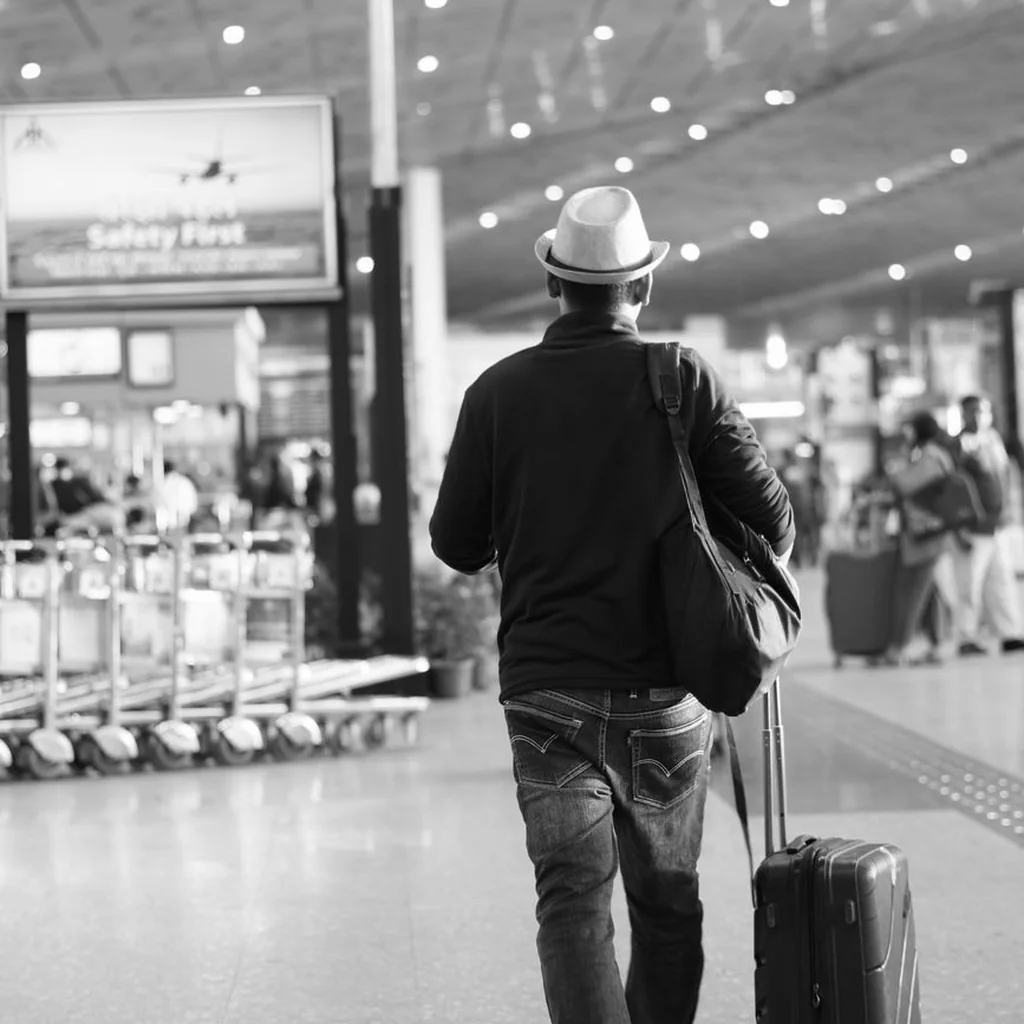
Photo: Sobraj Sarkar on Pexels
빨간 리본이 달린 가방
The Suitcase with the Red Ribbon
At home, Seunghyeon discovers that the black suitcase he brought back from the airport contains someone else’s belongings.
Three short parts. Read each part in Korean first; tap “Show English” under a paragraph when you need the translation.


Part 1
승현은 현관에 들어서자마자 여행 가방을 세워 두고 신발부터 벗어 던졌다. 사흘 내내 신고 다닌 운동화가 제 발로 구석에 기어 들어가는 것 같았다.
Show EnglishHide English
As soon as Seunghyeon stepped into the entryway, he stood his suitcase upright and kicked off his shoes first. His sneakers, which he had worn for three days straight, seemed to crawl into a corner of their own accord.
냉장고에는 생수 한 병과 유통기한이 아슬아슬한 우유가 있었다. 승현은 우유를 마실지 말지 한참 들여다보다가, 일단 냄새부터 맡고 생각하기로 했다.
Show EnglishHide English
The refrigerator held a bottle of water and some milk that was perilously close to its expiration date. Seunghyeon stared at the milk for a long while, wondering whether to drink it, then decided he would smell it first and think about it afterward.
가방 지퍼를 여는데 뭔가 이상했다. 손잡이에 묶어 둔 빨간 리본이 없었다. 공항에서 다른 가방에 치이다 떨어졌겠거니 하고 지퍼를 끝까지 당긴 순간, 맨 위에 얌전히 접힌 꽃무늬 잠옷이 눈에 들어왔다.
Show EnglishHide English
Something seemed off as he unzipped the suitcase. The red ribbon he had tied to the handle was gone. He figured it must have come loose after being jostled by other bags at the airport, but just as he pulled the zipper all the way around, he noticed a neatly folded pair of floral pajamas lying on top.
승현은 잠옷을 한 번, 가방을 한 번 봤다. 아무리 피곤해도 자기가 입지 않는 옷쯤은 알아볼 수 있었다.
Show EnglishHide English
Seunghyeon looked at the pajamas, then at the suitcase. No matter how tired he was, he could still recognize clothes he never wore.
“아, 이건 좀.”
Show EnglishHide English
“Oh, this is awkward.”
그는 다시 덮었다가 곧바로 열었다. 덮는다고 자기 가방으로 바뀔 리 없었다. 검은색에 바퀴 네 개, 옆면의 흠집까지 비슷했다. 수하물 벨트 앞에서 자기 것이라고 철석같이 믿고 낚아챘던 장면이 생생하게 떠올랐다.
Show EnglishHide English
He closed it again, then immediately opened it. Closing it wouldn’t turn it into his own suitcase. It was black, had four wheels, and even the scratch on the side looked similar. The scene at the baggage carousel came back to him vividly: he had snatched it up, absolutely certain it was his.
안쪽 주머니에는 이름과 전화번호가 적힌 수하물 표가 들어 있었다. 승현은 그나마 다행이라고 중얼거리며 번호를 눌렀다. 신호가 두 번 가더니 여자가 받았다.
Show EnglishHide English
In an inner pocket was a baggage tag with a name and phone number on it. Muttering that at least that was a relief, Seunghyeon dialed the number. It rang twice before a woman answered.
“여보세요?”
Show EnglishHide English
“Hello?”
“저, 혹시 오늘 공항에서 검은색 가방 찾으셨나요?”
Show EnglishHide English
“Um, did you happen to pick up a black suitcase at the airport today?”
잠깐 정적이 흘렀다. 뒤에서 지퍼를 여닫는 소리가 나더니 여자가 말했다.
Show EnglishHide English
There was a brief silence. He heard a zipper opening and closing in the background, then the woman said,
“지금 찾은 것 같아요. 남의 양말이 잔뜩 나왔거든요.”
Show EnglishHide English
“I think I’ve just found it. A whole lot of someone else’s socks came out.”
승현은 저도 모르게 발을 내려다봤다. 하필 빨래를 미뤄 둔 채 여행을 떠나 양말만 새로 사 신은 참이었다.
Show EnglishHide English
Without thinking, Seunghyeon looked down at his feet. As luck would have it, he had left on the trip without doing his laundry and had simply bought new socks to wear.
“죄송합니다. 제가 잘못 가져왔나 봐요.”
Show EnglishHide English
“I’m sorry. I think I took the wrong one.”
“그쪽 가방에 빨간 리본 달려 있죠? 제 가방인 줄 알고 집까지 끌고 왔어요.”
Show EnglishHide English
“Your suitcase has a red ribbon on it, right? I thought it was mine and dragged it all the way home.”
서로 사과를 주고받다가 여자가 물었다.
Show EnglishHide English
After they exchanged apologies, the woman asked,
“그런데 혹시 제 가방, 이미 열어 보셨어요?”
Show EnglishHide English
“By the way, have you already opened my suitcase?”
Part 2가방과 양말의 거리(The Distance Between a Suitcase and Socks)
“네. 잠옷이 보여서 바로 덮었습니다.”
Show EnglishHide English
“Yes. I saw the pajamas and closed it right away.”
승현이 그렇게 말하자 전화기 너머에서 짧은 한숨이 들렸다. 한숨 끝에 웃음이 섞여 있어서 그는 그제야 구겨 쥐고 있던 수하물 표를 폈다.
Show EnglishHide English
When Seunghyeon said that, he heard a short sigh from the other end of the phone. There was a hint of laughter at the end of it, and only then did he unfold the baggage tag he had been gripping in a crumpled fist.
“다행이네요. 그 잠옷은 엄마가 사 주신 건데, 꽃이 너무 커서 입으면 화단 같거든요.”
Show EnglishHide English
“That’s a relief. My mom bought those pajamas for me, but the flowers are so huge that when I wear them, I look like a flower bed.”
“저는 꽃인지만 봤습니다.”
Show EnglishHide English
“I only saw that they had flowers on them.”
“거짓말은 안 하셔도 돼요. 저도 양말 봤어요. 전부 똑같은 회색이던데요?”
Show EnglishHide English
“You don’t have to lie. I saw your socks, too. They were all the same shade of gray, weren’t they?”
“짝 맞추기 귀찮아서요.”
Show EnglishHide English
“It’s a hassle to match pairs.”
“현명하시네요. 저는 짝 찾다가 아침마다 인생을 돌아보거든요.”
Show EnglishHide English
“That’s sensible. I spend every morning reflecting on my life while I look for a matching pair.”
여자는 수아라고 했다. 지도에서 서로의 집을 확인해 보니 지하철로 두 정거장 거리였다. 승현은 당장 가방을 들고 나가겠다고 했지만, 수아는 막 집에 도착해 씻지도 못했다며 씻고 나서 자기가 가겠다고 했다. 승현의 집 근처에 저녁을 사러 나갈 참이기도 하단다.
Show EnglishHide English
The woman said her name was Sua. When they checked their homes on a map, they found they were two subway stops apart. Seunghyeon offered to bring the suitcase over right away, but Sua said she had only just got home and hadn’t even had a chance to wash up; she would come over after she did. She was also about to go out and buy dinner near Seunghyeon’s place.
전화를 끊고 승현은 가방을 다시 닫았다. 손대지 않은 것처럼 놓아 보려다가 바퀴가 자꾸 돌아가자 결국 현관 벽에 기대 세웠다. 자기 집 현관이 이렇게 좁았나 싶었다.
Show EnglishHide English
After hanging up, Seunghyeon closed the suitcase again. He tried to leave it as if it had never been touched, but the wheels kept turning, so in the end he stood it against the entryway wall. He wondered if his entryway had always been this narrow.
이십 분쯤 뒤 초인종이 울렸다. 문을 열자 빨간 리본이 달린 가방 뒤로 수아가 서 있었다. 승현은 반가운 마음에 손잡이를 잡았다가 곧 놓았다. 먼저 사과부터 해야 할 것 같았다.
Show EnglishHide English
About twenty minutes later, the doorbell rang. When he opened the door, Sua was standing behind the suitcase with the red ribbon. Seunghyeon reached for the handle in relief, then let go. He felt he should apologize first.
“오늘 제일 열심히 한 일이 남의 가방 운반이네요. 죄송합니다.”
Show EnglishHide English
“The thing I’ve worked hardest at today is carrying someone else’s suitcase. I’m sorry.”
“저도요. 덕분에 운동은 했어요.”
Show EnglishHide English
“Me too. Thanks to you, I got some exercise.”
둘은 가방을 바꿔 잡고 서로의 얼굴을 보며 멋쩍게 웃었다. 이걸로 끝인가 싶어 승현이 인사를 하려는데, 수아가 자기 가방 손잡이를 잡아당겼다.
Show EnglishHide English
They exchanged suitcases and looked at each other, smiling awkwardly. Just as Seunghyeon was about to say goodbye, wondering if that was the end of it, Sua tugged at the handle of her suitcase.
손잡이는 반쯤 올라오다 멈췄다. 수아가 버튼을 다시 눌러 보고 손잡이를 좌우로 흔들어 보더니 승현을 올려다봤다.
Show EnglishHide English
The handle rose halfway, then stopped. Sua pressed the button again and wiggled the handle from side to side, then looked up at Seunghyeon.
“아까 끌고 오실 때도 이랬어요?”
Show EnglishHide English
“Was it like this when you dragged it over earlier?”
Part 3손잡이와 우유 냄새(The Handle and the Smell of Milk)
승현도 손잡이의 버튼을 눌러 봤다. 버튼은 들어가는데 손잡이는 꿈쩍도 하지 않았다. 공항에서 집까지 올 때는 분명 멀쩡했는데, 그 말을 그대로 꺼내기에는 수아의 표정이 미묘했다.
Show EnglishHide English
Seunghyeon pressed the button on the handle, too. The button went in, but the handle wouldn’t budge. It had definitely been fine on the way home from the airport, but Sua’s expression was hard to read, and he couldn’t bring himself to say that outright.
“엘리베이터에서 내릴 때 벽에 한 번 부딪혔어요. 제가 그랬나 봅니다.”
Show EnglishHide English
“When I got out of the elevator, I bumped it against the wall once. I guess I did this.”
수아가 손잡이를 잡고 무릎으로 가방을 살짝 눌렀다. 이번에는 손잡이가 쑥 올라왔다가 한쪽만 덜컥 내려갔다.
Show EnglishHide English
Sua held the handle and pressed the suitcase lightly with her knee. This time the handle slid all the way up, then one side clunked back down.
“아이고, 또 이러네.”
Show EnglishHide English
“Oh dear, not again.”
“원래 그랬어요?”
Show EnglishHide English
“Was it always like that?”
“가끔요. 이제 바꿀 때가 됐다고 엄마가 그러셨는데, 이 정도는 아직 쓸 만하다면서 버텼거든요.”
Show EnglishHide English
“Sometimes. My mom said it was time to replace it, but I insisted it was still usable and held on to it.”
수아는 손잡이를 끝까지 밀어 넣고 양손으로 다시 잡아당겼다. 딸깍 소리가 나며 양쪽이 나란히 올라왔다. 승현은 저도 모르게 박수를 한 번 쳤다.
Show EnglishHide English
Sua pushed the handle all the way down, then pulled it up again with both hands. With a click, both sides rose evenly. Seunghyeon found himself clapping once.
“지금 저 놀리시는 거죠?”
Show EnglishHide English
“You’re making fun of me, aren’t you?”
“아뇨, 진심으로 기뻐서요.”
Show EnglishHide English
“No, I’m genuinely happy for you.”
“저도요. 오늘 저녁은 굶고 가방이랑 씨름할 뻔했거든요.”
Show EnglishHide English
“So am I. I was about to spend the evening wrestling with my suitcase instead of eating dinner.”
승현은 수아를 엘리베이터까지 배웅했다. 문이 열리자 수아가 가방을 끌고 들어갔고, 손잡이는 이번에도 제자리를 지켰다. 수아는 현관에 세워 둔 승현의 리본 달린 가방을 돌아보더니 자기 가방에도 뭔가 달아야겠다고 했다.
Show EnglishHide English
Seunghyeon walked Sua to the elevator. When the doors opened, Sua pulled her suitcase inside, and this time the handle stayed in place. She glanced back at Seunghyeon’s ribboned suitcase standing in the entryway and said she should attach something to hers, too.
“꽃무늬 잠옷을 묶어 둘까요?”
Show EnglishHide English
“Shall I tie the floral pajamas to it?”
“그 정도면 공항 전체에서 알아보겠는데요.”
Show EnglishHide English
“At that point, you’d be able to spot it anywhere in the whole airport.”
문이 닫히고 승현은 집으로 돌아와 자기 가방을 열었다. 회색 양말들이 흐트러진 채 들어 있었다. 수아가 얼마나 뒤졌을까 잠깐 궁금했지만, 자기도 꽃의 크기를 봤으니 따질 처지는 아니었다.
Show EnglishHide English
The door closed, and Seunghyeon went back inside and opened his own suitcase. The gray socks lay jumbled inside. He briefly wondered how much Sua had rummaged through them, but since he had seen the size of the flowers himself, he wasn’t in a position to complain.
그는 양말을 세탁기에 쏟아 넣고 냉장고를 열었다. 아까 맡아 보려던 우유가 그대로 있었다. 승현은 뚜껑을 열고 냄새를 맡더니 잔을 꺼냈다. 오늘은 이 정도면 됐다.
Show EnglishHide English
He dumped the socks into the washing machine and opened the refrigerator. The milk he had meant to smell earlier was still there. Seunghyeon unscrewed the cap and sniffed it, then took out a glass. That was enough for today.
Practise this Korean story
Vocabulary in context
Important words and phrases
유통기한이 아슬아슬한
adjective phrasebarely within its expiration date; close to expiring
유통기한이 아슬아슬한 우유는 냄새를 먼저 맡아 본다.
I sniff milk that is close to expiring first.
철석같이 믿고
verb phraseabsolutely believing; taking something as certain
그는 안내문을 철석같이 믿고 그대로 따라갔다.
He trusted the notice completely and followed it exactly.
낚아챘던
verbsnatched up; grabbed quickly
아이는 책상 위의 열쇠를 낚아챘다.
The child snatched the key off the desk.
정적이 흘렀다
idiomsilence fell
그 말이 끝나자 잠깐 정적이 흘렀다.
When he finished speaking, a brief silence fell.
멋쩍게 웃었다
verb phrasesmiled awkwardly
그는 대답 대신 멋쩍게 웃었다.
He gave an awkward smile instead of answering.
쓸 만하다
phrasestill usable; good enough to keep using
이 가방은 낡았지만 아직 쓸 만하다.
This bag is old, but it is still usable.
씨름할 뻔했거든요
verb phraseI almost ended up struggling with it
문이 안 열려서 한참 씨름할 뻔했거든요.
The door would not open, so I almost ended up struggling with it for a long time.
구겨 쥐고 있던
verb phrasecrumpled up in one's hand
그는 영수증을 구겨 쥐고 있다가 천천히 폈다.
He had been crumpling the receipt in his hand, then slowly unfolded it.
미묘했다
adjectivewas subtle; slightly awkward or unclear
그의 표정은 기쁘다고 하기에는 미묘했다.
His expression was too subtle to call it happy.
그나마 다행이라고
phraseat least thankfully; taking comfort in the fact that
비가 오지 않은 것만으로도 그나마 다행이라고 생각했다.
She thought that, at least, it was lucky that it had not rained.
Check your understanding
Comprehension questions
Choose an answer, check it, then move to the next question.
Question 1 of 3
- Question 1: current not answered
- Question 2: not answered
- Question 3: not answered
Notice the language
Language notes
N인 줄 알고
This pattern means you thought something was a certain noun, but later found out it was not. It is formed with a noun + 인 줄 알고. You can reuse it whenever you want to describe a mistaken assumption before the truth becomes clear. Example: "처음엔 기차인 줄 알고 탔는데 버스였어요."
제 가방인 줄 알고 집까지 끌고 왔어요.
I thought it was mine and dragged it all the way home.
More Korean stories to read next
예약 날짜를 착각한 밤
The Night He Got the Reservation Date Wrong
At a restaurant, Jaehoon proudly tells Eunji he booked a hard-to-get table, but discovers the reservation is for next Friday.
휴대전화 속 추억
Memories on a Phone
At home, Jeonghun’s phone brings up a memory from three years earlier, when he badly botched japchae for Gaeun’s mother.
주유등이 켜진 길
The Road with the Fuel Light On
On a country road, Myeongsuk sees the fuel warning light on and the gauge almost empty, and the last sign put the previous station 80 km behind them.

미영의 마지막 출근일
Miyeong’s Last Day at Work
On Miyeong’s last day at work, Sujin prepares a farewell party for her in a company meeting room.