
Photo: Hasan Utku Sala on Pexels
La vieille barque
The Old Boat
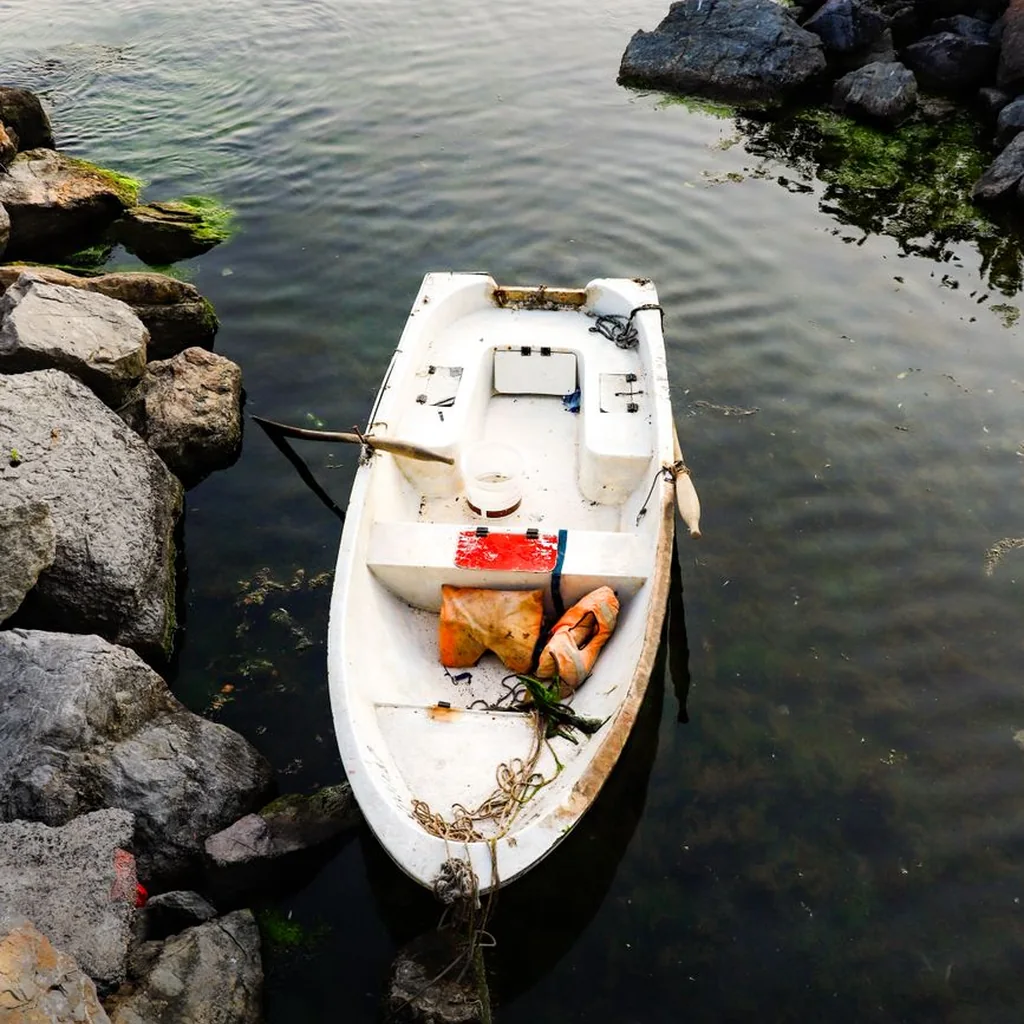
Benoît and his brother Stéphane stand by their late father's old fishing boat, which the landowner wants moved before the end of the month.
Three short parts. Read each part in French first; tap “Show English” under a paragraph when you need the translation.


Part 1
Benoît arrive au bord de l’eau avec un thermos et deux gobelets. Son frère Stéphane est déjà là, debout devant la vieille barque de leur père.
Show EnglishHide English
Benoît arrives by the water with a thermos and two cups. His brother Stéphane is already there, standing in front of their father's old boat.
La peinture bleue s’écaille et une corde traîne dans l’herbe. Depuis l’enterrement, trois mois plus tôt, aucun des deux n’est revenu ici.
Show EnglishHide English
The blue paint is peeling, and a rope is lying in the grass. Since the funeral three months earlier, neither of them has come back here.
« Le propriétaire du terrain veut qu’on la déplace avant la fin du mois », dit Stéphane. Il se baisse pour ramasser la corde, puis la repose aussitôt.
Show EnglishHide English
“The landowner wants us to move it before the end of the month,” says Stéphane. He bends to pick up the rope, then immediately puts it back down.
Benoît verse du café. Il a passé la semaine à chercher une place pour la barque, mais il n’a rien trouvé près de chez lui.
Show EnglishHide English
Benoît pours the coffee. He has spent the week looking for somewhere to put the boat, but he has found nothing near his home.
« On pourrait la vendre, propose-t-il. Elle prend de la place et aucun de nous ne pêche. »
Show EnglishHide English
“We could sell it,” he suggests. “It takes up space, and neither of us goes fishing.”
Stéphane prend son gobelet sans répondre. Ils regardent l’eau un moment, comme s’ils attendaient que leur père apparaisse avec ses bottes et son seau.
Show EnglishHide English
Stéphane takes his cup without answering. They look at the water for a while, as if waiting for their father to appear with his boots and bucket.
« Tu as déjà mis une annonce ? » demande enfin Stéphane.
Show EnglishHide English
“Have you already put up an ad?” Stéphane finally asks.
« Non. Je voulais qu’on en parle d’abord. »
Show EnglishHide English
“No. I wanted us to talk about it first.”
Son frère hoche la tête, mais son visage reste fermé. Puis il monte dans la barque, qui bouge légèrement sous son poids.
Show EnglishHide English
His brother nods, but his expression remains closed. Then he climbs into the boat, which shifts slightly under his weight.
Il soulève le banc du fond et découvre une petite boîte en métal. « Tiens, je me demande ce qu’il gardait là-dedans. »
Show EnglishHide English
He lifts the bench at the back and discovers a small metal box. “Look at this. I wonder what he kept in there.”
Part 2La boîte de souvenirs(The Box of Memories)
Stéphane ouvre la boîte et en sort quelques hameçons, une bobine de fil et une vieille photo. On y voit leur père dans la barque, un poisson à la main et un sourire fier aux lèvres.
Show EnglishHide English
Stéphane opens the box and takes out a few hooks, a spool of line, and an old photograph. It shows their father in the boat, holding a fish and wearing a proud smile.
« Il l’a racontée cent fois, cette journée, dit Benoît. Chaque fois, le poisson avait grandi. »
Show EnglishHide English
“He told that story a hundred times,” says Benoît. “Each time, the fish had grown bigger.”
Stéphane rit, puis tend la photo à son frère. Au dos, leur père a écrit la date et les mots : « Première sortie avec les garçons. »
Show EnglishHide English
Stéphane laughs, then hands the photograph to his brother. On the back, their father has written the date and the words: “First outing with the boys.”
Benoît ne se souvient pas du poisson, mais il reconnaît son manteau rouge sur la photo. Stéphane, assis à côté de lui, porte un gilet bien trop grand.
Show EnglishHide English
Benoît does not remember the fish, but he recognizes his red coat in the photograph. Stéphane, sitting beside him, is wearing a vest that is far too big.
« J’aimerais la garder, dit Stéphane en posant la main sur le bord de la barque. Pas seulement la photo. »
Show EnglishHide English
“I’d like to keep it,” says Stéphane, putting his hand on the side of the boat. “Not just the photograph.”
Benoît repose son gobelet. « Tu m’as dit le mois dernier que tu n’avais pas de place chez toi. »
Show EnglishHide English
Benoît puts down his cup. “You told me last month that you didn’t have room at your place.”
« Je sais. Je pourrais demander à ma voisine si je peux la mettre au fond de son jardin. »
Show EnglishHide English
“I know. I could ask my neighbor if I can put it at the back of her garden.”
« Et dans un an ? On fera quoi quand elle voudra récupérer son jardin ? »
Show EnglishHide English
“And in a year? What will we do when she wants her garden back?”
Stéphane descend de la barque, visiblement vexé. « Tu as toujours une bonne raison de te débarrasser des choses. »
Show EnglishHide English
Stéphane climbs out of the boat, clearly offended. “You always have a good reason to get rid of things.”
Benoît ouvre la bouche pour répondre, puis remarque une feuille coincée sous la boîte.
Show EnglishHide English
Benoît opens his mouth to answer, then notices a sheet of paper caught under the box.
Part 3La barque de leur père(Their Father's Boat)
Benoît déplie la feuille. C’est une liste de courses pour la pêche, écrite par leur père : du pain, des vers et une bouteille d’eau.
Show EnglishHide English
Benoît unfolds the sheet. It is a shopping list for fishing, written by their father: bread, worms, and a bottle of water.
« Il avait même noté le pain », dit-il. Stéphane sourit malgré lui. « Il l’oubliait toujours. »
Show EnglishHide English
“He even wrote down the bread,” he says. Stéphane smiles despite himself. “He always forgot it.”
Benoît remet la liste dans la boîte avec la photo. « Je ne veux pas tout jeter, tu sais. Je suis triste aussi, mais je ne peux pas garder la barque. »
Show EnglishHide English
Benoît puts the list back in the box with the photograph. “I don’t want to throw everything away, you know. I’m sad too, but I can’t keep the boat.”
Stéphane remonte dans la barque, s’assoit sur le banc et regarde ses chaussures. « Pardon. J’ai eu l’impression que tu voulais tourner la page tout de suite. »
Show EnglishHide English
Stéphane climbs back into the boat, sits on the bench, and looks at his shoes. “I’m sorry. I felt as if you wanted to turn the page right away.”
« Ce n’est pas ça. On peut prendre le temps de trouver quelqu’un qui s’en servira. »
Show EnglishHide English
“That’s not it. We can take the time to find someone who will use it.”
Après un silence, Stéphane accepte. Ensemble, ils sortent la boîte, nettoient un peu la barque et prennent des photos pour une annonce.
Show EnglishHide English
After a silence, Stéphane agrees. Together, they take out the box, clean the boat a little, and take photos for an ad.
Le lendemain, ils la vendent à un homme du village qui cherche une barque pour pêcher avec sa fille. Il vient la chercher le samedi suivant, et les deux frères l’aident à la charger sur sa remorque.
Show EnglishHide English
The next day, they sell it to a man from the village who is looking for a boat to go fishing with his daughter. He comes to get it the following Saturday, and the two brothers help him load it onto his trailer.
Avant son départ, Stéphane glisse la photo dans sa poche. « Je t’en ferai une copie », dit-il à Benoît.
Show EnglishHide English
Before it leaves, Stéphane slips the photograph into his pocket. “I’ll make you a copy,” he tells Benoît.
Ils restent un moment près de l’eau. Puis Benoît ouvre son thermos et sert deux cafés, comme la semaine précédente.
Show EnglishHide English
They stay by the water for a while. Then Benoît opens his thermos and pours two coffees, just as he did the week before.
Practise this French story
Vocabulary in context
Important words and phrases
au bord de l’eau
prepositional phraseby the water
Ils se sont assis au bord de l’eau.
They sat by the water.
la vieille barque
noun phrasethe old boat
Cette vieille barque appartient à mon oncle.
That old boat belongs to my uncle.
prendre de la place
verb phraseto take up space
Cette table prend trop de place dans la cuisine.
This table takes up too much space in the kitchen.
mettre une annonce
verb phraseto place an ad
Nous avons mis une annonce pour vendre le vélo.
We placed an ad to sell the bike.
tourner la page
idiomatic expressionto move on
Après cette dispute, ils ont décidé de tourner la page.
After that argument, they decided to move on.
une liste de courses
noun phrasea shopping list
J’ai retrouvé la liste de courses dans ma poche.
I found the shopping list in my pocket.
te débarrasser des choses
verb phraseto get rid of things
Tu n’as pas besoin de te débarrasser de tout.
You do not need to get rid of everything.
prendre le temps de
verb phraseto take the time to
Il faut prendre le temps de réfléchir avant de répondre.
You need to take the time to think before answering.
s’en servira
verb phrasewill use it
J’espère que quelqu’un s’en servira encore.
I hope someone will still use it.
la charger sur sa remorque
verb phraseto load it onto his trailer
Ils ont chargé la barque sur sa remorque.
They loaded the boat onto his trailer.
Check your understanding
Comprehension questions
Choose an answer, check it, then move to the next question.
Question 1 of 3
- Question 1: current not answered
- Question 2: not answered
- Question 3: not answered
Notice the language
Language notes
prendre le temps de + infinitif
This structure means to do something without rushing, with patience or care. It is useful when suggesting a calm, careful process, and it can be reused with many verbs after de + infinitive.
On peut prendre le temps de trouver quelqu’un qui s’en servira.
We can take the time to find someone who will use it.
More French stories to read next

La première course de Léa
Léa’s First Race
Léa, a 30-year-old woman, is at the start of her first five-kilometer race in a park, where the other runners seem faster than she is.
La baguette et la traduction
The Baguette and the Translation
Rose, newly arrived in France, is in a bakery to buy a well-baked baguette cut in half, but she still knows little French.
Perdue dans les ruelles
Lost in the Alleyways
Camille wanders through the old town after leaving the market square, then realizes she cannot find her way back to meet her friend at a café.
Le plongeon d'Alain
Alain’s Dive
At the pool with his daughter Émilie, Alain hesitates to enter the water, fearing it may be cold.