
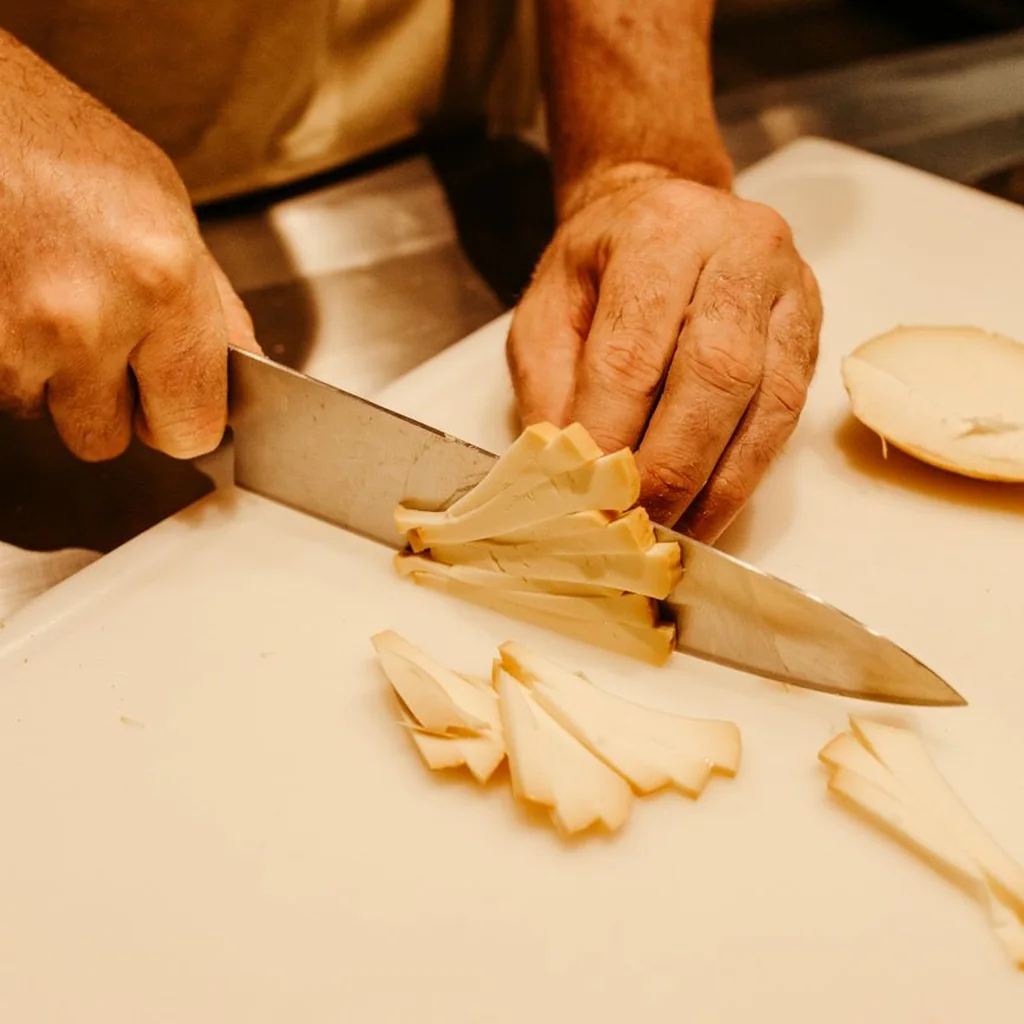
Photo: Jonathan Borba on Pexels
Learning to Cut Their Own Food
At dinner, John realizes his children can cut their own food, and he feels quiet without the job he has done for years.
Three short parts. Read each part once for the main idea, then check the key words explained below the story.


Part 1
John put the plates on the table and sat down between his two children. There was chicken, rice and a bowl of carrots, still warm from the pan.
“Who wants help cutting their chicken?” he asked, reaching for his knife.
“I’m fine, Dad,” said Grace. She held her fork firmly and cut a small piece on her own.
John turned to Harry, who was six. “What about you?”
Harry shook his head. “I can do it. Mum showed me yesterday.”
John watched him press down on the chicken. The first piece was too big, so Harry cut it again. He looked pleased with himself, and John smiled.
“That’s good,” John said. Then he picked up his own fork and found that his chicken had gone cold while he was watching them.
For years, he had cut their food before he touched his own. He had never thought much about it. Now he felt strangely quiet without that little job to do.
Grace noticed him looking at their plates. “Dad, why are you smiling like that?” she asked.
John opened his mouth, but he wasn’t sure how to explain.
Part 2The Carrots at Dinner
“I was just thinking about when you were little,” John said. “I used to spend half of dinner cutting your food.”
Grace laughed. “And you always made the pieces too small.”
“I did not,” John said. “I made them exactly the right size.”
Harry held up a piece of chicken on his fork. “This is the right size now.”
John nodded. He was glad they could do it themselves, even if dinner felt different. He took a bite of chicken and reached for the carrots.
A moment later, Grace looked at him. “You can stop watching us, Dad. We’re not going to forget how to use a knife.”
Harry put down his fork and stared at John too. John felt his face grow warm. He had been watching them, and now they were both waiting for him to say something.
“Sorry,” he said. “Old habit.”
Grace smiled, and Harry went back to eating. John tried to do the same, but the bowl of carrots was now on the other side of the table.
He looked at his children. “Could one of you pass me the carrots?”
Part 3A Little Help at Dinner
Grace picked up the bowl and passed it to John with both hands. He took it and put a spoonful of carrots on his plate.
“Thank you,” he said. “I suppose I can still ask for help at dinner.”
“Of course,” said Grace. “Even grown-ups need help sometimes.”
Harry reached for the bowl too. “Can I have some more?”
John passed it to him, and Harry carefully served himself. A carrot fell onto the table, and all three of them watched it roll toward the edge.
Harry caught it just in time. “I meant to do that,” he said.
“Exactly the right size,” Grace said, and John laughed. Harry ate the carrot, then held up his empty fork as if he had won a prize.
When they had finished, Grace collected the plates. Harry carried the bowl to the kitchen, walking slowly so it wouldn’t slip from his hands.
John followed with the glasses. Dinner had been noisy and a little awkward, but he liked seeing what his children could do. Tomorrow, he thought, he would remember to eat his dinner while it was warm.
Practise this English story
Vocabulary in context
Important words and phrases
on her own
phraseMeaning: without help
She held her fork firmly and cut a small piece on her own.
press down on
phrasal verbMeaning: push hard on the top of something
He pressed down on the chicken.
had gone cold
phraseMeaning: had become not warm anymore
The soup had gone cold.
used to
phraseMeaning: did regularly in the past, but not now
I used to spend half of dinner cutting your food.
old habit
noun phraseMeaning: something you do again and again without thinking
Sorry, old habit.
pass me
phraseMeaning: give me something that is near you
Could you pass me the salt?
even if
conjunctionMeaning: although something may be true or happen
He was glad they could do it themselves, even if dinner felt different.
just in time
phraseMeaning: at the last moment, before it is too late
Harry caught it just in time.
reach for
phrasal verbMeaning: move your hand toward something to take it
John reached for the carrots.
collect the plates
phraseMeaning: pick up the plates after a meal
Grace collected the plates.
Check your understanding
Comprehension questions
Choose an answer, check it, then move to the next question.
Question 1 of 3
- Question 1: current not answered
- Question 2: not answered
- Question 3: not answered
Notice the language
Language notes
used to + verb
Use used to + base verb to talk about a past habit or a past situation that is not true now. It often describes something that happened regularly in the past. You can reuse it for memories and old routines.
I used to spend half of dinner cutting your food.
More English stories to read next
The Missing Lucky Socks
Before the school race, Claire finds her lucky socks wet in the laundry basket and must wear plain white ones instead.

The Right Moment
Ben has carried a ring box for a week and is trying to find a quiet moment to give it to Grace.
Finding the Birthday Candles
On her first day on the shop floor, Mei cannot find the birthday candles a customer needs for his son's cake.

The Blurry Sentence
Janet sits near the back of her classroom and cannot read the words on the board when her teacher asks her to read a sentence aloud.