
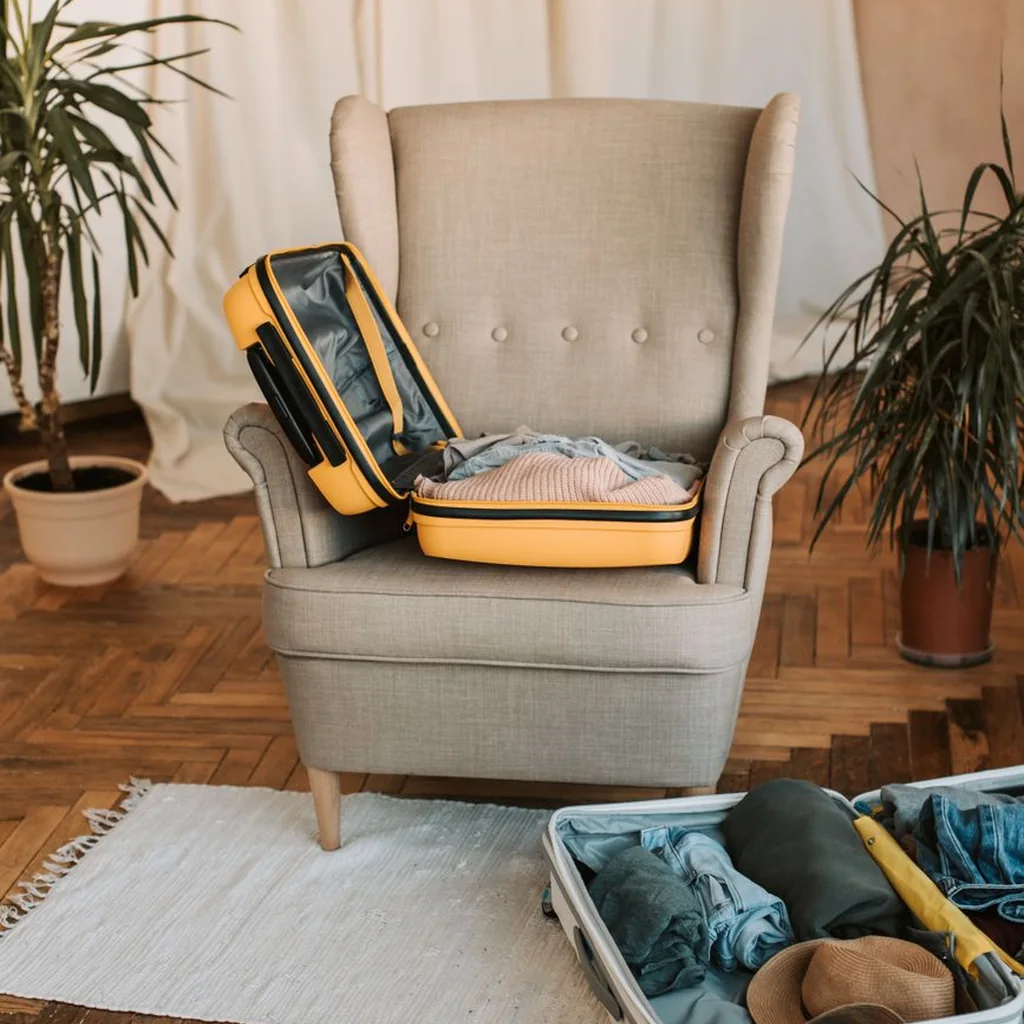
Photo: Vlada Karpovich on Pexels
Emily Tries to Run Away
Emily packs a small suitcase to run away from home, but rain falls when she steps outside.
Three short parts. Read each part once for the main idea, then check the key words explained below the story.


Part 1
Emily puts two shirts, a book, and a banana in her small suitcase. She wants to run away from home.
This morning, Mum said no to a second cake. Emily was angry. She said, “I don’t want to live here!”
Now she puts on her shoes and takes her suitcase to the front door. Mum is in the kitchen. She can hear Emily, but she does not say anything.
Emily opens the door and walks onto the front step. Then rain falls on her head. It falls on her suitcase, too.
“Oh, no,” she says. She sits on the step, under the little roof by the door. Her shoes are still in the rain, so she pulls her feet closer.
The front door opens. Mum stands there with a cup of tea.
“Where are you going?” she asks.
Part 2Running Away in the Rain
“I’m running away,” Emily says. “But I’m waiting for the rain to stop.”
Mum looks at the wet street. “I see. Do you have everything you need?”
“Yes,” says Emily. She opens her suitcase to show Mum. The banana is on top of her clean shirts.
Mum sits next to her on the step. Emily takes out the banana and puts it on her lap.
“I have a book, too,” she says. “And two shirts.”
“Those are good things to have,” says Mum. “What about your bear?”
Emily looks in the suitcase again. Her bear is not there. He is on her bed, next to her pillow.
“I can’t go without him,” she says. “But my shoes are wet.”
“I can get him for you,” says Mum. She puts down her cup and goes inside.
Part 3Emily and the Bear
Mum comes back with the bear. Emily takes him and holds him close. She touches his soft brown ears.
“Thank you,” she says. She puts him in the suitcase, next to her book.
The rain is still falling. Emily looks at the street, then at the door. She can see her chair at the kitchen table, and she knows it is warm inside.
“I don’t like sitting here,” she says. “And I don’t want to go without you.”
Mum puts her arm around Emily. “I don’t want you to go. I’m sorry you’re sad about the cake.”
Emily leans against her. “I’m sorry I was angry.”
Together, they go inside. Emily takes off her wet shoes and puts her bear back on her bed. Then she comes down and eats her banana at the kitchen table.
Practise this English story
Vocabulary in context
Important words and phrases
small suitcase
noun phraseMeaning: a small bag with a handle for clothes and other things when you travel
Emily puts her shirts in her suitcase.
run away
verb phraseMeaning: leave home or a place because you do not want to stay
She wants to run away from home.
angry
adjectiveMeaning: very upset and mad
Emily was angry.
puts on
verb phraseMeaning: starts to wear clothes or shoes
She puts on her shoes.
front door
noun phraseMeaning: the door at the front of a house
She takes her suitcase to the front door.
step
nounMeaning: a flat place outside a door where you can stand or sit
Emily sits on the step.
rain
nounMeaning: water that falls from the sky
Rain falls on her head.
wet
adjectiveMeaning: covered with water
My shoes are wet.
bear
nounMeaning: a soft toy animal
Emily puts her bear in the suitcase.
takes out
verb phraseMeaning: takes something from inside a bag, box or other place
She takes out the banana.
comes back
verb phraseMeaning: comes to a place again after going away
Mum comes back with the bear.
Check your understanding
Comprehension questions
Choose an answer, check it, then move to the next question.
Question 1 of 3
- Question 1: current not answered
- Question 2: not answered
- Question 3: not answered
Notice the language
Language notes
don't want to + verb
Use don't want to + verb to say you do not want to do something. Emily says, 'I don't want to go without you.' You can reuse this pattern in many situations: 'I don't want to leave now.'
I don't want to go without you.
More English stories to read next
The Recipe
In her small kitchen, Susan serves casserole to her mother-in-law Aisha, who asks for the recipe she gave Susan last week.

The Welcome Page
At work, Paul and Linda must make a welcome page together, but they need to act professionally.
Ben Forgets His Wallet
Ben cannot find his wallet at the checkout; it is in his first trolley near the fruit, halfway across the store.
The Missing Message
Amelia forgot her lunch with her friend Carol, and now she wants to send Carol the right message to say sorry.