
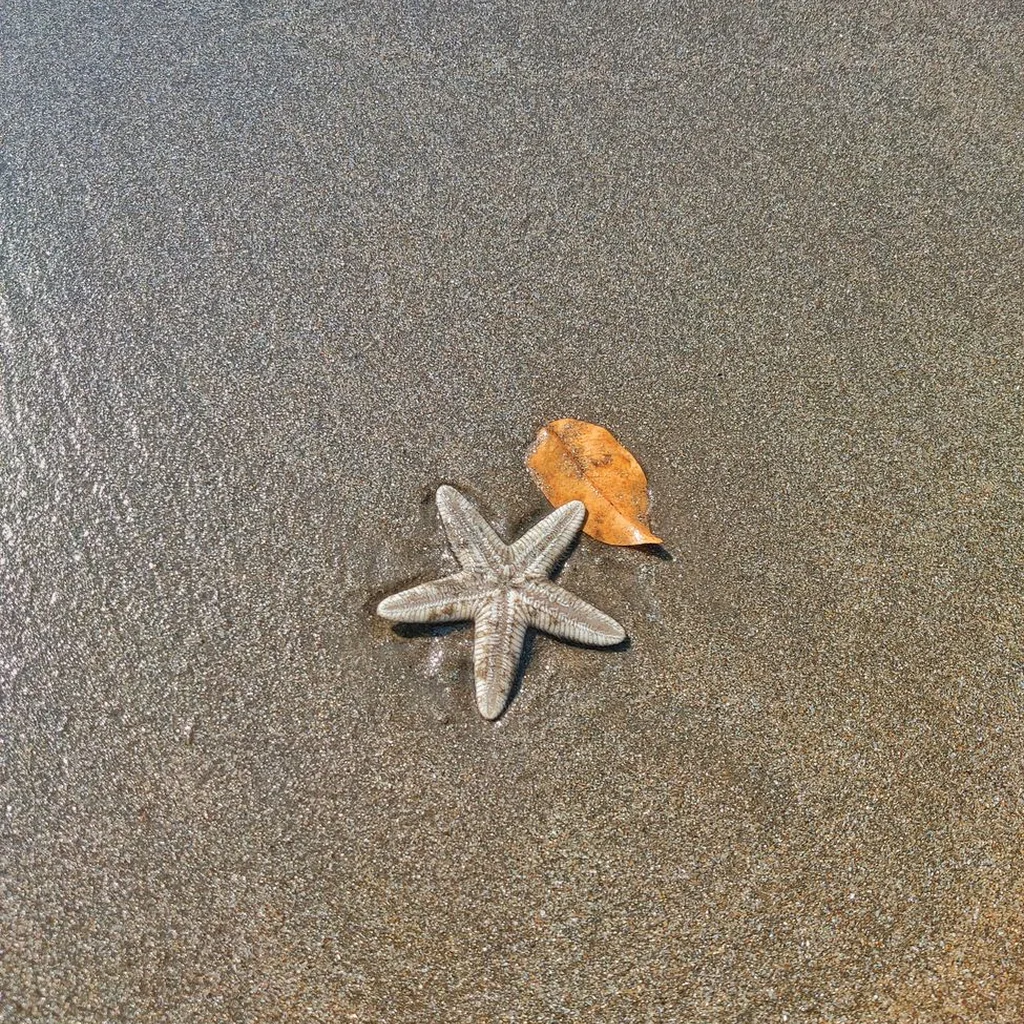
Photo: Vidit Goel on Pexels
Морская звезда на отливе
A Starfish at Low Tide
At a beach where the sea has receded far from shore, Nikolay finds a starfish stranded high above the waterline.
Three short parts. Read each part in Russian first; tap “Show English” under a paragraph when you need the translation.


Part 1
Николай заметил морскую звезду, когда уже собирался уходить с пляжа. Она лежала на влажном песке, далеко выше кромки воды; за время отлива море отступило так далеко, что люди у самой воды казались игрушечными.
Show EnglishHide English
Nikolay noticed the starfish just as he was getting ready to leave the beach. It lay on the damp sand, far above the waterline; the tide had gone out so far that the people at the water’s edge looked like toys.
Он присел на корточки и заслонил звезду от солнца. Размером она была с ладонь, чуть изогнутая, с песчинками на шероховатой спине. Николай осторожно коснулся одного луча, но так и не понял, движется она или ему только кажется.
Show EnglishHide English
He crouched down and shaded the starfish from the sun. It was about the size of his palm, slightly curved, with grains of sand clinging to its rough back. Nikolay cautiously touched one of its arms, but still could not tell whether it was moving or whether he was only imagining it.
— Ты чего там нашёл? — крикнула Марина от полотенца.
Show EnglishHide English
“What have you found there?” Marina called from their towel.
— Звезду. Похоже, её тут после отлива оставило.
Show EnglishHide English
“A starfish. Looks like the tide left it here.”
Марина подошла, придерживая шляпу, которую ветер так и норовил сорвать. Посмотрела на звезду, потом на море и сняла шлёпанцы.
Show EnglishHide English
Marina came over, holding on to her hat, which the wind kept trying to snatch away. She looked at the starfish, then at the sea, and took off her flip-flops.
— Надо отнести её в воду.
Show EnglishHide English
“We should carry it to the water.”
Николай сунул палец под край звезды и тут же отдёрнул руку. Снизу виднелись какие-то крошечные ножки, и ему стало неловко хватать её как попало.
Show EnglishHide English
Nikolay slipped a finger under the edge of the starfish and immediately pulled his hand back. Tiny little feet of some kind were visible underneath, and he felt awkward about grabbing it any old way.
— А если ей от этого хуже будет? Может, её вообще нельзя руками трогать.
Show EnglishHide English
“What if that makes it worse? Maybe you’re not supposed to touch them with your hands at all.”
— Может, и нельзя. Но лежать на солнце ей вряд ли полезнее.
Show EnglishHide English
“Maybe not. But lying in the sun can hardly be better for it.”
Они немного помолчали, глядя на звезду. Мимо прошла женщина с собакой; Николай едва не окликнул её, но она так решительно смотрела перед собой, что он передумал.
Show EnglishHide English
They stood silent for a little while, looking at the starfish. A woman with a dog walked past; Nikolay nearly called out to her, but she was staring so intently ahead that he changed his mind.
— У тебя же ведёрко было, — сказала Марина.
Show EnglishHide English
“You had a little bucket, didn’t you?” Marina said.
— Я его ещё утром под скамейку убрал, чтобы не мешалось.
Show EnglishHide English
“I put it under the bench this morning so it wouldn’t be in the way.”
Она вернулась к их вещам и достала ведёрко из-под скамейки. Николай уже протянул руку, но Марина заглянула внутрь и остановилась: на дне лежал телефон.
Show EnglishHide English
She went back to their things and took the bucket out from under the bench. Nikolay had already reached for it, but Marina looked inside and stopped: there was a phone at the bottom.
Part 2Звезда в ведёрке(The Starfish in the Bucket)
— Это ещё что такое? — спросила Марина, поднимая телефон двумя пальцами.
Show EnglishHide English
“What’s this doing here?” Marina asked, lifting the phone with two fingers.
Николай узнал свой старый чехол. Утром он спрятал телефон в ведёрко, чтобы тот не валялся на солнце, а потом начисто об этом забыл.
Show EnglishHide English
Nikolay recognized his old case. That morning he had hidden the phone in the bucket so it wouldn’t be left lying in the sun, and then completely forgotten about it.
— Я его полчаса искал, — сказал он. — Решил, что дома оставил.
Show EnglishHide English
“I spent half an hour looking for it,” he said. “I thought I’d left it at home.”
— Зато теперь нашёл. Прямо праздник находок.
Show EnglishHide English
“At least you’ve found it now. What a day for finding things.”
Марина вытерла чехол краем полотенца и положила телефон в сумку. Николай тем временем поддел звезду влажной ладонью, поддерживая снизу, и осторожно опустил в ведёрко. Она едва поместилась: один луч упёрся в стенку.
Show EnglishHide English
Marina wiped the case with the edge of the towel and put the phone in her bag. Meanwhile, Nikolay eased the starfish up on his damp palm, supporting it from underneath, and carefully lowered it into the bucket. It barely fit: one arm pressed against the side.
— Может, воды ей принести? — спросил он, оглядываясь в сторону моря.
Show EnglishHide English
“Maybe I should bring it some water?” he asked, glancing toward the sea.
— Давай уж сразу отнесём. До воды идти всего ничего.
Show EnglishHide English
“Let’s just take it there. It’s only a short walk to the water.”
«Всего ничего» оказалось довольно далеко. Песок то пружинил под ногами, то засасывал пятки; Николай держал ведёрко перед собой и следил, чтобы его не слишком трясло. Марина шла рядом со шлёпанцами в руке и время от времени заглядывала внутрь.
Show EnglishHide English
The “short walk” turned out to be quite a distance. The sand sometimes sprang beneath their feet and sometimes sucked at their heels; Nikolay held the bucket out in front of him and took care not to jostle it too much. Marina walked beside him with her flip-flops in her hand, peering inside from time to time.
— Ты так несёшь, будто там суп до краёв налит.
Show EnglishHide English
“You’re carrying it as if it’s filled to the brim with soup.”
— А ты не дыши на меня, я сосредоточен.
Show EnglishHide English
“And don’t breathe on me. I’m concentrating.”
У самой воды Николай нагнулся, собираясь опустить ведёрко, и вдруг замер. Перед ними тянулась широкая мелкая лужа, отделённая от моря полосой песка. Вода в ней была тёплая, почти неподвижная.
Show EnglishHide English
At the water’s edge Nikolay bent down to lower the bucket, then suddenly froze. A broad, shallow pool stretched out before them, separated from the sea by a strip of sand. The water in it was warm and almost still.
Марина присела рядом и провела пальцами по поверхности.
Show EnglishHide English
Marina crouched beside him and ran her fingers over the surface.
— Как думаешь, здесь ей хватит воды или надо дальше?
Show EnglishHide English
“What do you think? Is there enough water for it here, or should we go farther?”
Part 3Морская звезда у берега(The Starfish by the Shore)
Николай посмотрел на лужу, потом на море за песчаной полосой. В луже воды было по щиколотку, и на дне лежали пустые ракушки.
Show EnglishHide English
Nikolay looked at the pool, then at the sea beyond the strip of sand. The water in the pool came up to their ankles, and empty shells lay on the bottom.
— Давай дальше, — сказал он. — А то опять окажется на песке раньше нас.
Show EnglishHide English
“Let’s go farther,” he said. “Otherwise it’ll be stranded on the sand again before we’ve even left.”
Они перешли лужу и песчаную полосу. По ту сторону вода шевелилась от ветра; небольшие волны набегали на берег и сразу откатывались. Николай вошёл по колено, присел и наклонил ведёрко под водой.
Show EnglishHide English
They crossed the pool and the strip of sand. On the other side, the water stirred in the wind; small waves ran up the shore and immediately rolled back. Nikolay waded in up to his knees, crouched down, and tilted the bucket underwater.
Звезда не выпадала. Он подождал, потом осторожно коснулся её снизу, и она соскользнула на песок. Несколько мгновений Николай держал руку рядом, пока вода колыхалась вокруг его запястья.
Show EnglishHide English
The starfish did not fall out. He waited, then cautiously touched it from underneath, and it slid onto the sand. For a few moments Nikolay kept his hand nearby while the water rippled around his wrist.
— Ну как? — спросила Марина с берега.
Show EnglishHide English
“How is it?” Marina asked from the shore.
— Лежит. Пока без восторга.
Show EnglishHide English
“It’s lying there. Not exactly thrilled yet.”
Песок осел, и в прозрачной воде звезду снова стало хорошо видно. Николай выпрямился и медленно вышел на берег, стараясь лишний раз не взмутить воду. Марина протянула ему свои шлёпанцы; он машинально взял один и только тогда сообразил, что тот ему ни к чему.
Show EnglishHide English
The sand settled, and the starfish became clearly visible again in the transparent water. Nikolay straightened up and slowly walked back to shore, trying not to stir up the water any more than necessary. Marina held out her flip-flops; he absent-mindedly took one and only then realized he had no use for it.
— Надевай, — сказал он. — Мне-то босиком недалеко.
Show EnglishHide English
“Put them on,” he said. “I don’t have far to go barefoot.”
Они вернулись к полотенцу, стряхнули с ног песок и собрали сумки. Николай положил ведёрко сверху и на всякий случай заглянул внутрь.
Show EnglishHide English
They returned to their towel, shook the sand from their feet, and gathered their bags. Nikolay put the bucket on top and looked inside just in case.
— Телефон у тебя, — напомнила Марина.
Show EnglishHide English
“You’ve got the phone,” Marina reminded him.
— Проверяю, не осталось ли там чего-нибудь ещё.
Show EnglishHide English
“I’m checking whether there’s anything else left in there.”
Она засмеялась и взяла его за свободную руку. До выхода с пляжа они дошли не спеша.
Show EnglishHide English
She laughed and took him by his free hand. They walked unhurriedly to the beach exit.
Practise this Russian story
Vocabulary in context
Important words and phrases
за время отлива
prepositional phraseTransliteration: za vremya otliva
during the ebb tide
За время отлива камни у берега стали видны целиком.
During the ebb tide, the rocks by the shore became fully visible.
кромки воды
noun phraseTransliteration: kromki vody
waterline
Лодка застряла у самой кромки воды.
The boat got stuck right at the waterline.
заслонить от солнца
verb phraseTransliteration: zaslonit' ot solntsa
to shade from the sun
Он заслонил экран от солнца ладонью.
He shaded the screen from the sun with his hand.
норовил сорвать
verb phraseTransliteration: norovil sorvat'
kept trying to snatch off; kept threatening to blow off
Ветер всё норовил сорвать с него капюшон.
The wind kept trying to snatch off his hood.
едва не окликнул
verb phraseTransliteration: yedva ne okliknul
almost called out to
Он едва не окликнул её, но вовремя сдержался.
He almost called out to her, but stopped himself in time.
заглянула внутрь
verb phraseTransliteration: zaglyanula vnutr'
looked inside
Она заглянула внутрь сумки и улыбнулась.
She looked inside the bag and smiled.
праздник находок
noun phraseTransliteration: prazdnik nakhodok
a lucky haul; a little celebration of finds
На распродаже мы нашли и книгу, и лампу — прямо праздник находок.
At the sale we found both a book and a lamp — a real lucky haul.
взмутить воду
verb phraseTransliteration: vzmutit' vodu
to stir up the water
Лучше не взмучивать воду, пока ил не осядет.
It’s better not to stir up the water until the silt settles.
так и не понял
verb phraseTransliteration: tak i ne ponyal
never quite understood
Он так и не понял, почему письмо задержалось.
He never quite understood why the letter was delayed.
пока без восторга
adverbial phraseTransliteration: poka bez vostorga
not impressed yet; without enthusiasm so far
Как идёт проект? — Пока без восторга.
How is the project going? — Not especially well so far.
Check your understanding
Comprehension questions
Choose an answer, check it, then move to the next question.
Question 1 of 3
- Question 1: current not answered
- Question 2: not answered
- Question 3: not answered
Notice the language
Language notes
так и не + глагол
This construction means that an action, result, or understanding never happened, even though there was time, effort, or expectation. It often adds a sense of incompleteness or a missed outcome. For example: «Он так и не понял, движется она или ему только кажется.» It is very useful when you want to say that something failed to happen by the end of a situation.
Он так и не понял, движется она или ему только кажется.
He never quite understood whether it was moving or whether he was just imagining it.
More Russian stories to read next
Осколки вазы
Shards of a Vase
At home, Maksim knocks over a vase while reaching for his charger, and his younger brother peers in from the hallway.

Матч до одиннадцати
A Game to Eleven
Mikhail plays table tennis with his twelve-year-old nephew Dmitriy in a hall, and Dmitriy has never beaten him in nearly a year of Saturday matches.

Прощание Надежды
Nadezhda’s Farewell
At an accounting office, Igor attends a retirement party for Nadezhda, who has worked there for thirty years, and struggles to say a few words.

Пирог и ценник
The Pie and the Price Tag
At a theatre, Larisa watches an actor claim he baked a pie himself, while the woman beside her quietly weeps.